











Circular.Concrete: putting technological innovations into practice
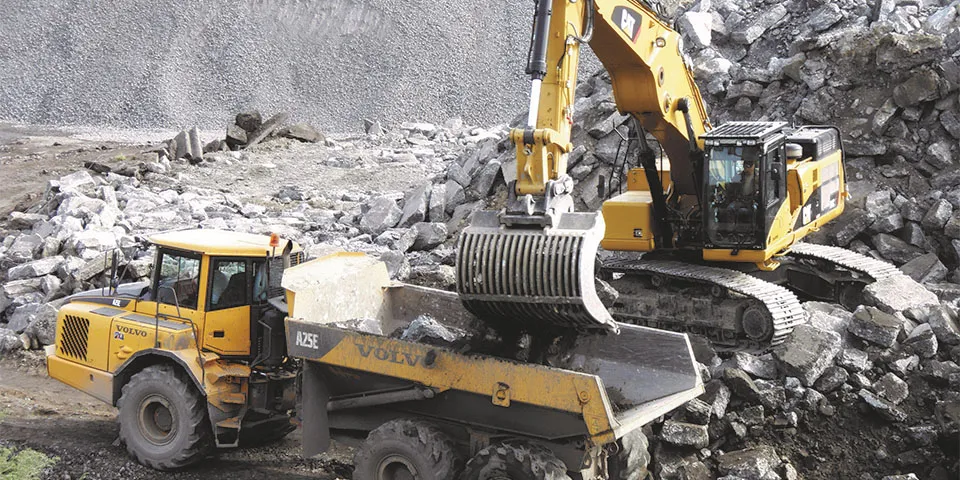
Concrete is the world’s most widely used construction material. Its extensive use requires huge quantities of raw materials and generates CO2 emissions. Construction and demolition activities also produce large amounts of waste that need to be reused.
In recent years, businesses and research centres have focused on more sustainable, circular alternatives across every link in the concrete value chain: using recycled aggregates, developing cement types with a lower environmental footprint, reusing construction materials, and designing more modular, demountable buildings, among other approaches. Many new solutions are already on the market or are about to emerge. However, the large-scale adoption of these innovations is being held back by a lack of practical knowledge, technical and economic uncertainty surrounding the new techniques, and the absence of practical reference frameworks that enable clear commitments to be made.
Through the “Circular.Concrete” project, funded by VLAIO as part of Cluster SIM Flanders, CSTC aims to take these innovative developments further by putting them into practice on construction sites.
State of the art
A state-of-the-art review brings together the knowledge currently available on innovative concrete technologies in the circular economy. It describes their advantages and disadvantages, as well as their suitability for the Belgian market.
Current attention is focused mainly on binders with a lower environmental impact. On the one hand, efforts are being made to improve established cement types, for example by using alternative raw materials such as slag and ash, regenerating cement that has already been used, through recycling or reactivation, and adopting other production processes, such as lower-temperature methods or C-S-H cement. On the other hand, “Portland clinker-free” binders are also being developed, with alkali-activated materials, or “geopolymers”, attracting particular interest.
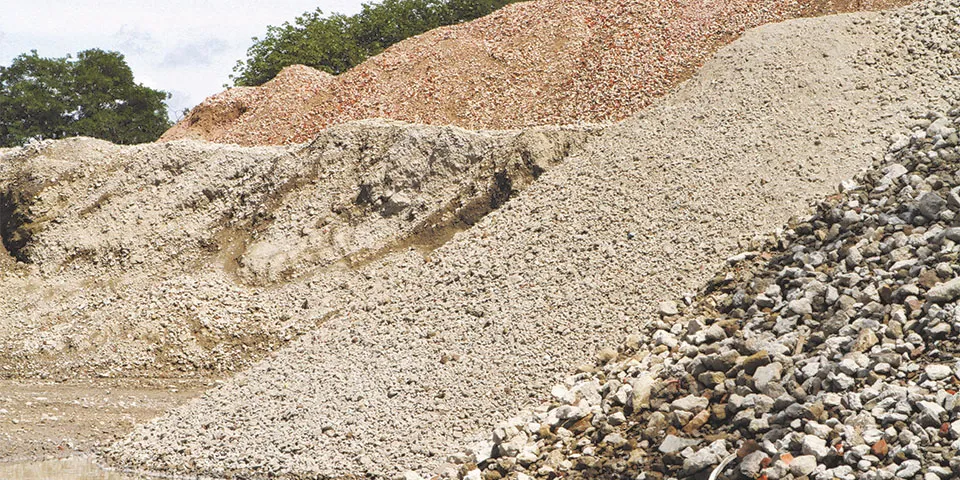
The document also discusses the use of recycled and artificial aggregates. The use of recycled concrete aggregates is now well regulated by Belgian standard NBN B15-001 (see also the recent CSTC monograph on the use of recycled concrete aggregates in concrete), but there are also opportunities to use recycled sand and mixed demolition aggregates.
Finally, the document focuses on the construction process, including admixtures, adding CO2 during mixing and reversible construction techniques, as well as a number of techniques for recycling or recovering value from concrete rubble. These have attracted considerable attention in recent years and focus mainly on recovering raw materials through new crushing and sorting methods.
Laboratory validation
A number of technologies are then validated in CSTC’s laboratories. This helps to assess the value and state of the art of certain solutions more accurately, and translate them into practical applications:
• Using smart crushing technology to improve the properties of recycled concrete aggregates;
• Using CO2 to improve the properties of concrete aggregates;
• Developing concrete mixes in which the entire aggregate skeleton consists of recycled aggregates;
• Mapping the applications of various new cements and binders;
• Understanding the workability, strength, shrinkage and creep of alkali-activated materials available on the market;
• Exploring ways to make precast concrete more circular.
On-site applications
One essential step is to put these technologies into practice on real construction projects and learn from the results. For these projects, CSTC supports the construction team, particularly the contractor, to ensure that innovations are applied appropriately and that the process is thoroughly documented. On site, the first step is to assess the potential applications and the level of ambition. Where appropriate, this is followed by proposed specifications and a preparatory pilot programme to validate the concrete’s properties. On-site monitoring and quality and performance guarantees will also be prepared.
Preparations are also under way to apply various circular concrete technologies on construction sites in Flanders and Brussels.
Conclusions
Through the Circular.Concrete project, CSTC hopes to bridge the gap between innovation and application. This means that the construction sector as a whole, and contractors in particular, can contribute. By involving end users, we hope to encourage innovative businesses to take their developments further.
This year, we will focus on sharing the results in cooperation with Febelcem, GBV, Fedbeton and others…
Question about this story? Ask your question
Keep following this
Get an email when a new story is published. No account needed.
- SubjectConcrete







