











A new step towards reducing carbon emissions and promoting circularity
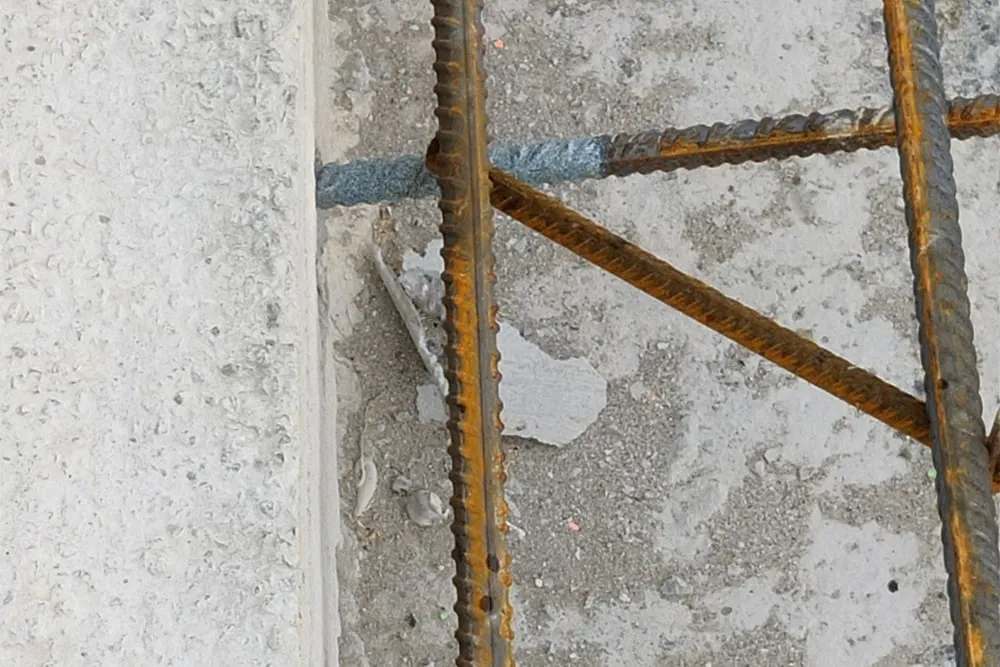
Barre d’ancrage avec protection époxy dans sa partie centrale - application en béton armé continu
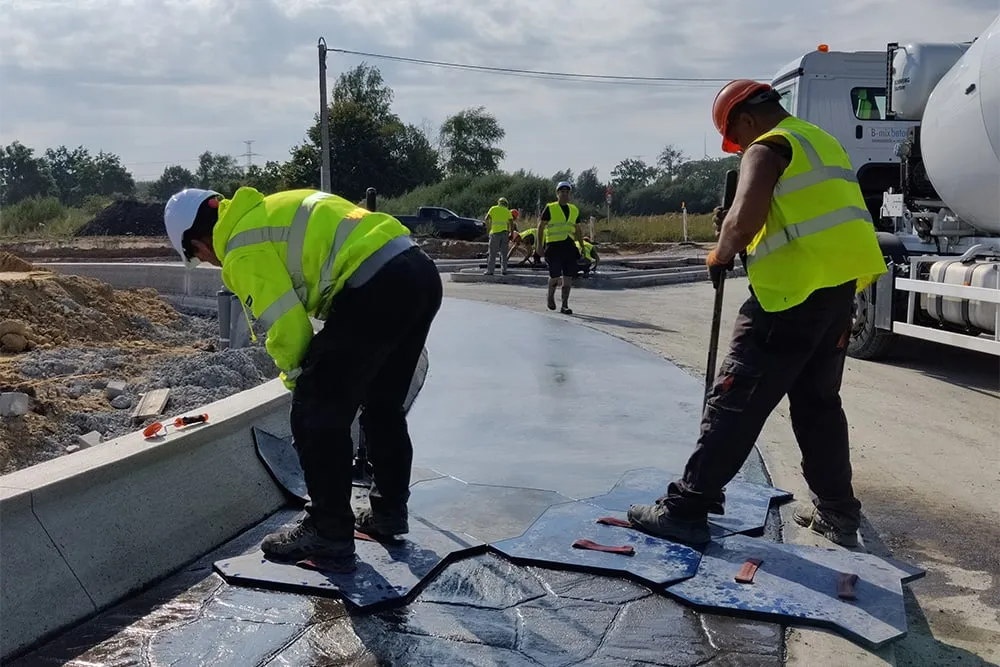
The administrative and technical provisions for road construction contracts are set out in the standard specifications used in Belgium’s three regions: the Cahier des Charges Type (CCT) Qualiroutes in Wallonia, CCT2015 in Brussels and Standaardbestek 250 in Flanders. These regulations are updated and revised at regular intervals in response to newly published standards and advances in knowledge and thinking, or to correct any errors. In Wallonia, they are updated annually; in Flanders, a new version is published every 5 years, with an interim corrigendum. In Brussels, CCT2015 has been fully updated and a new version is expected.
A revised edition of the Qualiroutes standard specifications has been published by SPW Mobilité et Infrastructures and has therefore been in force since 1 January 2024.
For hydraulic mixtures used in road foundations, several noteworthy amendments promote lower CO2 emissions and circularity. In Chapter C, “Materials”, the latest cement standards, EN 197-5 and -6, have been incorporated into §8 on cement. This means that a number of low-carbon cements, with their low clinker content, can also be used. However, their use is limited to foundation mixtures (sand-cement, continuous-graded aggregate with Ia and IIa additions, lean concrete), the same scope of application as for the road hydraulic binders (LHR) introduced in early 2023. One example of a cement that can be used for this purpose is CEM II/C-M (V-L) 32.5, available on the Belgian market, in which 36 to 50% of the clinker has been replaced with fly ash and limestone. This is undoubtedly a step forward in decarbonising the concrete sector.
In force
Other technical amendments have been made to Chapters C, “Materials”, and G, “Surfacing”:
Anchor bars must have an epoxy-type protective coating over a total length of at least 20 cm, distributed on either side of the centre of the bar.
The diameter of transverse reinforcement bars in continuously reinforced concrete has been standardised at 14 mm.
Air-entraining admixture is no longer required in the concrete mix when the concrete is not placed using a slipform paver. In such cases, a water repellent must be applied.
As a result, the clause on surface treatment by spraying a surface impregnation product has also been amended, with manually placed concrete added as an additional case. It also specifies that this treatment must be applied in two coats.
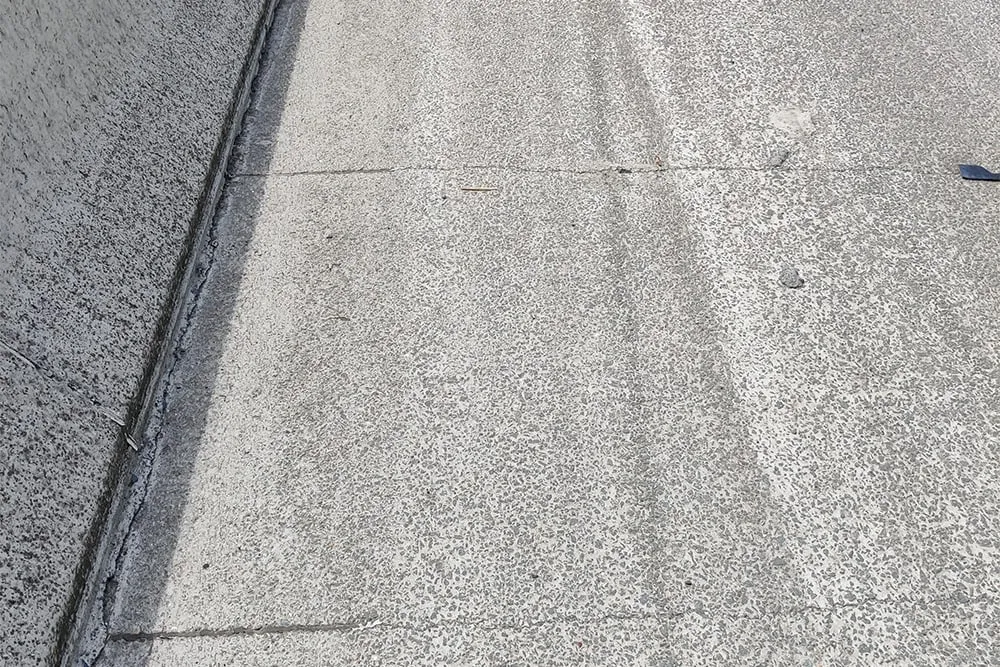
A transverse joint has been provided at the connection between a concrete surface and a bituminous surface, to accommodate their differential expansion.
Under consideration
Other items are still under consideration and could be introduced in early 2025:
the introduction of the ‘slab test’ for freeze-thaw testing, replacing the obsolete test under draft standard ISO/DIS 4846.2.
The amendment of the specifications for crack inducers in continuously reinforced concrete.
The introduction of an isolation joint, with compressible foam inserted to prevent sympathetic cracking when the linear element is constructed in a different phase from the concrete surface, and also to reduce concrete-to-concrete contact between two different structures.
These amendments to the technical provisions aim to improve infrastructure quality and durability, thereby extending the service life of concrete pavements. This means that, in the long term, less raw material is needed for reconstruction, environmental impact is reduced, the road remains operational for users for longer and its whole-life cost is lower. In short, concrete roads meet the three pillars of sustainable construction.
Question about this story? Ask your question
Keep following this
Get an email when a new story is published. No account needed.
- ThemeBuilding with less carbon
- SubjectConcrete







