Underground infrastructure and sewerage
Well-designed dewatering for a prestigious residential project
Texte Tim Janssens | Photos G. Smeyers
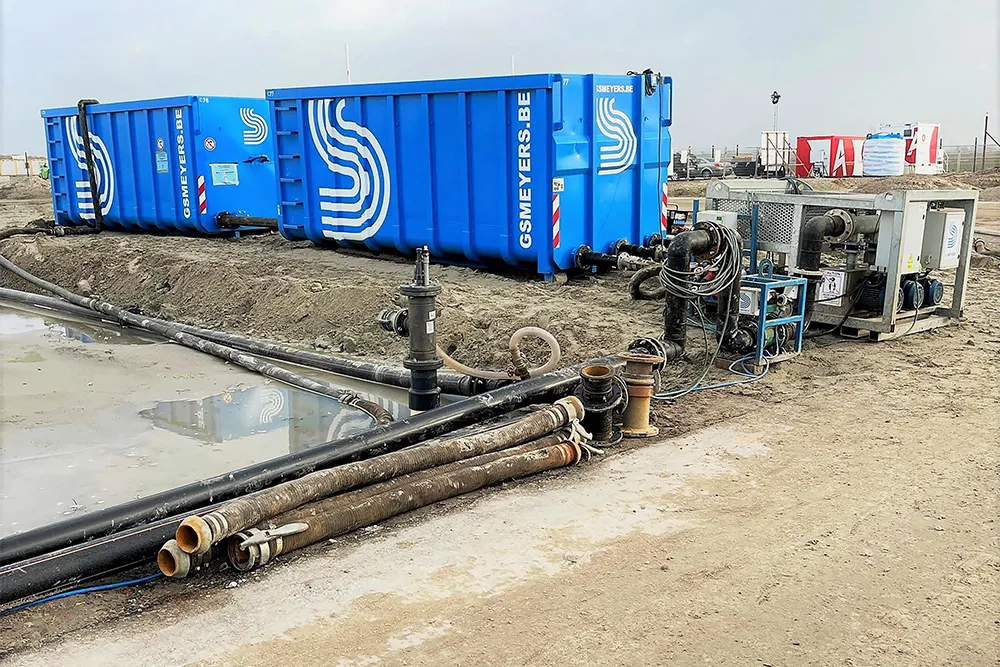
In Knokke-Heist, work is now under way on De Zoute Schorre, a new residential development comprising fourteen homes, underground car parks and a car-free public space. One of the first steps in the construction process was to drain the groundwater. This was a complex and delicate operation because of the particular nature of the soil, but a tailor-made job for a specialist such as G. Smeyers, which combined different techniques to dry out the extensive site and will continue to monitor the situation closely for some time to come to avoid problems during construction.
Living in the historic heart of Knokke, in a leafy neighbourhood just a stone’s throw from the town centre and the sea: it sounds like a dream, and one that will soon become a reality for fourteen families. Through the De Zoute Schorre project, De Haan Construct is undertaking to build high-end homes averaging 320 m², each with three underground parking spaces. The project bears the signature of Piet Bailyu, who, as a true Knokke native, knows the « library of architectural styles » that characterises local architecture inside out. The philosophy behind De Zoute Schorre is to give authentic features a modern touch, ensuring the residential project sits harmoniously within Knokke’s distinctive setting while expressing a subtle individuality. The homes evoke typical coastal villas, but make greater use of glass and therefore benefit from more natural light. Unsurprisingly, nothing has been left to chance, from the use of high-end materials and sophisticated technologies to the creation of a car-free area with attractive green spaces, winding paths and a pleasing range of views.
Vertical wellpoints and wells
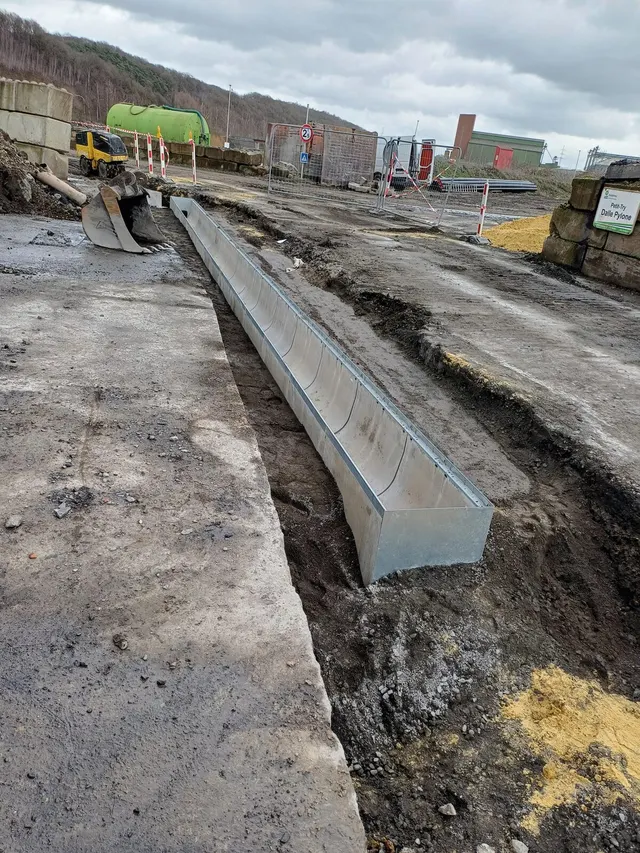
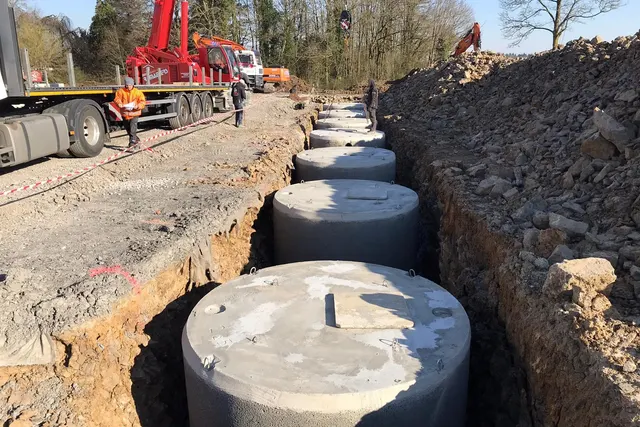
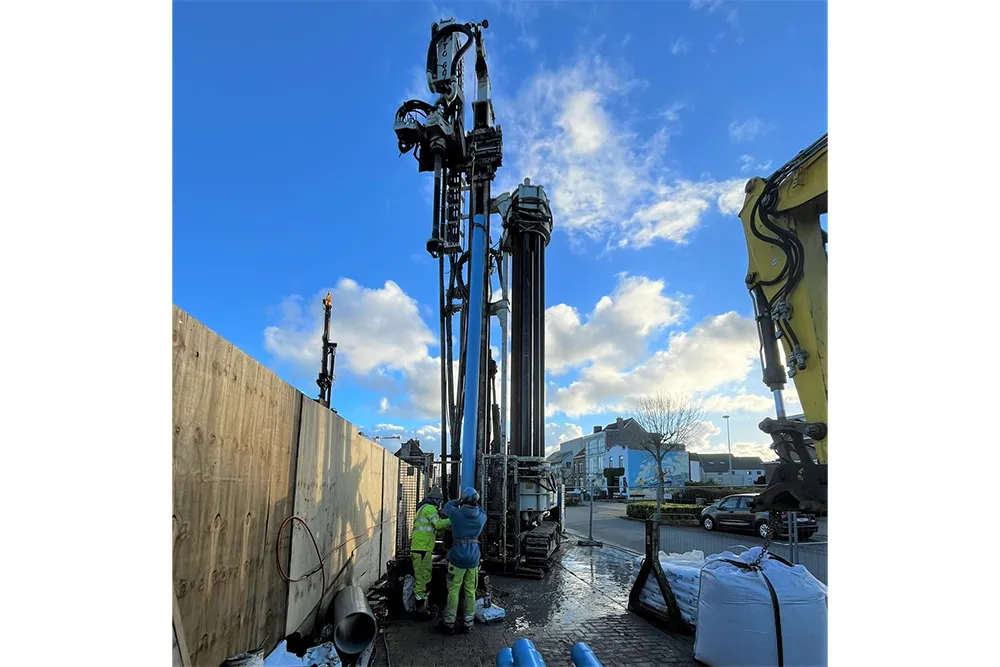
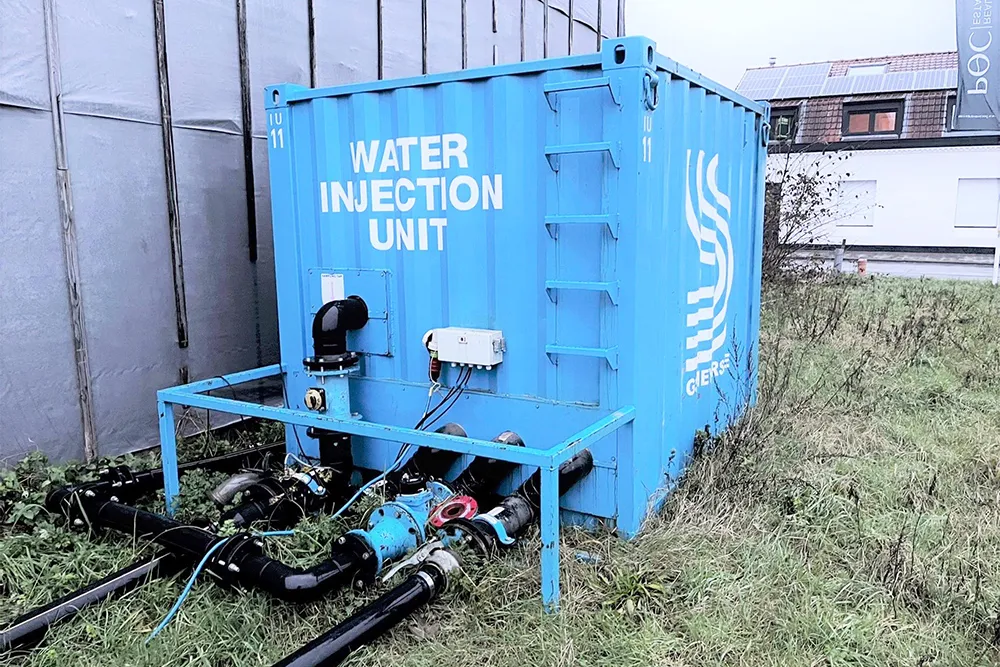
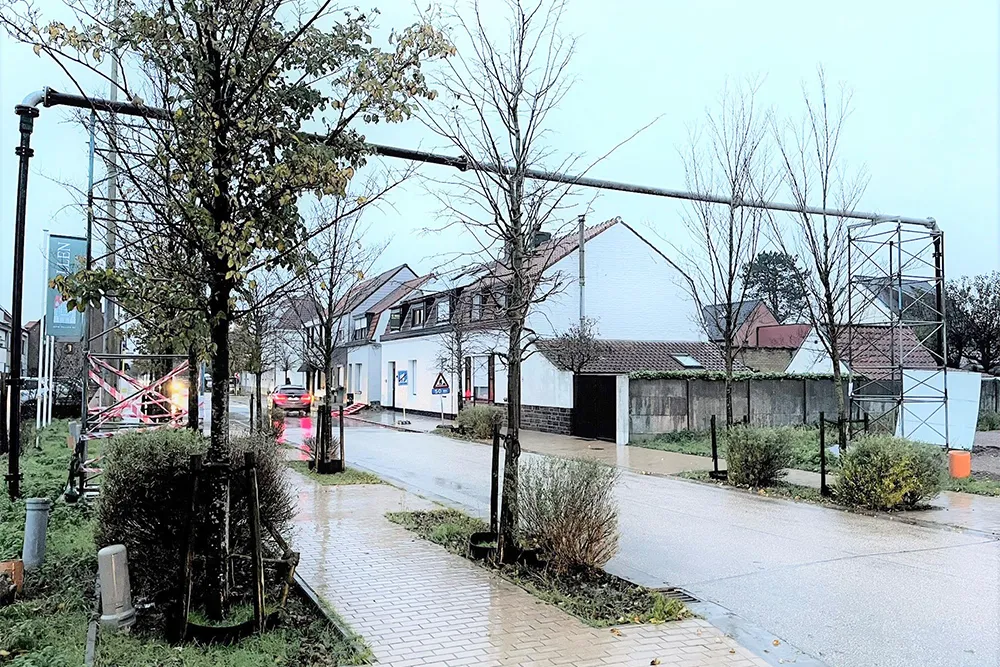
The start of work brought technical challenges. At the request of main contractor DSV Crop, G. Smeyers used two types of drainage because of the heterogeneous composition of the subsoil. « As the clay layer is relatively high in some places, we divided the site into two areas. In one, the clay layer is 7 metres below ground level, which allowed us to use vertical wellpoints. In the other, it is slightly shallower, so we had to use wells to carry out drainage and reduce groundwater pressure », explains site manager Xandres Maes. « The saline water we pump from these wells is reinjected a little further away into the same layer, as part of a return drainage system. The water collected by the wellpoint drainage system is discharged into two wadis some distance from the site using an additional pumping station. To avoid blocking traffic on the two roads within the site, we built a platform that allowed us to install the discharge pipes above ground. »
A complex but fascinating challenge
De Zoute Schorre is what G. Smeyers calls a « critical site ». In other words, things can quickly go wrong if the drainage does not perform as expected. « That means all the parameters need to be monitored rigorously. The piezometer tubes that measure water pressure have been supplemented with a vacuum sensor on each wellpoint line, allowing us to respond quickly if a problem arises », explains Xandres Maes. « So far, everything is going perfectly and we have not received any alerts, but we are continuing to monitor the situation closely. We are currently busy burying the drainage pipes, and will soon be pouring the slab. So we will be working here for quite some time yet. Projects such as De Zoute Schorre involve a large number of different processes, making them highly complex and challenging, but that is precisely what makes them fascinating. At G. Smeyers, we enjoy this kind of challenge! »
Question about this story? Ask your question
Keep following this
Get an email when a new story is published. No account needed.
- SubjectUnderground infrastructure and sewerage