Underground infrastructure and sewerage
PE 100-RC precision pipes for pipelines in Lake Biel
Texte AGRU
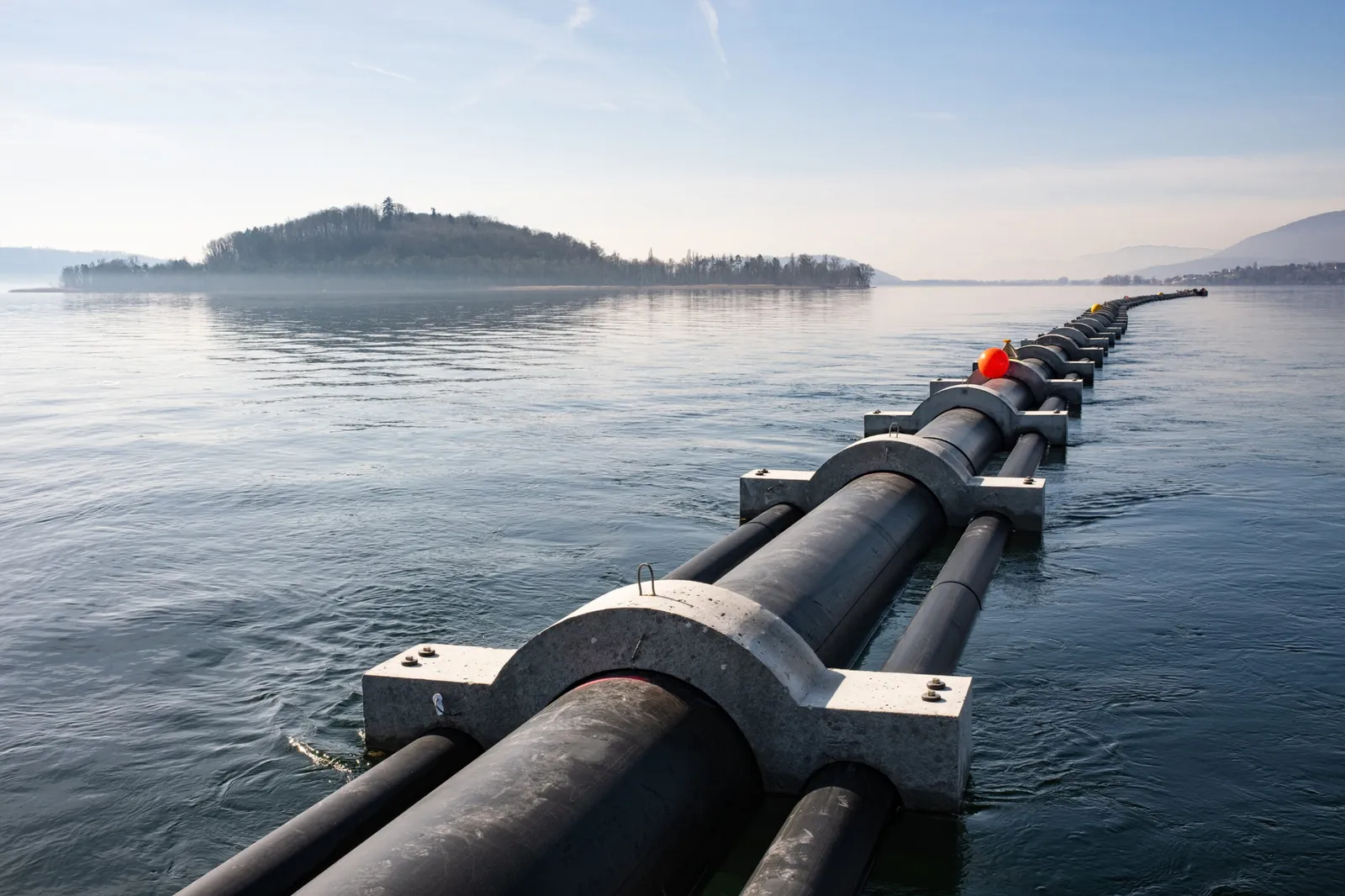
At the lake waterworks in Ipsach, on the shore of Lake Biel (Switzerland), the raw water intake was fundamentally redesigned because of the invasive quagga mussel. Two AGRULINE DN/OD 700 PE 100-RC plastic pipeline systems, each 750 metres long, allow all components of the lake water intake to be cleaned internally in a fully automated process, including the intake screen. The plastic pipeline system installed is therefore not merely a means of transport, but also an integral part of the cleaning system.
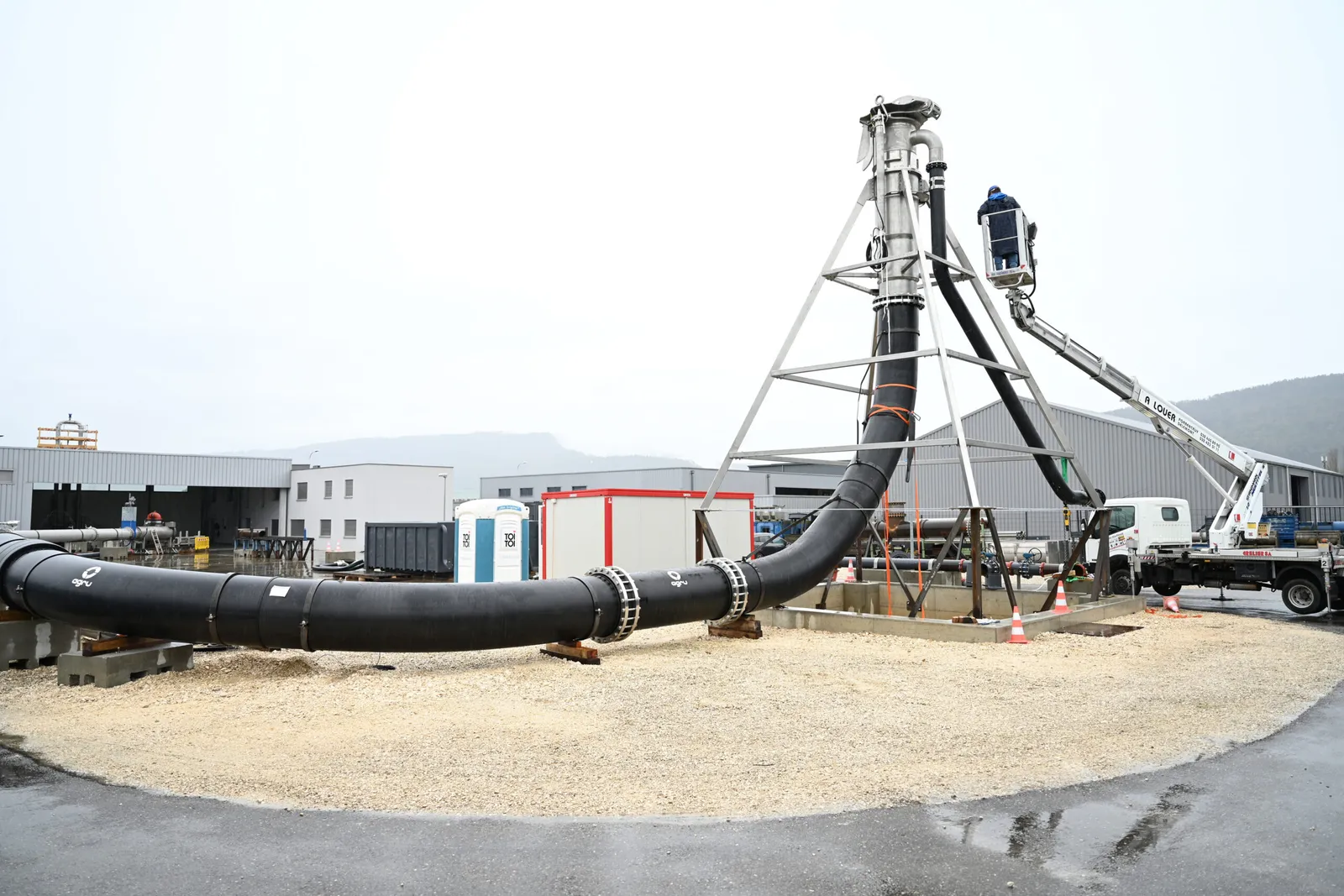
Consistent dimensional accuracy along the pipes and uniform welded joints allow a mechanical cleaning device to travel the full length of the pipeline under water pressure, without encountering any changes in cross-section. The pipeline, fittings and intake screen are hydraulically matched and have the same internal diameter. The decisive factor is that all pipeline components are manufactured with perfect geometric continuity and no change in cross-section.
Quagga mussels make pipeline cleaning essential
The raw water intake project was prompted by the complete renovation of the Ipsach lake waterworks. This work had to take account of the growing fouling caused by the invasive quagga mussel (Dreissena rostriformis bugensis), which has been spreading in Lake Biel since around 2019. Free-swimming larvae attach themselves to surfaces within about four weeks and then form a shell. Mechanical cleaning was not possible in the existing lake water intake, dating from the 1970s, which consisted of a cement-lined steel pipe with a valve structure. In conventional pipeline cleaning, a cleaning device is pushed through the pipeline, exits into the lake and is then retrieved by boat. This type of cleaning requires divers and boats and disrupts operations. The aim at Ipsach was to develop a system that could be cleaned without any work taking place on the lake. This would enable fully automated operation, independent of weather conditions, with optimised life-cycle costs.
Geometric continuity as a technical prerequisite
At the heart of the new plastic pipeline system are two parallel PE 100-RC pipelines, with an operating pressure of 2 bar and identical internal diameters from the operations building to the intake point at a depth of around 38 metres. The design also includes a launch and reception chamber, a separate return pipeline and a patented intake screen (“strainer”) with the same hydraulic diameter as the pipeline. This geometric continuity is a prerequisite for the cleaning device to travel the entire route in both directions without having to be retrieved.
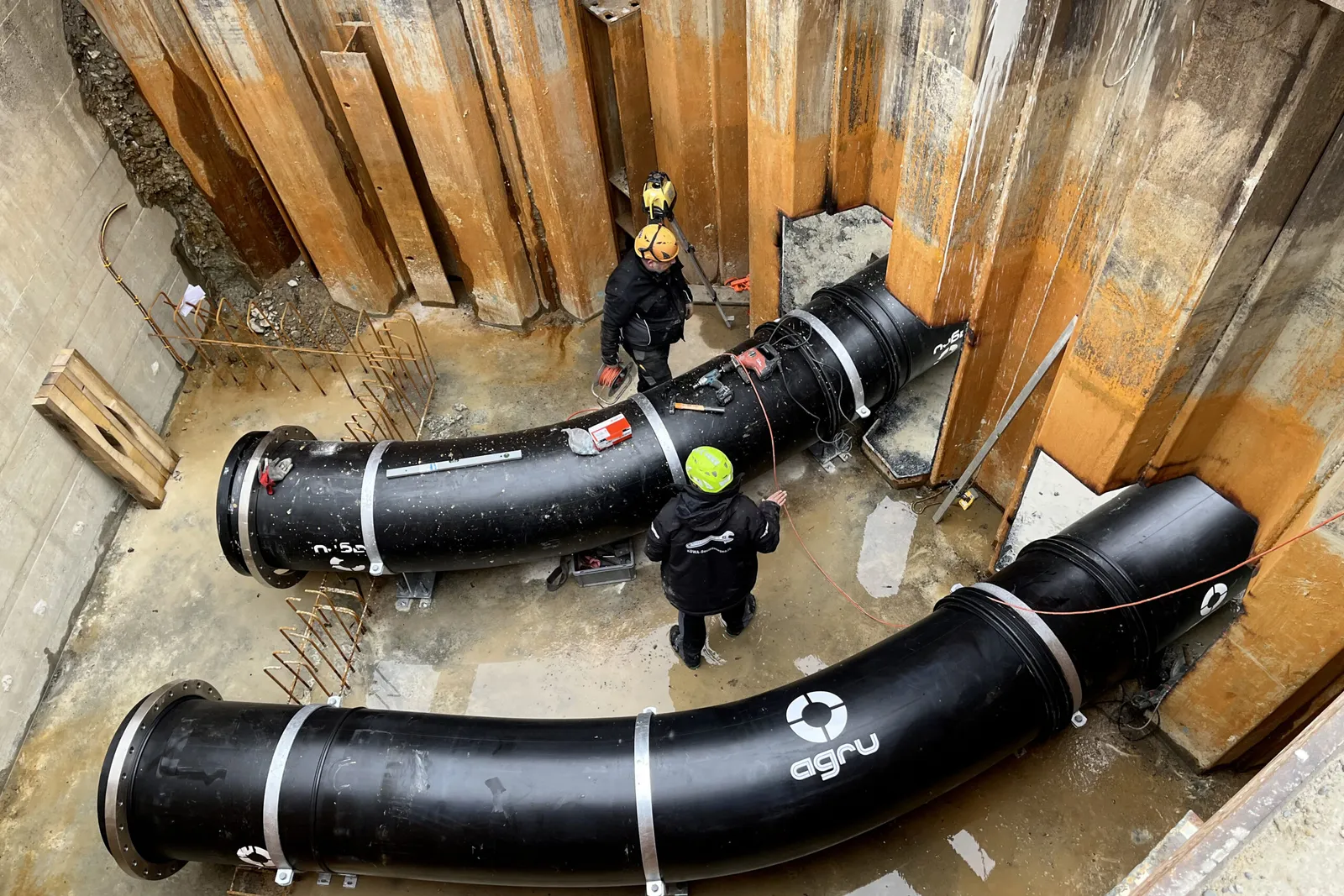
For use in the 750-metre-long pressure pipeline, no significant ovality, notable deviations in diameter or appreciable misalignment at the welds can be tolerated. Even small deviations in shape increase mechanical resistance and compromise passability. The internal profile must remain constant along the entire length.
Precision manufacturing and joining technology
AGRU manufactured the pressure pipes within defined production windows to avoid tolerance deviations caused by deformation during prolonged storage. The pipe sections to be welded came from the same material batch and were marked as belonging to the same set. AGRU thus supplied a plastic pipeline system precisely tailored to the project. The pipe sections were joined by heated tool butt welding to create uniform units with longitudinal tensile strength. The aim was to achieve a consistent internal geometry, with minimal weld bead misalignment along the entire pipeline. According to the operator, the requirements exceeded the tolerances generally accepted in the industry, and AGRU met them through meticulous preparation.
PE 100-RC as a material for long-term service
After several options had been assessed, PE 100-RC was selected as the material. The decisive criteria were its corrosion resistance, abrasion resistance and suitability for repeated mechanical cleaning cycles. ¶ Compared with coated steel, internal coatings and additional corrosion protection measures are no longer needed.
PE 100-RC has increased resistance to slow crack growth and achieves minimum test times of more than 8760 hours in the FNCT test in accordance with ISO 16770. For welded pressure pipeline systems, this provides additional long-term security, particularly in weld zones subject to cyclic loads. The fusion weld through the full wall thickness creates a monolithic system with no detachable sealing joints, a sound design solution for a planned service life of several decades.
Installation at a depth of 38 metres under controlled conditions
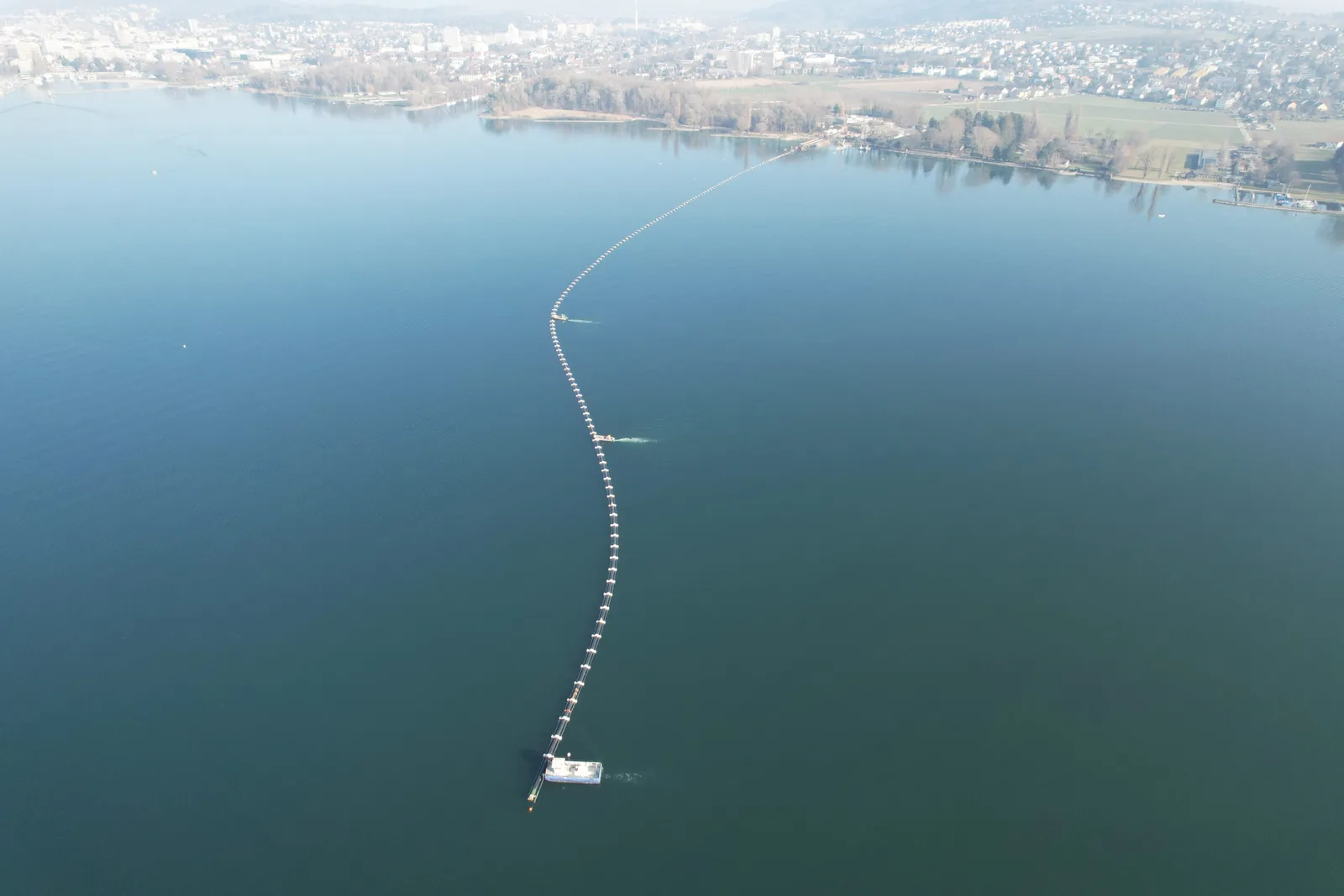
Welding, the controlled lowering of the lake pressure pipelines and their secure anchoring on the lake bed were carried out by Hydrokarst Swiss SA, a company specialising in underwater works. The company drew on its experience, in particular, to align and position the DN/OD 700 pipelines precisely at a depth of around 38 metres. As PE has a density close to that of water, the lake pressure pipeline could be floated to its exact final position. Controlled lowering along an S-shaped curve was achieved by filling the lake pressure pipeline in a coordinated manner. The intake screen, which is around ten metres high, is located on a slope on the lake bed and oriented to follow the geometry of the shoreline and withstand potential sediment movement. The system was commissioned in late 2025.
Dimensional accuracy as a functional requirement
“Exact dimensional accuracy of the pipelines was essential to ensure that the new cleaning system worked properly. AGRU did an excellent job of meeting our demanding requirements,” says Hanna Schiff, project manager at the Ipsach lake waterworks.
The project is a reference case for lake water intakes in waters affected by quagga mussels. It shows that managing fouling in technical installations in the face of this invasive organism is a technical challenge. When the pipeline geometry, material, fittings and joining technology are designed so that mechanical cleaning can be automated and carried out without interrupting operations, maintenance methods are fundamentally transformed. At Ipsach, the plastic pipeline system used is therefore the essential structural prerequisite for a lake water intake that remains reliably operational over the long term.
Question about this story? Ask your question
Keep following this
Get an email when a new story is published. No account needed.
- SubjectUnderground infrastructure and sewerage