Underground infrastructure and sewerage
Underground networks to secure our energy future
Texte Philippe Selke | Photos David Plas
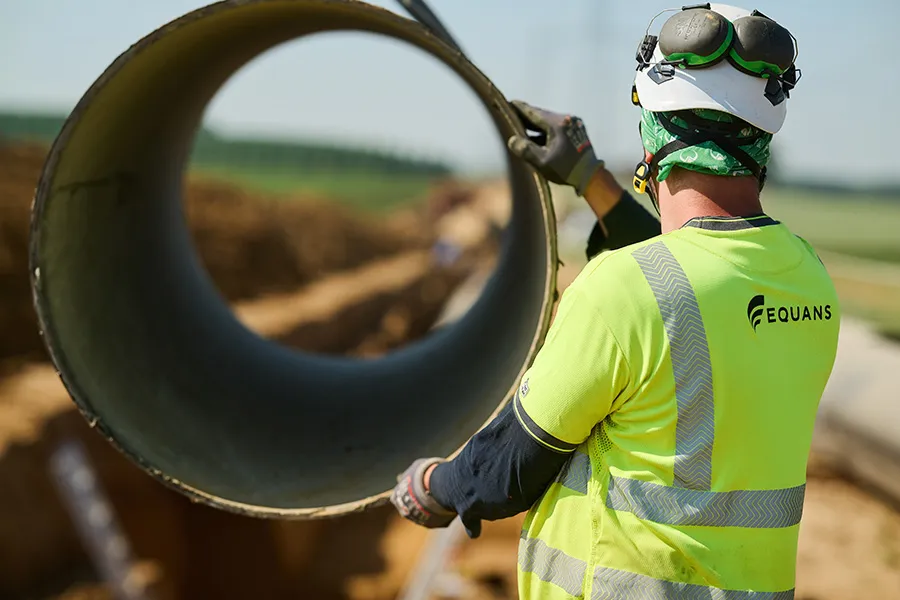
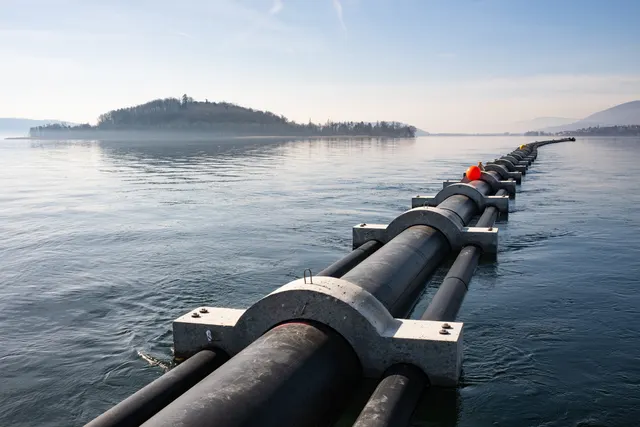
In the face of climate disruption, maintaining an adequate supply everywhere in the country is vital. Water, gas, electricity, district heating networks… EQUANS has the expertise and equipment to work on all fronts, building the underground infrastructure we need. One example is the Water Highway, a 100 km network bringing water from the Eupen and Gileppe dams to municipalities in the province of Luxembourg, which suffer from chronic shortages.
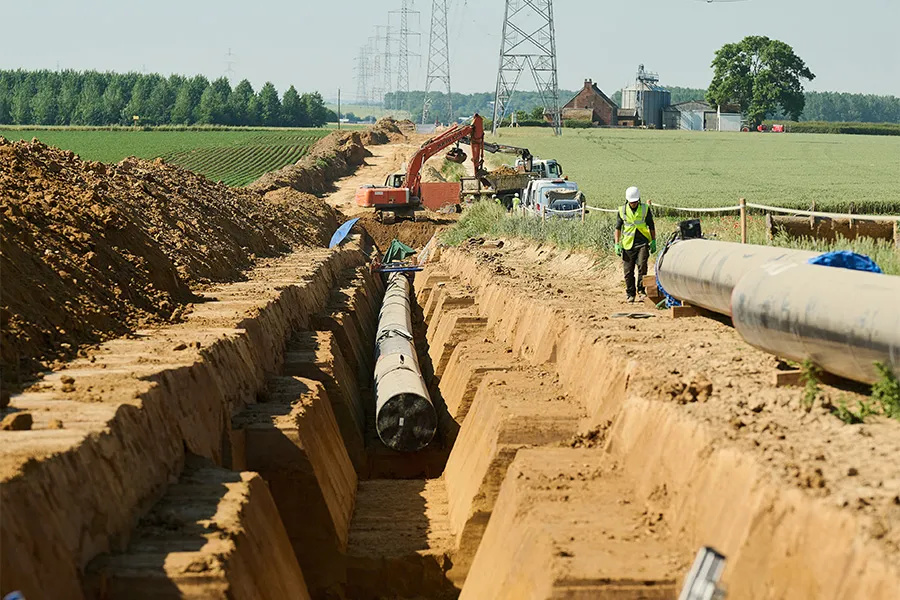
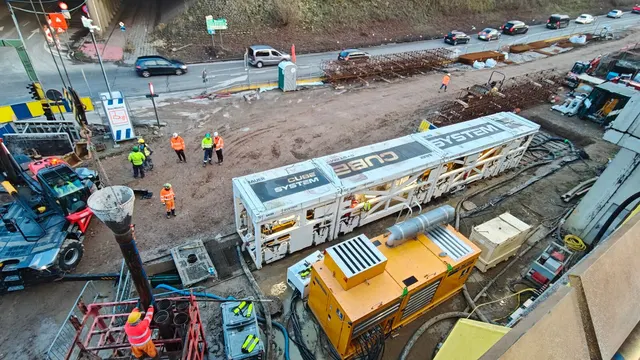
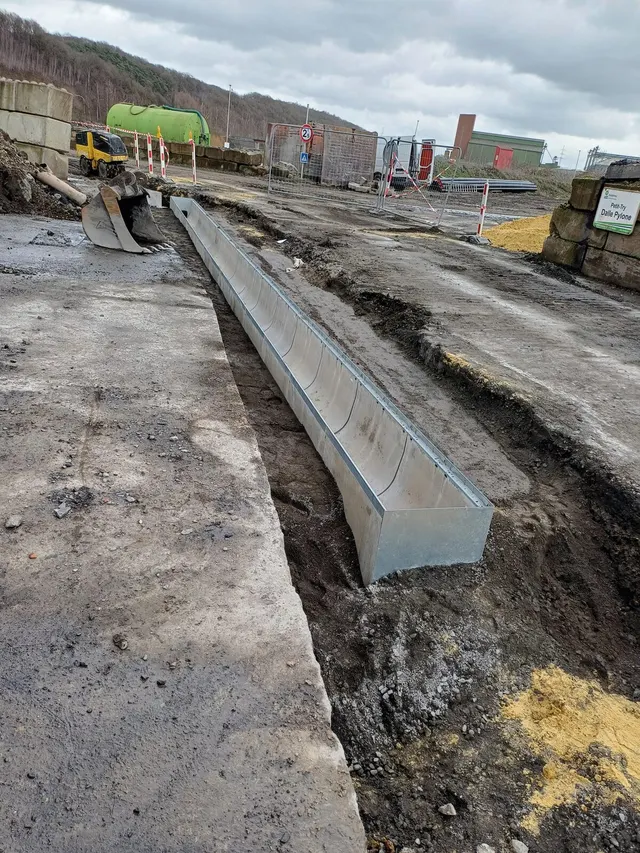
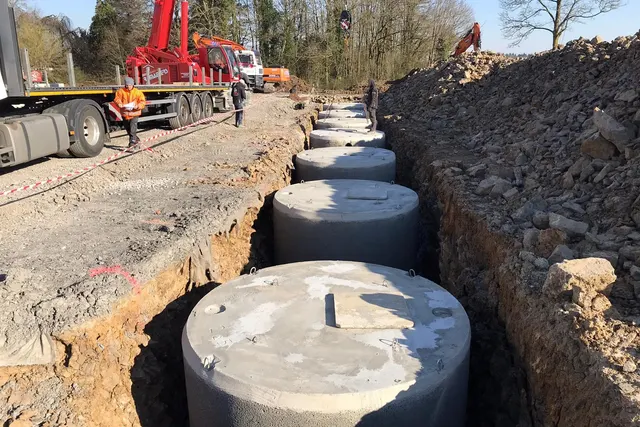
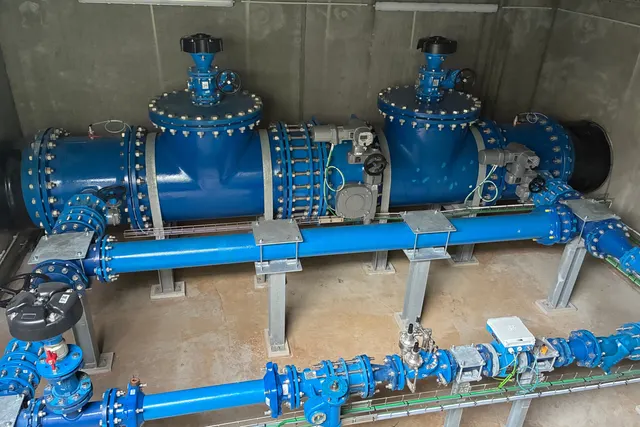
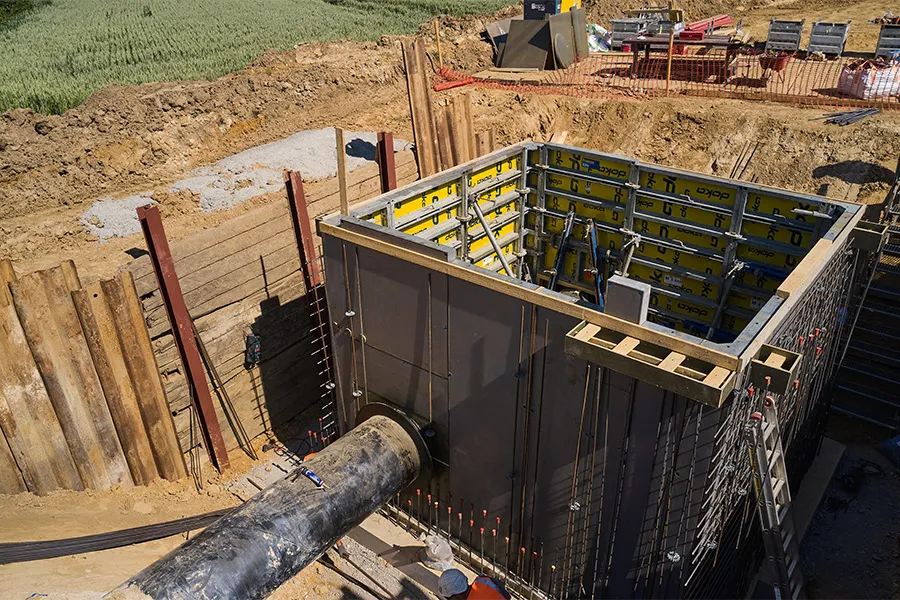
The Water Highway is the largest project in Wallonia’s regional water resources plan. On behalf of the Société Wallonne des Eaux (SWDE), EQUANS teams are currently working on a 3 km section between the Arbre à la Croix reservoir in Grâce-Hollogne and Villers-le-Bouillet: digging trenches, installing and welding an 800 mm diameter steel pipeline, and building inspection chambers.
Jonathan Manise, section manager at EQUANS Belux, can count on around a hundred colleagues, the vast majority of whom work on site, from machine operators to water network technicians: « As soon as we were notified that we had won the public contract, we used the specifications and schedule of rates to purchase and take delivery of the pipes, check their quality, then dig the trench to lay them and weld them together end to end. Once the trench has been backfilled, we pressure-test the pipelines and build the inspection chambers. Apart from this last part, which we sometimes subcontract, all the rest is done by our own teams. Before the construction industry holidays, they completed the pipeline installation and are now laying the cables and fibre-optic lines that will enable the valves in the inspection chambers to be operated automatically, regulating water flows. »
The ground conditions and route posed no particular challenges on this section of the Water Highway, but EQUANS is proficient in specialist techniques such as horizontal directional drilling. This makes it possible to install underground infrastructure without digging a trench, particularly when crossing roads or railway lines that cannot or should not be closed, even temporarily. The technique could therefore prove useful in the construction of other sections of what the SWDE calls the project of the century. Active throughout the country, EQUANS is equipped to work in all kinds of ground, whether sandy, marshy or rocky.
More than just water
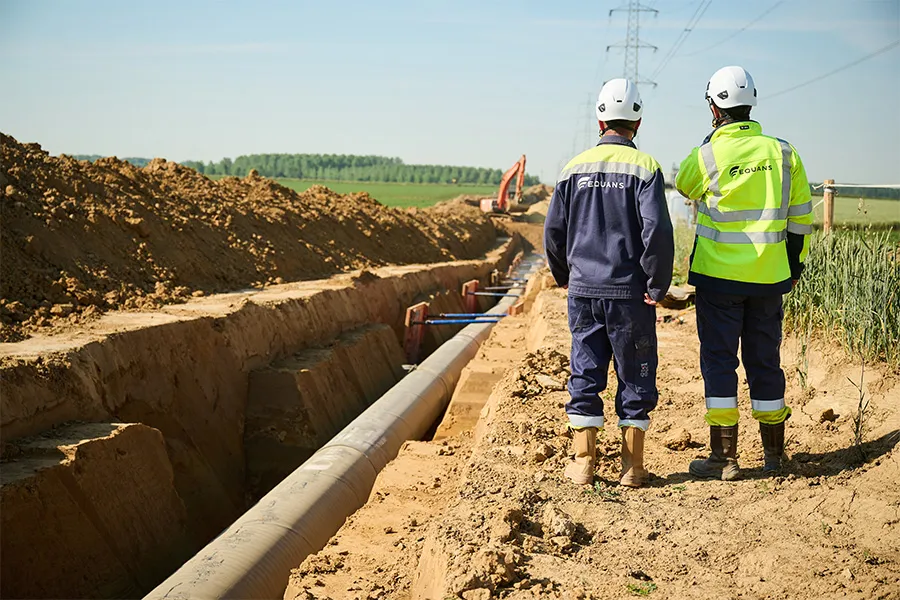
With its broad range of expertise, EQUANS’ « Underground Infrastructure » division has its hands full. For Fluxys, it installs gas pipelines, whose specifications are evolving to allow them to transport hydrogen too, an energy source for the future. District heating networks are one way to manage energy resources more effectively. EQUANS is active in this field too, with numerous installations in Flanders as well as in Brussels, including the conversion of the former Ixelles barracks into a mixed-use neighbourhood, and in Wallonia, at the Les Rives Ardentes eco-district in Liège. EQUANS is also helping to meet rising electricity demand across the country, driven by the widespread adoption of heat pumps and electric vehicles. It offers underground solutions for new high-voltage lines or to replace ageing overhead high-voltage lines, such as the one between Ruien and Chièvres. EQUANS even supplies electricity to end users through a small electric vehicle charging point business. Energy and environmental challenges are numerous and urgent, and the global leader in multi-technical installations and maintenance services is exceptionally well equipped to meet them. It can even offer new business models that see the company involved much earlier in the process.
Energy to spare
Jonathan Manise: « Take the example of a property developer who owns land they want to develop into eco-districts. We can take on a role akin to that of a promoter, financing the study needed to propose the technical solutions required, based on the number of buildings and estimated consumption. We then install, maintain and operate those solutions, supplying energy for 20 years or more. The advantage for the developer is that they do not have to make a major upfront investment, and can offer future residents of the eco-district a fully operational, optimised network, coupled, for example, with renewable energy sources. »
Question about this story? Ask your question
Keep following this
Get an email when a new story is published. No account needed.
- ThemeTransforming infrastructure and territories
- SubjectUnderground infrastructure and sewerage