Underground infrastructure and sewerage
Stormwater: continuous monitoring for better management
Texte Philippe Selke | Photos Superplastic
Superplastic, a Liège-based company, aims to identify and supply quality products at competitive prices for every construction or infrastructure project.
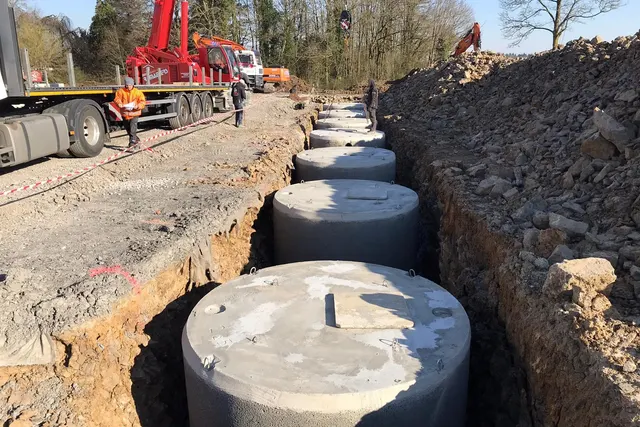
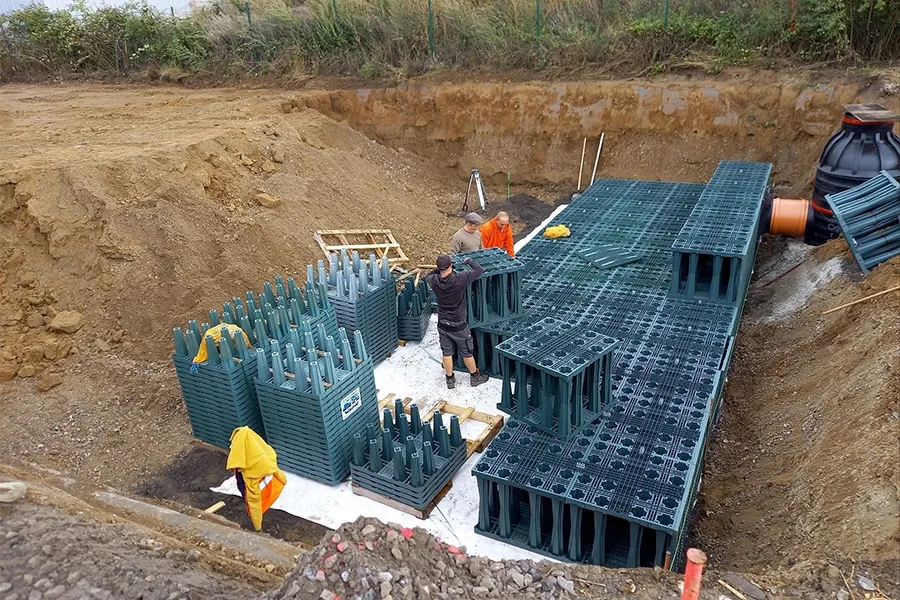
Identifying and supplying quality products at competitive prices for every construction or infrastructure project is the mission of Liège-based company Superplastic. This time, Jean de Brouwer and Xavier Cornet take us to a business park in the municipality of Amay, where two stormwater retention basins were built last year by Cop & Portier using Fränkische crates. The Province of Liège, the client for the project, has decided to enhance the installation with an automatic level measurement system using a probe.
Collecting rainwater has become essential in the current climate: increasingly frequent and severe droughts and floods mean we all need to manage precipitation, or its absence, as effectively as possible. Whether the aim is to prevent the drainage network from becoming overloaded, provide a water reserve (for firefighting, sanitation, etc.) or reduce soil water stress, the construction of basins, whether lined or unlined, is becoming a necessity. In all cases, being able to monitor the level in collection structures easily greatly increases their usefulness.
Project in Amay
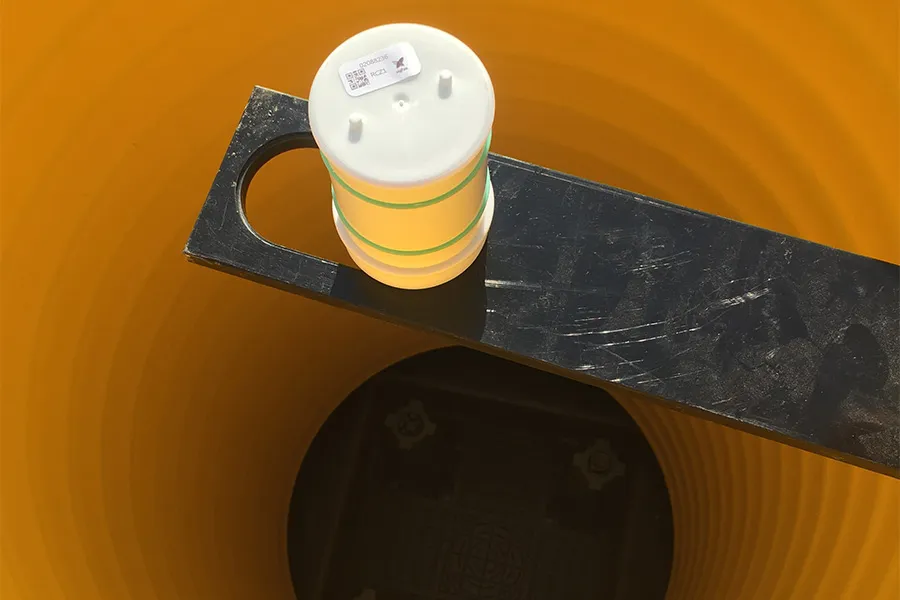
The Province of Liège took this approach, seeking to monitor the water level continuously in its new retention basins in the Amay business park. On the advice of Superplastic, which had already supplied the components used to build the basins, it will therefore acquire a WizeWater connected probe system in the coming days. The system is distributed in Belgium by water management specialist Riopro.
Xavier Cornet, internal sales representative at Superplastic: “From its offices, the Province will be able to monitor how quickly the basins fill and, above all, empty. What is interesting here is that one of the basins has a filtration system upstream, while the other does not. We will therefore be able to measure objectively the benefits of installing such a filtration system.”
The tools to take action
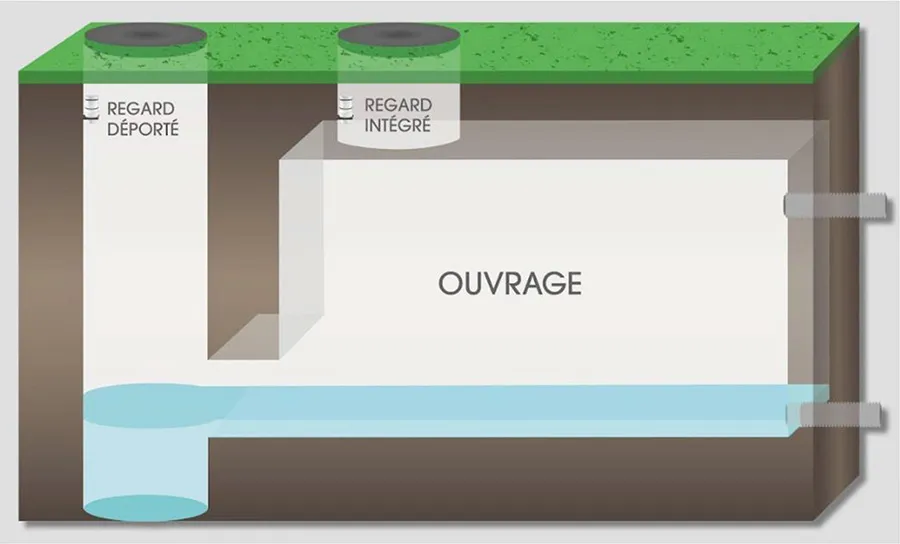
Depending on the quality of the network at the site, the probe, installed in an inspection chamber serving the basin, uses radar or lidar to measure the volume of water every two hours and send the data to an online platform. The platform supports a wide range of applications, including generating reports and issuing alerts when pre-programmed levels are reached.
In an infiltration basin, this makes it possible to observe the gradual clogging of the geotextile, which reduces its performance over time, and anticipate any need to clean out the basin.
Jean de Brouwer, sales director at Superplastic: “For a retention basin, the benefits are just as clear. At present, the water stored in this way usually ends up in an overflow tank and goes to waste. Designed to handle very heavy rainfall over a short period, the retention system remains empty 95% of the time. We need to go further by making better use of the water collected, and current technology allows us to do that. It starts with knowing how much water is available in the basin at any given moment, as well as having a complete historical record. We can then manage the water by anticipating forecast or foreseeable weather events. These days, everyone wants to monitor their energy consumption remotely, so why not do the same with water?”
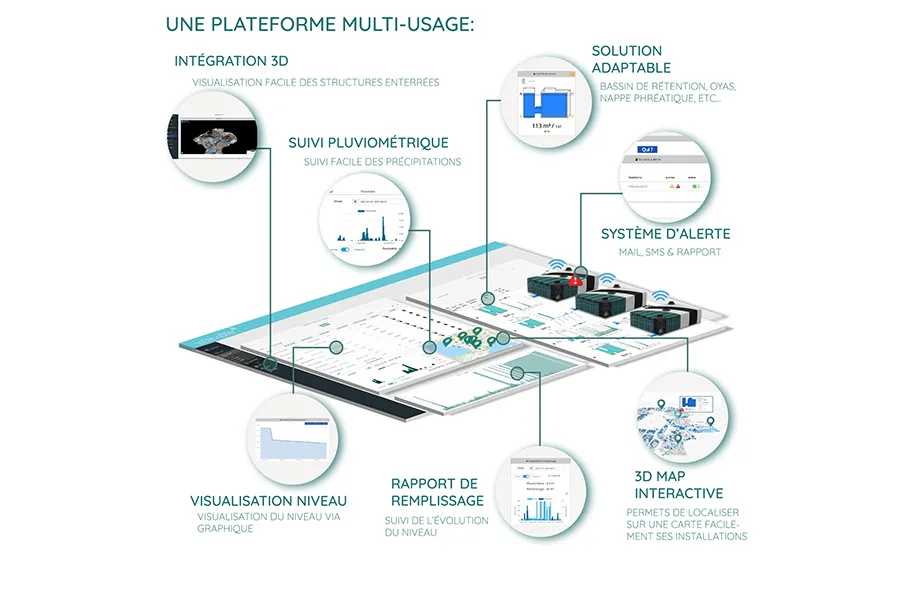
The issues are certainly worth taking seriously: they concern sustainability (the responsible use of resources) and safety (protecting people and property from the risk of flooding). Every public authority has a responsibility in this regard. In France, several dozen municipalities are already connected.
Question about this story? Ask your question
Keep following this
Get an email when a new story is published. No account needed.
- SubjectUnderground infrastructure and sewerage