Underground infrastructure and sewerage
Fill old sewers with rigid foam and avoid additional excavation work.
Texte Niels Rouvrois | Photos ALV
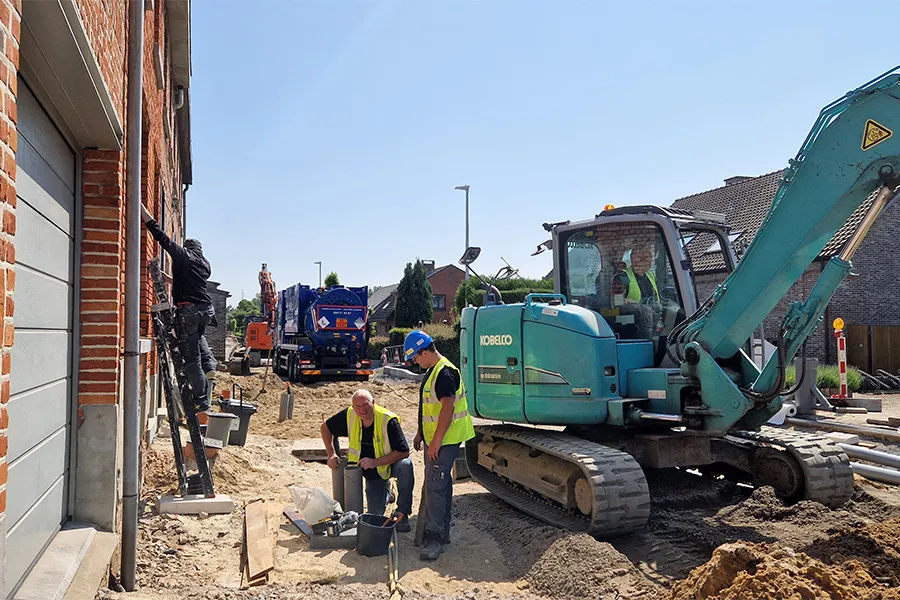
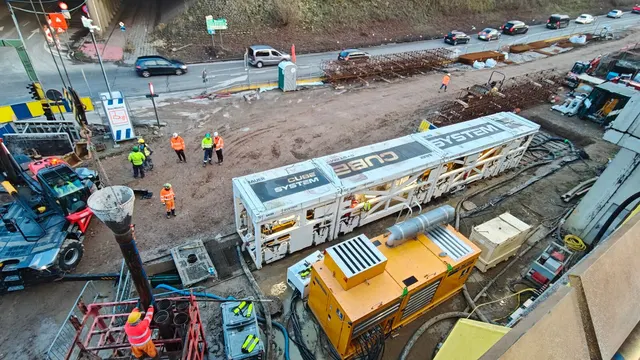
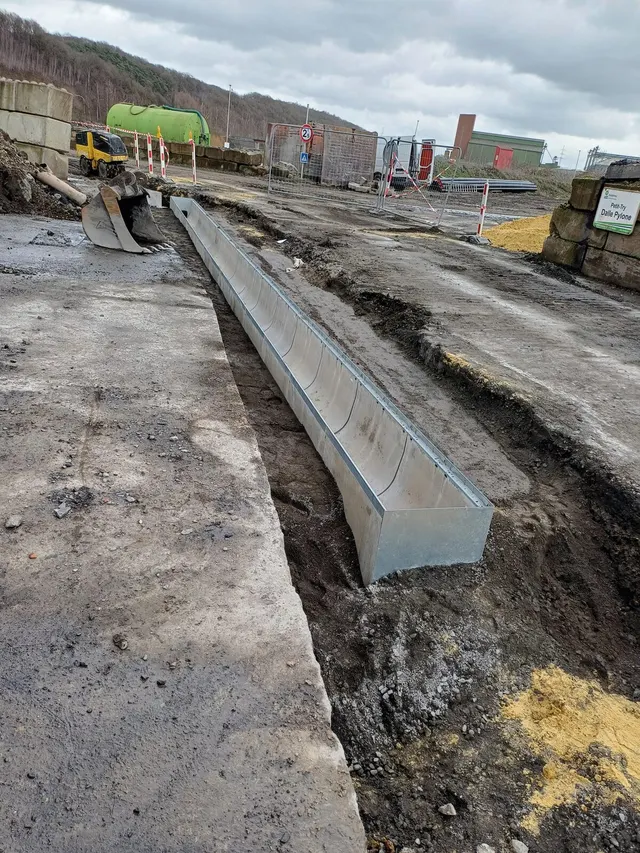
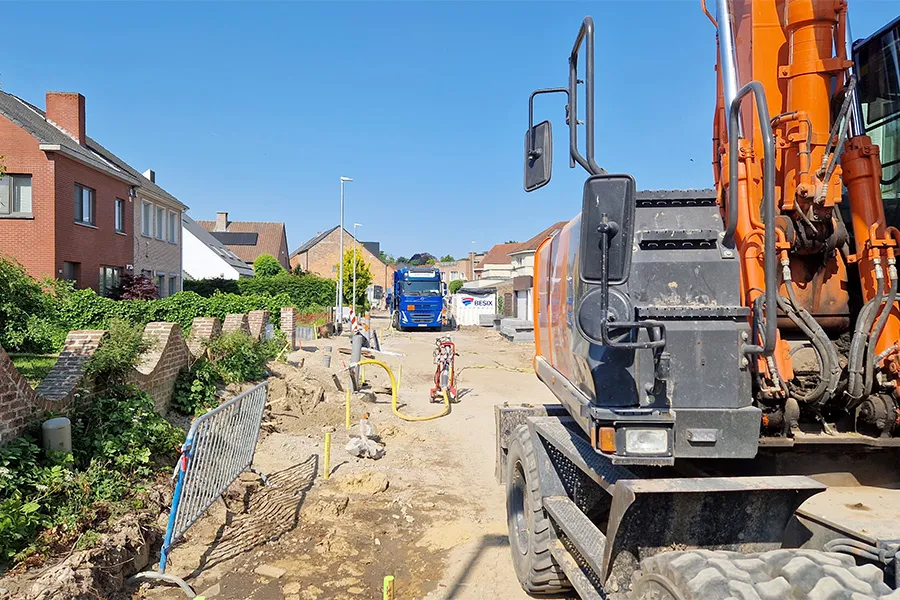
Roadworks on Wareslagedreef in Waasmunster are currently in full swing. As part of the project, Aquafin is installing a separate sewer system: wastewater is being routed via Hoogstraat to the wastewater treatment plant, while rainwater is being drained into the existing basin. Notably, the old sewer system is not being removed, but filled with Benefil rigid foam. To do this, Besix, Sweco and Aquafin called on ALV’s expertise. “Filling old sewers with rigid foam avoids additional excavation work and minimises disruption in the surrounding area,” explains Johnny Fonteyne, manager of ALV.
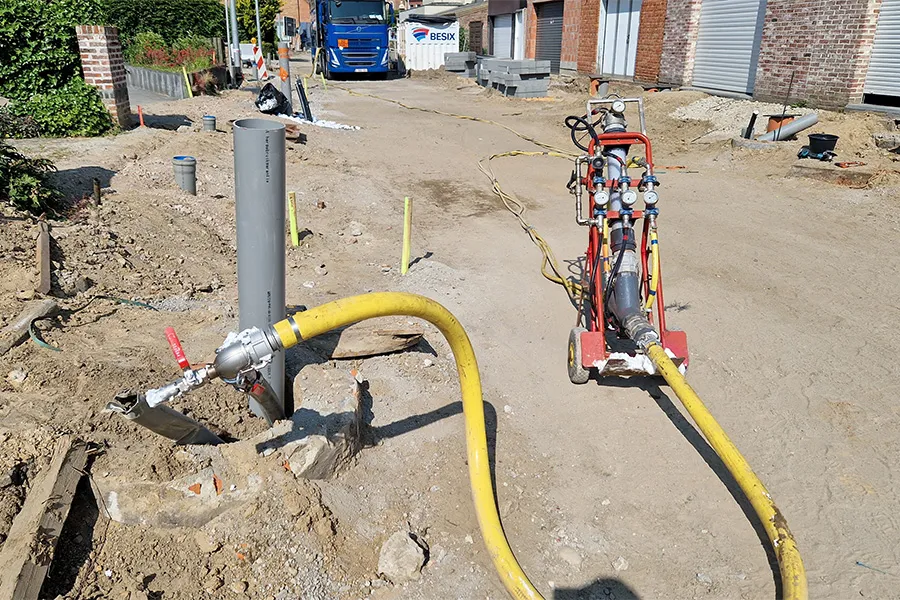
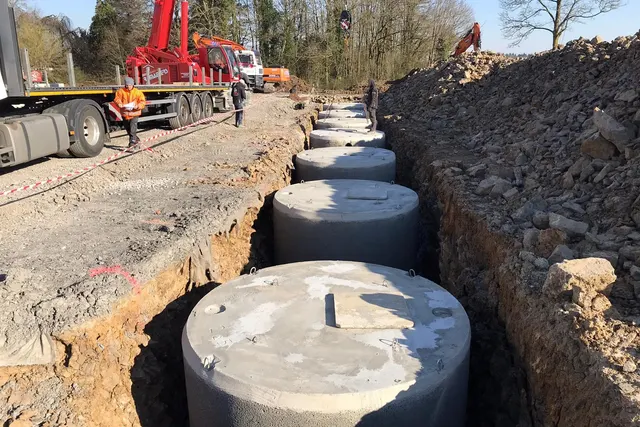
Unused sewer pipes or pipe systems can cause collapses or subsidence. There is also a genuine risk of damage caused by rodents or flooding. Benefil eliminates this danger.
Injecting Benefil into disused sewer pipes means they do not have to be removed. They are also filled with a solid, inert material. This prevents subsidence over time and minimises the risk of damage to roads or buildings.
Benefil is a Dutch resin-based product. Originally used as a soil improver, it is now also used to raise sunken ground, fill voids such as sewers, and fill fuel oil tanks. ALV specialises in tank inspections, decommissioning tanks, and installing new tanks and tank systems. Remediation accounts for a significant share of the company’s work, and ALV’s activities in this area extend beyond tanks. “We have been using Benefil since the end of 2018. It is still fairly innovative in Belgium,” says Johnny Fonteyne. “We use it not only to fill tanks, but increasingly to fill sewers and renovate industrial floors.”
10 to 15 m³ per hour
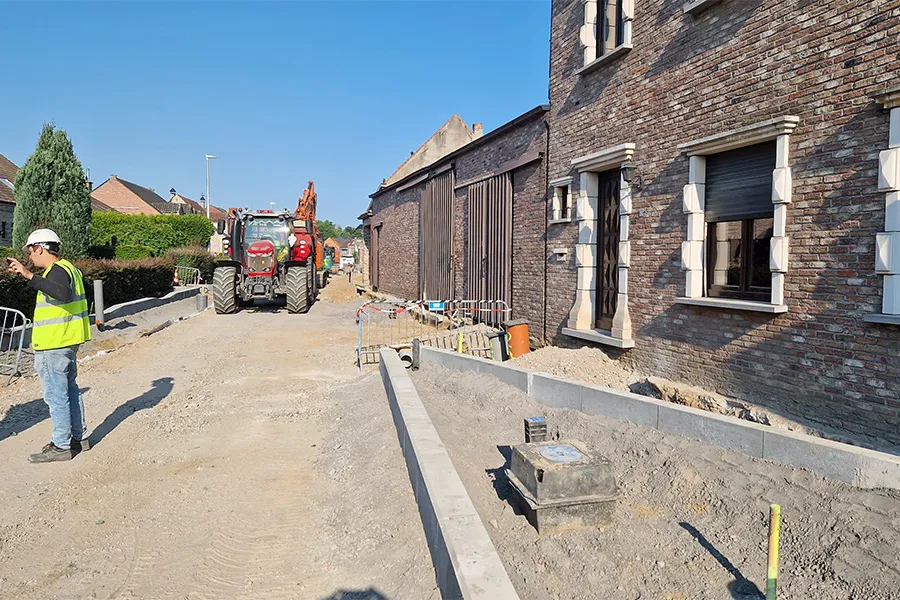
ALV was also called in to fill around 900 m of sewers in Waasmunster. Johnny Fonteyne explains: “At the filling point, the foam is sprayed into the pipes at a pressure of around 1 to 2 bar, over a distance of 30 to 80 m from one manhole to the next. This allows us to fill 10 to 15 m³ per hour. For example, during the first phase of this project, we filled 300 m of pipe in 2 hours. Sludge and water still in the pipes are discharged through the vent until the pipes are 100% full. There is therefore no need to clean the sewers beforehand.”
Another advantage of the Benefil method is that the pipes can remain in place, with no additional excavation required to remove them. “Avoiding excavation work is obviously a particularly important benefit,” stresses Johnny Fonteyne. “As the old pipes remain in place, there is no need to refill the space they would have left behind either. Benefil’s high load-bearing capacity means there is no risk of subsequent subsidence. In this project, we chose to fill the sewers via the various manholes, but when filling, for example, water and gas pipes without manholes, up to 500 m can be filled from a single filling point.”
A wide range of applications
It is no surprise that ALV is called on not only to rehabilitate and backfill old tanks, which remain the company’s core business. Johnny Fonteyne explains: “Benefil is simply a highly effective and useful product for decommissioning old sewers. It also has many other applications. In Antwerp, for example, we recently filled a crawl space whose ceiling had deteriorated due to concrete decay. And in Kuurne, we repaired the floor of a 2,600 m² warehouse that had subsided under the weight of the racking. We were able to raise the floor using Benefil without moving the racking. This once again demonstrates the product’s high load-bearing capacity once cured.”
“Last year in Bruges, medieval wells were discovered beneath a fairly busy street. We filled them with Benefil too, thanks to its high load-bearing capacity and, above all, because the product can later be removed if archaeological excavations are required. As it is produced on site from two components, it is always possible to make the right quantity, keeping surplus to a minimum. Its strength can also be tailored to the application,” concludes Johnny Fonteyne.
Question about this story? Ask your question
Keep following this
Get an email when a new story is published. No account needed.
- SubjectUnderground infrastructure and sewerage