Renovation: managing the unexpected to stay in control
Texte Philippe Selke Photos IA
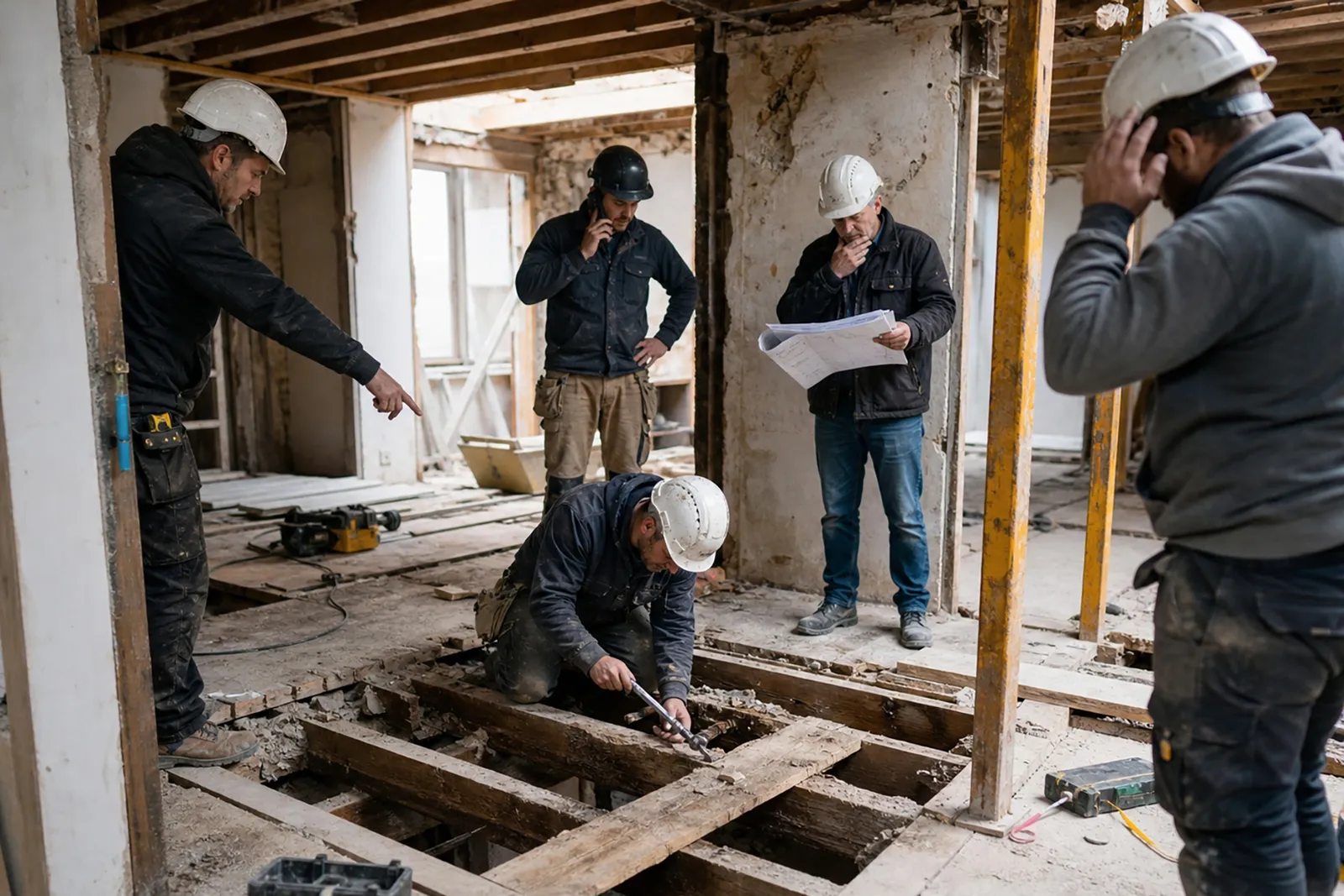
Renovation projects rarely begin where you think they will. Behind a wall, beneath a floor or within an old service network, a building conceals a reality that often differs considerably from the available plans. It is precisely this element of the unknown that can send projects off course… or, conversely, show just how well they are being managed. Because, ultimately, a well-run renovation project is not one that avoids the unexpected, but one that absorbs it without losing its coherence.
Prepare better to limit the impact
It is all decided at an early stage. A rushed preliminary phase almost always comes at a cost during construction. The challenge is not simply to survey the existing building, but to question what you find. Where the plans say “wall”, ask: is it load-bearing or not? Where a floor appears sound, check its actual load-bearing capacity. In other words, move from a descriptive reading to a critical assessment.
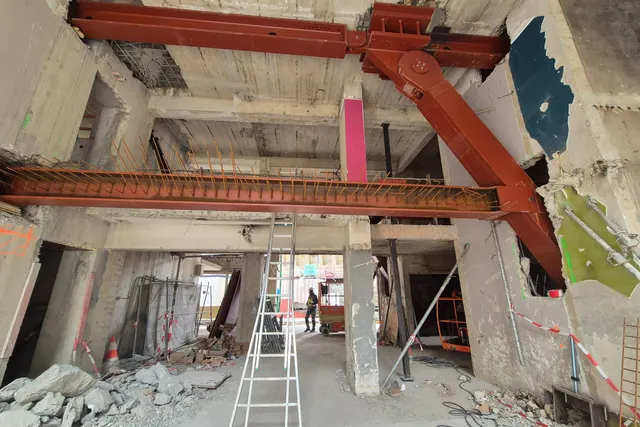
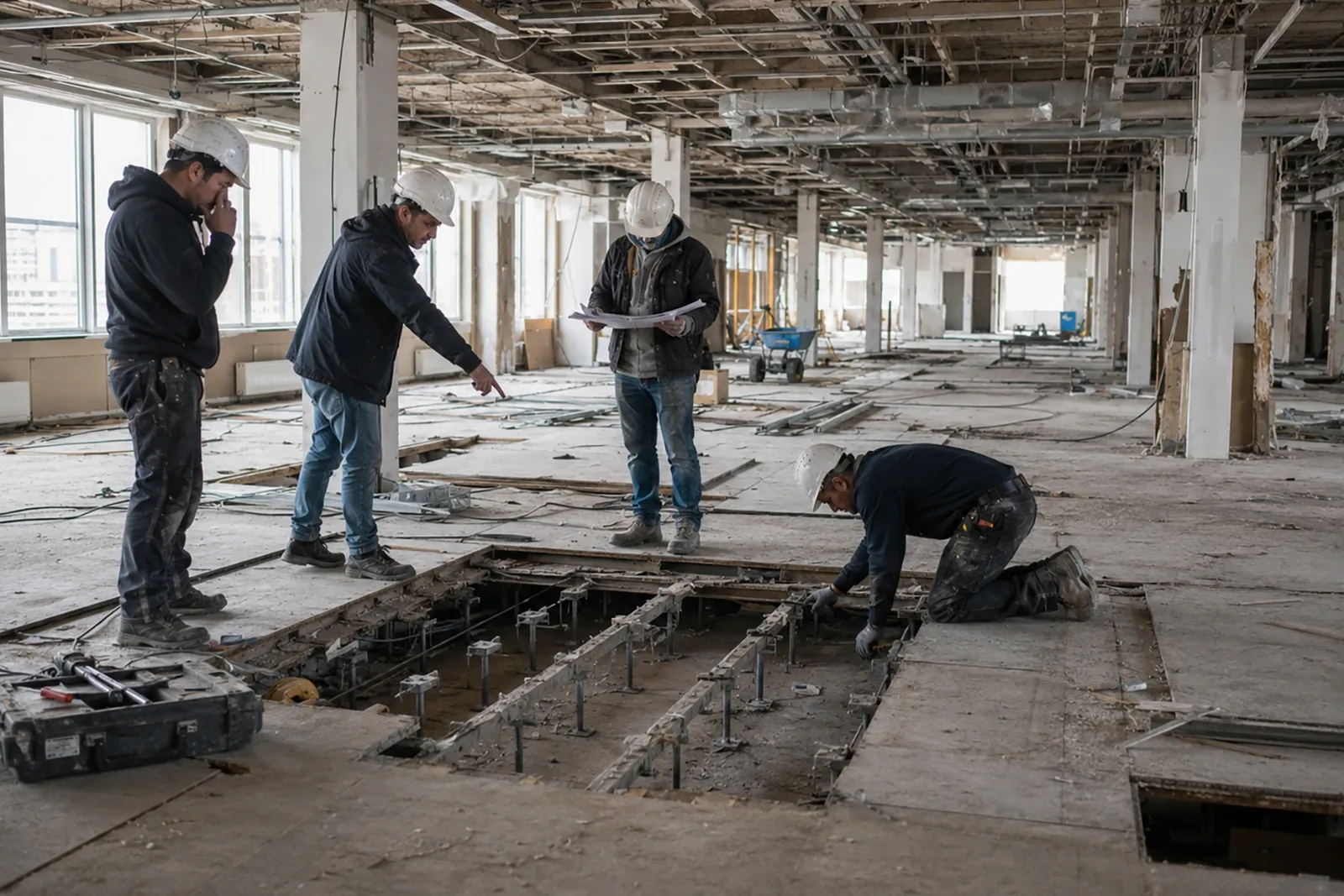
This means accepting a certain level of investigation, including destructive testing. A well-placed exploratory opening costs little compared with an unpleasant surprise during construction. The same applies to service networks, which are often poorly documented.
Even with thorough preparation, however, not everything will be known. This calls for a shift in approach: work with assumptions rather than certainties. Considering several scenarios makes it possible to turn an unexpected discovery into the straightforward implementation of a solution that has already been considered.
Put a structure in place for managing uncertainties
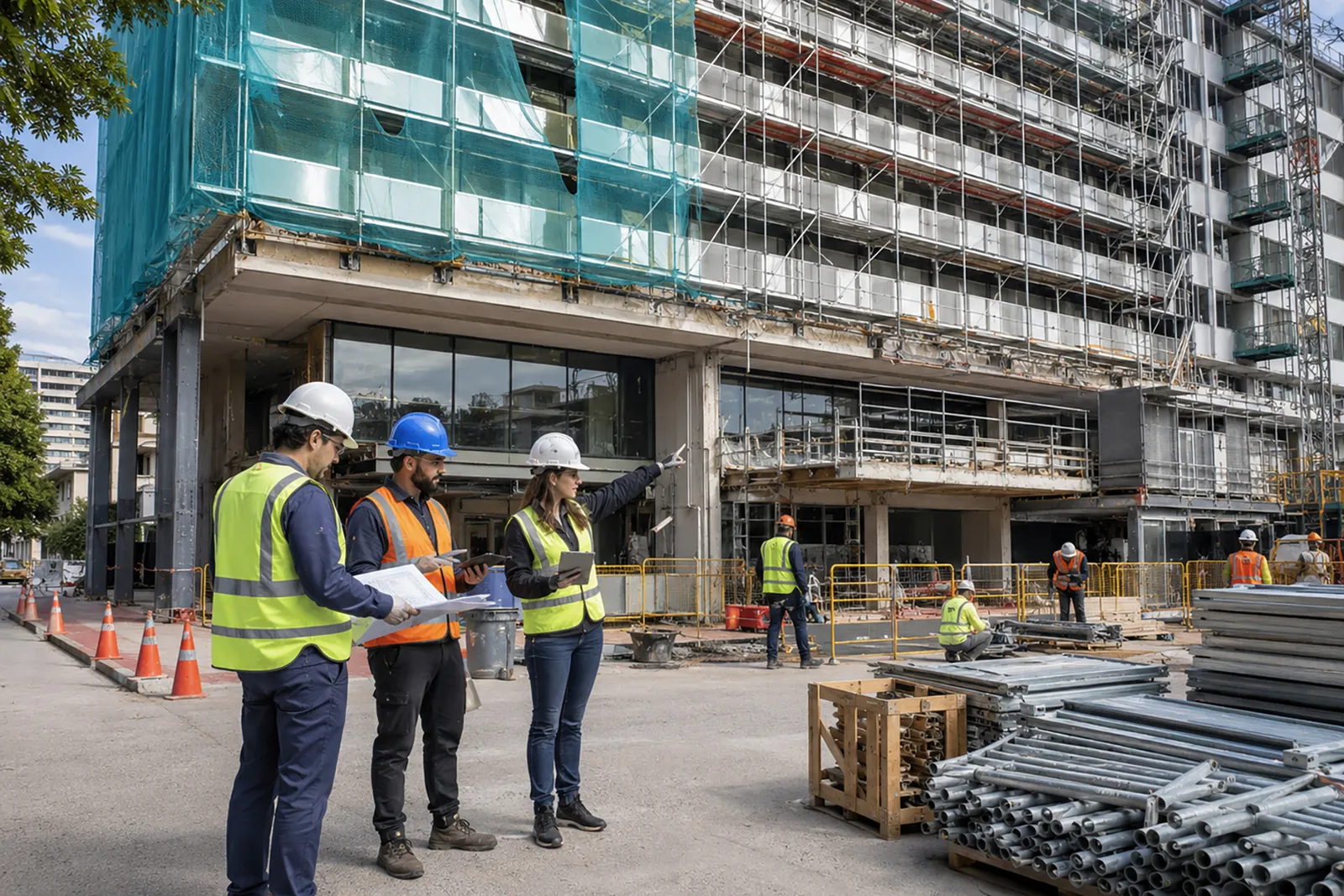
On site, the real danger is not so much the unexpected as how it is handled. Reacting to each issue as it arises, under pressure, often leads to a build-up of decisions that lack coherence.
By contrast, putting a method in place can completely change the dynamic. Every problem should be clearly defined, analysed and then assessed in terms of its impact. This means taking a step back, even under pressure. A decision made too quickly often costs more than taking a few hours to consider it.
In this context, keeping a clear record is essential. Photos, site observations and written approvals all help to safeguard decisions and avoid misunderstandings. On renovation projects, the record of what happened on site is often more fragile than we think.
Communication: a decisive factor
A project can be technically sound… and still go off course because of poor communication. It happens all the time.
Raising issues early and clearly, without creating alarm but without downplaying them either, remains one of the most powerful tools available. A problem shared promptly can be managed. A problem kept under wraps only grows.
The technical details must also be translated into a decision. The client does not need a detailed diagnosis, but an understanding of what is at stake: what is happening, what options are available, and what are the consequences? This ability to summarise speeds up decision-making and prevents hold-ups.
Be prepared to adjust the project
A renovation project that is too rigid is vulnerable. When the unexpected arises, it clashes with reality instead of adapting to it.
Allowing room for flexibility, both in technical choices and in organisation, makes it possible to absorb shocks. It also means accepting an often uncomfortable truth: not everything can be preserved. Cost, time and quality are in constant tension. When an unforeseen issue arises, a decision has to be made. That decision must be conscious, owned and explicit.
Prevent the domino effect
An isolated unexpected issue is manageable. Its knock-on effects are what cause problems. One delay leads to another, a technical change affects several trades, and before long the project becomes disorganised.
The key is to act quickly while keeping the bigger picture in view. Producing a quick estimate, even an approximate one, helps frame decisions. Updating the schedule continuously prevents prolonged hold-ups. Above all, keeping work moving, even partially, limits downtime, which can weigh heavily on costs.
It comes down to project management
Behind all these mechanisms lies one constant: the quality of project management. The project manager cannot prevent the unexpected, but can control its effects. Their ability to prioritise, make decisions and communicate directly shapes the course of the project.
In renovation, the aim is not to follow a plan, but to keep heading in the right direction.
Question about this story? Ask your question
Keep following this
Get an email when a new story is published. No account needed.
- ThemeRenovating existing buildings
- SubjectRenovation