Belgian milling specialist makes a strong impression in Dijon with its movable drum
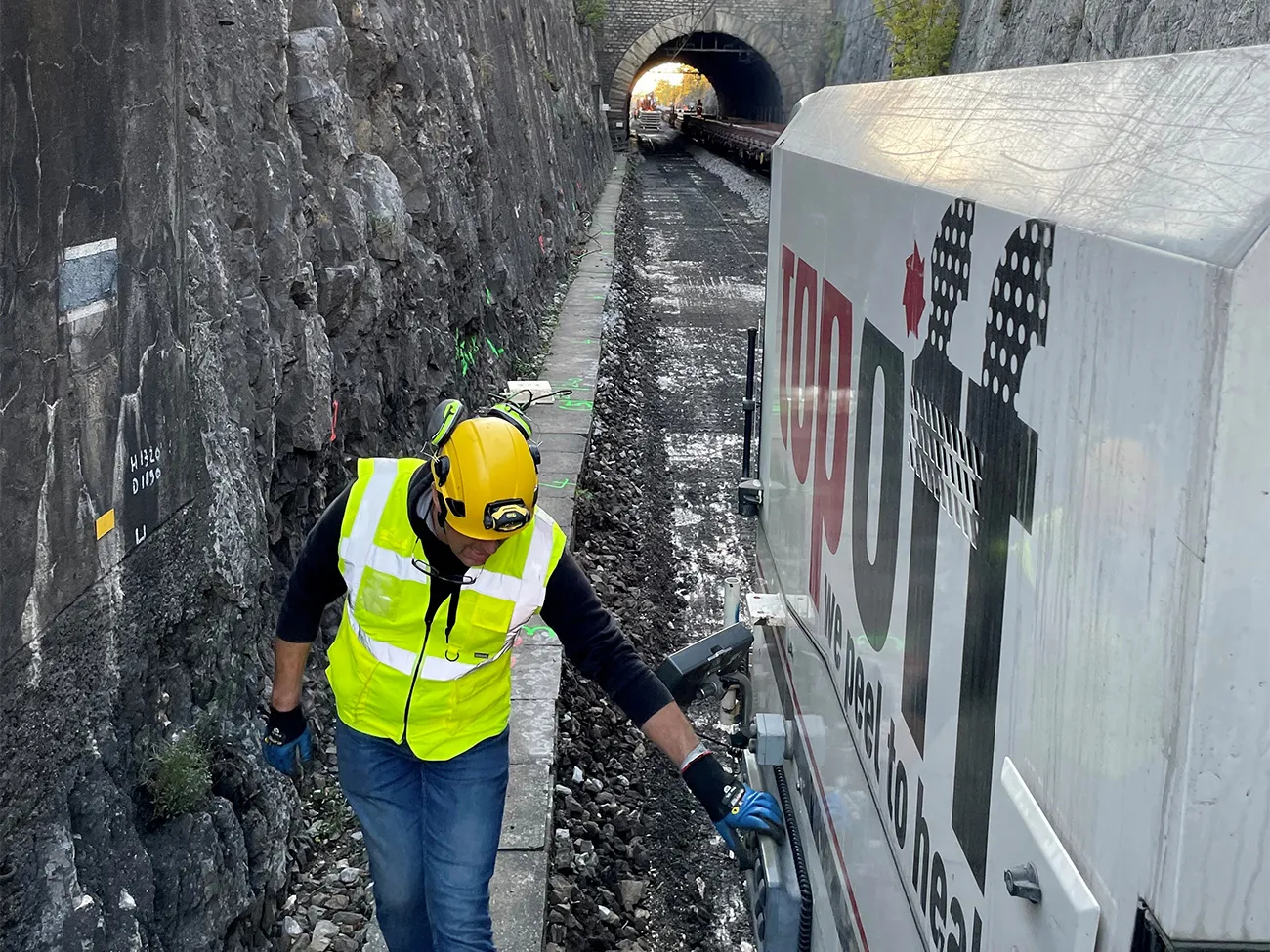
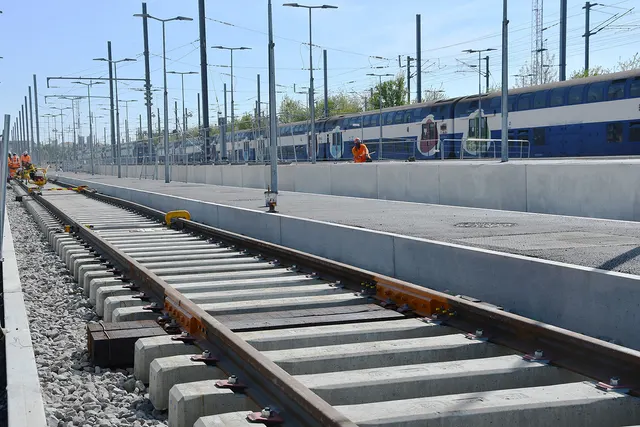
Innotrax, a subsidiary of milling specialist TopOff, continues to make waves in the French rail sector. Thanks to its own sophisticated, patented 3D milling technology, Innotrax has already had the honour of working twice on the Paris Metro in recent years. It is now working on the Dijon tunnels as a subcontractor to main contractor Colas, on behalf of French railway company SNCF. Developed in-house, its milling technique combines speed and precision, and its effectiveness is also clear on this project in Dijon.
Innotrax was established around seven years ago as a subsidiary of TopOff. “Innotrax was born out of the idea that we could create a very flat surface by finely milling concrete,” explains John Vastmans, who runs both companies. “At TopOff, we achieve very good results in 3D milling as a specialist subcontractor, and I had been considering working in the rail sector for some time. We started exploring the idea and eventually came up with a process in which we lay a continuous slab that is overly thick, then mill it flat in 3D using a micro-fine milling machine. That is still the basis of the technique today, and we patented it straight away.”
Success in France
This unique technique attracted attention in France, where Innotrax first had the opportunity to work on the Paris Metro in 2019. John Vastmans: “Of the five candidates for the first phase of the project, Innotrax was the only non-French company, yet we still won the contract, which is worth highlighting. The client trusted us: we sparked its interest by proposing 3D milling from the outset. In July 2021, we were involved again in a second phase of the project. This involved adjusting the track height at two stations. We were also able to complete this work quickly and to a high standard. Given SNCF’s very tight schedule, we had to be highly flexible, and that is one of our strengths.”
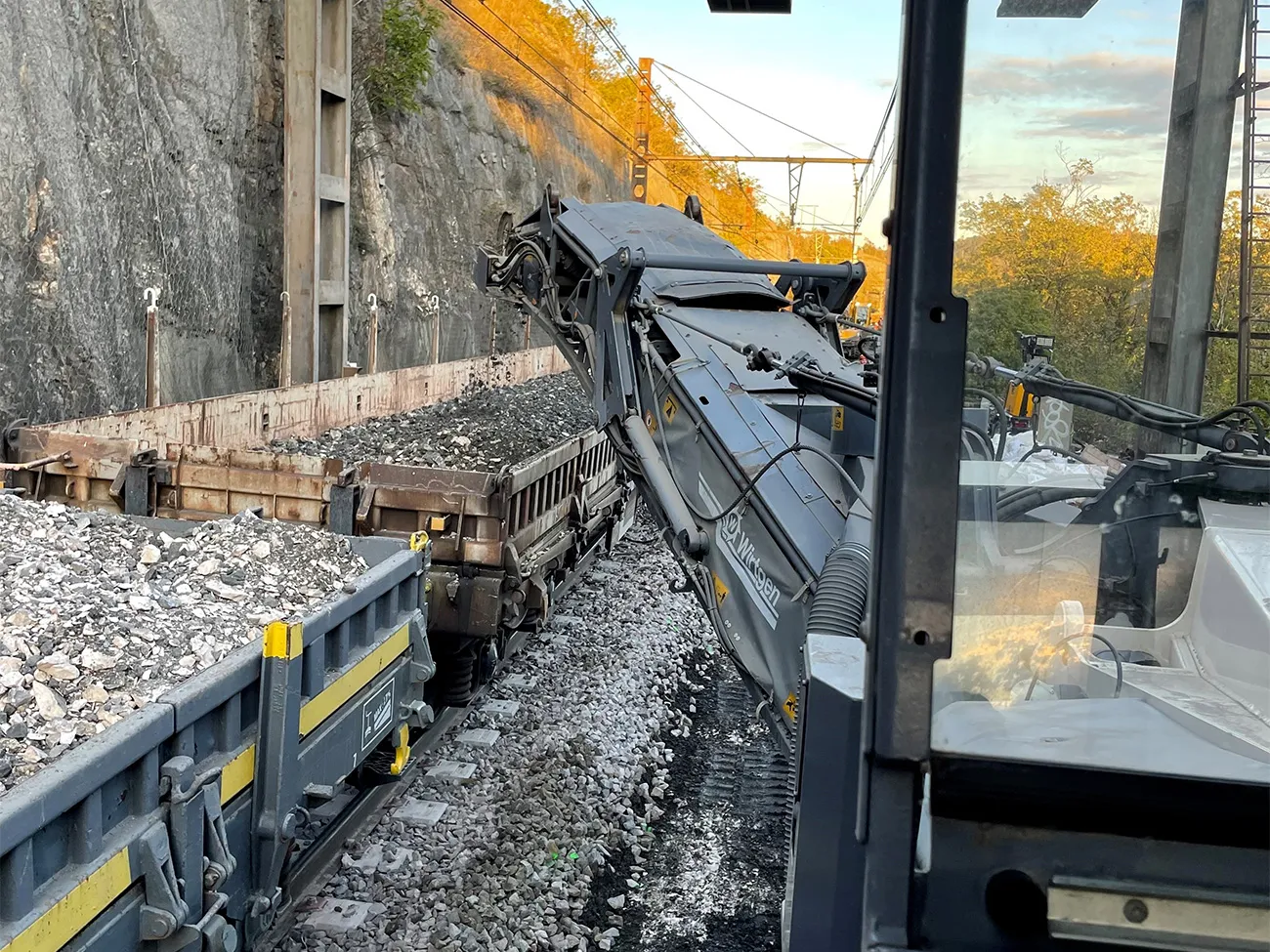
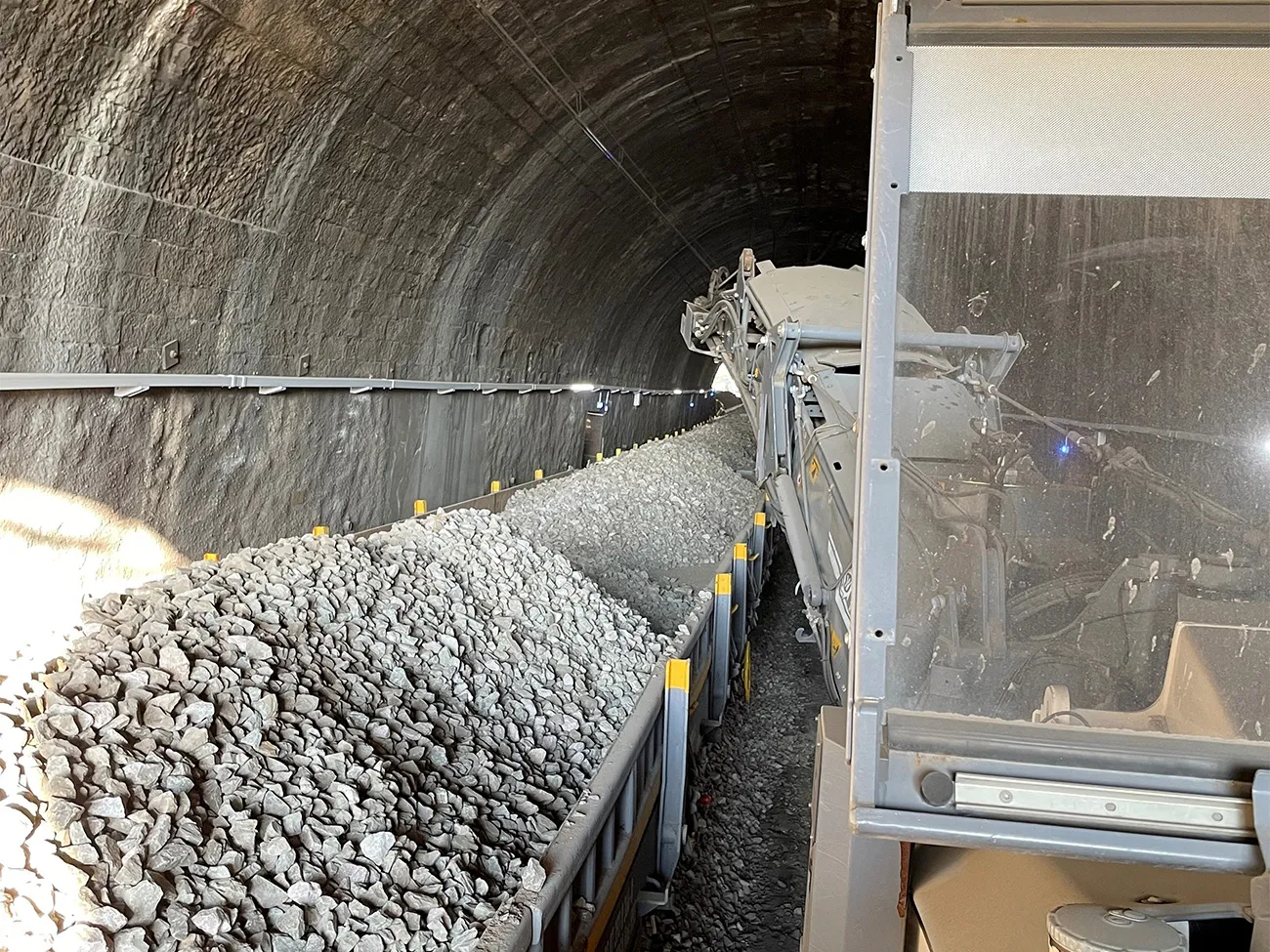
The success of the project in Paris has been good for Innotrax’s business. In fact, the milling specialist has since also secured a project in Dijon. “The first step is to remove the ballast, then mill the rock in 3D down to the required level. Our innovative working method is why we, as a Belgian contractor, are allowed to take part in such a major French rail project. For this work, we use a milling machine with a movable milling drum. This allows us to load the milled material onto the train on the track next to the one that has been dismantled. In 2021, we completed two tunnels this way, and in September this year we will be working again over four weekends.”
Huge time savings
For the client and project owner, this primarily means valuable time savings. “There is no other way to remove this milled material,” explains John Vastmans. “Traditionally, this is done with cranes, but that means having to take the overhead lines into account at all times, and it simply cannot handle the volume of material we are removing today. Working faster also means shorter traffic interruptions. That is a major added benefit, because the high-speed train to and from Geneva, Switzerland, runs along this section. The time available to us to carry out the work during the closure is limited.”
Also for roadworks
The movable milling drum has also proved its added value on many roadworks projects in recent years. “We have been using it in road construction for around six years now. In fact, the drum was originally developed for work on motorways. The drive belt on a conventional milling machine is on the left-hand side, which means you can never mill right up against Jersey barriers, leaving at least 30 cm of old asphalt behind. With our movable milling drum, we can mill right up to the Jersey barrier. Using this drum on a rail project was a first, and it certainly will not be the last time. The logistical added value is enormous. Remarkably, our current client for the Dijon project, Colas, heard about our specific capabilities from its competitor Eiffage, which was also our client on the two-part Paris Metro project. That makes this story all the more unusual. The project owner, SNCF, has also been pleased with the quality of our work and our method. We therefore hope to carry out more projects in France in the future,” concludes John Vastmans.
Question about this story? Ask your question
Keep following this
Get an email when a new story is published. No account needed.
- ThemeTransforming infrastructure and territories
- SubjectRailway works