Raising Lixhe Bridge: the visible part of a much larger project
Texte Philippe Selke Photos Nelles
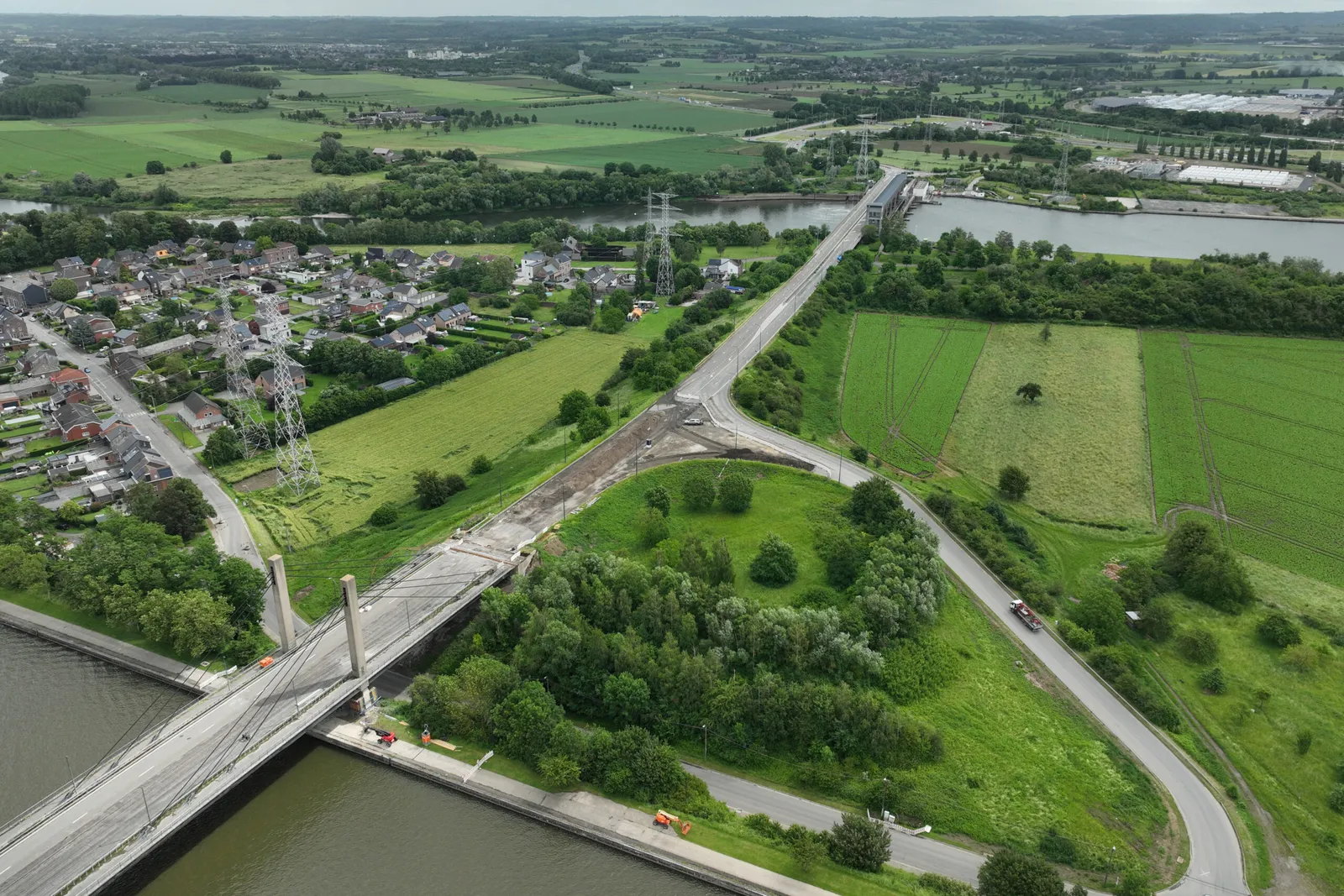
As part of the programme to raise the bridges over the Albert Canal, work on Lixhe Bridge is a particularly complex operation. While the main objective is to raise the eastern section of the deck by 2.16 m to allow river convoys carrying four layers of containers to pass, the project also involves a major road and cycle-route upgrade extending for around 2.3 km, from the roundabout beyond Lixhe barrage bridge to the N671. The work is being carried out by Nelles in a temporary joint venture with SOCOGETRA. Under this partnership, SOCOGETRA is responsible in particular for the actual bridge-raising operations.
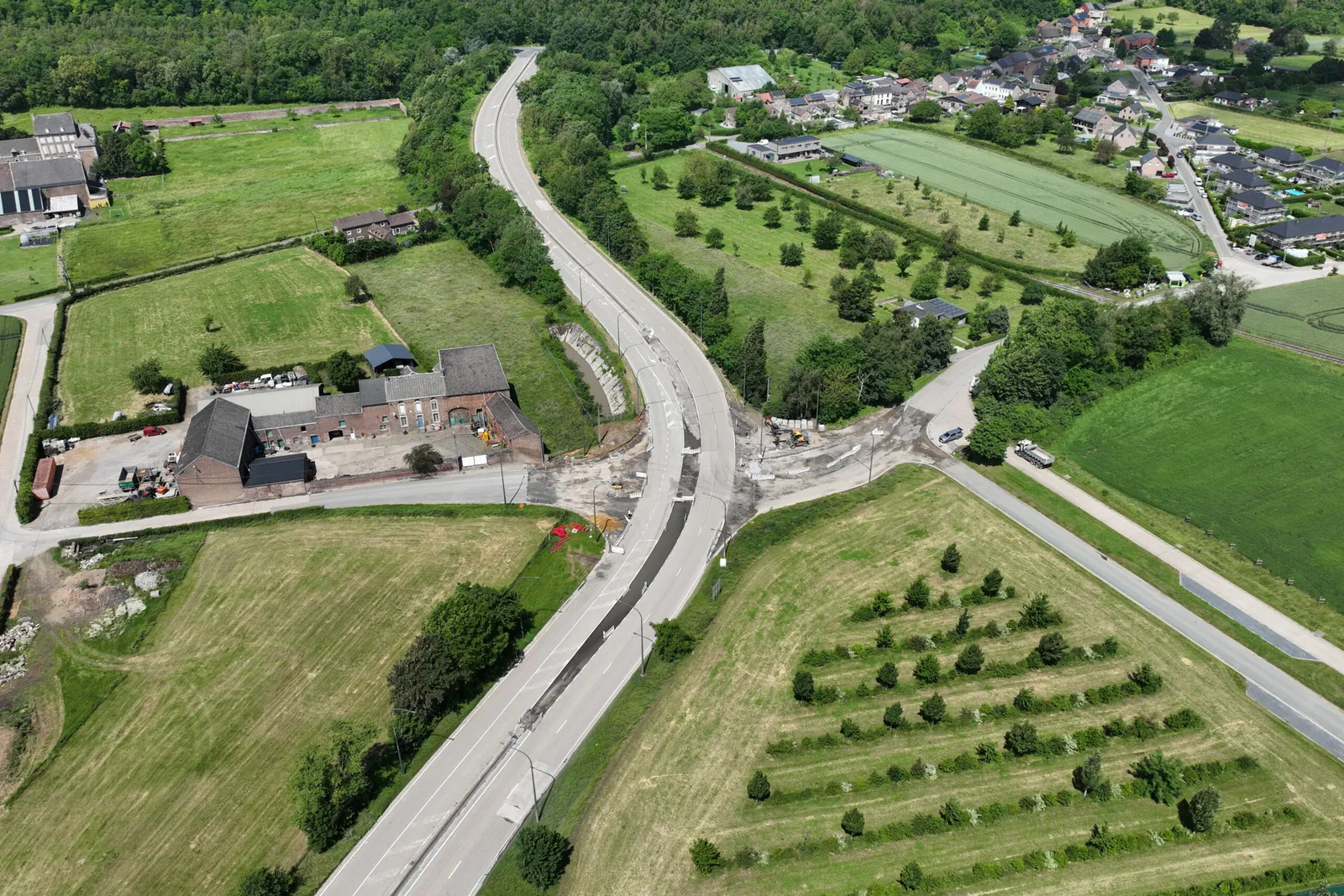
Nelles’ work includes reconfiguring several junctions, building a dedicated cycle path, creating access ramps for active travel, carrying out major earthworks and constructing several civil engineering structures. “The bridge is at the heart of the project. The work extends on both sides of the structure,” explains François Crutzen, site manager at Nelles.
Rotation instead of a full lift
In fact, only the eastern section of Lixhe Bridge will be raised, by rotating it around a fixed point to the west of the structure. This new configuration will require major changes to the associated infrastructure. The abutments will need to be raised to support the new embankments, which will provide a gradual connection between the bridge and the road. More than 5,000 m³ of earth will be needed, equivalent to several hundred lorry loads.
At the same time, the road will be redesigned to give greater priority to active travel. Several sections currently laid out as dual carriageways will be replaced by a reconfigured road incorporating a protected cycle path and new measures to improve safety at junctions.
The unforeseen challenge of utility networks
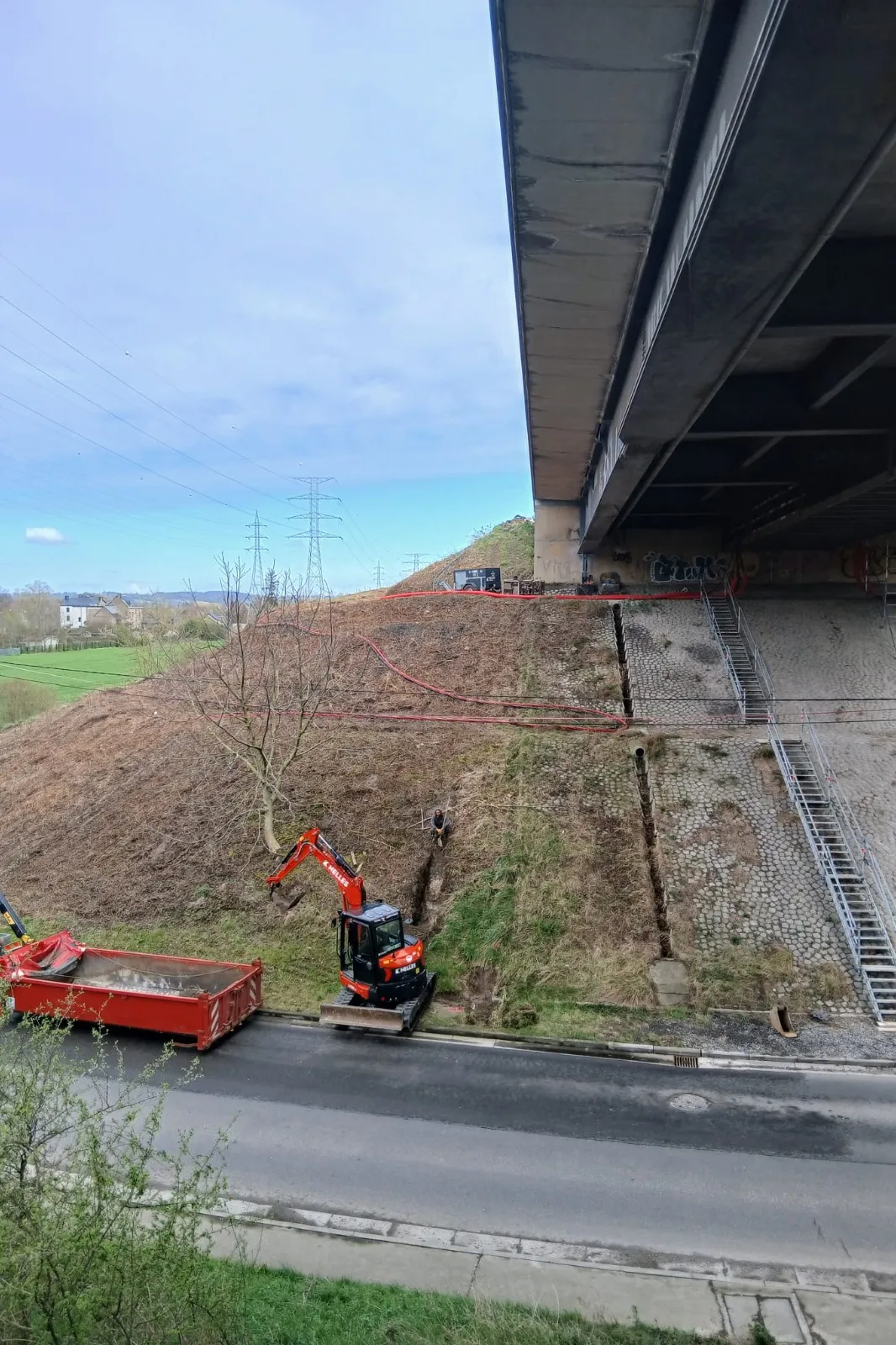
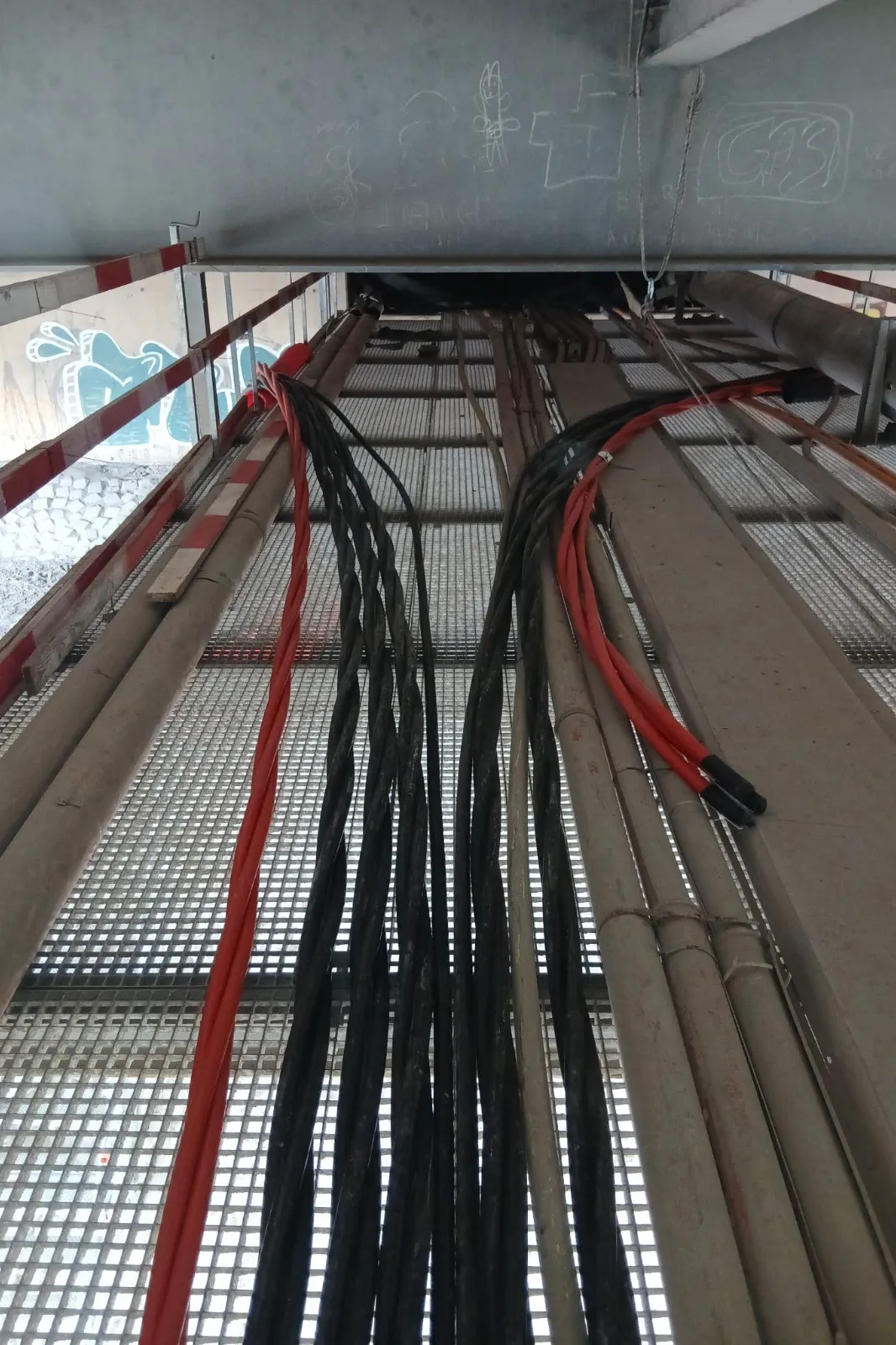
For the Nelles teams, the main challenge at the start of the project was the large number of cables and pipes attached to the structure’s service bridge. While some had been accounted for in the initial studies, several other utility and telecommunications networks needed urgent modifications before the deck could be raised. “We therefore had to act quickly to ensure the bridge could be lifted on schedule,” says François Crutzen.
In total, nearly 3,500 metres of cables and pipes were relocated, extended or modified. The work involved specialist teams working at height above the canal, after lifelines and purpose-built scaffolding had been installed and some of the open-grid flooring replaced. For Rémy Xhrouet, utility networks site manager at Nelles, the operation was unprecedented: “We had never before laid cables for more than 300 metres while harnessed above the water.”
A critical milestone
Scheduled for the end of June, raising the bridge is a key milestone in the project, as it is a condition for securing the European funding associated with the works. It will also allow the next phases to begin, including the permanent reconstruction of the abutments, the construction of the embankments and the final repositioning of the utility networks. “The second challenge is fitting our work into the bridge-raising schedule and meeting the contractual deadlines,” says François Crutzen.
If the schedule is met, the bridge could reopen to traffic in early autumn 2026. Work on the surrounding areas and finishing touches is expected to continue until early 2027.
DNSH as a guiding principle
Alongside the technical requirements, the project must also comply with the European DNSH principle. Specific monitoring is being carried out to document the measures taken to limit the environmental impact of the works. The partners are prioritising local treatment and recycling facilities in particular, to reduce the distance travelled by excavated or reused materials.
At Lixhe, raising the bridge is therefore the visible part of a much larger project, in which technical coordination, utility network management, mobility and environmental requirements are closely intertwined.
Een zakelijke vraag aan NELLES frères SA? Get in touch
Companies in this story

Keep following this
Get an email when a new story is published. No account needed.
- ThemeTransforming infrastructure and territories
- SubjectInfrastructure
- CompanyNELLES frères SA