Trends in concrete surface treatments for decorative road surfacing
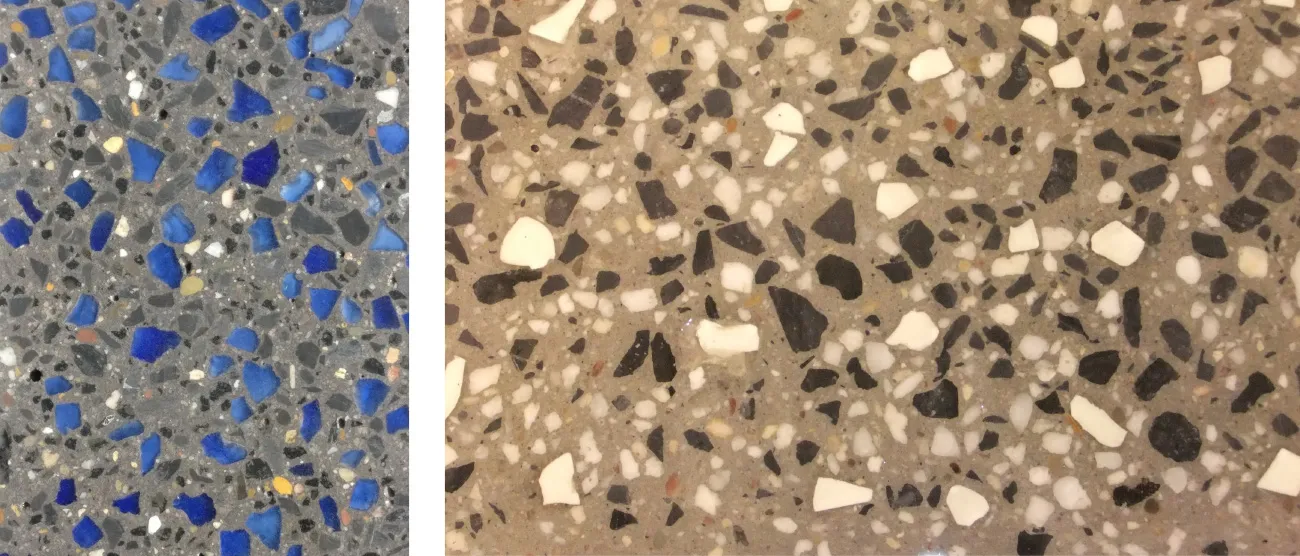
Concrete is undoubtedly being used increasingly in public spaces and urban environments. Whether using precast concrete products or cast-in-place concrete, designers and architects have a wide range of shapes, colours and textures to choose from. This material can create both a modern, clean look and a rustic one, or allow the surface to blend harmoniously into its surroundings.
Exposed-aggregate concrete is particularly popular. This technique involves spraying a surface retarder onto fresh concrete and, after a few hours, removing the surface mortar and laitance, generally with high-pressure water to expose the surface aggregate. By varying the colour of the aggregate and underlying mortar, the background colour and contrasts can be adjusted. Thanks to the growing knowledge and experience of suppliers, designers and contractors, the quality of completed projects has steadily improved over recent decades.
In recent years, however, we have also seen growing interest in other surface treatments. Most are mechanical treatments applied to concrete that has recently hardened: polishing or grinding, bush hammering and shot blasting. For finishing fresh concrete, alongside brushing and washing, a piece of hessian can also be dragged across the surface.
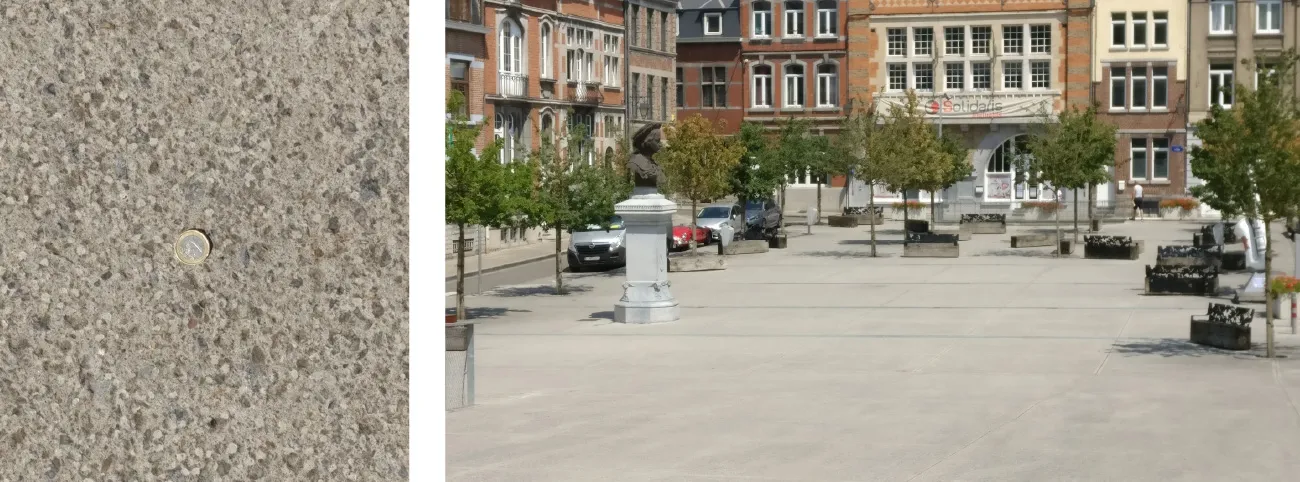
Polishing or grinding
This does not refer to power floating fresh concrete, but to grinding around 4 mm off the surface of hardened concrete using rotating discs. This exposes the ground aggregate and mortar on the same plane. The concrete does not need to be fully hardened: a standard road concrete can be treated after just 48 hours. This technique is also used for indoor floors, generally with a glossy polished finish. For outdoor surfacing, skid resistance must always be taken into account, so grinding is limited to a “coarser grain”. This treatment can be combined with the incorporation of other materials in the top layer. These might include, for example, glass aggregate or phosphorescent stones, which are white in daylight but glow blue, yellow or green in the dark.
A few reference projects: Place de l’Atomium in Brussels, Strekdammen in Ostend, Schengenplein in Antwerp.
Bush hammering
The surface is hammered using mechanical tools fitted with pointed chisels. It is sometimes ground beforehand. The result is a rough surface with a distinctly rustic appearance.
Shot blasting
The process is referred to as sandblasting or shot blasting depending on the blasting material used. The material, along with the intensity, blasting angle and travel speed, determines the final appearance. Light blasting will barely expose the peaks of the aggregate beneath the mortar. Intensive shot blasting can produce a surface similar to exposed-aggregate concrete. Shot blasting differs from washing in that it leaves small chips in the surface aggregate.
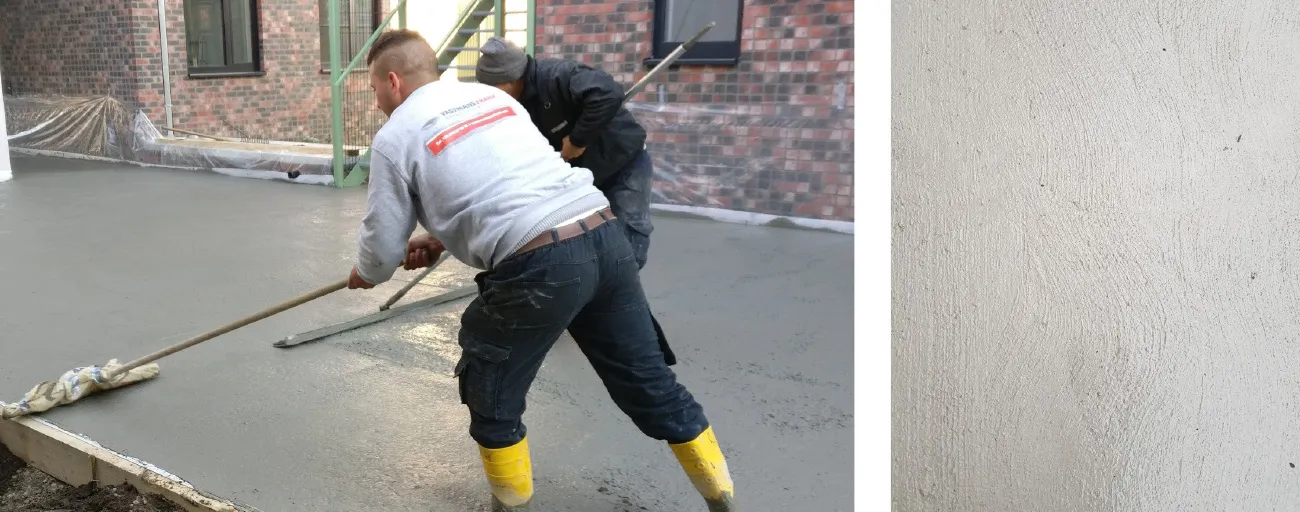
Dragging hessian across the surface
This technique has been used on German motorways for years, with a piece of hessian dragged mechanically in a wavy motion. The texture is comparable to a light, wavy brush finish. In public spaces, it can simply be done by hand, just like brushing, immediately after the concrete has been poured, compacted and levelled. The first project using this technique for outdoor surfacing was completed in Abdijstraat in Hemiksem, designed by Bureau France de Lier.
Making the right choice
The designer must choose the right finish for fresh concrete or treatment for hardened concrete, based on the desired appearance of the surface and taking into account the execution conditions, cost, timescales and so on. For mechanical treatments, it is advisable to use specialist contractors with the necessary machinery and a track record of successful projects.
Question about this story? Ask your question
Keep following this
Get an email when a new story is published. No account needed.
- ThemeTransforming infrastructure and territories
- SubjectPublic space