Semi-rigid paths also suitable for heavier traffic
Using semi-rigid surfacing only to build footpaths and cycle paths is a thing of the past.
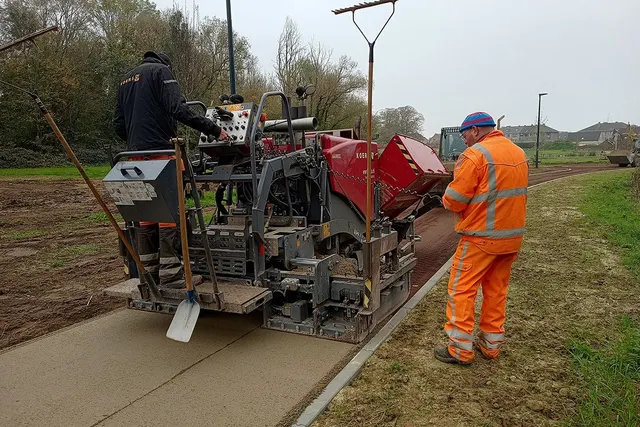
An important development in recent years has seen semi-rigid surfacing capable of bearing heavier loads come onto the market. And, of course, without losing the key benefits of semi-rigid surfacing: leaving the ground unsealed and allowing water to permeate.
“Demand for semi-rigid surfacing that can withstand heavier loads came from one of our clients,” explains Klaas Koers, director of Koers bvba, a company specialising in separating and processing waste into sustainable materials for road construction and rural engineering. Around five years ago, officials in Großenkneten, Germany, reported that the rural roads in their municipality had been completely destroyed by heavy agricultural traffic. They wanted to know whether Koers had a semi-rigid surfacing that combined good permeability and low maintenance costs with high load-bearing capacity. Koers then developed a new semi-rigid surfacing in its laboratory, based on an existing product range, DurEko-mix BIO. It combines several types of hard stone with biopolymers, offering excellent durability and a much higher load-bearing capacity. The product can withstand axle loads of 10 to 15 tonnes. Many kilometres of agricultural roads have been built with it, and they have performed very well ever since.
A natural look
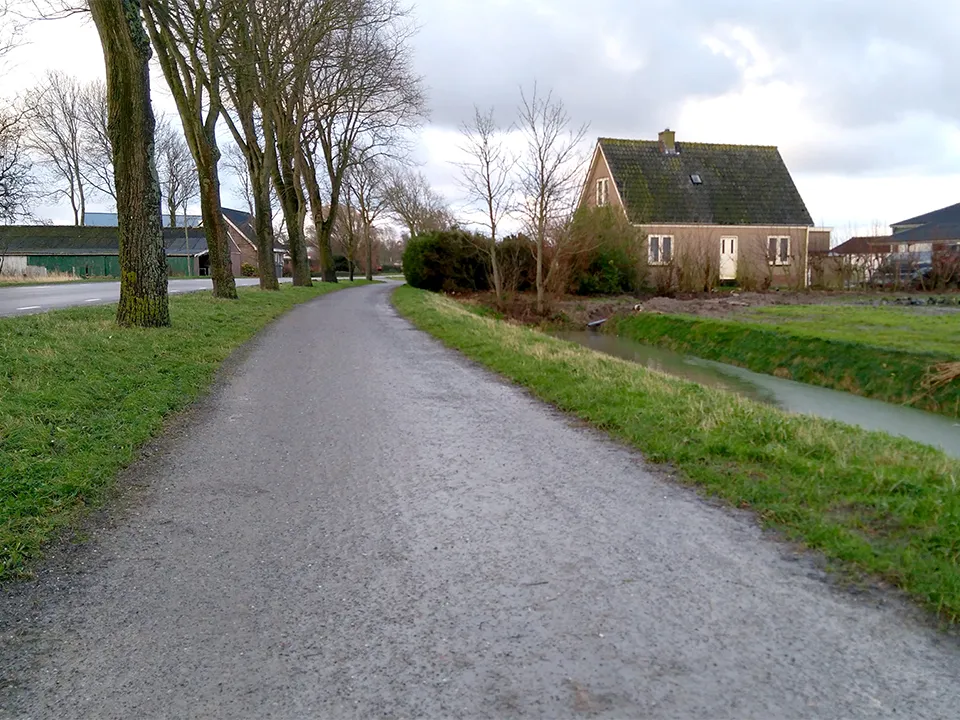
As DurEko-mix BIO is used mainly in rural settings, it is important that the surface layer has a natural appearance. Care was also taken to ensure that the mix was formulated so the path would not break up. What sets this new generation of semi-rigid surfacing apart is that the polymers used restore the binder in the material when they come into contact with water. This gives the material self-healing properties, making it relatively inexpensive to maintain. Klaas Koers says: “We always advise our clients to treat paths like these with the polymer again after a certain period. This can make the path durable for several more years, as we know from experience.”
New applications
Koers recently completed a very special project in the Netherlands. It involved a narrow asphalt road used by heavy agricultural traffic and numerous lorries. As a result, vehicles often drove along the verges, which had to be repaired regularly. The municipality had tried to reinforce these areas using traditional methods, but this had proved ineffective because of the soft ground and heavy loads. After discussing the issue with the municipality, Koers came up with a solution: installing semi-rigid surfacing on the verges. The results have been good: the verges remain stable and there is now virtually no damage. And if the material starts to subside after a while, it can be quickly and easily restored. One positive side effect, which no one had anticipated, is that this new surface layer on the verges seems to slow road users down…
Hydraulic sand
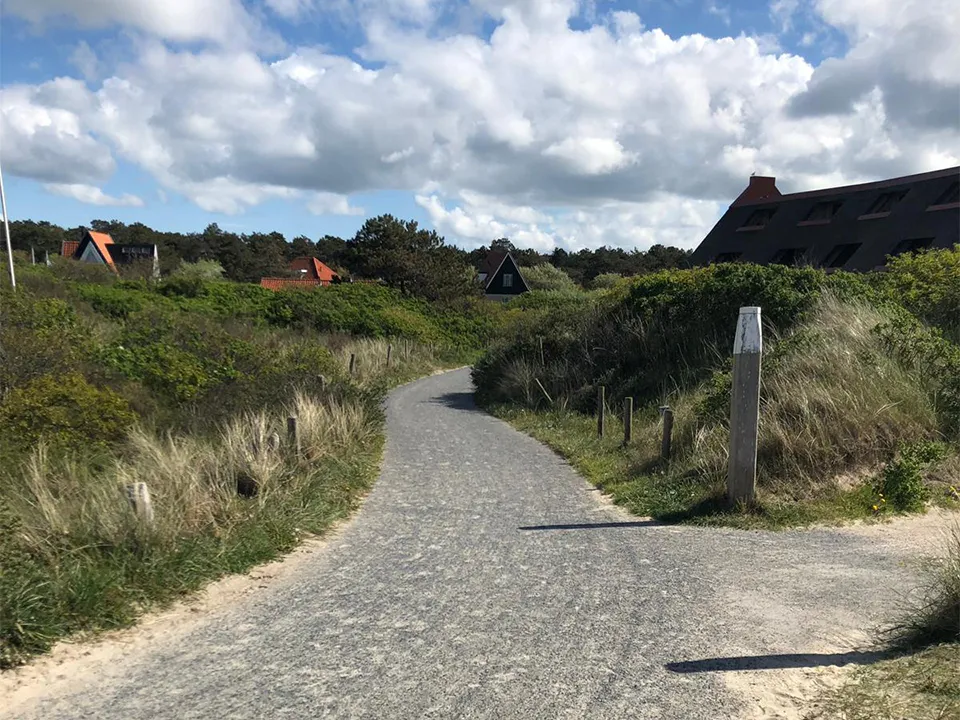
Sand and dirt roads are also important from a cultural and historical perspective. In rural areas, most dirt roads have been asphalted, losing their natural character in the landscape. Today, municipalities and heritage organisations aim to preserve existing dirt roads wherever possible.
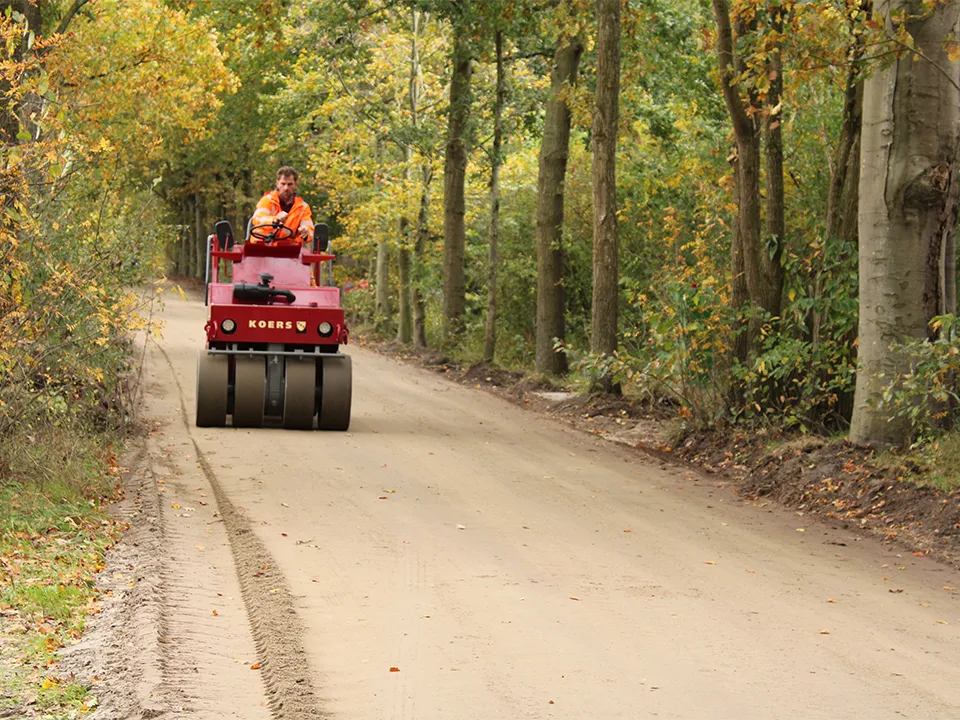
Klaas Koers says: “Our company has become very active in this field in recent years, thanks to a special hydraulic sand that we developed for dirt and sand roads. Hydraulic sand allows you to preserve a road’s character while minimising its disadvantages.” The road no longer turns into a mud bath, there is no loose sand and it barely moves when you drive over it. The existing road is milled to a depth of around 25 cm, then the existing sand is mixed with hydraulic sand. The road is then reshaped and the sand compacted. “Hydraulic sand is a good example of how we want to work as a developer and producer. We want to make relevant products, process recycled materials wherever possible, and ensure they meet stringent sustainability requirements in both production and installation,” concludes Klaas Koers.
Question about this story? Ask your question
Keep following this
Get an email when a new story is published. No account needed.
- SubjectPublic space