Minimising the impact of development
Restoring the link between water, soil and vegetation in urban spaces
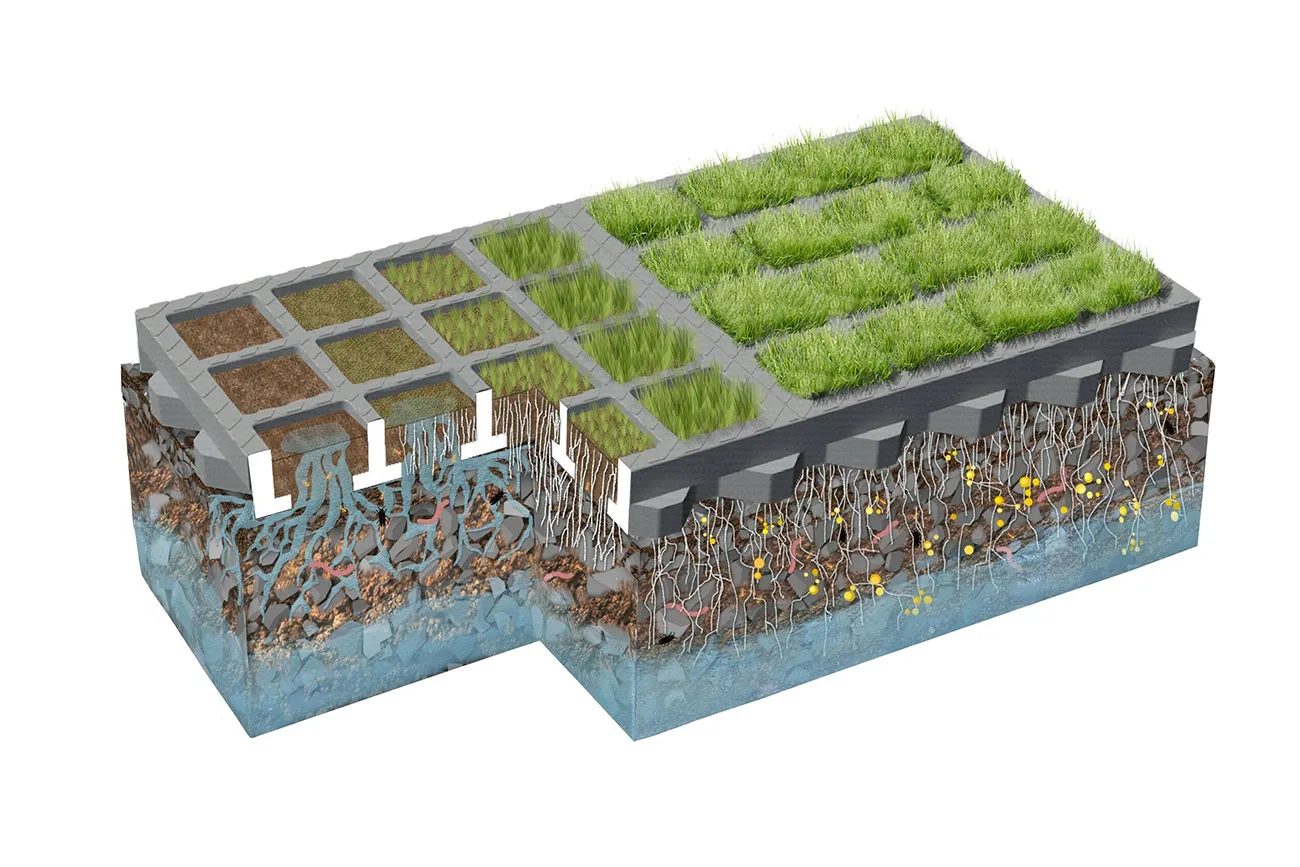
The challenges of urbanisation have changed. The focus is increasingly on a resilient city model that is adapted to climate change and gives nature more space. Bringing nature back into cities means rethinking development in a way that supports biodiversity. This is precisely the commitment made by O2D Environnement. Its O2D® concept is based on an «open» soil system that is permeable to water and air, with the aim of preserving the soil’s natural functions.
The O2D® concept
The O2D® soil system concept is based on combining a foundation type (mineral or organic), the TTE® support slab and a choice of infill materials. The TTE® slab was designed to have a high material density (28 kg/m2). It offers a very high load-bearing capacity. Its rigidity, interlocking system and large ground contact area ensure optimal lateral load distribution, while its rectangular shape allows the laying pattern (herringbone or staggered) to be adapted for greater stability across the load-bearing surface. A genuine eco-material, it is manufactured in Belgium from 100% recycled and recyclable plastics. Its main technical advantage is that it allows 100% of rainfall to infiltrate where it falls, with no surface runoff. This makes it possible to disconnect the entire parking area or access road from the drainage network and reduce
the risk of flooding.
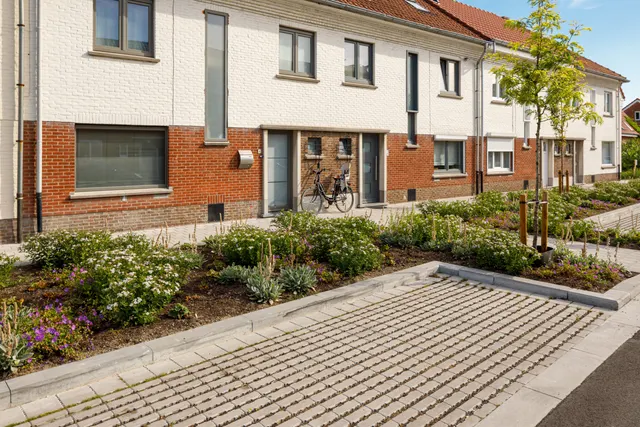
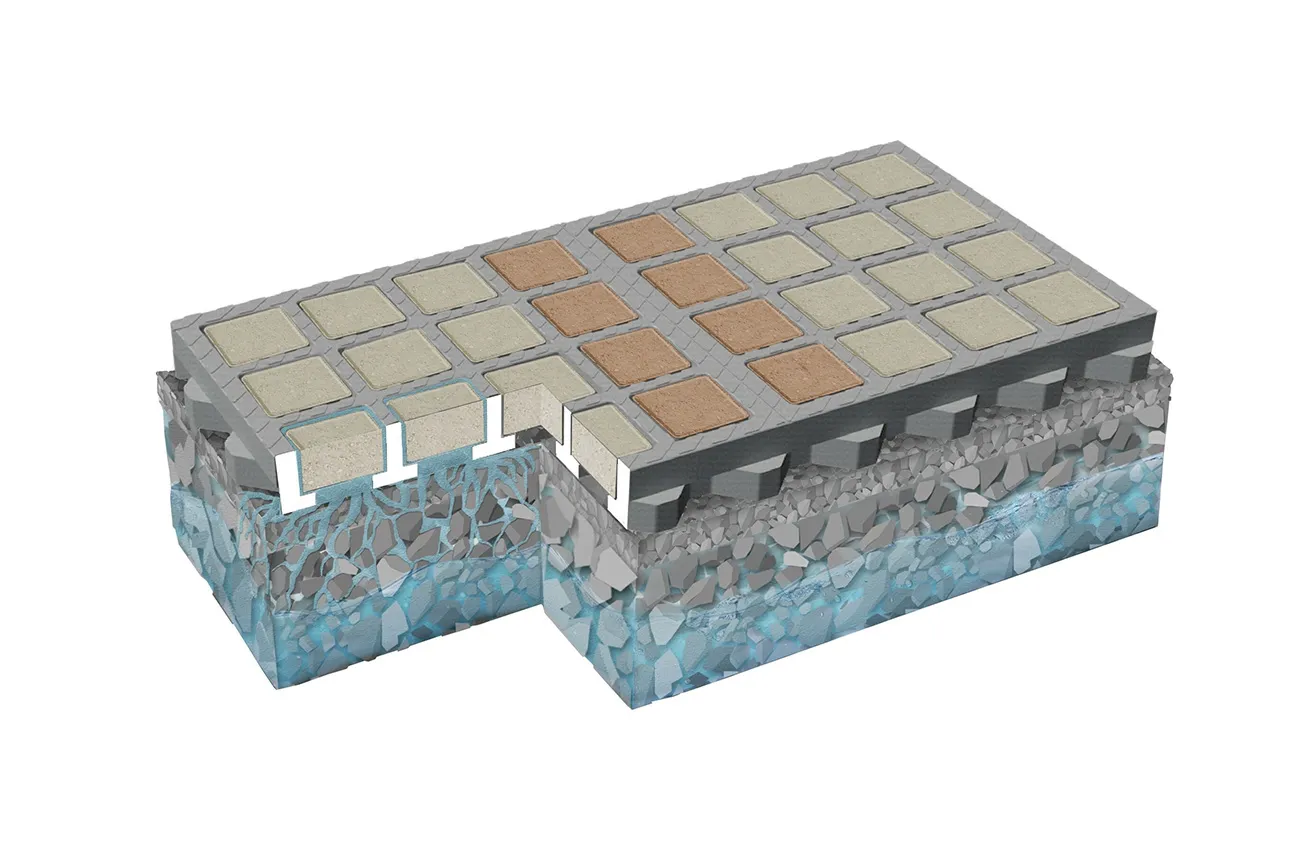
The concept offers a choice of infill materials on the same load-bearing base, the slab, in four permeable soil systems: O2D Green, a permeable soil system with vegetation, either seeded on site or using pre-seeded slabs; O2D Pavé, a permeable paved soil system particularly suited to pedestrians, people with reduced mobility, cyclists and occasional light and heavy vehicle traffic; O2D Minéral, a permeable gravel soil system preferred for long-term parking (railway stations, airports) or occasional parking over a large area (car-sharing car parks, park-and-ride facilities and communal residential car parks); and finally, O2D Mulch, an organic permeable soil system and a genuine alternative to gravel infill, offering both landscape benefits (better integration thanks to the natural appearance of wood chips) and environmental benefits (moisture retention, aeration and support for soil biodiversity).
O2D® permeable paving solutions combine technical performance, environmental benefits and landscape integration.
Environmental benefits
Reducing the urban heat island effect
Unlike impermeable surface materials, O2D® permeable soil systems restore the exchange of water, soil and air, and do not contribute to rising ambient temperatures. They allow air to circulate and water to infiltrate, a particularly valuable benefit during heatwaves. Depending on the system, the temperature reduction ranges from 0.7° C to 6°C during the day and from 6.1°c to 6.8°C at night.
Preserving soil biodiversity
Surveys have identified a diverse mesofauna in the infill and foundation substrates of O2D® systems. The microbial activity recorded is comparable to that measured in urban lawns.
Eco-designed surfaces that support ecosystems
100% infiltration of rainwater helps restore the soil water balance, replenish groundwater and make this WATER resource available to plants
Landscape integration
O2D® cellular slab solutions offer a wide choice of infill materials on the same load-bearing base, making it possible to alternate between planted and mineral surfaces. Parking spaces can be delineated, and markings or logos created, by inserting concrete pavers available in several colours. This design freedom supports landscape integration and allows the surface to be adapted to different uses, by pedestrians or vehicles.
Eco-material and sustainable production
The TTE® slab is manufactured from recycled waste. Substrate-producing partners are selected according to quality criteria and sustainable production methods that incorporate the recycling of construction and green waste. To reduce its carbon footprint, O2D Environnement also endeavours to minimise transport distances for supplies by prioritising local suppliers.
Question about this story? Ask your question
Keep following this
Get an email when a new story is published. No account needed.
- SubjectPublic space