Encouraging active travel with dynamic lighting
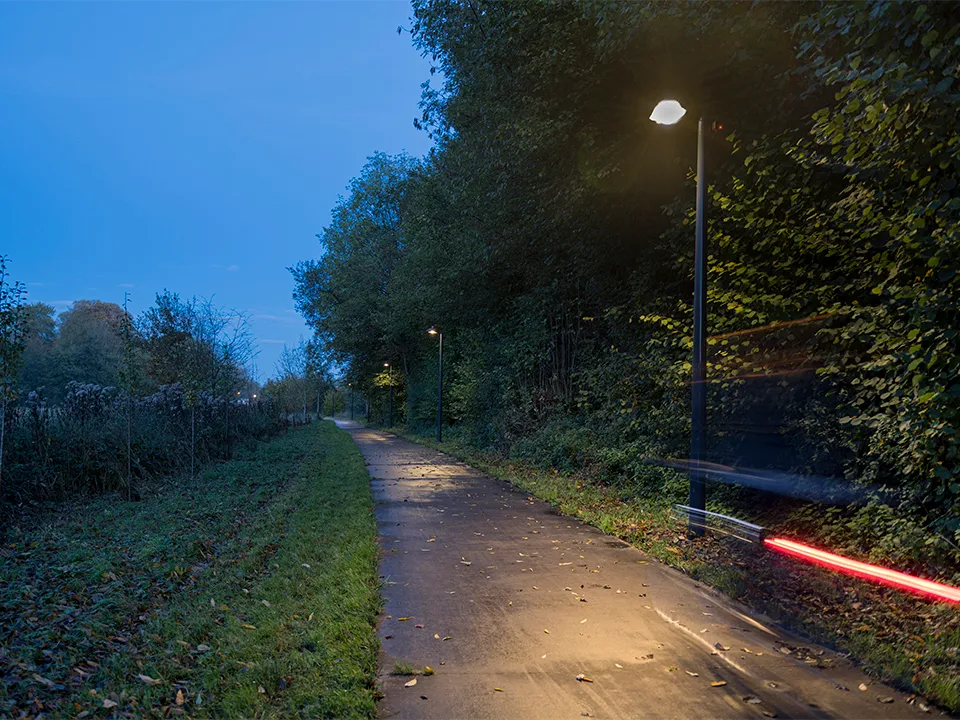
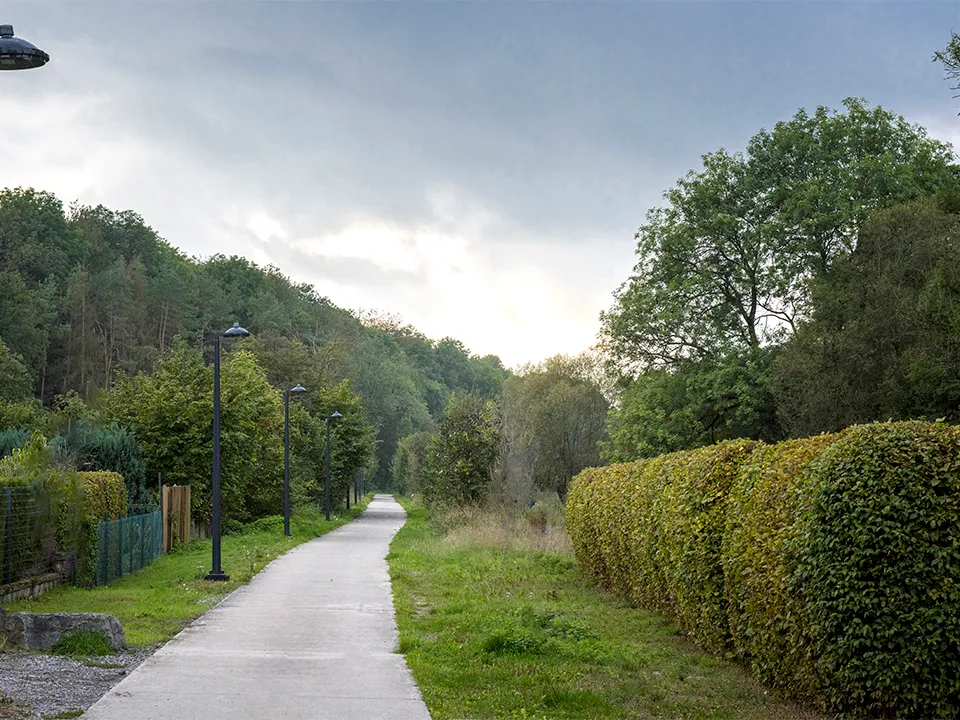
Aware of social and civic aspirations, the elected representatives of Thy-le-Château wanted to make the RAVeL (Réseau Autonome des Voies Lentes, a network of routes for active and accessible mobility) safer with suitable lighting for users, thereby encouraging the use of active modes of transport.
A section of the RAVeL links Berzée station to the village centre, so the path is heavily used by schoolchildren and commuters. The authorities needed to make this infrastructure accessible by day and by night, while reducing its environmental impact.
“Today, technological innovations give us the opportunity to rethink the concept of public lighting, because the physical properties of LEDs differ from those of traditional light sources,” explains Samir Wariach, Managing Engineer at SPW Mobilité et Infrastructures (Intelligent Transport Systems Department). “They offer solutions and initiatives to address economic, social and environmental challenges.”
Lighting tailored to users’ journeys
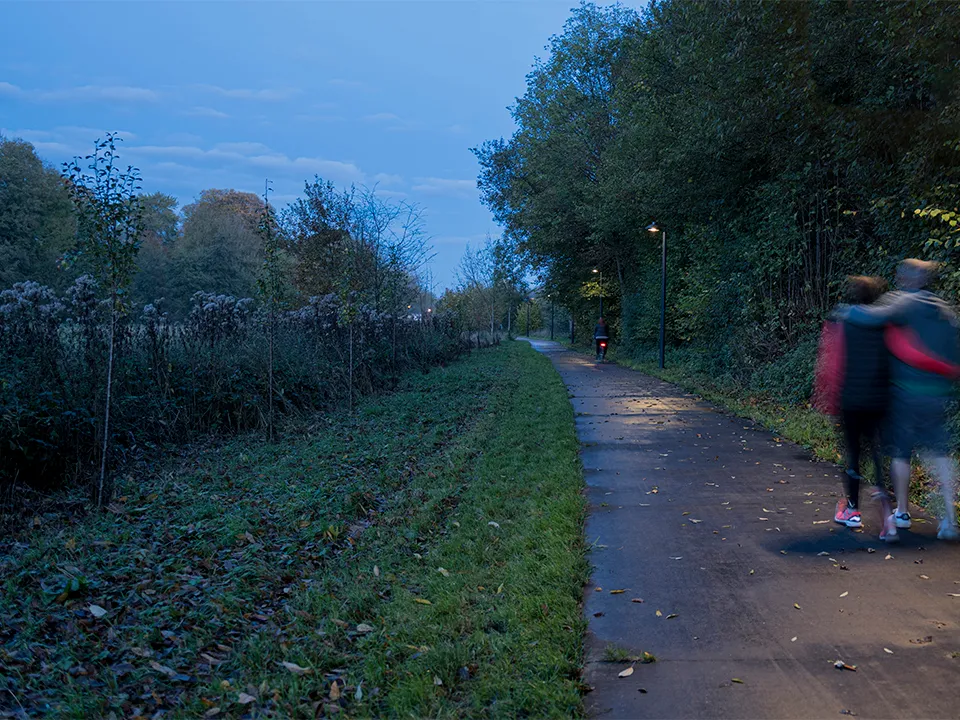
For the RAVeL lighting, the officials at SPW Mobilité et Infrastructures wanted to provide light on demand. In other words, lighting that adapts to users’ movements, automatically adjusting the light around them and following them throughout their journey. They also wanted to maintain a minimum level of lighting when the route was not in use. This fine-tuned lighting management allows them to reduce light pollution at night and make additional energy savings.
CITEA NG combines cutting-edge technology with design
To achieve these objectives, SPW chose CITEA NG luminaires with the Owlet IoT remote management system and presence detectors. This luminaire, certified to standard 005, meets current regulations as well as construction and maintenance requirements, based on tests carried out to recognised standards by accredited laboratories. CITEA NG combines the benefits of a functional luminaire incorporating the latest technologies with refined, innovative design. It provides visual comfort while blending harmoniously into the landscape.
Remote management and presence detectors adjust lighting to meet needs
When a user is detected by a radar at the start of the RAVeL, the information is sent to the intelligent management system, which automatically raises the lighting level of the first 4 luminaires to 100%. The user is then detected by a PIR motion detector, which in turn sends the information to the system so that the lighting level of the next 4 luminaires reaches 100%. This system follows the user throughout their journey, providing them with the appropriate level of lighting. If no movement is detected for 4 minutes, the luminaires are dimmed by 70%.
SPW is particularly pleased to have addressed the legitimate concerns of local authorities and RAVeL users. According to Samir Wariach, “This lighting solution ensures users’ visual comfort and safety, while meeting the various needs associated with the social challenge, including environmental concerns. The intelligent lighting system, which adjusts light to meet needs, optimises electricity consumption and significantly reduces light pollution.”
Other possible applications
But Schréder is not stopping there, as Renaud Lacrosse, Area Sales Manager Schréder BE, explains: “Some new housing developments, such as Terrasses du Luxembourg in Arlon, are equipped with the same lighting management system, retaining just 25% of the light when no one is detected. This results in significant electricity savings, less light pollution and, above all, less intrusive light in homes. This dynamic lighting management is also used in other areas, such as car park lighting, including at Château de Jehay.”
Question about this story? Ask your question
Keep following this
Get an email when a new story is published. No account needed.
- SubjectPublic space