Tivoli GreenCity, Laeken | A NEW SUSTAINABLE DEVELOPMENT PROMOTING SOCIAL COHESION
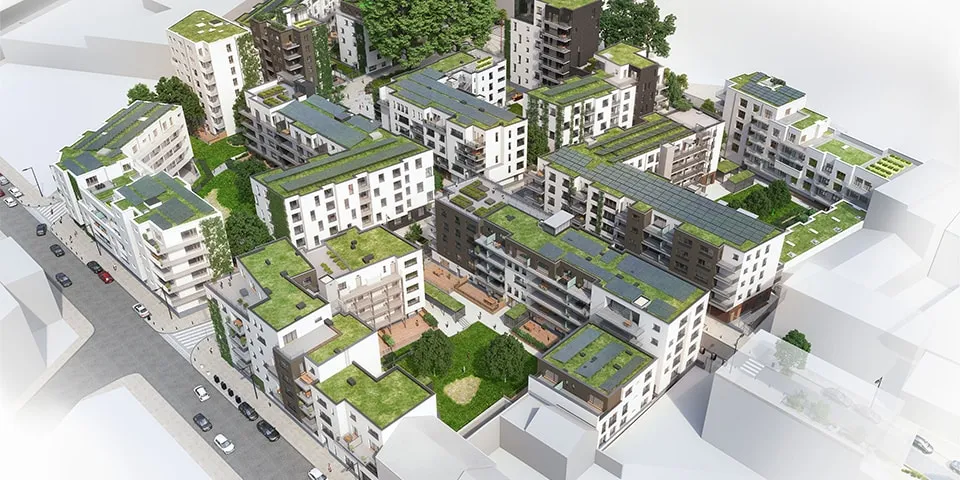
Contemporary architecture, sustainable technologies and seamless integration into a neighbourhood where residential areas sit alongside port industry. Tivoli GreenCity has risen from the ground to become a new place to live in Brussels. Around 400 homes bring together multiculturalism and economic realities, with a strong focus on environmental responsibility.
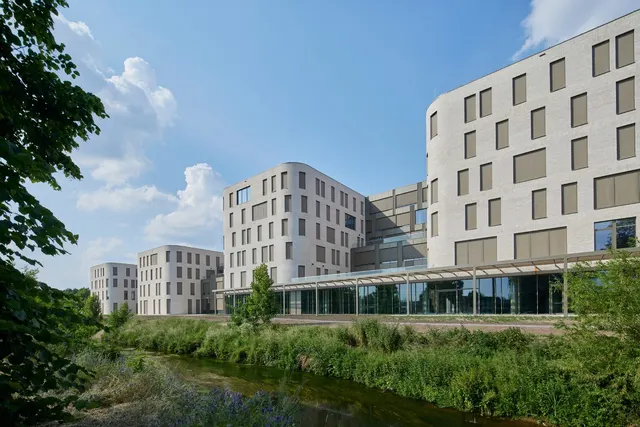
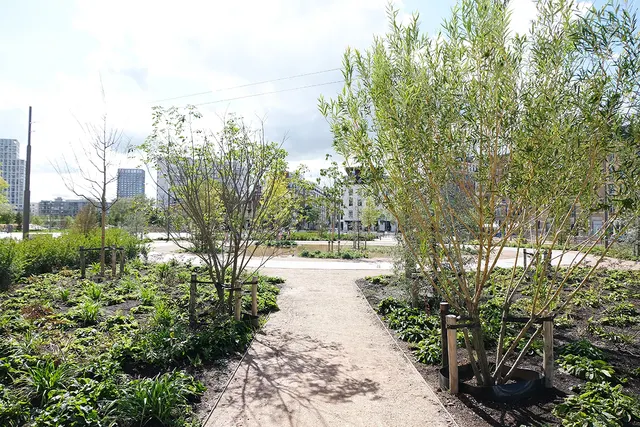
Four architecture practices and a landscape architect joined forces to draw up the plans for Tivoli GreenCity. Together, they designed eleven buildings arranged in five blocks, dressed and surrounded by greenery. This unique collaboration between different practices gave each block its own identity. A dominant white colour and sustainable features bring the buildings together in a coherent and attractive development. The scheme also includes two nurseries, five internal gardens, seven commercial units, a bicycle workshop, several laundries, three new roads and a public square.
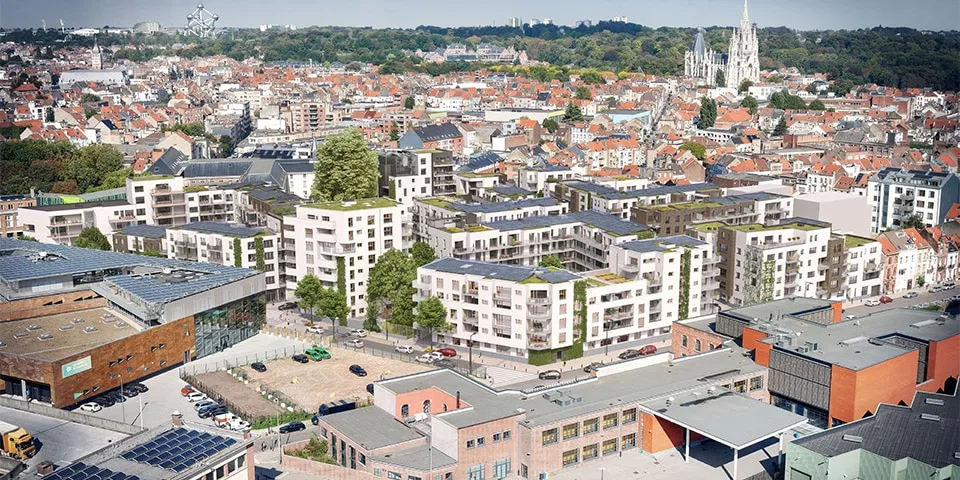
The new neighbourhood is located between multicultural, densely populated Bockstael and the industrial zone of the port of Brussels. (Photo: Simon Schmitt)
A mix of homeowners and social housing tenants
Tivoli GreenCity is fully integrated into the urban fabric. The new residential neighbourhood is located close to the canal, on a former Belgacom site bounded by Rue Claessens, Rue du Tivoli and Rue de Molenbeek. It is sandwiched between multicultural, densely populated Bockstael and the industrial zone of the port of Brussels. Nearly four hundred households will move in.
More than 70 per cent of the flats have been sold, while the remaining 30 per cent are available to rent as social housing. The social housing units are spread across all five blocks to prevent a ghetto effect. Social cohesion is clearly part of Tivoli GreenCity’s DNA.
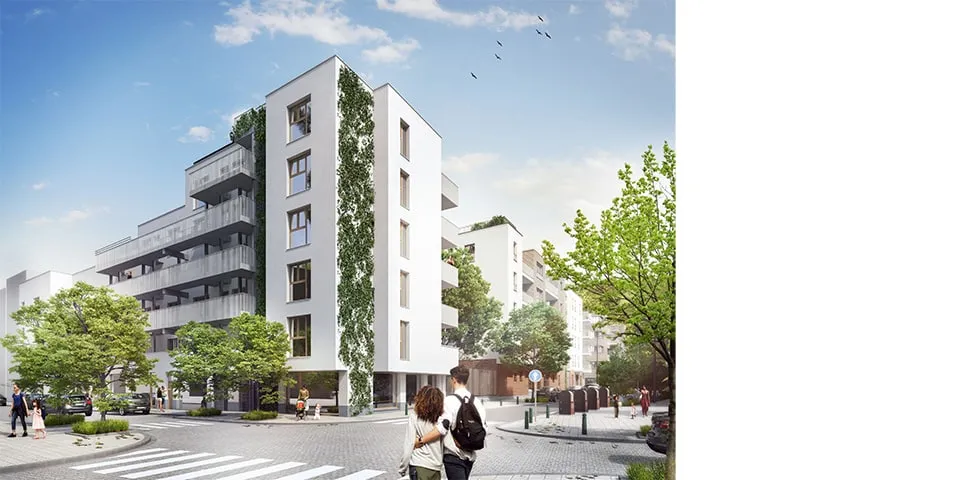
White sets the tone, with a few green accents on the façades.
Making way for sustainable mobility
From the outset, the developers opted for a sustainable approach. One third of the homes are energy-neutral. The entire development meets the passive standard. As a result, energy consumption among the nearly 400 Tivoli GreenCity households is particularly low. Residents are also encouraged to make extensive use of alternative forms of transport. The underground car park has just 300 spaces, equivalent to only 0.8 spaces per owner-occupied flat and 0.6 per rental home. By contrast, there are 650 bicycle spaces and a repair workshop. The roads on the site have been designed to prevent through traffic. The area is not car-free, but every effort has been made to strongly encourage sustainable mobility. Pedestrians and cyclists take priority. Work on the Tivoli GreenCity project began two years before construction of the residential buildings. In 2016, Greenbizz, the economic component of this mixed-use project, opened on the site. Greenbizz brings sustainable businesses together under one roof. Across 8,000 square metres, start-ups and established businesses put the circular economy into practice in a wide range of fields, from coffee to textiles and from event communications to energy management.
Sustainable living charter
Based on an ecological vision of urban living, Tivoli GreenCity’s infrastructure gives residents a major helping hand. Common areas are powered by green electricity generated by photovoltaic panels installed on every roof. The flats’ individual ventilation systems and heat exchangers are also connected to this supply. The entire roof surface, including the areas beneath the solar panels, is covered with vegetation.
Every building also has a shared rooftop vegetable garden. Residents of Tivoli GreenCity are not left to pursue greater sustainability on their own: collaboration is strongly encouraged. Homeowners and tenants sign a sustainability charter before moving into their flat. This is not a binding contract with penalties, but rather a list of recommendations for taking part in the day-to-day life of their green neighbourhood.
The sustainability charter is an initiative of citydev.brussels and PARBAM. As owner of the Tivoli GreenCity site and contracting authority, citydev.brussels made it possible to deliver this mixed-use, sustainable neighbourhood by providing the necessary subsidies. As property developer, PARBAM is the private partner for the residential part of the project.
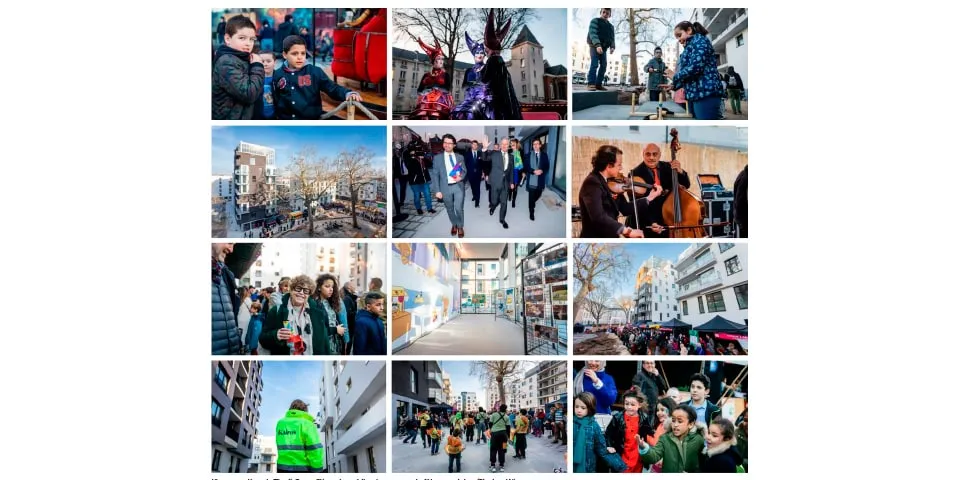
The inauguration of Tivoli GreenCity was marked by a large community celebration. (Photos: Wim Straetmans)
Water recovery and reuse
The same environmental approach led to an integrated strategy for water consumption. Tivoli GreenCity collects rainwater for reuse, including in the communal laundries and to irrigate green spaces. Wastewater, also known as greywater, is also recycled. Green spaces play an important role in water management: vegetation retains a considerable amount of water, helping it to be absorbed slowly, evaporate and seep into the ground. This leaves the drainage network available to collect excess rainwater and wastewater.
Tivoli GreenCity has certainly lived up to its name. The many efforts to create a sustainable neighbourhood have resulted in a limited ecological footprint and a BREEAM Communities label. A large neighbourhood celebration was held to mark the handover of the project. It brought together residents, all the homes having since been sold, local neighbours, construction partners and King Philippe. The crowd raising a glass at the inauguration of Tivoli GreenCity marked the successful launch of a new place to live and work, with solidarity and respect for the environment as its core values.
Question about this story? Ask your question
Keep following this
Get an email when a new story is published. No account needed.
- SubjectProjects