The future: an exciting playground for HVAC and plumbing professionals
What are the current challenges facing HVAC and plumbing professionals? What new techniques, technologies, products, materials and standards are on the horizon for the coming years? Following a timely recommendation from ATIC (Royal Association for Heating, Ventilation and Air Conditioning Technology), Construire la Wallonie asked two specialists in plumbing and HVAC to shed light on these questions for its readers. The floor goes to Bart Bleys, Head of the CSTC Water Technology Laboratory, and Ivan Verhaert, professor at EMIB (Energy & Materials in Infrastructure & Buildings) in the Faculty of Applied Engineering / Electromechanics at the University of Antwerp.
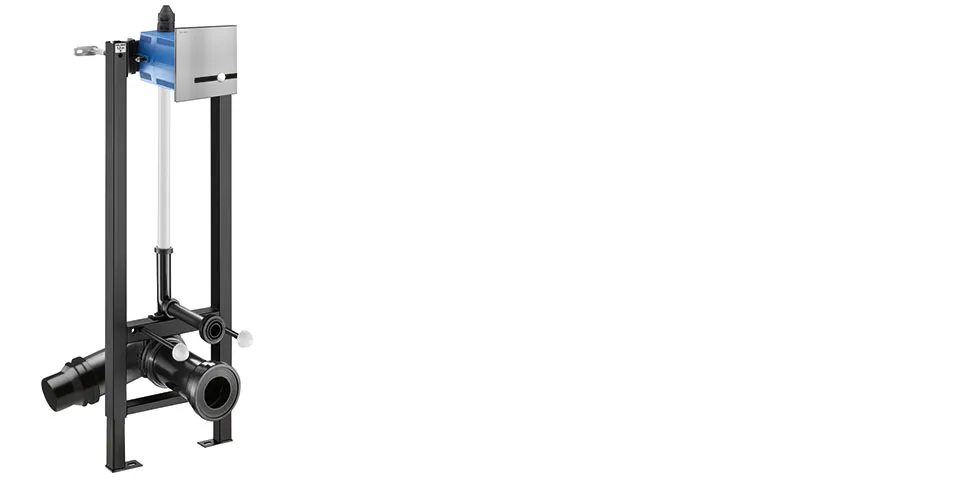
Delabie’s TEMPOMATIC Bicommande is a direct-flush toilet system, meaning it has no cistern, with an ‘intelligent’ automatic flush that adjusts the water volume according to use (photo Delabie).
Both plumbing and HVAC are fast-moving sectors. New technologies and energy carriers, the development of digitalisation and home automation, improvements to techniques, evolving standards and the arrival of innovative products on the market: professionals have their work cut out if they are to keep up to date in their day-to-day work.

Bart Bleys, Head of the CSTC Water Technology Laboratory (photo Jeroen Peys).
Water efficiency and hygiene: two key challenges for plumbing
“One of the major challenges in plumbing is the limited amount of drinking water available per person in Belgium,” explains Bart Bleys. “Climate change will intensify droughts further, leading to water shortages and making it necessary to take steps to reduce water consumption. As a result, more and more water-efficient products, such as low-flush toilets and waterless urinals, are coming onto the market. In this context, Smart/IoT water outlets are also being developed. Among other things, they enable consumption monitoring to help change user behaviour and encourage water savings.”
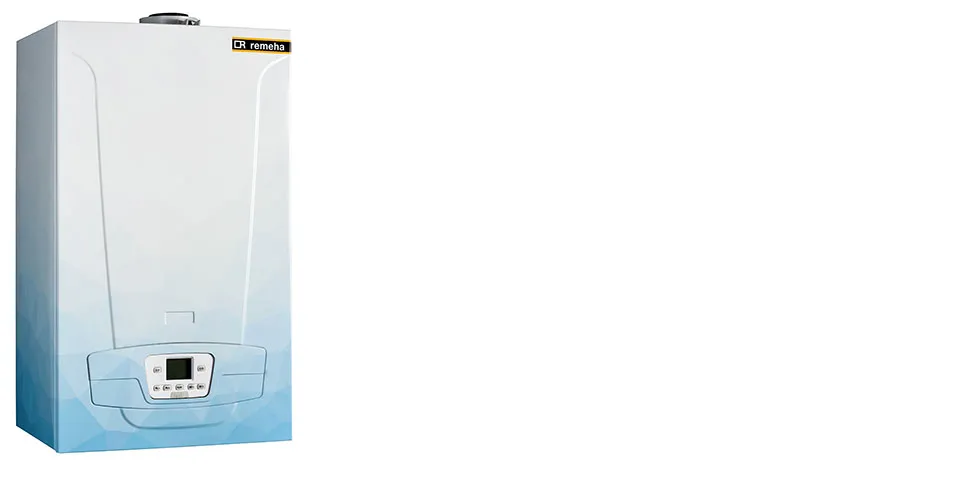
Remeha is the world’s first manufacturer to develop a hydrogen boiler
(photo Leo de Jong, Remeha).
Other techniques and technologies are also developing rapidly: smart urinals with monitoring to optimise maintenance, automatic leak detection systems, domestic hot water production using phase-change materials (PCMs)…
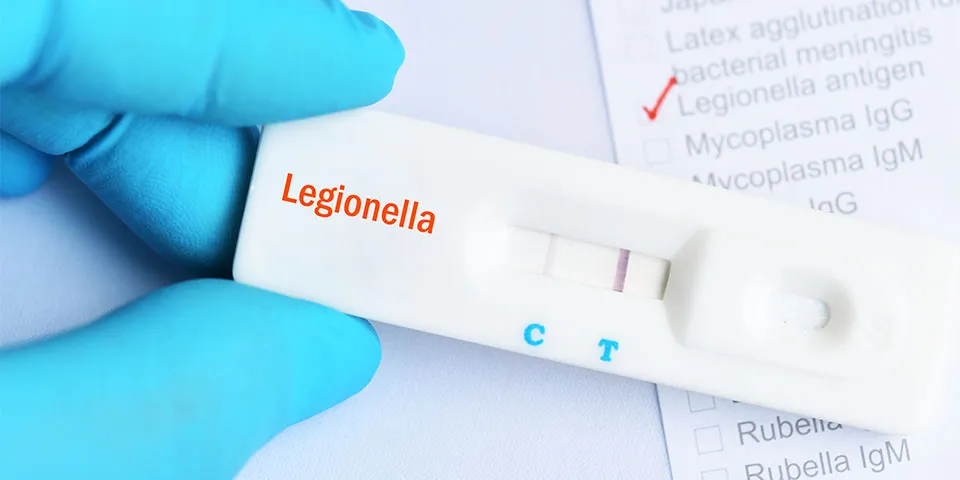
Hygiene is another challenge. “Techniques and technologies aimed at reducing the risk of Legionella growth in both hot and cold water are expanding rapidly,” says Bart Bleys. “These may include automatic flushing systems that flush the pipes after a certain period of stagnation or when cold water reaches a certain temperature, as well as advanced control systems in plumbing circulation loops.” Another possibility is to use electricity generated by photovoltaics to carry out thermal disinfection cycles in domestic hot water cylinders, thereby preventing Legionella growth.
HVAC: air quality
Is providing healthy air at all times a key concern for manufacturers? Yes, says Ivan Verhaert, who welcomes this: “Interest is growing, and I think that is a positive development. ◊
HVAC has too often been viewed, and still is, in terms of investment and energy costs, when its primary function is to provide comfort, air quality and hygiene. It is important to continue promoting these functions. Given the shift towards a circular economy, it would even make sense to move from selling products to offering services.”
The heating sector is seeing a trend towards decarbonisation, with greater attention being paid to air quality and cooling, whereas heating used to dominate the market. “Access to data and the ability to process it have changed enormously. This has already had, and will continue to have, an impact on the HVAC of tomorrow,” says Ivan Verhaert.
New energy carriers
“In the field of technologies using decarbonised energy, new energy carriers such as hydrogen, electricity and heat networks are emerging as alternatives to conventional natural gas or oil-fired systems,” explains Ivan Verhaert. “Two trends are emerging in energy supply: on the one hand, continued decentralisation and electrification, with HVAC becoming an application in its own right; on the other, a significant consolidation of heat demand, leading to more collective systems such as heat networks and combined loop systems.”
“Heat Interface Units (HIUs) play a key role in ensuring individual comfort, fair pricing and overall energy efficiency,” he continues. “Innovative versions are already available, including heat pumps with electric backup heating, booster heat pumps or local storage. I believe that, in time, heat consumers will become prosumers, as has already happened with electricity. Given global warming and the rise of these prosumers, the heat network of the future will also need to play a role in cooling.”
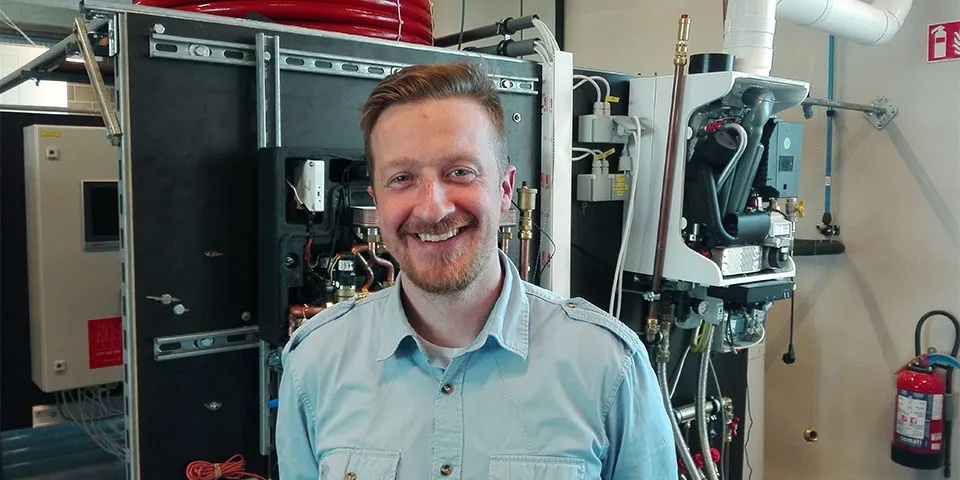
Ivan Verhaert, professor at EMIB, University of Antwerp (photo ATIC).
Services versus product sales
Ivan Verhaert: “In the future, conventional technologies will be combined with new monitoring and data-processing techniques. Instead of selling sludge separators or pressure-maintenance equipment, we will offer (predictive) maintenance services or quality services. This digitalisation will undoubtedly go hand in hand with the adoption of BIM in design, although translating the concept into practice will take several steps before the desired level of detail is achieved for each type of building.”
According to the EMIB professor, air quality in our urban environment is currently deteriorating. “We can therefore expect to see more products that not only maintain indoor air quality passively through ventilation, but also actively improve it through air purification, compared with the outdoor air.”
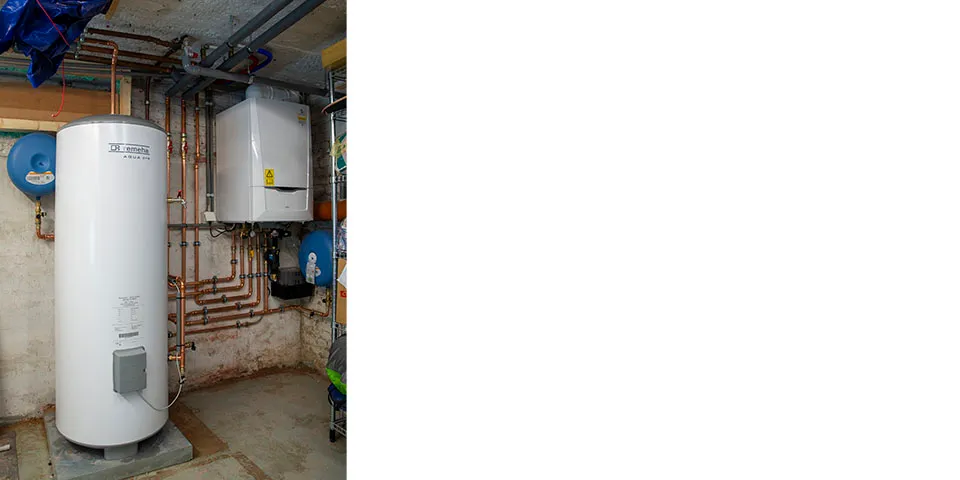
Testing a hydrogen boiler in a detached house (photo Remeha).
New standards and their impact on day-to-day work
In plumbing, two Technical Information Notes (NIT 265 & 270) have recently been published by the CSTC. The first, which replaces NIT 200, covers the design and sizing of gravity drainage systems for wastewater in residential buildings and buildings with similar sanitary use, such as hotels, schools, hospitals, offices, restaurants, prisons and barracks. The second sets out the rules for the design and sizing of gravity rainwater drainage systems in accordance with standard NBN EN 12056-3. “However, the recommendations in this standard, which are based on numerous tests and in-depth studies, are difficult to put into practice in their current form,” admits Bart Bleys. The document therefore proposes a simplified sizing method. “Sizing tools are also expected to help installers apply both documents.”
Finally, Rehva’s brand-new Guidebook (No. 30) is devoted to hygiene in drinking water installations in buildings. It can be considered a code of good practice in countries or regions with little legislation on this subject, such as Wallonia.
A business enquiry for Delabie? Get in touch
Companies in this story
Keep following this
Get an email when a new story is published. No account needed.
- SubjectProjects
- CompanyDelabie