The challenges facing the deep foundation sector
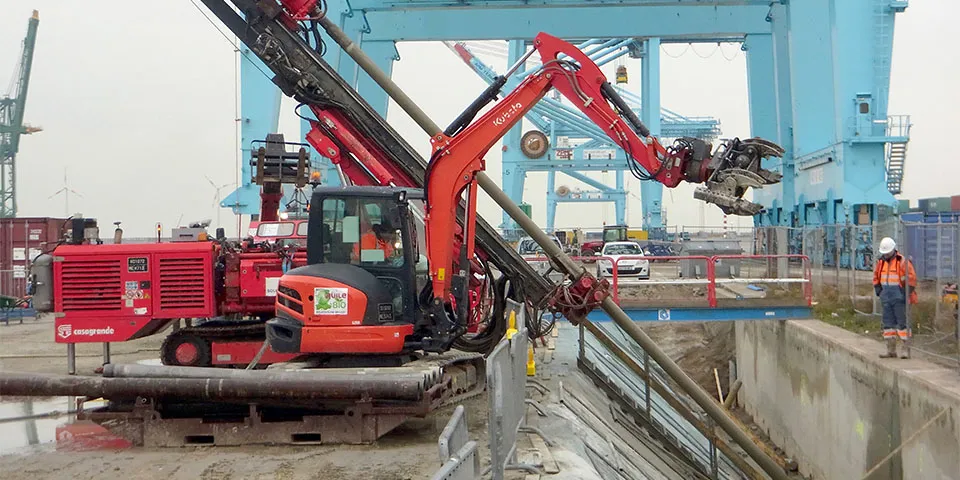
In October 2000, seven foundation companies decided to defend the sector’s interests together by founding the non-profit association ABEF. “The association’s main aim is to foster sound relationships within the sector and defend its members’ professional and moral interests, insofar as these relate to foundation works in the broadest sense of the term,” explains its president, Olivier Rens, who here lifts the lid on the challenges facing the foundation sector.
Since 2012, ABEF has been a member of FEDECOM, the Federation of Complementary Construction Companies. FEDECOM is itself part of Confédération Construction. Olivier Rens, CEO of De Waal Solid Foundations, has been ABEF’s vice-president and treasurer since 2011. On 1 January 2018, he took on the role of president for a four-year term. ABEF promotes and defends its members’ interests, in particular by fostering good relations between members, associations, companies and institutions involved in the sector, and by taking positions on the drafting of standards, regulations, provisions and so on.
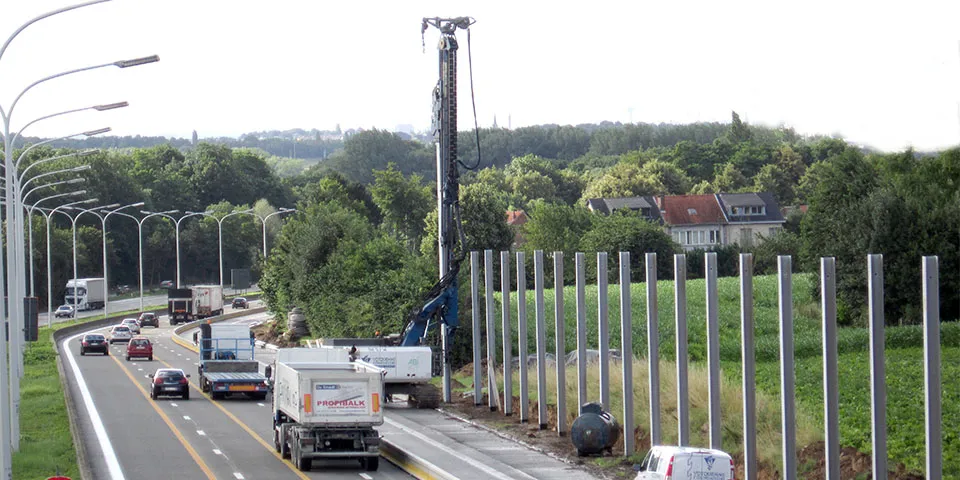
ABEF’s activities also include attracting workers, promoting professional competence, achieving a higher quality label across all aspects of the foundation sector, advising members in the event of disputes, and taking part in the European association EFFC (European Federation of Foundation Contractors). It also participates in working groups and committees involved in standardisation at national and European level. Olivier Rens says: “We are represented in national and international working groups on geotechnics and deep foundations. ABEF contributes to drafting documents on the design and construction of different types of deep foundation.”
Digitalisation
The construction sector as a whole continually faces short- and long-term challenges. The foundation sector is no exception. “Digitalisation is under way and has made its way into the deep foundation sector,” explains Olivier Rens. “The introduction of increasingly high-performance machines that emit less CO2, the automatic recording of drilling parameters and the use of GPS are just a few examples. But, ultimately, good staff remain essential. Finding the right people has become one of the biggest challenges for the future.”
Poor-quality ground
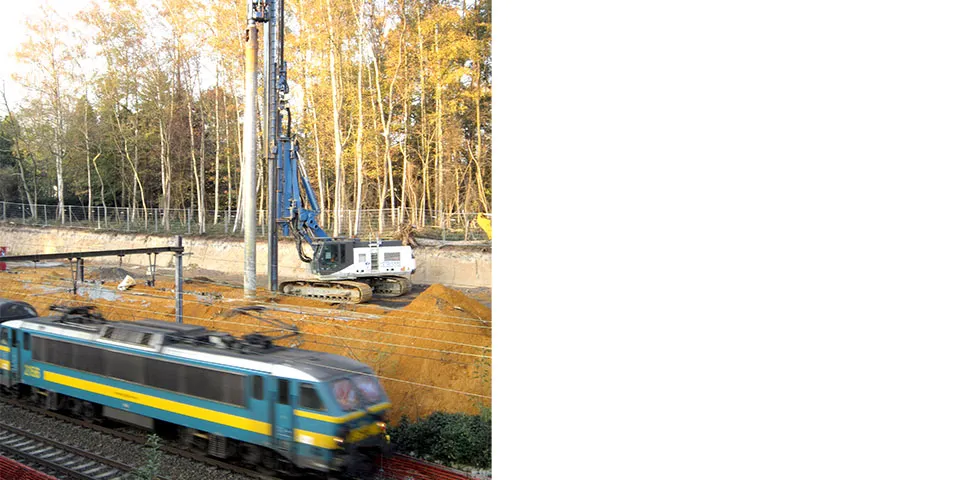
How does ABEF’s president see the sector developing? “The deep foundation market is not growing exponentially. Sites are becoming increasingly scarce, and the best ones have already been built on. As a result, construction is increasingly taking place on poor-quality ground. There is also more construction at depth, for example, underground car parks. Meanwhile, the number of machines on the Belgian market has risen significantly, putting prices under pressure. Major projects have been announced, such as the Oosterweel connection, the completion of Antwerp’s ring road, but the question remains whether the project will go ahead, given that obtaining a permit is becoming increasingly difficult. Eurostadium, planned for the Heysel car park, is a good example.”
Training
ABEF devotes considerable attention to training, including its Deep Foundations Training (FFP) and various other courses. Olivier Rens says: “FFP1 is an introductory two-week course to become a specialist foundation worker. It is aimed at people who have been working in the sector for a few years. FFP2 is a one-week course that trains deep foundation machine operators, combined with on-the-job training. Since late 2018, there has also been a refresher course for operators who completed FFP2 more than 5 years ago. The intention is for only people who have completed these courses to operate a deep foundation machine.”
Question about this story? Ask your question
Keep following this
Get an email when a new story is published. No account needed.
- SubjectProjects