Stage equipment for greater versatility
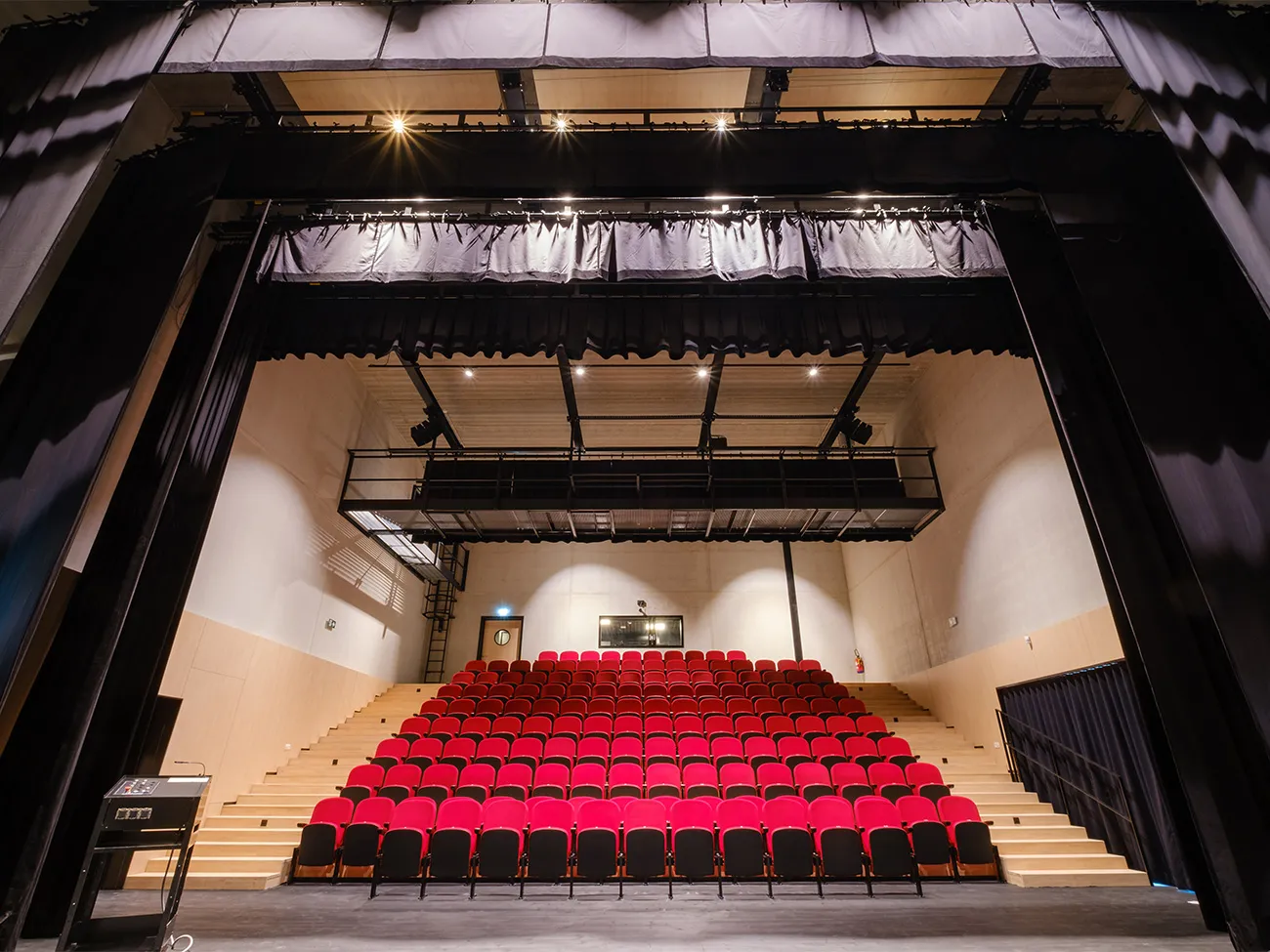
Servio has been equipping performance venues for nearly 40 years, and fitted out both halls at the Grand Manège. While the 150-seat hall has the standard equipment found in a cultural centre, the main hall became the setting for a series of discussions between the architect and technicians, as they sought the best possible compromise between the original concept and versatility. Johan Raes, Servio’s CEO, outlines the project’s main challenges.
Although the 800-seat hall was initially designed as a concert venue, the request to extend its use to theatrical performances came during construction. Two distinct uses requiring different equipment! Johan Raes: “We were heavily involved in discussions with the architect, the design office responsible for the scenography, the City, … to put this decision into practice within the limits of what was possible. The architect wanted to preserve the hall’s original appearance, while the technicians wanted more equipment. For theatre, in particular, we had to break up the unity of the hall by adding a proscenium. The challenge was therefore to darken the sides and upper section with a lightweight, removable structure, leaving only a stage opening in theatre configuration. A series of fly bars masks the hall’s architecture, focusing attention on what is happening on stage. All this equipment disappears into the ceiling in concert configuration.”
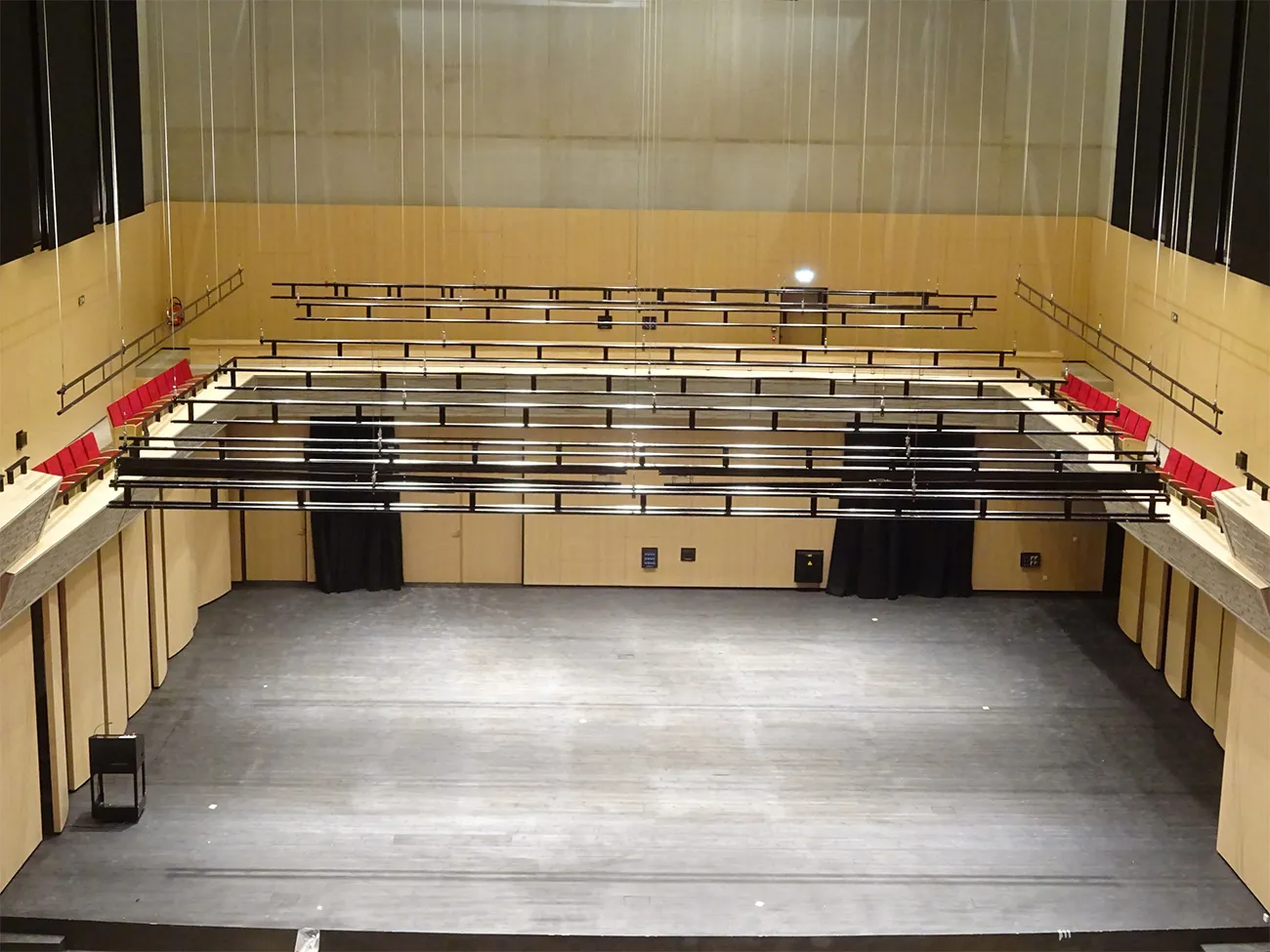
Catwalk and fly bars
Another essential feature that had to be incorporated was a mobile steel catwalk weighing several tonnes. It is lowered above the audience to light the stage, and also disappears into the ceiling in concert configuration. All this equipment requires impressive machinery, including motors, drums and cables. “But the most complicated part was fitting the fly-bar system between all the wooden sound reflectors designed to project the music towards the audience.”
Johan Raes’s job is to turn the client’s dream into reality. He succeeded, reaching a compromise that satisfied all parties.
Question about this story? Ask your question
Keep following this
Get an email when a new story is published. No account needed.
- SubjectProjects