Mechelen’s Vierendeel bridges undergo major renovation
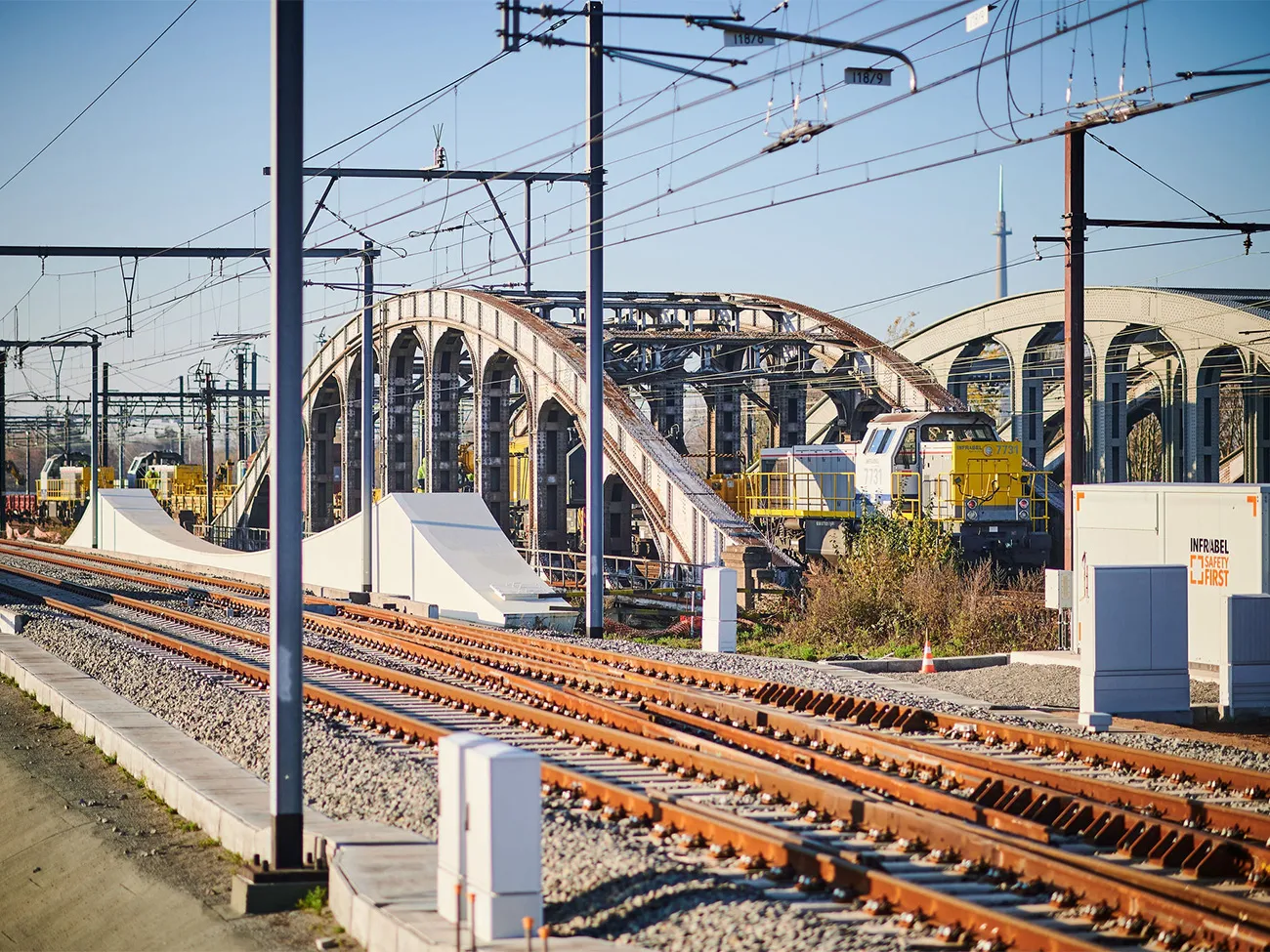
Anyone travelling along the Leuvense Vaart canal in Mechelen will probably have noticed that one of the large Vierendeel bridges has already been completely renovated. Since spring 2019, Infrabel and TUC RAIL have been working together to renovate the first two railway bridges. The renovation of the bridges is part of the large-scale renewal of railway infrastructure in and around Mechelen.
To meet future mobility challenges at national and international level, railway infrastructure in Mechelen and the surrounding area is undergoing a major transformation. At the end of 2020, a new railway bypass, the final missing piece in Belgium’s high-speed rail network, was brought into service.
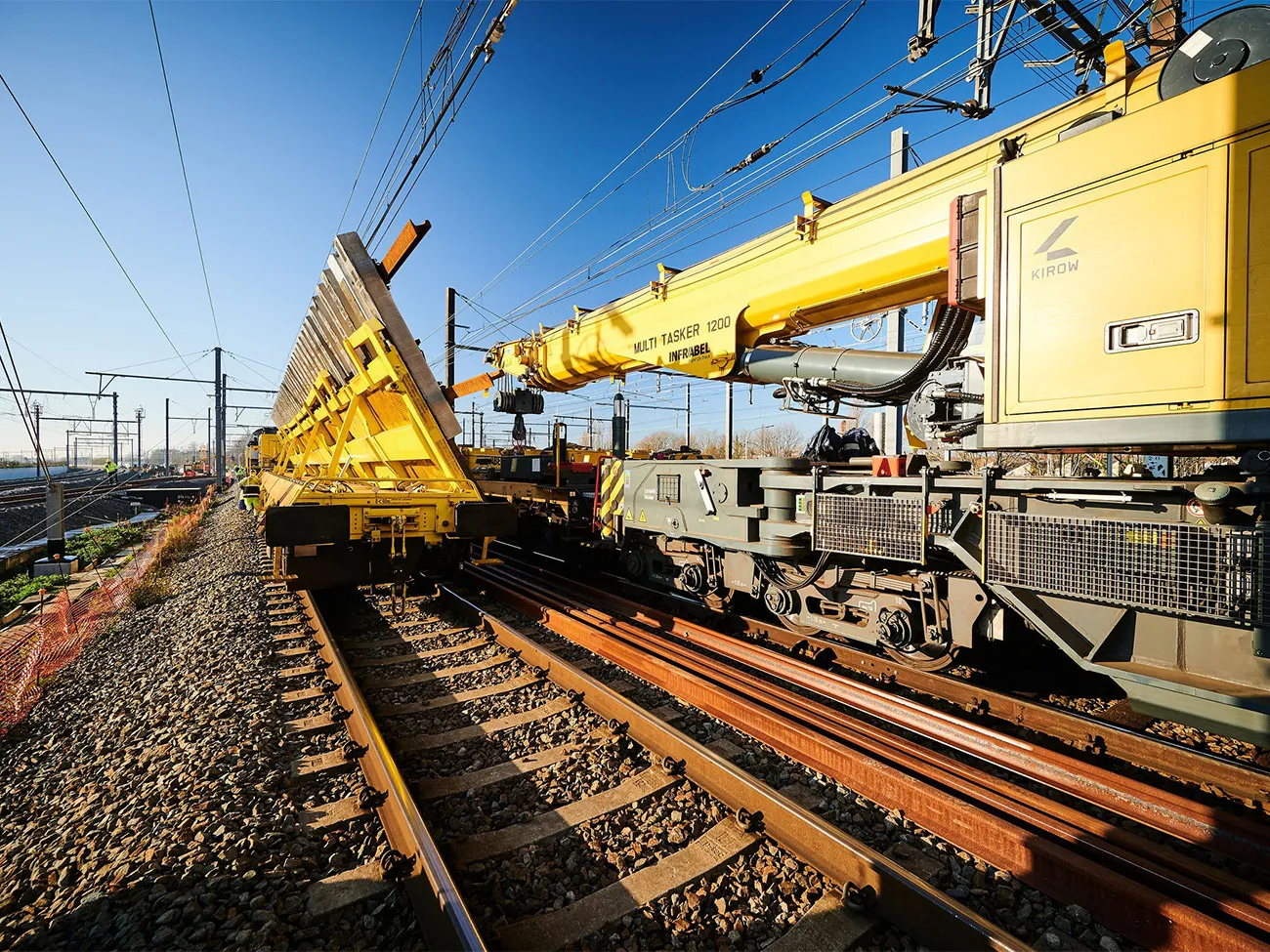
The new track and platforms on the railway bypass will initially be used to provide additional capacity, enabling the rest of the railway infrastructure at Mechelen station to be renewed and optimised. This optimisation is heavily influenced by the presence of four Vierendeel railway bridges with ballasted track, which require a complete overhaul.
In the first phase, Infrabel and TUC RAIL are renovating the two Vierendeel bridges that carry the Brussels-Antwerp line (line 27) and the Dendermonde-Leuven line (line 53) across the Leuvense Vaart. These riveted steel, double-track bridges, with a span of 63 m, are listed as industrial heritage. Renovation of the bridge on line 27 was completed in November 2020. Work on the bridge on line 53 will begin in autumn 2021. In the second phase, Infrabel and TUC RAIL will tackle the two remaining bridges on the Brussels-Antwerp railway line (line 25), over the Leuven-Dyle Canal and the Leuvensesteenweg. These bridges are also listed as industrial heritage, and the latter is a protected monument.
Easier maintenance and compliance with current standards
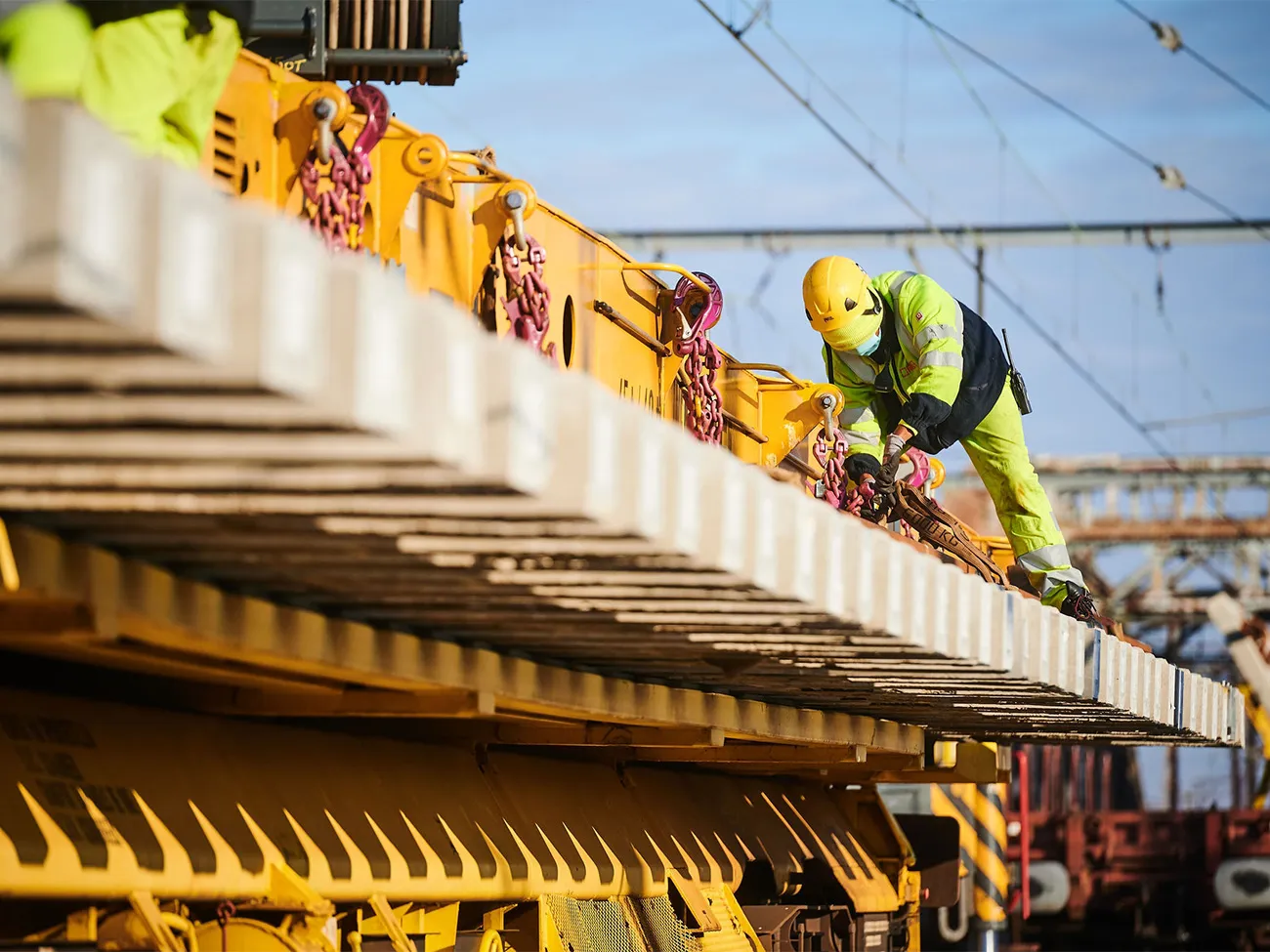
Renovating the Vierendeel bridges involves more than simply repainting them: it also means preparing for an optimised railway alignment and easier maintenance. On the one hand, the wooden sleepers are being replaced with steel frames that directly support the track. On the other, TUC RAIL has made a number of modifications to comply with current occupational safety regulations.
A logistical feat
As the first bridge is on the busy Brussels-Antwerp railway line, Infrabel could only take one track on the bridge out of service at a time, and then only for a limited period of around 8 months. The bridge was therefore renovated one half at a time, always alongside a track that remained in service. Some work, such as installing the steel frames on the bridge, was carried out at night or during a temporary full closure of the tracks. This work always had to be planned and co-ordinated well in advance. The work is being managed by TUC RAIL, which specialises in building new railway infrastructure and modifying and modernising existing infrastructure. TUC RAIL has the expertise needed to deliver large-scale, phased and multidisciplinary projects.
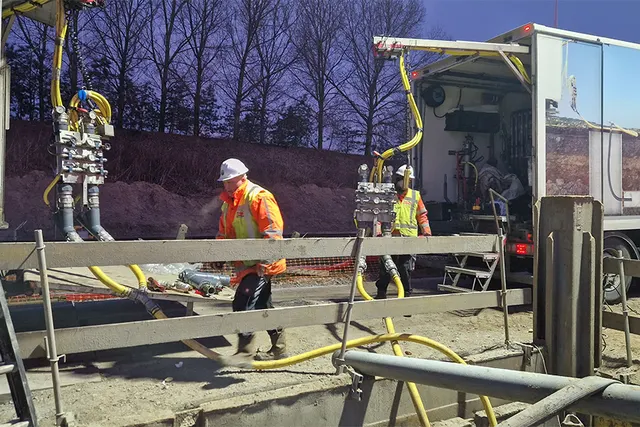
Before work even began, TUC RAIL first built a temporary cable-stayed bridge so that the cable ducts on the bridge being renovated could be completely cleared. A protective deck was also installed beneath the bridge to fully protect pedestrians and cyclists below from falling debris.
In the first phase, track A on the bridge was taken out of service and that half of the bridge was completely dismantled. TUC RAIL then erected scaffolding around the half of the bridge being renovated and installed a partition between the two tracks to protect rail traffic. The scaffolding and partition were then covered with a completely sealed shrink-wrap film. The enclosure was then pressurised to prevent dust and lead-bearing particles from spreading into the surrounding area during blasting of the steel structure. The steel structure was then inspected, and all badly corroded, broken or missing parts were replaced before it was completely repainted. TUC RAIL’s technical teams carefully checked the stability of the structures and the bridge itself at all times.
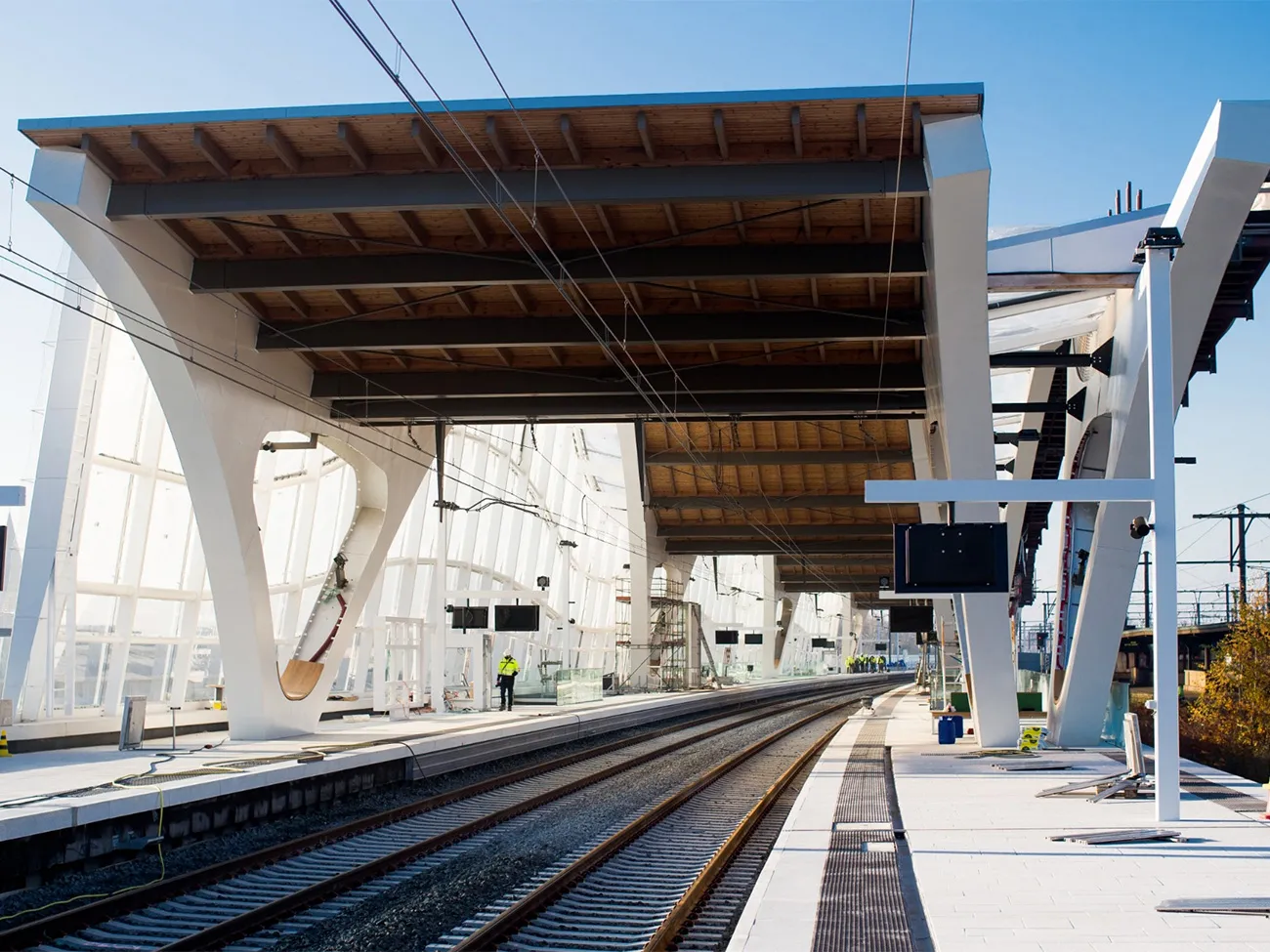
The steel frames were then positioned and aligned on the bridge, temporarily supported by bolts and shims, and covered with non-shrink epoxy mortar. Once the epoxy mortar had cured, the prestressed bolts connecting the steel frames to the bridge were tightened. This connection and the epoxy mortar covering are sufficiently flexible under dynamic conditions and bond perfectly to the steel structures, preventing dirt and water from penetrating the contact surface and causing corrosion.
After track A had been completed and brought into service, track B on the bridge was taken out of service and the same work was carried out. After around a year and a half, the bridge had been completely renovated and could be brought back into service.
After renovating the superstructure, TUC RAIL also renovated the abutments. The existing masonry was removed and the necessary concrete repairs were carried out. The abutments were then faced with new masonry that perfectly matched their original appearance.
Question about this story? Ask your question
Keep following this
Get an email when a new story is published. No account needed.
- ThemeRenovating existing buildings
- SubjectProjects