Hygiene is vital in healthcare
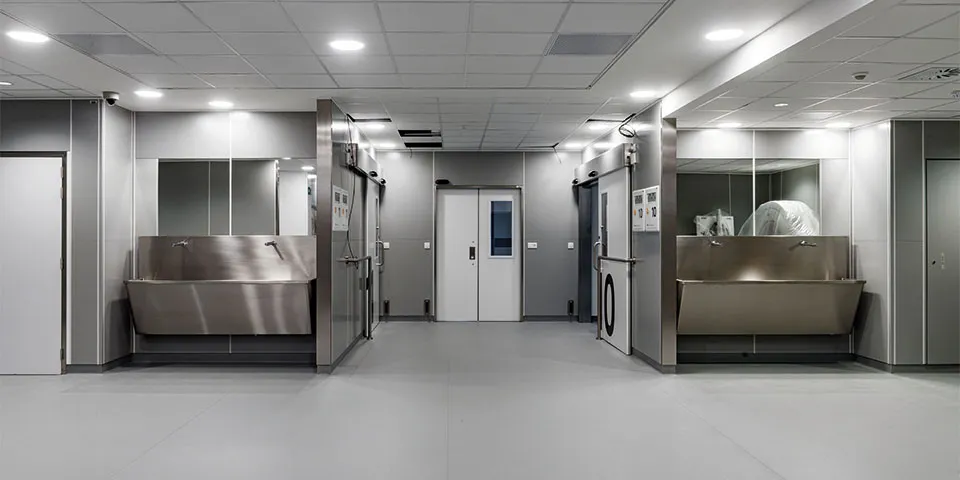
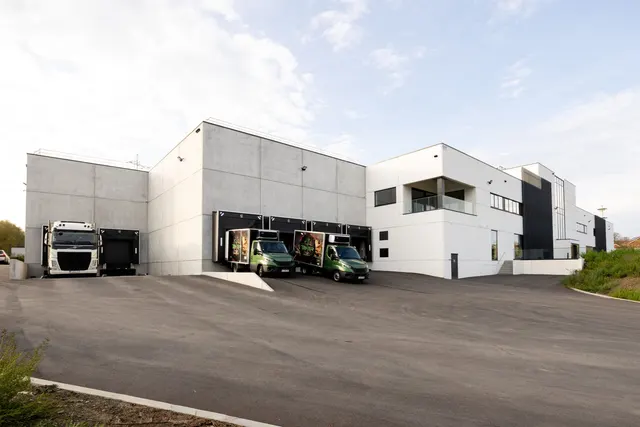
The Clinique du MontLégia, on the heights above Liège, now brings together the activities of the three hospitals and clinics run by the Centre Hospitalier Chrétien. This facility, with more than 800 beds, was designed by Assar Architects in collaboration with artau architectures. On the advice of hospital architect Alwin Fable, the client, engineering consultancy Tractebel Engineering and installers Cegelec and Danneels opted for Delabie taps, stainless steel sanitaryware and support rails for people with reduced mobility.
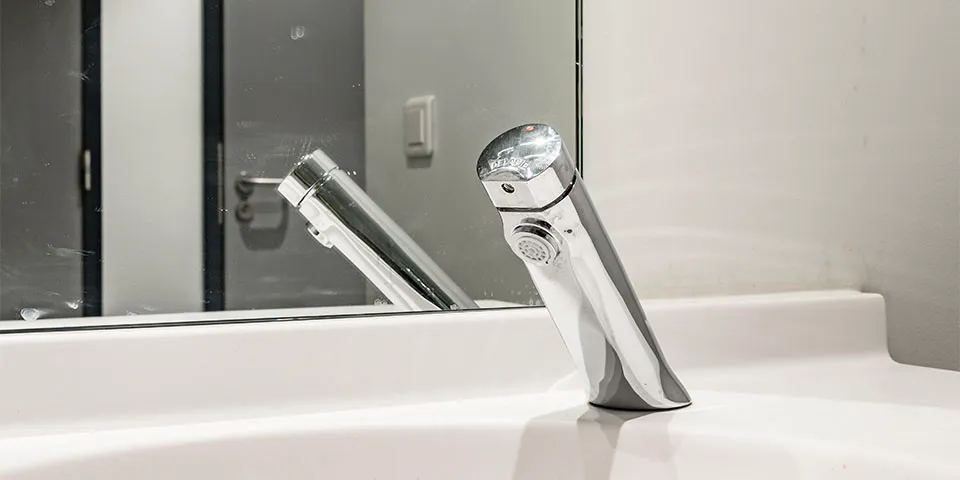
In the public washrooms, push-button timed-flow TEMPOSOFT taps were chosen.
“We tried to propose a comprehensive solution, taking account of both the client and maintenance,” explains Alwin Fable (Assar). “We quickly settled on Delabie, which offers 100% of what we were looking for, both aesthetically for the rooms and communal areas, and medically for the high-acuity areas. Delabie is known for the quality of its taps, whose distinctive smooth bodies help actively combat bacteria.” Thomas Bottemanne, Business Development Manager at Delabie, says: “Hygiene is essential in hospitals. Our products enabled us to meet the client’s original requirements: to have taps that help combat bacteria developing in the water network, at the outlet and in the taps themselves.”
A wealth of experience
Delabie has extensive experience working with hospitals. In Belgium, Delabie taps and products can be found at CHIREC-Hôpital Delta (Auderghem), CHWAPI (Tournai), the extensions to CHR de Namur and the future hôpital Jules Bordet (Brussels). At MontLégia, in addition to support rails and shower mixers, Delabie mainly supplied three types of taps, all guaranteed for 10 years: BIOSAFE washbasin mixers for patient rooms, TEMPOSOFT push-button timed-flow taps for public washrooms, and TEMPOMATIC 4 MIX and BINOPTIC MIX electronic mixers for stainless steel clinical sinks, including those located between operating theatres. Alwin Fable explains the choice: “We opted for push-button timed-flow taps in public washrooms to avoid having to manage batteries or infrared sensors. In the medical and technical areas, however, we chose managed infrared systems, with much more rigorous monitoring and checks.”

The Clinique MontLégia stands on the heights above Liège. This ultramodern hospital was designed by Assar Architects in association with artau architectures.
In the patient rooms
BIOSAFE washbasin mixers, with smooth internal bodies, are distinctive in that they have no spout. Thomas Bottemanne explains: “The spout is the part of a tap where the greatest bacterial growth is likely to occur. At the end of a spout, there is air and water, everything bacteria, and Pseudomonas aeruginosa in particular, need to grow. In this case, the hot and cold water hoses also enter the tap body at the cartridge, and therefore at the mechanism. This means that when the tap is turned off, the amount of water inside it is kept to an absolute minimum. This is another advantage in preventing the emergence and spread of bacteria.”
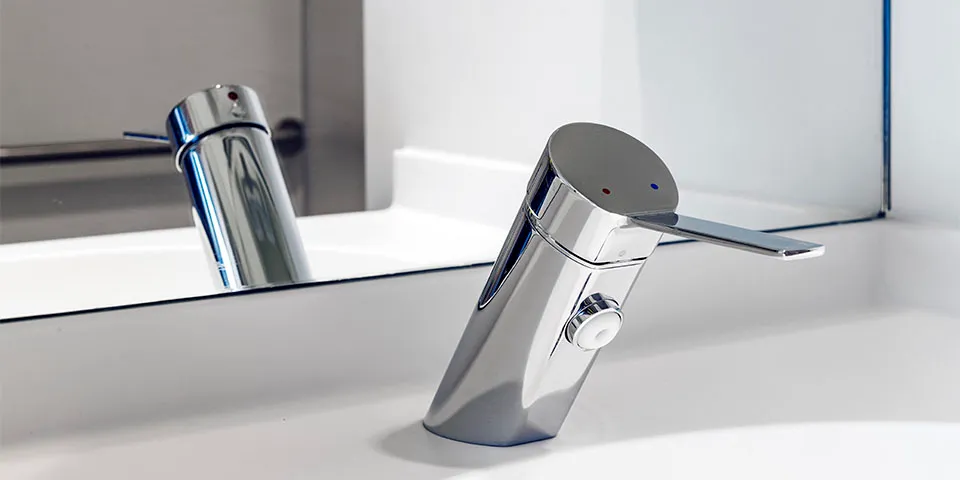
In patient rooms, spoutless BIOSAFE taps help limit the spread of bacteria.
For staff
The stainless steel clinical sinks are fitted with BINOPTIC MIX electronic mixers, another flagship product in Delabie’s range. “We chose these electronic taps because the infrared sensor is at the start of the spout, rather than on the wall,” says Alwin Fable. In addition to saving water (90%), this model offers another valuable benefit. Thomas Bottemanne explains: “It has a smooth internal body and a piston solenoid valve developed in-house. This valve flushes the water inside the tap each time it is used. Diaphragm solenoid valves have a major drawback: they contain an area where water stagnates and is never renewed, allowing bacteria, legionella and Pseudomonas to grow.” Two recent studies have shown that electronic taps without the right components are more likely to encourage bacterial growth than conventional taps. “Yet water savings are not the only reason to choose electronic taps: hygiene is above all the main consideration,” adds Thomas Bottemanne. The models installed at MontLégia also have an automatic flush: if the taps are not used for 24 hours, they switch on automatically for one minute, drawing water through the system and thereby preventing bacteria from developing.
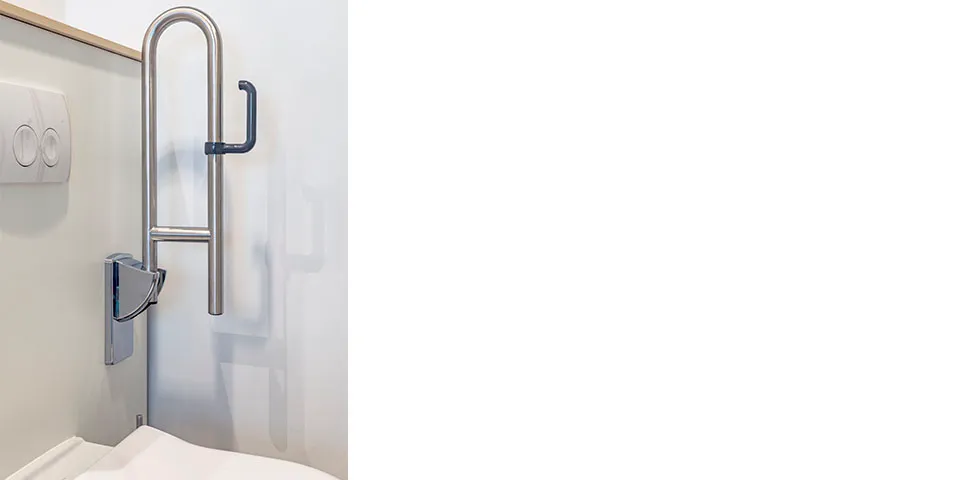
At MontLégia, Delabie also supplied support rails for people with reduced mobility, alongside the taps.
A successful collaboration
The client, architects and installers are pleased with their collaboration with Delabie. According to Pierre Maurice Wéry, Associate Architect at Assar Architects and Project Manager for the Clinique du MontLégia, “Delabie is one of those companies with a strong presence in the market, whose representatives do more than sales work: they also have a technical command of the products they offer. The ability to communicate and make oneself understood by other professionals involved in the construction process is essential today.”
A business enquiry for Delabie? Get in touch
Companies in this story

Keep following this
Get an email when a new story is published. No account needed.
- SubjectProjects
- CompanyDelabie