ALEGrO project strengthens the Belgian and European electricity grid
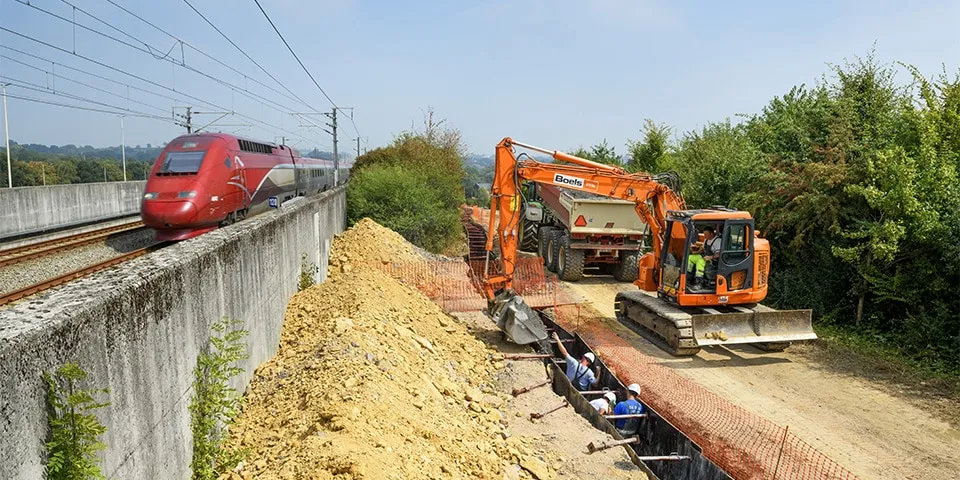
The ALEGrO project will provide the first electricity interconnector between Belgium and Germany. This underground link will cross 14 Belgian municipalities and cover 90 km (49 in Belgium and 41 in neighbouring Germany). “Following a testing phase, the aim is to bring the interconnector into operation in 2020,” explains Julien Madani, Project Communication Manager at Elia, the operator of Belgium’s electricity transmission system.
By 2020, all European countries want to be able to import and export 15% of their national electricity production. Belgium already has interconnectors, or plans for them, with France, the United Kingdom and the Netherlands. “But we do not yet have an interconnector with Germany. ALEGrO is therefore the missing link: it will have a transmission capacity of 1000 MW, equivalent to 1/10 of Belgium’s average electricity consumption,” says Julien Madani of Elia, the operator of Belgium’s electricity transmission system, which is carrying out the project with its German counterpart Amprion.
A secure energy supply
Today, Elia faces new challenges, including managing the unpredictable nature of energy supply. Julien Madani explains: “That is why it is important to develop the domestic market at European level. ALEGrO will help manage this volatility on the grid. If our production falls in Belgium, we will be able to feed electricity from Germany into our grid, and vice versa. By opening up the electricity market to greater competition, ALEGrO will also help prices converge, which is positive for both businesses and households.” In addition, the security of electricity supply will inevitably improve. “ALEGrO is one of the major projects aimed at strengthening the security of supply in our country in the medium and long term,” explains Julien Madani. “Interconnections with neighbouring countries need to be strengthened, as Europe offers the possibility of importing or exporting 15% of national production. By diversifying the available energy sources, ALEGrO helps protect the grid against shortages during periods of higher demand.”
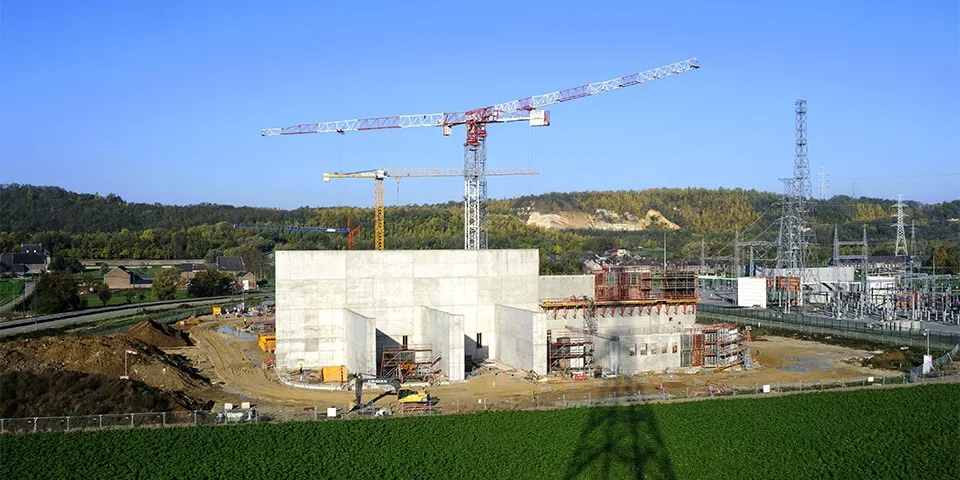
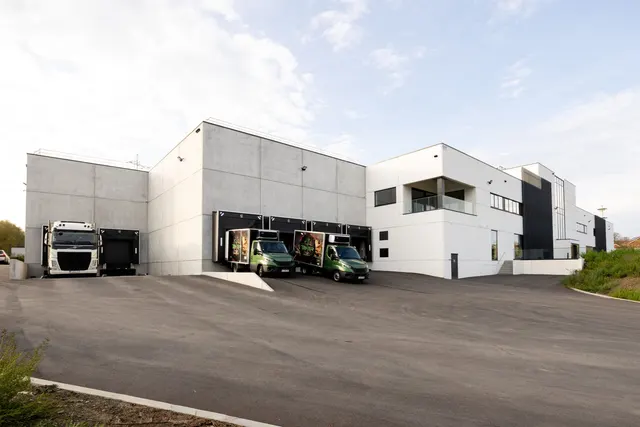
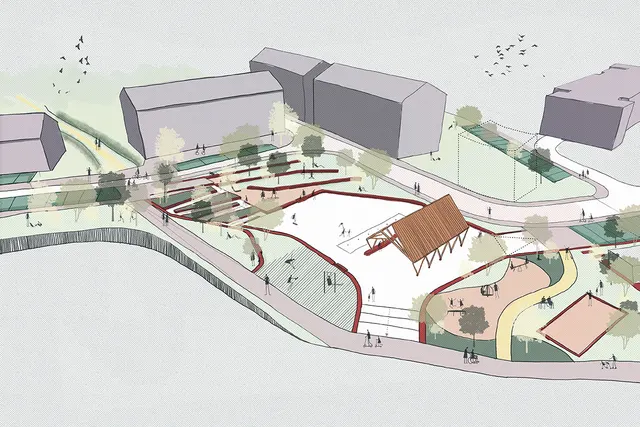
The Lixhe converter station will measure approximately 100 m long, 70 m wide and 20 m high.
Close cooperation
Elia is managing this interconnector project between Germany and Belgium in collaboration with its German counterpart Amprion. ALEGrO is a 90 km underground link connecting the future converter station at Lixhe (Visé) to the station at Oberzier in Germany. In Belgium, the connection will cover 49 km, linking the Lixhe station to the junction point at Raeren, on the German border near Eynatten. In Germany, the route will then cover a further 41 km to Oberzier. Amprion obtained the necessary permits for the German section of the interconnector and officially launched construction on 30 October 2018.
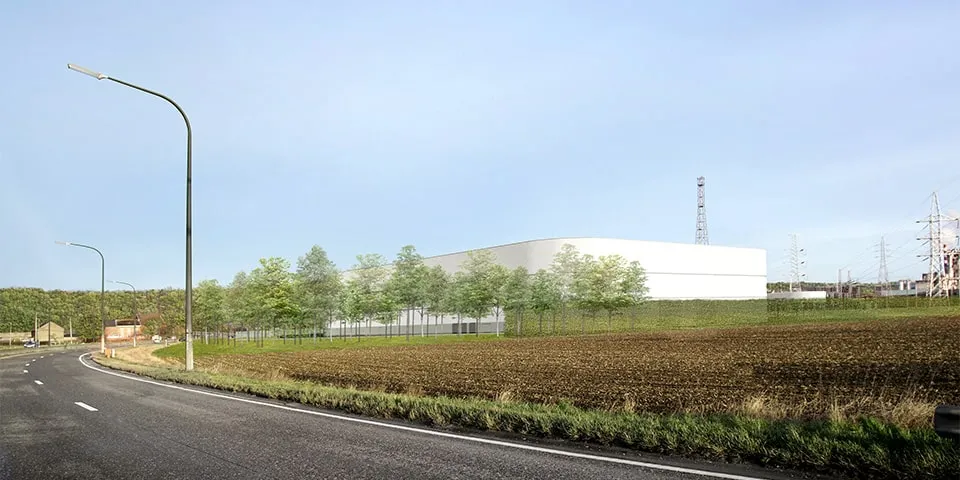
The Lixhe station was designed by the architecture firm CANEVAS and will be built by Siemens. (Image: CANEVAS)
Cooperation with local authorities and proactive communication with residents in the area concerned are essential for a project of this kind. Various meetings were held during the permit application process. Julien Madani explains: “Since the various construction sites opened, residents have been kept informed about the potential impact on their daily lives. Where necessary, we also hold information sessions for residents to give them as much information as possible. Information on Elia’s website is updated regularly too. A map allows people to follow the progress of the works in real time. A freephone number and an email address are available for people to ask questions. And, of course, we liaise regularly with the municipal authorities.”
3 cable-laying techniques
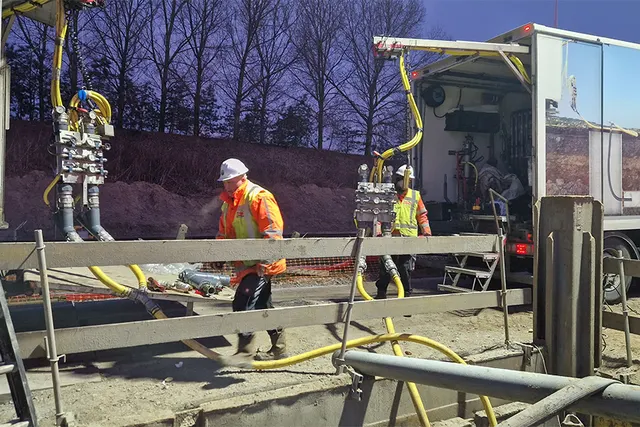
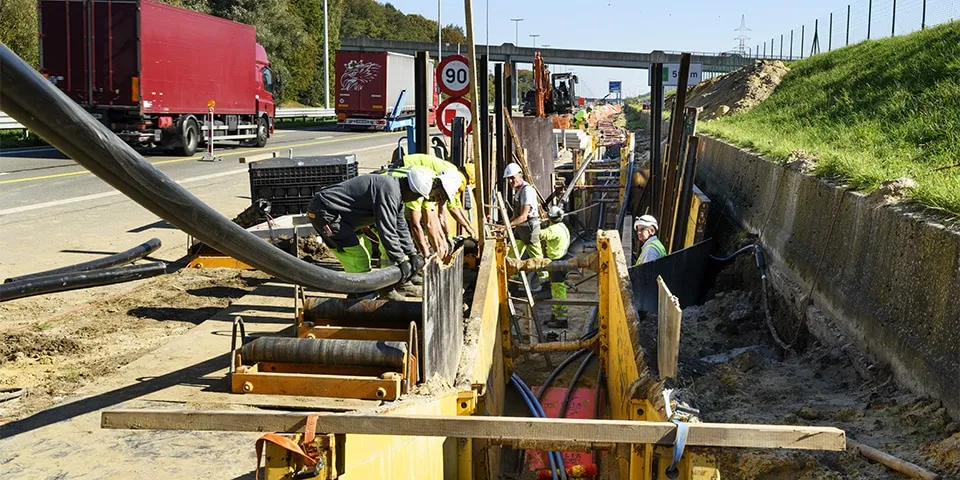
To minimise the impact on residents and their surroundings, Elia will use three cable-laying techniques: trenches, horizontal directional drilling and microtunnelling. “A large part of the link will be laid in a trench 1.80 m deep and 1 m wide, excavated in sections 1 km long. Work on each section takes 6 weeks on average,” explains Julien Madani. “Horizontal directional drilling will be used to pass beneath major infrastructure such as interchanges, junctions and the high-speed rail line. The microtunnel beneath the Meuse and the Albert Canal will carry two high-voltage cables under the water. This will have no impact on river traffic. Horizontal excavation of the microtunnel began in early April, using a tunnel boring machine. The microtunnel is being excavated at a depth of 30 m. It is approximately 600 m long in total and has a diameter of 2 m.”
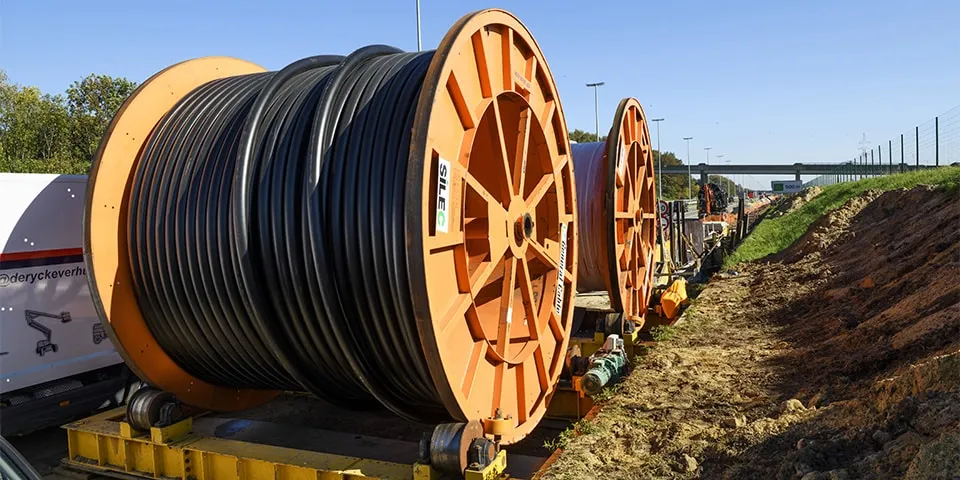
This underground link will cross 14 Belgian municipalities and cover 90 km (49 in Belgium and 41 in neighbouring Germany).
The best technology available
ALEGrO uses DC technology, the best technology currently available for a connection of this kind between converter stations. This technology enables immediate, seamless bidirectional energy flows over long distances. Julien Madani explains: “The existing grids use alternating current. At either end of the underground connection, the Lixhe and Oberzier stations provide the link between the national grid and ALEGrO. These stations convert alternating current into direct current and vice versa. The two countries can import or export electricity as required.”
ALEGrO will connect the future converter station at Lixhe (Visé) to the station at Oberzier in Germany.
The Belgian converter station under construction at Lixhe will measure approximately 100 m long, 70 m wide and 20 m high. It was designed by the architecture firm CANEVAS and will be built by Siemens. Trees and other vegetation will help it blend into the landscape. Civil engineering works are under way: the foundations have been laid and the 20 m-high concrete side walls have been built. The next stage is to install the electrical equipment.
Operational in 2020
Elia was granted the permits and authorisations required to build the route in Belgium in late 2017. In January 2018, work began simultaneously on the three types of infrastructure: the link, the converter station and the microtunnel. “This work will take about two years. Elia is carrying it out with due consideration for residents and the environment, in collaboration with the local authorities. Following a testing phase, the aim is to bring the interconnector into operation in 2020,” concludes Julien Madani.
Question about this story? Ask your question
Keep following this
Get an email when a new story is published. No account needed.
- SubjectProjects