A wide range of foundation techniques for building on a spoil tip
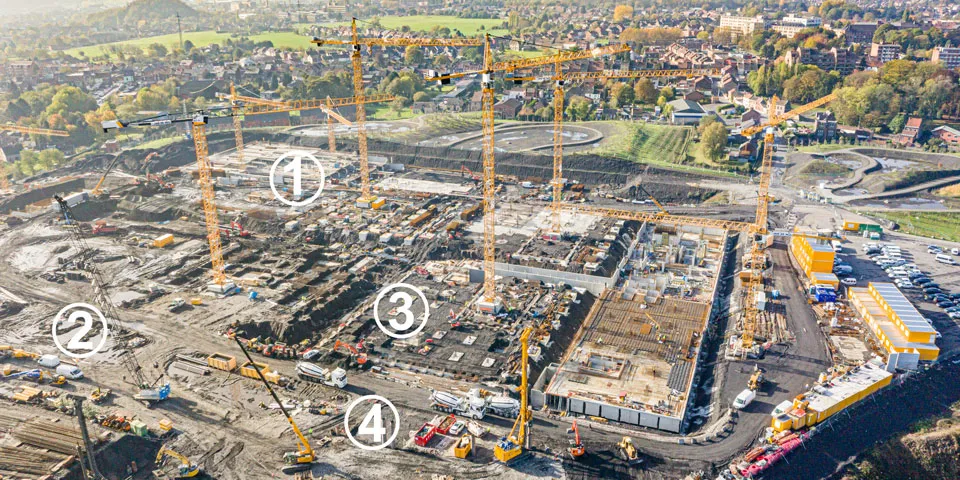
Secant pile walls, Vibro driven piles, Kelly-system bored piles, sheet pile walls, … Soetaert (Jan De Nul Group) has been working on the Grand Hôpital de Charleroi site since March. Once complete, it will be Belgium’s second-largest hospital. The unusual ground conditions and significant variations across the site have required the company to use a wide range of techniques. We take a chronological look at the work with Erwin Dupont, head of the Pile Foundations department at Soetaert.
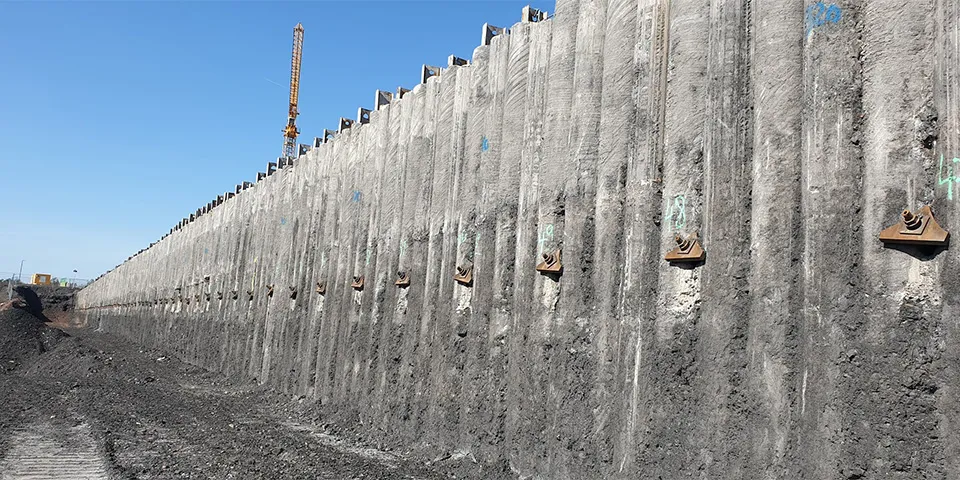
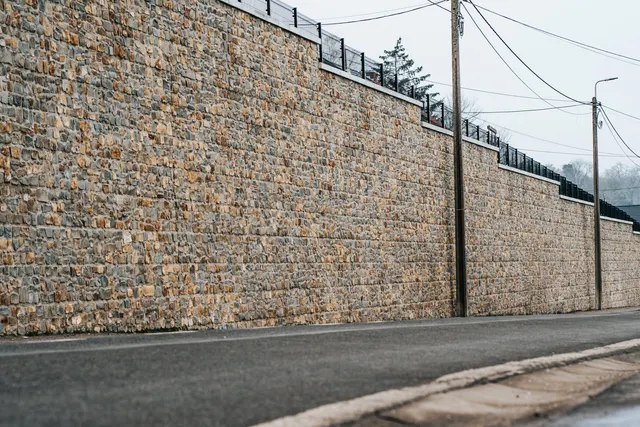
1 | Secant pile retaining wall with anchors.
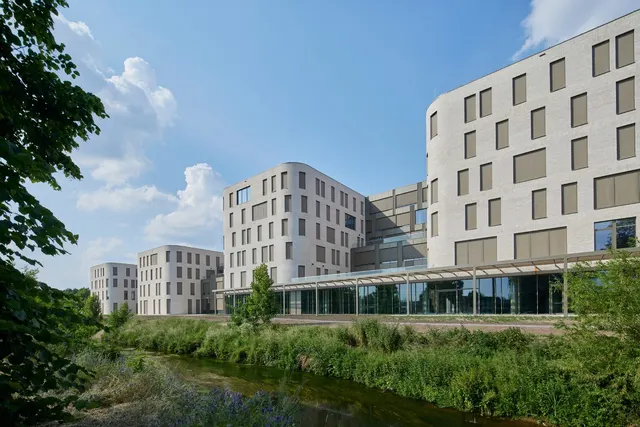
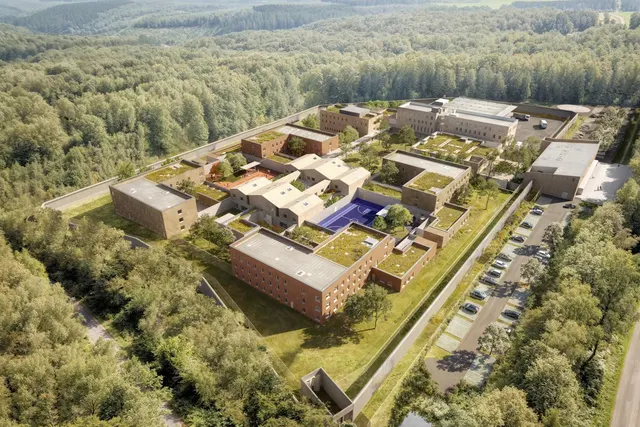
The site is east of Charleroi, in the former municipality of Gilly, and more specifically on the former Viviers mining site. A new hospital complex (4 ha) and its car park (1.5 ha) are being built on a 17-hectare site, surrounded by an extensive park. The project is currently at the structural works stage.
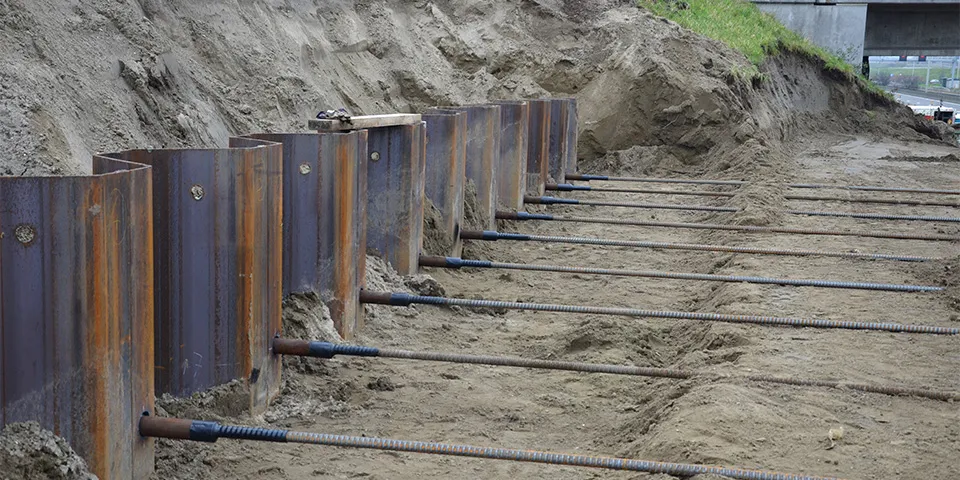
2 | Sheet pile wall with passive anchors.
In March and April, Soetaert began by constructing a 265-metre-long retaining structure, 11 to 12 metres deep, between the future buildings and the car park. The secant piles are 63 cm in diameter, with a centre-to-centre spacing of 55 cm once installed. A total of 125 self-drilling anchors, 16.5 to 21 metres long, were required to ensure the structure’s stability.
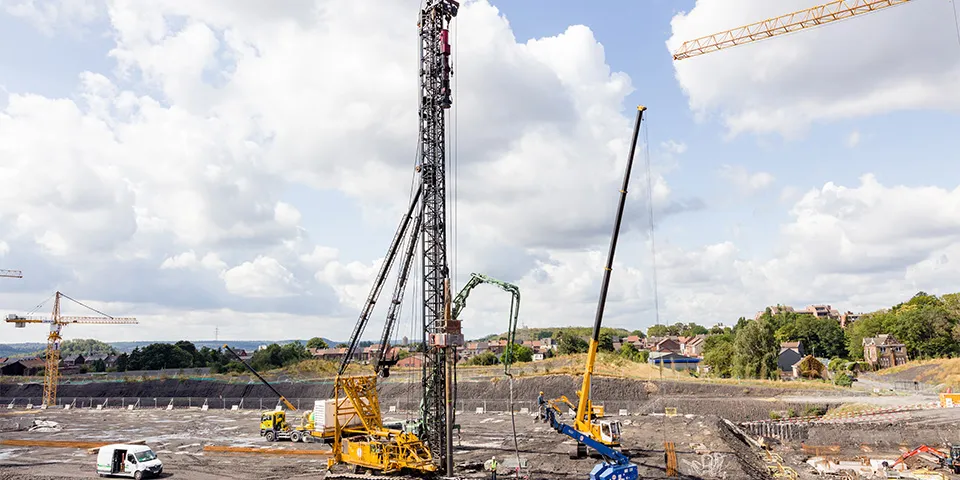
3 | Vibro piles.
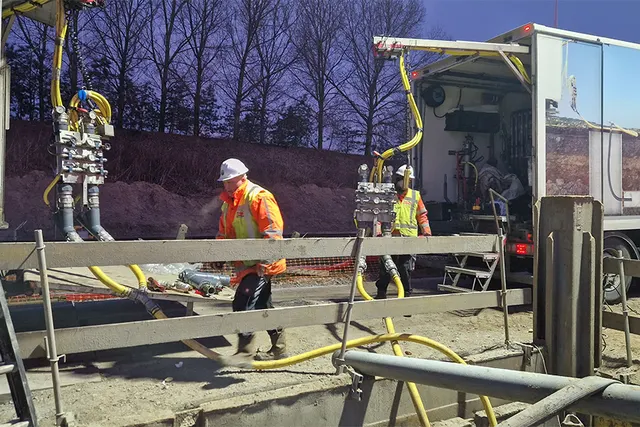
From mid-June to mid-October, Soetaert gave its competitor De Waal a hand to help it keep to the programme (see article on pages 88-89). Work proved more difficult than expected because of the unpredictable ground conditions on this levelled spoil tip, despite extensive ground investigations. Soetaert drove around 900 of the 2,600 Vibro piles (diameter 41/46) to a depth of up to 21 m in schistose ground.
Since mid-October, the company has also been using Kelly-system bored piles in a specific part of the site where the ground conditions called for a particular solution. Erwin Dupont: « This is a former slurry pond, with the sloping bedrock 35 metres below ground. When the mine was operating, mining waste from coal washing and crushing, known as slurry, was dumped in a settling pond. The piling techniques used in other areas of the site could not be used here because of the considerable depth and the need to anchor into the bedrock. » In total, 187 large-diameter piles (88 and 130 cm) are currently being bored to varying depths, owing to the slope of the bedrock. The maximum depth is 42 metres.
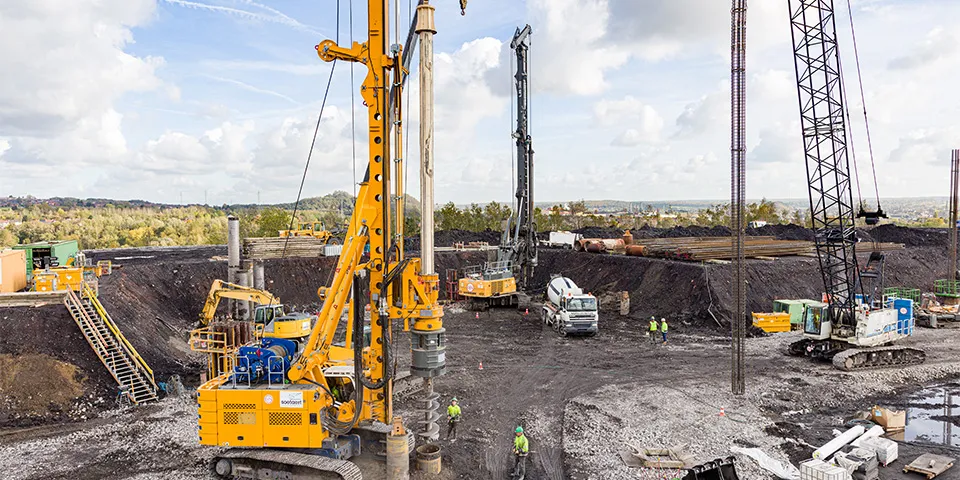
4 | Kelly bored piles.
Finally, after the year-end break, Soetaert will also build a retaining structure on a slope using sheet pile walls with passive anchors. Having carried out both retaining works and pile foundations, the Ostend-based company will then have spent a full year on the Grand Hôpital de Charleroi site. Erwin Dupont: « This project is quite exceptional for us, as we are using most of our techniques here. »
Question about this story? Ask your question
Keep following this
Get an email when a new story is published. No account needed.
- SubjectProjects