A taste for innovation and expertise
Texte Philippe Selke Photos Eloy
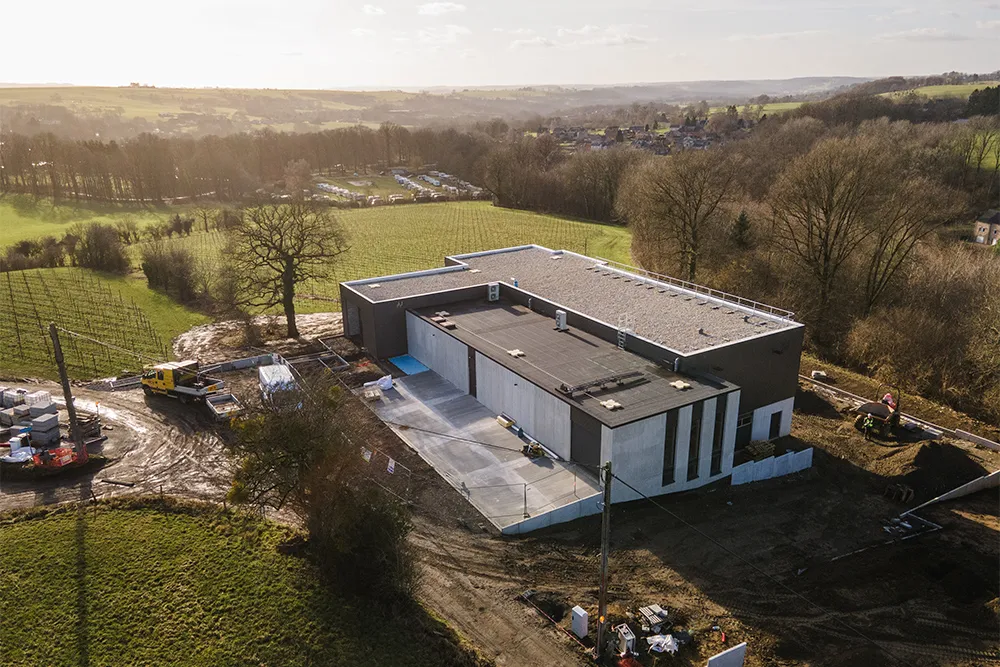
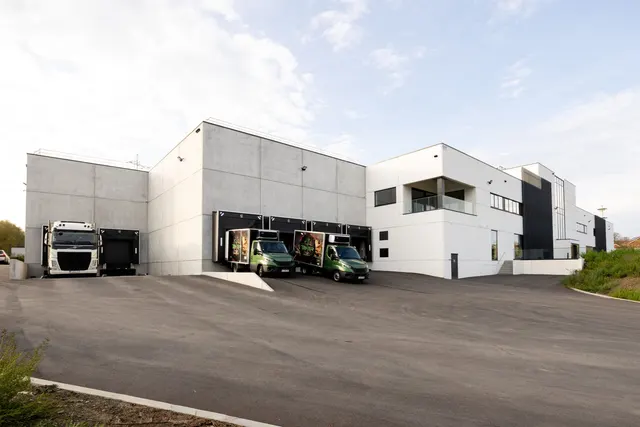
VivArdent, a 6 ha vineyard with a unique concept, has been established in Sprimont, a stone’s throw from eloy’s headquarters. Naturally, the client entrusted eloy with building the 650 m2 winery on two levels, designed for production and sales, as well as hosting wine-related activities. Teamwork and adaptability made it possible to erect a building that was a first for almost all those involved, as well as a technical first thanks to the project’s sustainable credentials.
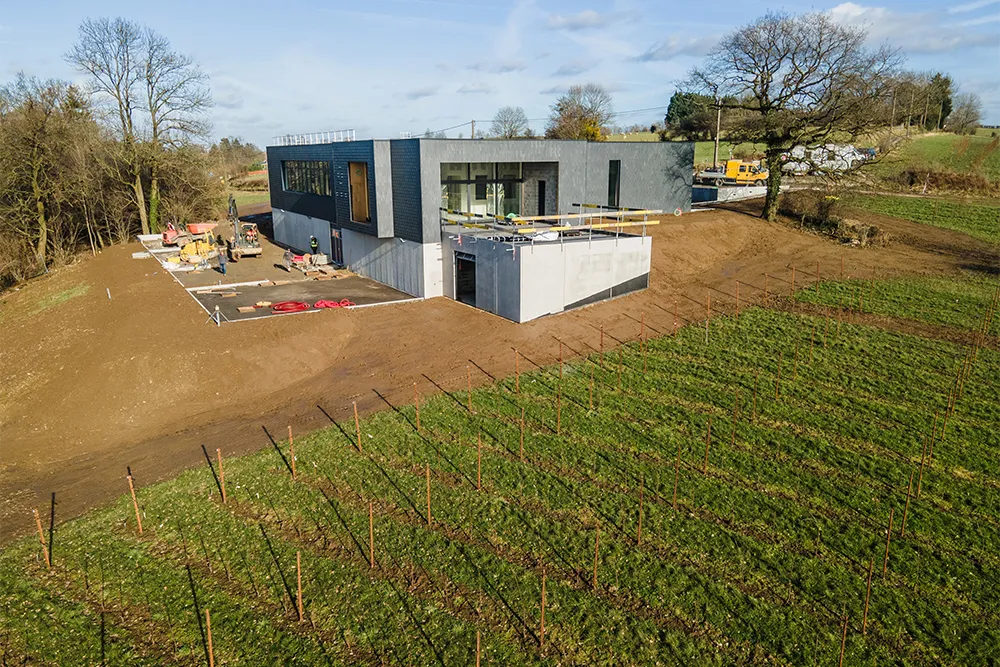
VivArdent is a wine production and sales concept operating as a “Winery”, built around 3 pillars: producing, ageing and distributing wines made from grapes grown on the estate and elsewhere; providing winemaking services and viticulture consultancy; and hosting events for partners and visitors. Modern in appearance yet aesthetically pleasing, the winery is designed to be versatile and adaptable. It is oversized for the local vineyard, with tanks and barrels, as well as a bottling unit and a large multi-purpose hall.
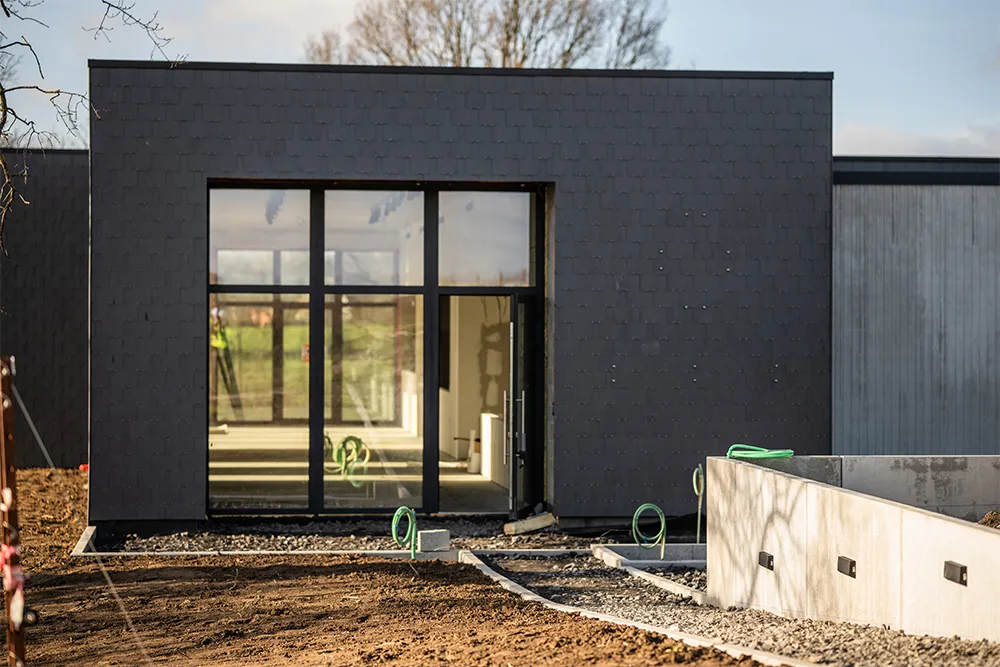
As the client and the local authority had hoped, the winery, located in open countryside, blends into its natural surroundings. Cédric Meys, site manager at eloy: “The exterior had to convey a sense of mineral solidity. We didn’t want to build an industrial-style steel ‘box’. We used board-marked concrete and natural slate cladding. The project was also moved 3 metres to preserve an old oak tree.”
A project that has matured
“VivArdent is the kind of unusual project where teamwork really comes into its own, although we would have preferred to be involved even earlier,” says Cédric Meys. “The client’s vision had not yet fully taken shape when the project began (late 2021), and the process partner, on whom many aspects would depend, had not yet been selected. Coming into the project somewhat later, we were still able to improve certain aspects, but we could probably have optimised it before the planning application, giving our client the best solution within a carefully controlled budget and programme. When we work in a bouwteam from the outset, we are more inclined to suggest alternatives than under the traditional model, which confines the contractor to following the specification. In any case, the client was pleased with the result at VivArdent.”
Xavier Bioul, one of VivArdent’s directors, confirms this: “I have nothing to compare it with, as this is my first winery. I did my preparatory work, then approached eloy as our neighbours, and they got to work. The financial plan covered both the building and the development of the facility, so we had to work within a budget set in advance. Everything went smoothly, both in terms of execution and communication, and the innovative, high-quality solutions stayed within budget. eloy’s teams put as much energy into this project as they do into those for much larger clients. It is good to feel the genuine support of a local company in developing VivArdent.” “
Decarbonised cement
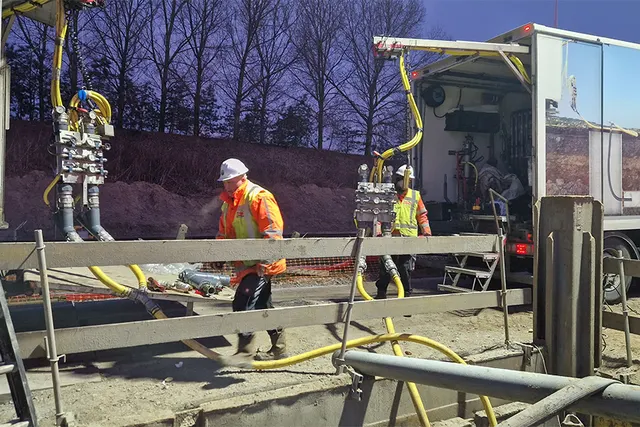
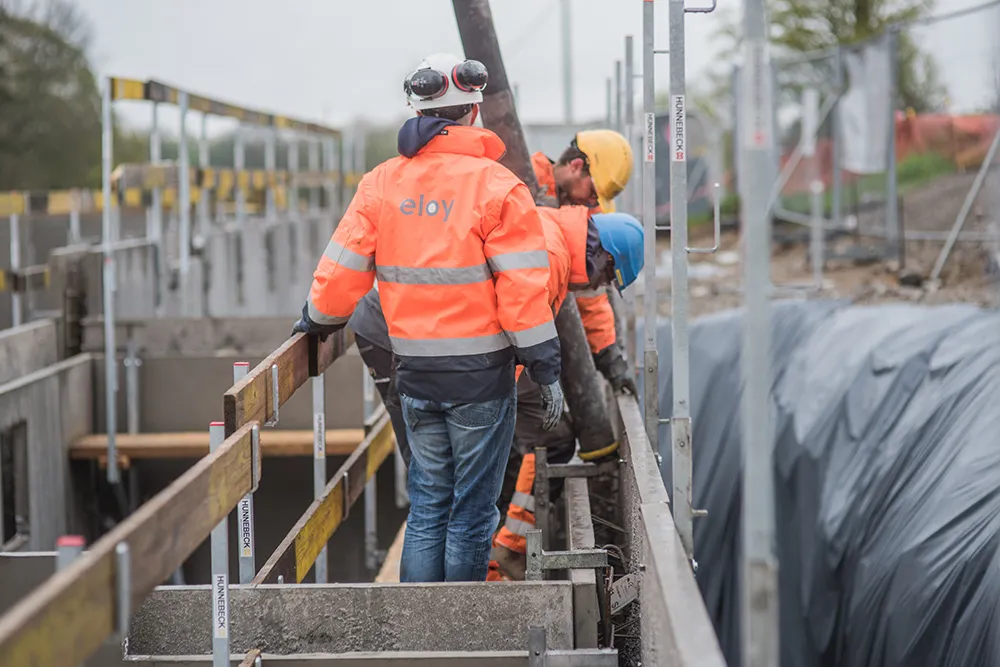
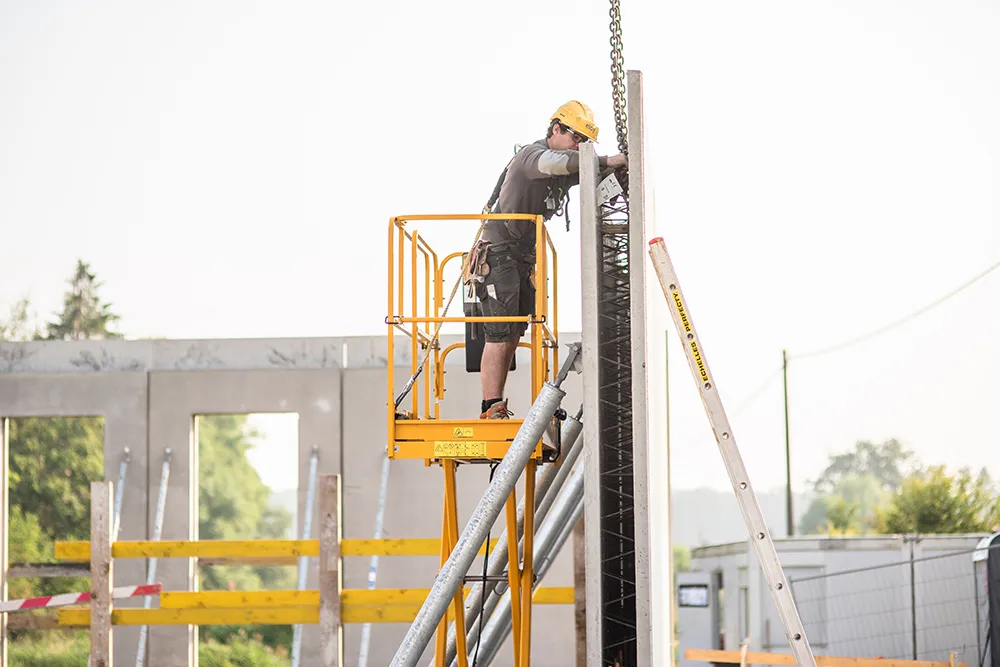
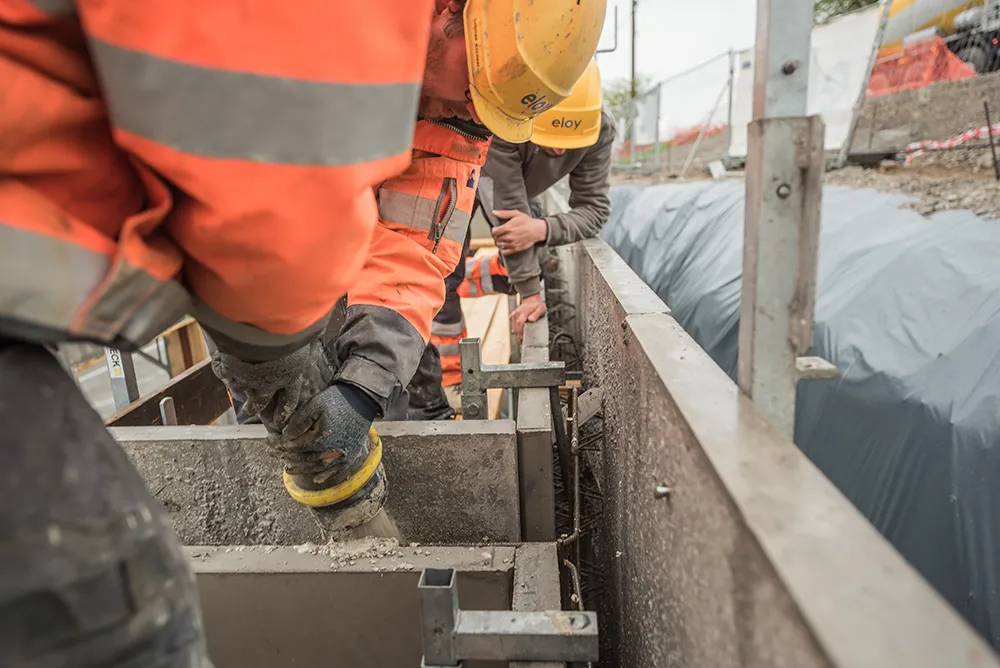
eloy also changed the approach to the concrete elements: the walls originally specified as in-situ concrete were replaced with precast elements, which are quicker to install. There was, however, a notable feature that was another first: the precast wall panels were filled with 200 m3 of concrete made using a new type of decarbonised cement. Manufactured by French group Hoffmann, the cement generated 5 times less CO2 during production than conventional cement. Clinker is replaced with blast furnace slag and chemical industry co-products (geopolymers). VivArdent’s winery is therefore a pilot project. Martin Wintgens, site supervisor at eloy: “A new cement means new installation requirements in terms of flow and shrinkage, a different appearance, … All these parameters were studied, tested and approved. The applications we have used it for so far have produced very satisfactory results, particularly in terms of strength.” As a key partner of the Hoffmann group in Belgium, eloy plans to develop the market for this type of product in 2024 as part of its low-carbon strategy.
Flexible solutions
Another example illustrates the innovative nature of the bouwteam concept and the flexibility it requires: “The drainage system had to be designed to accommodate possible future legislation on treating winery wastewater. Unlike France, Belgium does not yet have such legislation. We proposed separate treatment systems for conventional wastewater (using an eloy Water package treatment plant) and winery wastewater (stored in tanks for off-site disposal). This solution can be modified at little cost when the latter can be discharged into the ground.” Martin Wintgens also recalls other challenges on this unusual site, such as building the 7 m-high double-height tank room, which required two walls to be erected one above the other; landscaping the site during two months of rain last winter; and the difficulty of getting deliveries of precast elements to the site along narrow farm tracks.
At the time of writing, the building is in the finishing stage and is due to be handed over in May. The winemaking equipment will be installed by a specialist French contractor offering a complete service from design through to commissioning. Although it will be another two years before grapes grown on site can be made into wine, VivArdent plans to carry out its first trials this year, using grapes from elsewhere. Xavier Bioul: “At a time when farmers are protesting for their survival, VivArdent aims to add value to a product from local agriculture, embracing every stage from production to distribution and delivering quality at a fair price. These are values we share with our contractor partner.”
Question about this story? Ask your question
Who worked on it
- ClientVivArdent
- ArchitectYannick Sante Architectes
- Main contractoreloy
Keep following this
Get an email when a new story is published. No account needed.
- SubjectProjects