











Infrabel launches fresh raft of measures to improve train punctuality
A national action plan, including the use of artificial intelligence, aims to reduce the impact of risky behaviour on traffic
Track intrusions and level crossing incidents cause more than 12 hours of delays across the rail network every day. In response, the rail infrastructure manager is launching a national action plan. Built around 3 pillars (awareness-raising, prevention and enforcement), it includes a raft of measures, several of them innovative, designed to improve punctuality and save lives. Among other things, Infrabel is making unprecedented use of artificial intelligence at selected level crossings.
A national, multidisciplinary approach
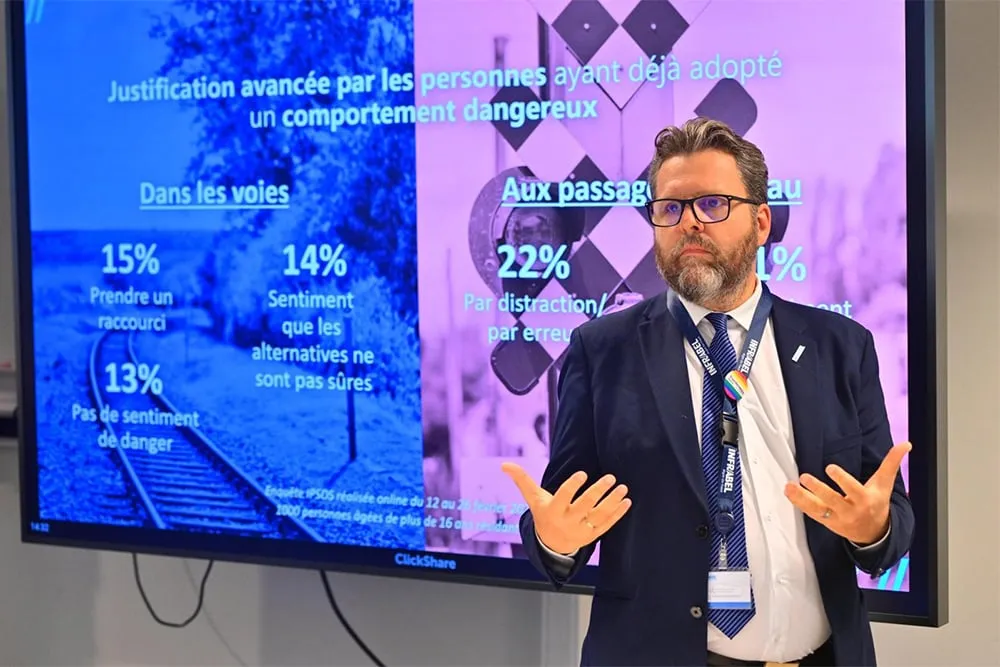
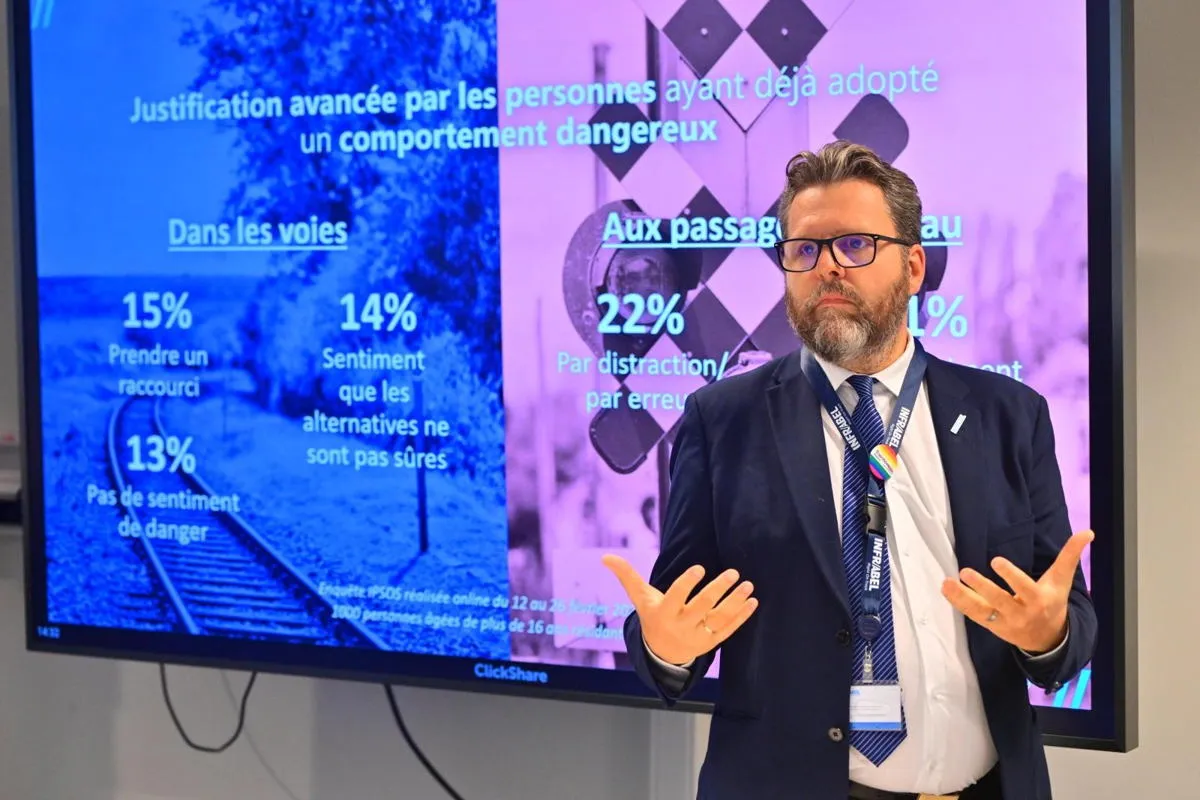
“Know your enemy and know yourself, and you will be victorious”. Infrabel applies this principle, taken from the strategy treatise “The Art of War”, in its efforts to improve the regularity of rail traffic. To identify the all-too-common dangerous behaviours and the motives of those who engage in them, the rail infrastructure manager surveyed a sample of 1000 people*. The results show that Belgians know the rules but underestimate the risks. For example, 48% of respondents said they were “prepared to cross the tracks”, mainly “to take a shortcut” (15%) or because they felt there was “no danger” (13%). A similar lack of caution is shown at level crossings by 41% of respondents. Their main excuses are distraction (22%) and not feeling in danger (19%).
By analysing incidents and their consequences, and drawing on the findings of this survey, Infrabel is developing a national action plan to tackle these so-called “third-party” causes. Last year, 31 accidents (and 324 incidents) at level crossings, along with 632 recorded intrusions onto railway property, caused an average of more than 12 hours of delays each day (10 hours due to intrusions and 2 hours 25 minutes due to level crossings). To tackle this worrying societal problem, Infrabel is strengthening its toolkit, while also relying on partners to take a multidisciplinary approach.
* IPSOS survey conducted online from 12 to 26 February 2024 among 1000 people aged over 16 living in Belgium
Raise awareness, prevent and enforce
Infrabel has always focused on raising awareness. Its recent digital campaign “The voices of those left behind” generated more than 6 million views. A new campaign will be launched across various channels in the coming months, with the aim of encouraging behavioural change. The network manager also runs educational games in schools. New activities tailored to young audiences will be introduced this year.
In terms of prevention, in other words measures to adapt infrastructure, considerable efforts have been made in recent years and will continue in 2024. These include:
- Securing 3 tunnels (Jonction Nord-Midi, Anvers-Central and Esneux) with intrusion detection systems. This year, 3 more will be added to the list: Landelies (Montigny-le-Tilleul), Cinquantenaire (Bxl eastern belt line) and Remouchamps (Aywaille);
- Installing 23 kilometres of rigid fencing in areas identified as high risk;
- Installing various measures (fencing, lighting and/or cameras) at 14 stations to prevent suicides;
- Fitting LEDs to the barriers at 23 level crossings, with 20 more to follow by the end of this year;
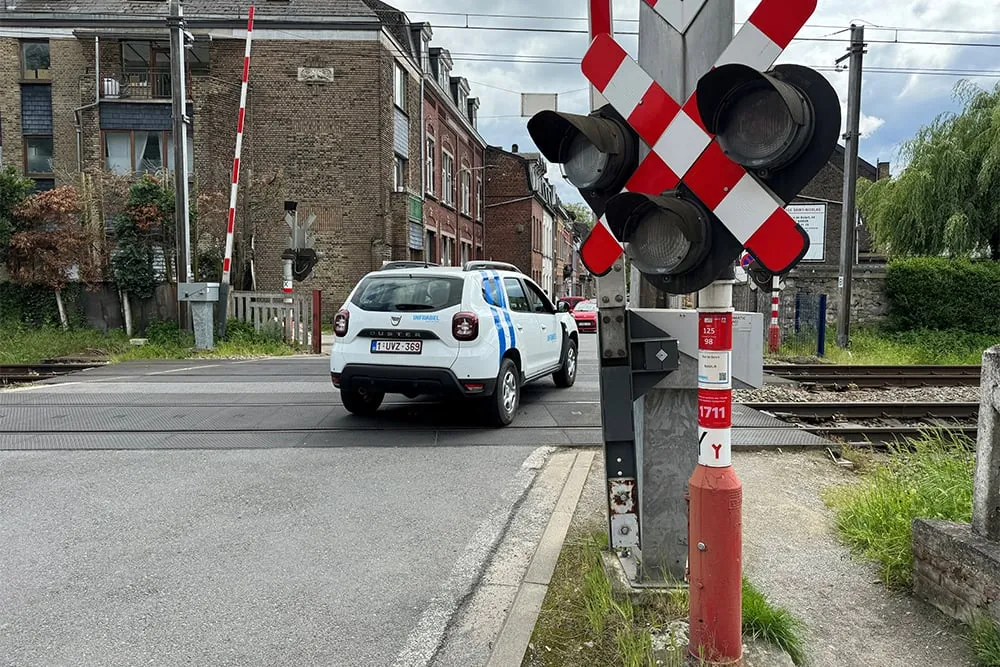
- Rolling out stickers displaying the “1711 level crossing emergency number”;
- Applying road markings (a chequerboard pattern delimiting the area where stopping is dangerous) at 5 level crossings. The number is expected to reach around 100 in due course;
- Deploying the “Warning box” at 11 level crossings, with more to follow. This mobile system sounds an alarm when a pedestrian crosses the barrier and has proved an effective deterrent: around 1 in 2 people behaving recklessly turn back.
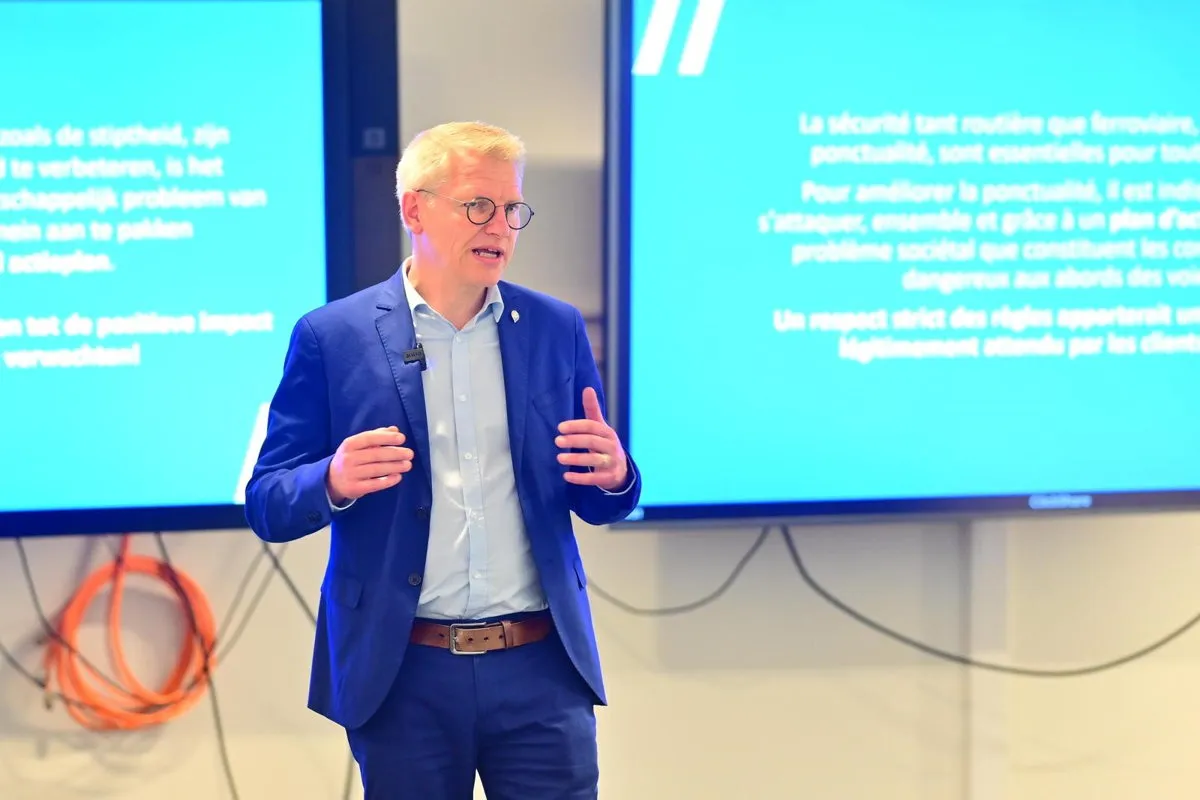
Benoît Gilson, CEO Infrabel: “Road and rail safety, as well as punctuality, matter to everyone. Improving punctuality means tackling dangerous behaviour around railway lines together, through a national action plan. Strict compliance with the rules would have the positive impact that rail customers rightly expect!”
To enforce the rules, Infrabel works with the police, who carry out targeted operations. This is the only way to convince those deterred solely by financial penalties. Another new initiative is Infrabel’s plan to introduce mediation sessions this year for minors caught in the act, instead of issuing them with an official report.
Using artificial intelligence to improve safety at level crossings
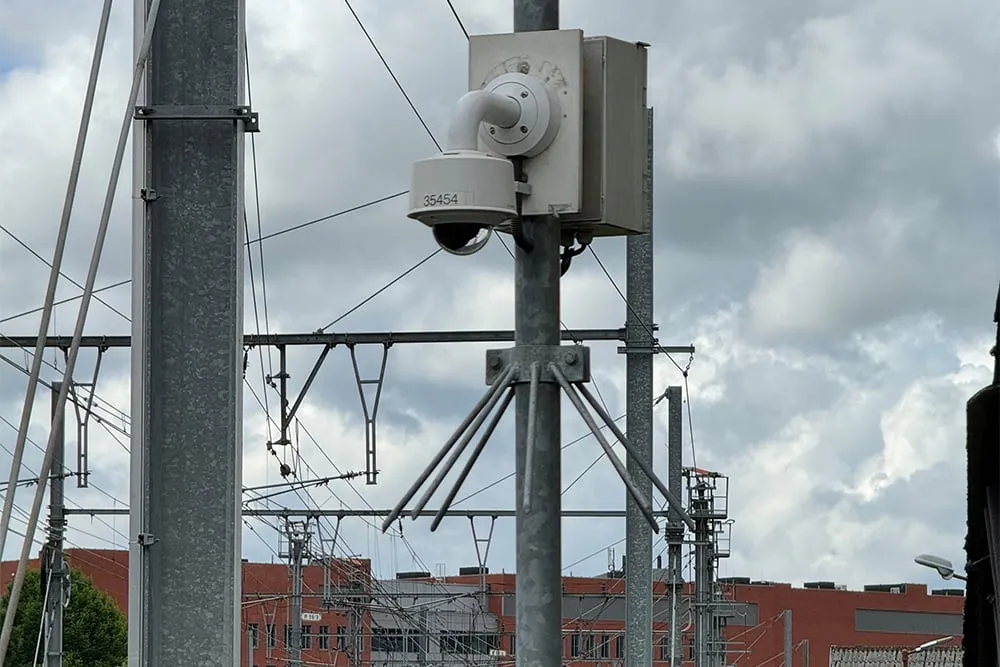
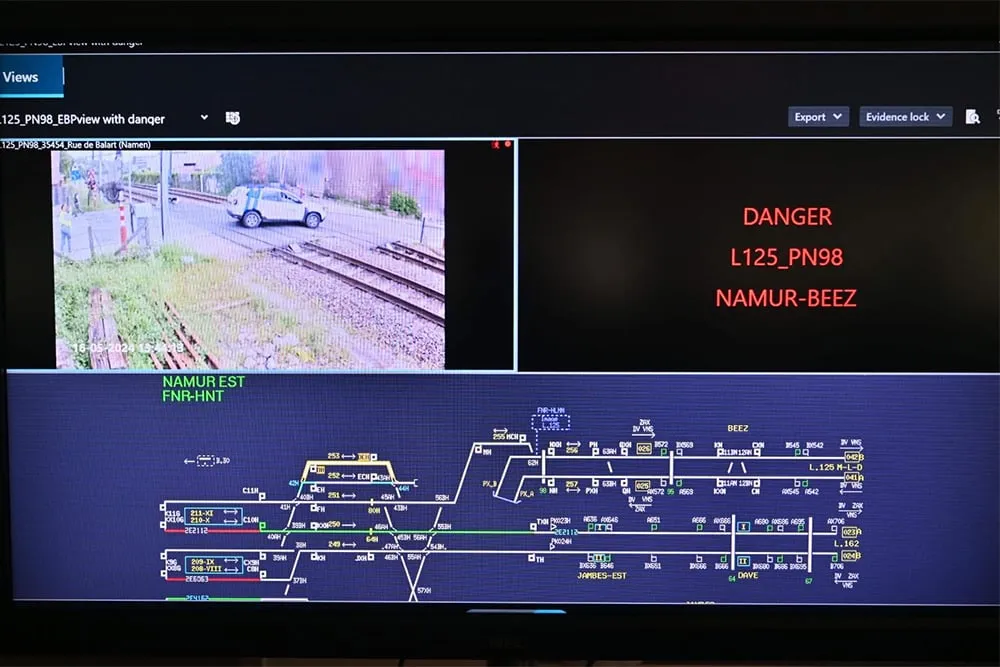
By mid-May, Infrabel will bring a new system into operation to identify risks at level crossings, using artificial intelligence (AI). Tests carried out since mid-2023 at 2 of these “rail-road” intersections (rue de Balard in Namur and Deurnestraat in Mortsel) have demonstrated the reliability of the new technology. Specifically, when a person or vehicle remains stationary for an extended period on a crossing while the barriers are open, an alarm sounds and a live view of the site appears at Infrabel’s traffic management centre. If the operator identifies an imminent risk, they can stop traffic immediately to prevent a collision, which can have very serious consequences.
Not all of the 1621 level crossings remaining on the network will be equipped. In the first phase, Infrabel’s experts identified 70 as high risk, most often due to queues backing up onto the crossing, a factor behind 40% of accidents. By the end of this year, they will be fitted with “AI” cameras at a unit cost of €10,000.
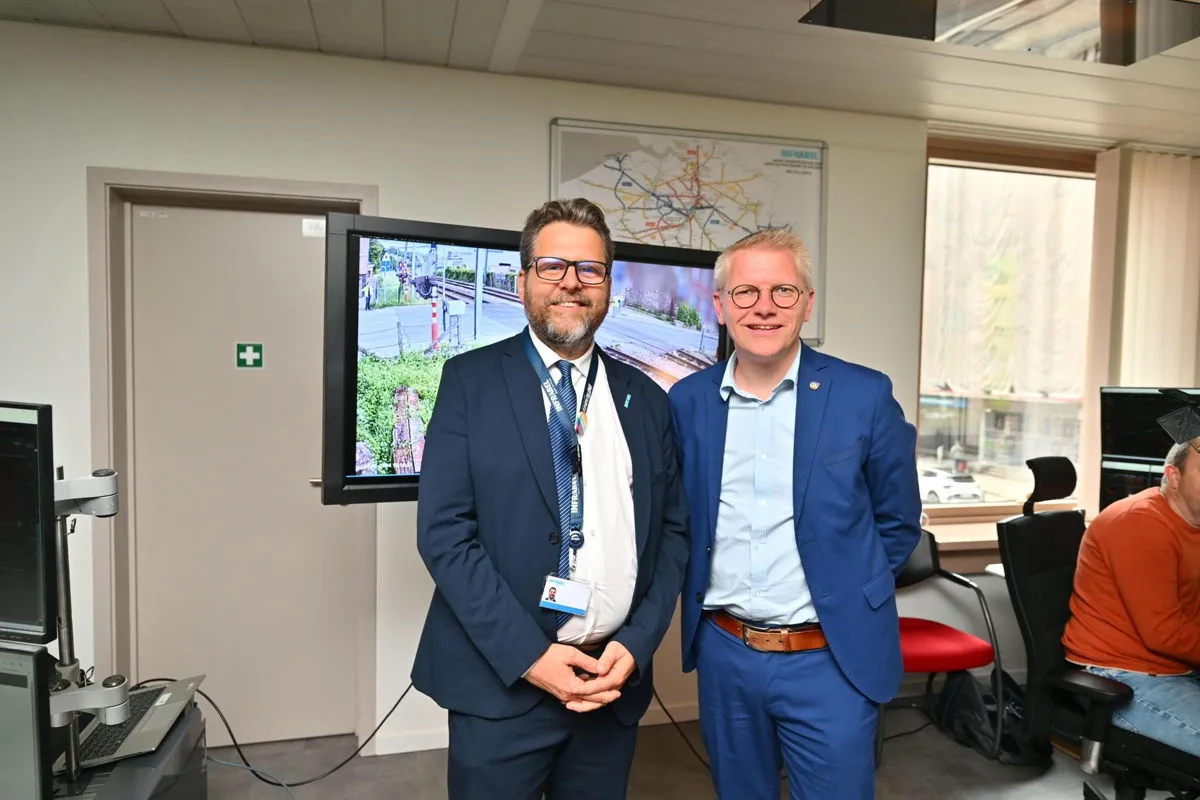
Georges Gilkinet, Federal Minister for Mobility: “Track intrusions and failure to obey the rules at level crossings not only put lives at risk, they are also one of the factors affecting the punctuality of our trains. By implementing this innovative action plan, Infrabel is equipping itself to reduce the number of these incidents, which unfortunately remain all too frequent. Alongside these new measures, our infrastructure manager is continuing its work in close cooperation with SNCB to improve punctuality. In line with the performance and public service contracts, and thanks to the new funding allocated to rail, they are taking action wherever they have the means to do so, in response to passengers’ legitimate expectations and to make rail the backbone of mobility for people in Belgium!”
Improving incident management
Some incidents will remain unavoidable, so Infrabel is looking to improve how they are managed. It takes an average of 3 hours 30 minutes to restore traffic after a person is struck. This is clearly too long! Infrabel has approached public prosecutors’ offices to make magistrates aware of the consequences for passengers of arriving late at the scene. It is also working on measures to speed up the response time of funeral services.
Finally, “Access to Railway” will be operational by the end of 2024. This innovative application uses geolocation to tell emergency services the easiest way to reach a railway site where an incident has occurred. Once again, the aim is to reduce response times and the impact on punctuality, for the benefit of customers whose expectations of improvement are entirely legitimate.
Question about this story? Ask your question
Keep following this
Get an email when a new story is published. No account needed.
- ThemeTransforming infrastructure and territories
- SubjectNews







