











Inauguration of Bressoux’s new urban boulevard and new access routes to the multimodal zone
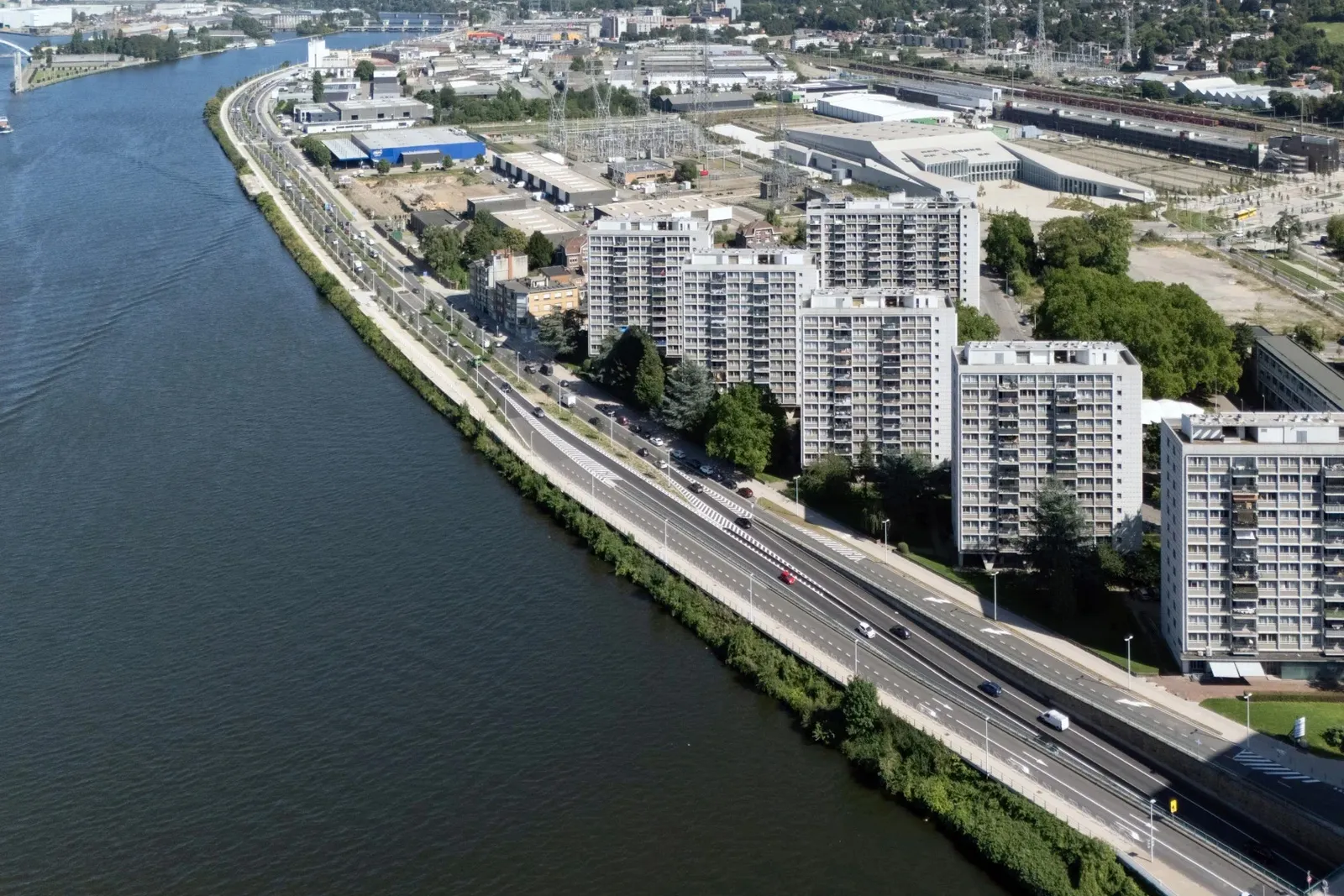
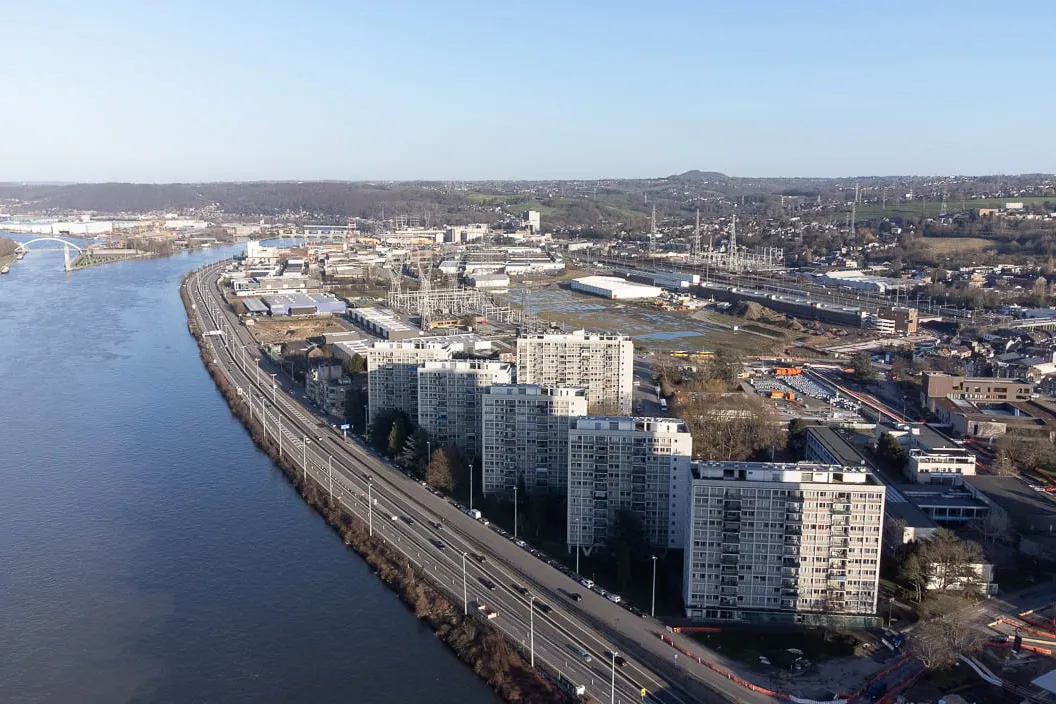
Since this summer, one of the main routes into the City of Liège has been completely transformed: the former A25 motorway, between the Monsin dam bridge and Atlas Bridge, has been converted into an urban boulevard, with new access routes to the Bressoux multimodal zone. The project, which is fully integrated into the PUM (Urban Mobility Plan) for the Liège metropolitan area, helps to calm motorised traffic, provides infrastructure dedicated to active travel and brings more greenery to the area. After just over 3 years of work, this major project was inaugurated this morning by SOFICO and all the partners involved in its delivery.
Introduction
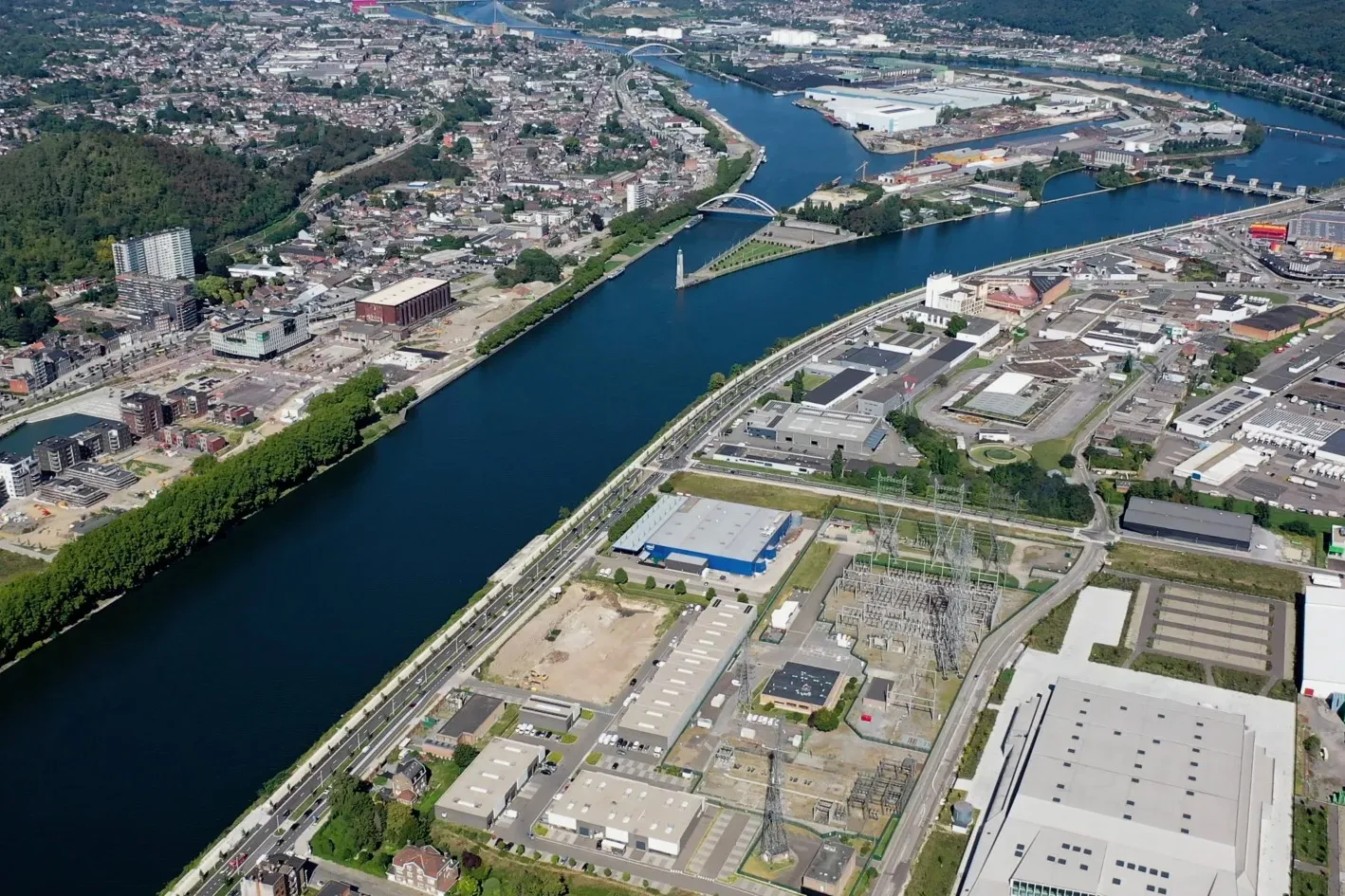
Liège’s Urban Mobility Plan (PUM), adopted in 2019, was developed in response to a finding confirmed by several studies: mobility in Liège would become gridlocked unless effective alternatives to the private car were put in place. As part of this wider drive, it was decided to completely redesign the city’s north-eastern entrance to support the transformation of mobility across the metropolitan area.
A greener gateway to the city, encouraging public transport and active travel
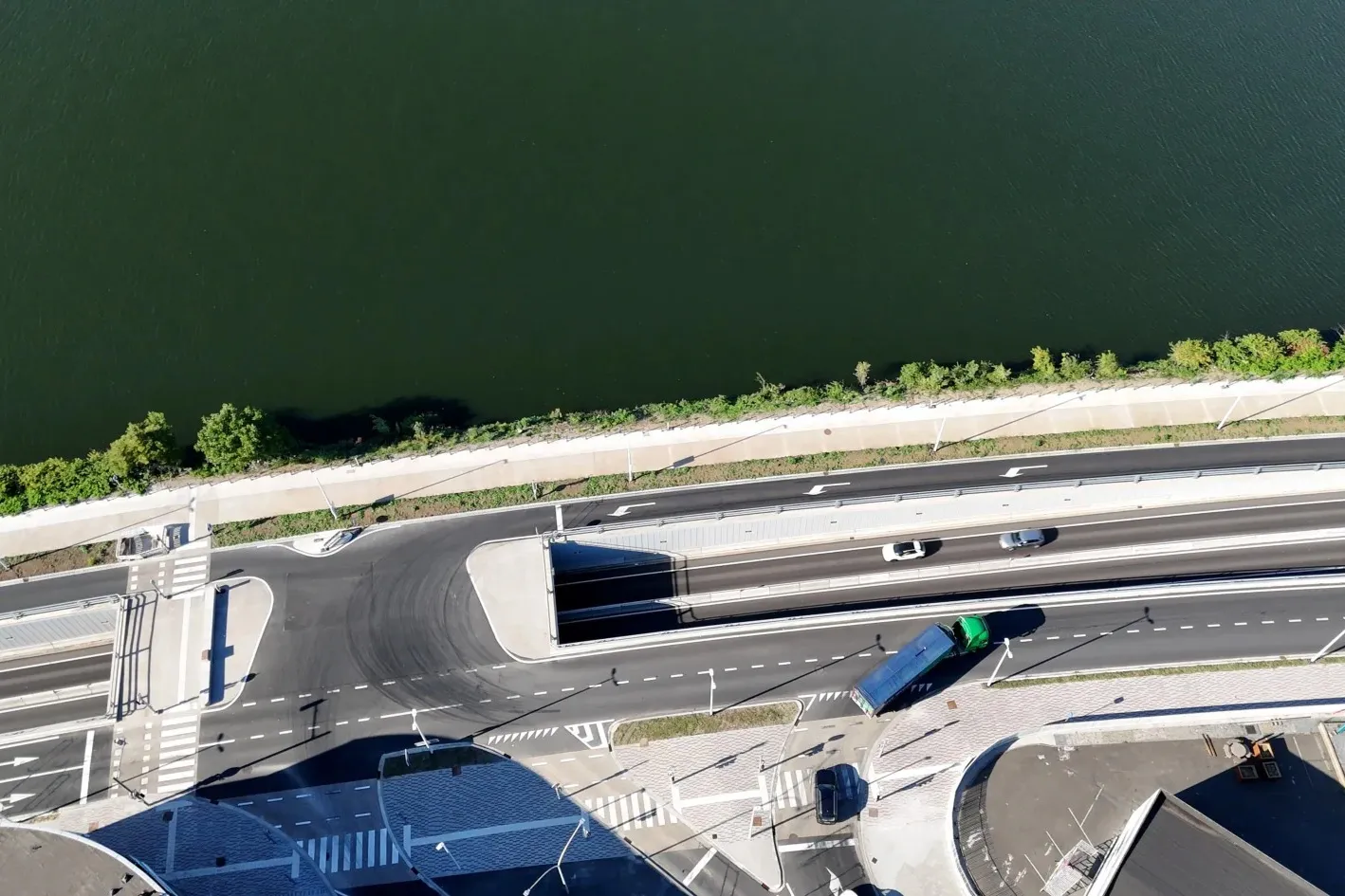
The works covered a 2 km section, transforming this stretch of the A25 motorway between the Monsin dam bridge and Atlas Bridge into an urban boulevard and providing access to the Bressoux multimodal zone. They began in March 2022 and were completed at the end of June 2025. The road layout was completed at the end of 2024, while the cycling and pedestrian facilities on the Meuse side were completed by the end of June 2025.
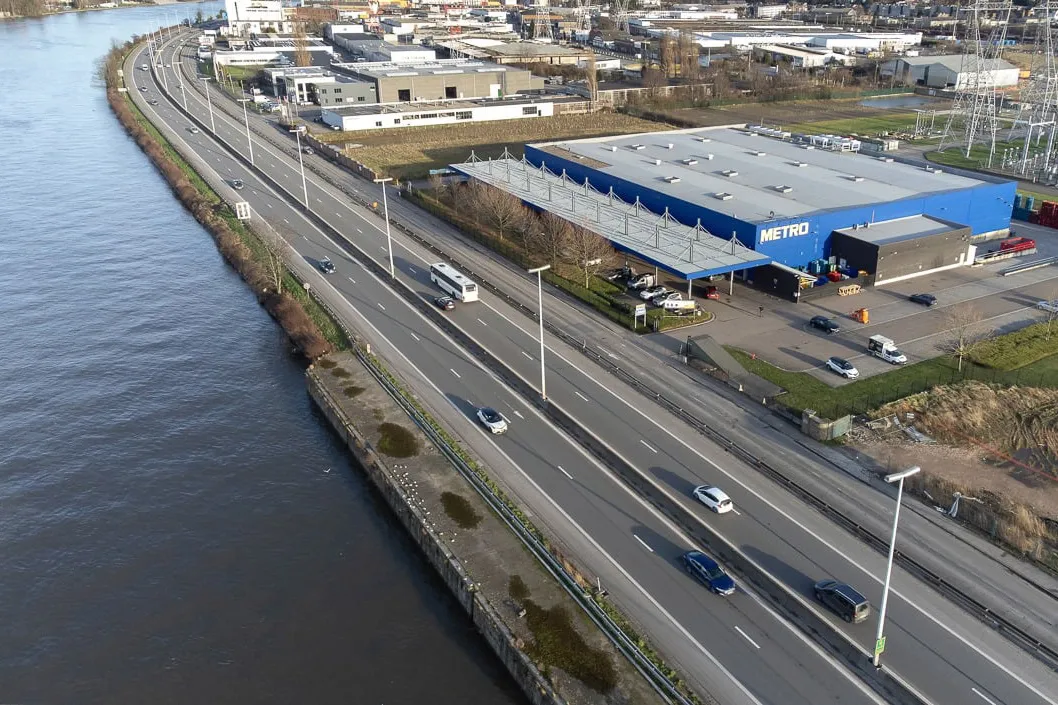
The existing A25 motorway had 2×2 lanes and a hard shoulder. Georges Truffaut Avenue ran alongside it, with 2×1 lanes, and the Meuse lay on the other side.
The space has been reorganised to:
- Calm motorised traffic.
The road embankments of the A25 and Georges Truffaut Avenue were demolished to make way for the new roads. The area now has two lanes for traffic leaving the city and one lane for traffic entering it, with a speed limit of 50 km/h.
- Create an access point for the tram depot, the P+R car park, Liège Expo and the rapidly changing Bressoux neighbourhood.
Jupille Avenue is connected to the new facilities by a new underpass. This structure was needed to meet mobility requirements for traffic entering and leaving the city. At surface level, it has a signal-controlled junction.
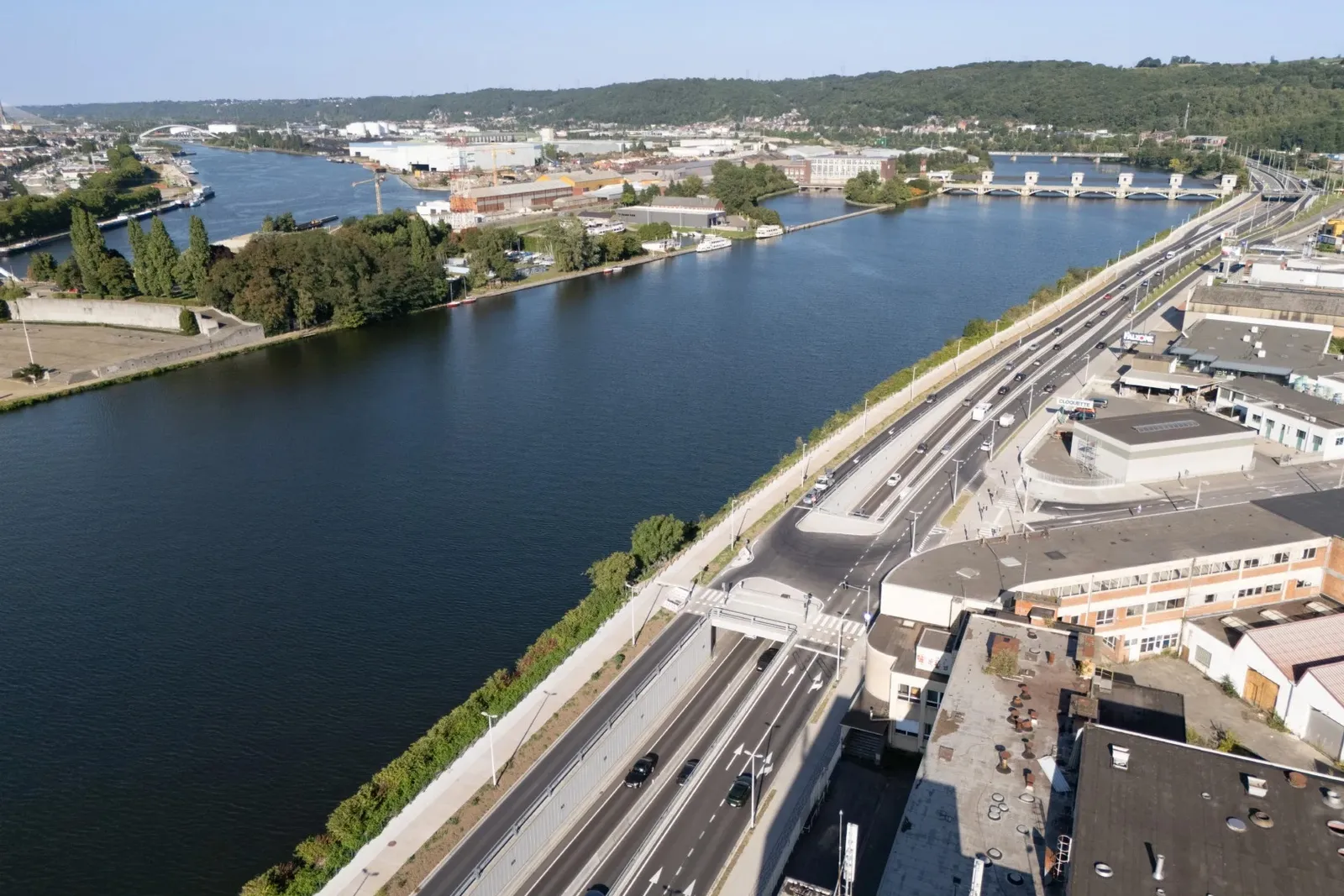
Jupille Avenue is connected to the new facilities by a new underpass. This structure was needed to meet mobility requirements for traffic entering and leaving the city. At surface level, it has a signal-controlled junction.
The new boulevard is also connected to rue de Droixhe, towards the multimodal zone, by a new road, rue Suzanne Clercx, which extends the existing rue Suzanne Clercx.
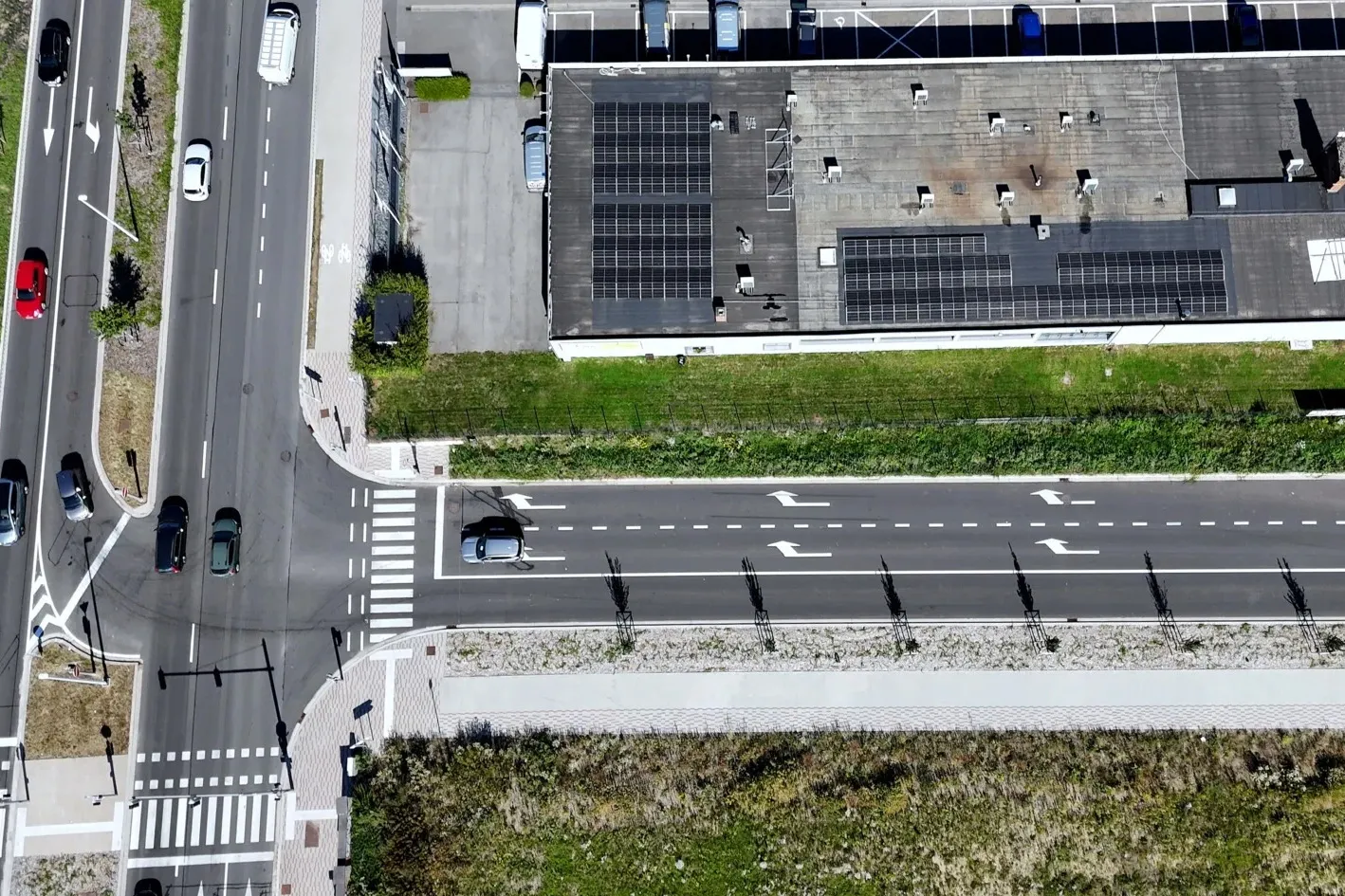
- Provide infrastructure to encourage active travel.
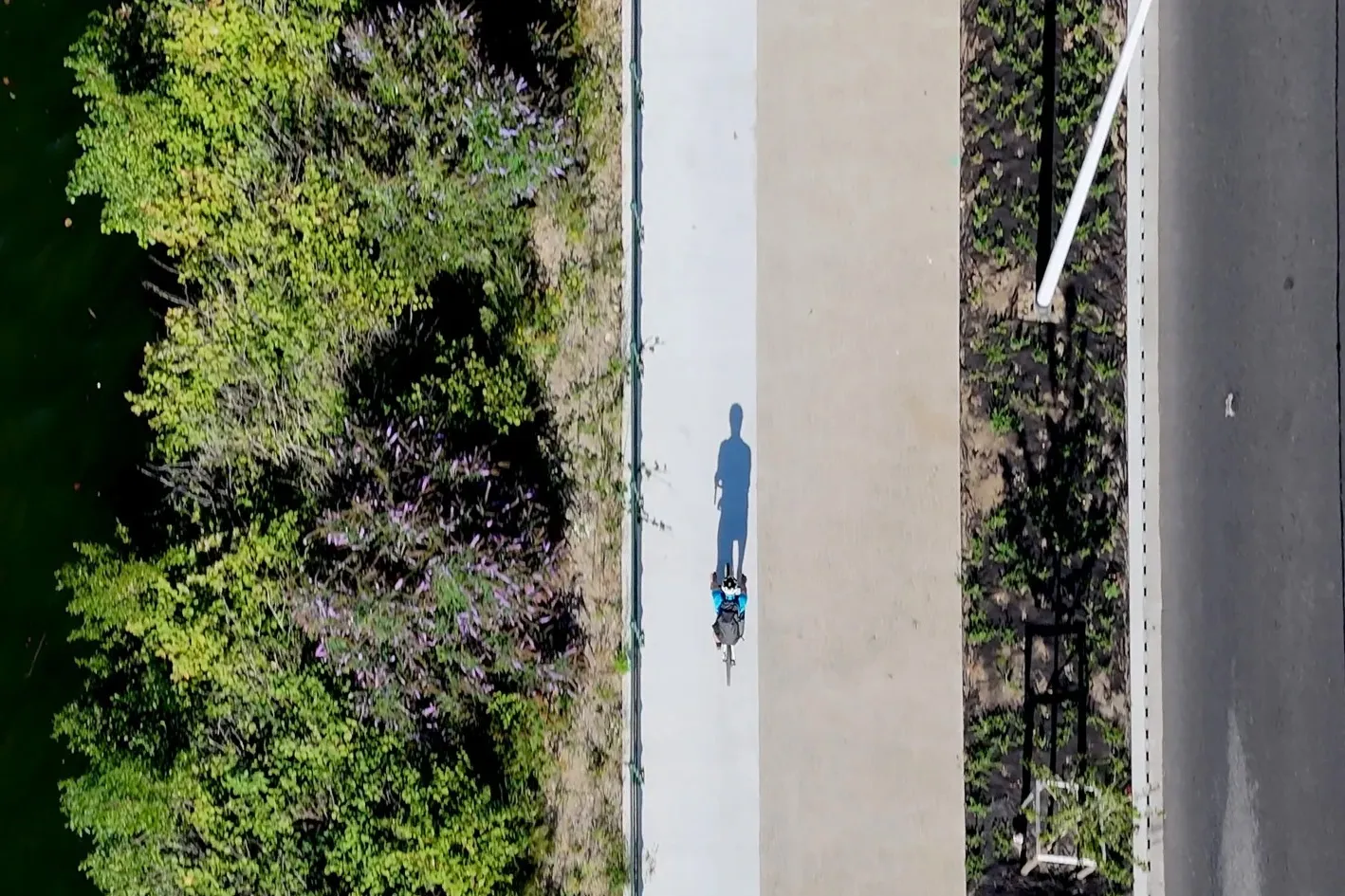
Dedicated cycle and pedestrian paths have been built on both the built-up side and the Meuse side. The path on the Meuse side is 3 metres wide for cyclists and 1.50 metres wide for pedestrians. On the built-up side, the path is 2.50 metres wide for cyclists and 1.50 metres wide for pedestrians.
- Increase the area given over to landscaping, helping in particular to improve the quality of life for local residents.
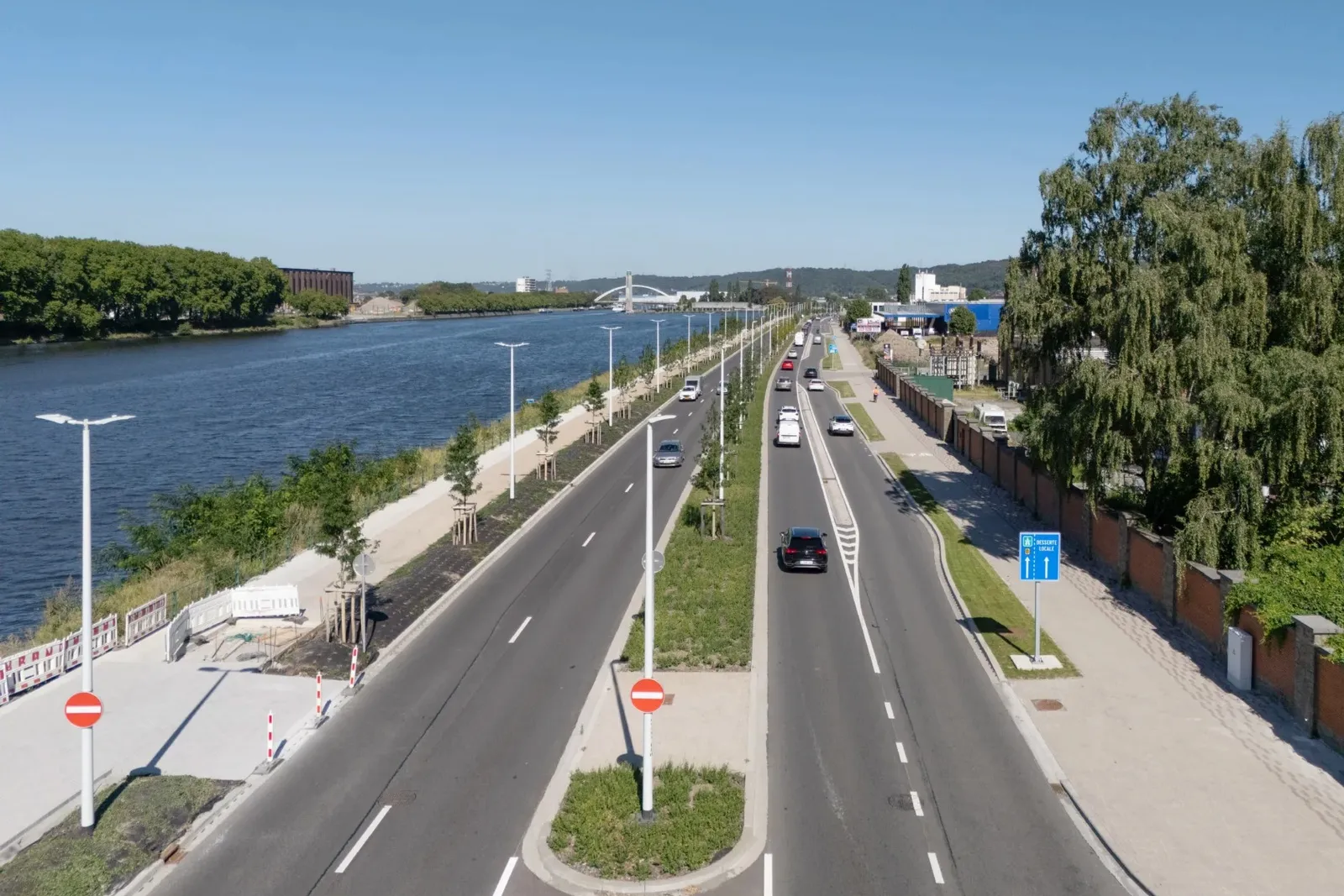
Rows of trees of various species punctuate and define the layout. Areas between the traffic routes have been planted with ground cover or grassed.
In total, there are:
- 228 trees planted, with the final trees to be planted in the autumn to benefit from suitable conditions;
- 3,960 m2 of grassed areas;
- 7,600 m2 of ground cover.
A closer look at the new underpass
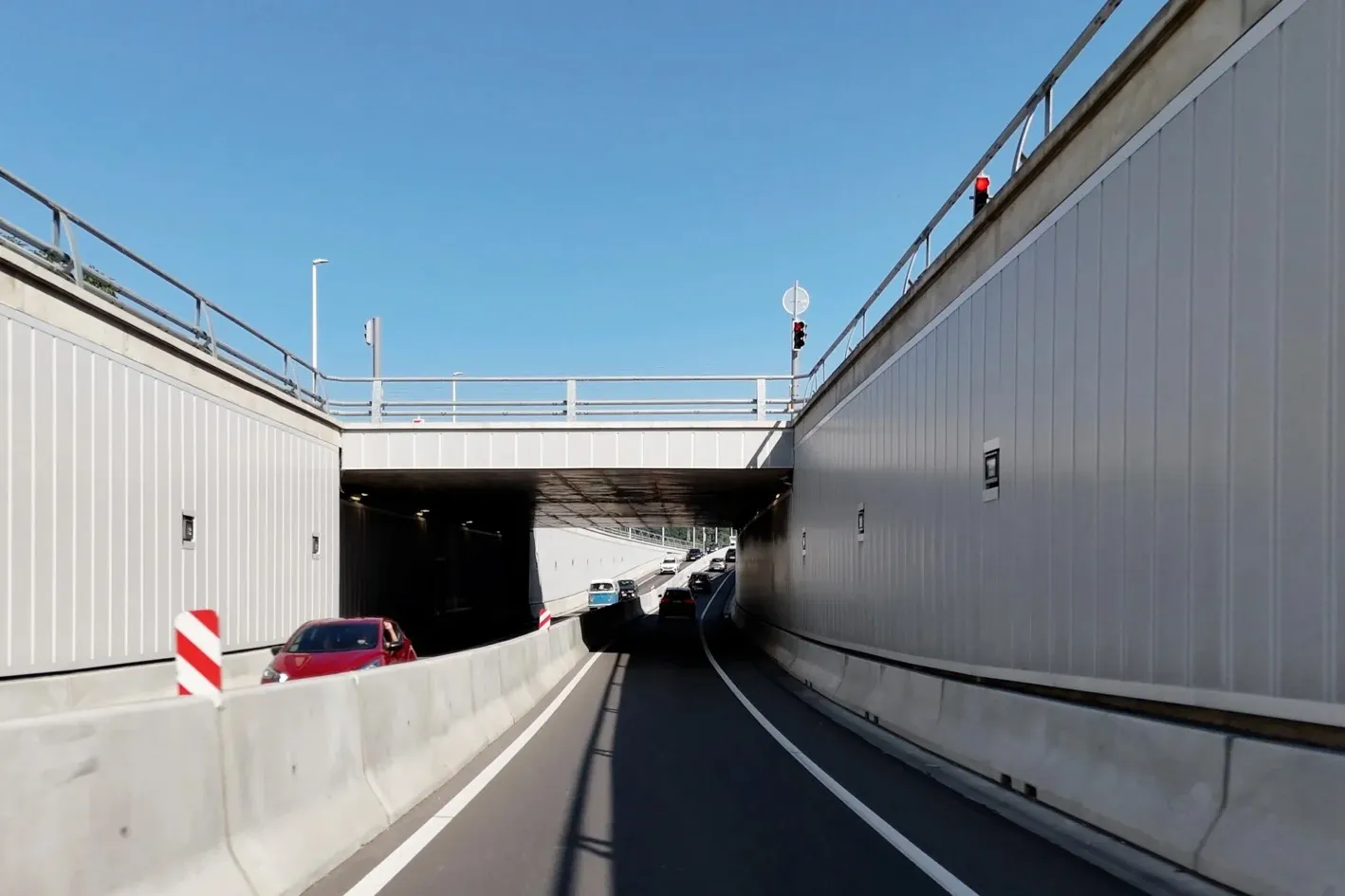
This structure, which is 295 metres long, has been open to traffic since June 2024.
Considerable work went into building the structure’s future walls, which retain the earth and ensure it is watertight. Given the limited width of the worksite, where traffic had to be maintained in both directions, secant piles were chosen. The two walls each comprise more than 370 interlocking piles and extend for 300 metres. Depending on their location, the piles have a diameter of 63 or 88 cm. One pile in every two is reinforced with steel bars. The enclosure is stabilised and made watertight by anchoring the structure into the rock.
Once the secant pile walls had been built, the roof slab was cast at ground level. Excavation then took place, removing 14,000m3 of material, while the underpass base slab was built progressively alongside it.
The installation of equipment and the laying of surfacing marked the completion of work on the new structure.
The underpass walls are clad with acoustic screens to reduce sound reverberation and limit noise disturbance for nearby residents.
A 150m³ rainwater collection tank has been installed beneath the structure. The water is discharged into the Meuse using a pumping system.
Project team
The project had a total budget of €22.71 million excluding VAT, comprising:
- €21.71 million excluding VAT funded by SOFICO, the client, with the support of a €9.5 million excluding VAT grant from the European Regional Development Fund (ERDF) under the 2014-2020 programming period. This €21.7 million excluding VAT budget covers studies, civil engineering works, new lighting, new traffic lights and the relocation of utility services;
- €1 million from RESA for medium-voltage cable installation works.
The project was delivered in collaboration with SOFICO’s technical partner, SPW Mobilité et Infrastructures, the project manager.
Bureau greisch was responsible for the technical studies for the project.
The civil engineering contract was awarded to the Galère-AB Tech joint venture.
Question about this story? Ask your question
Companies in this story

Keep following this
Get an email when a new story is published. No account needed.
- ThemeTransforming infrastructure and territories
- SubjectNews
- CompanyBureau greisch







