











Deep-cleaning surfaces
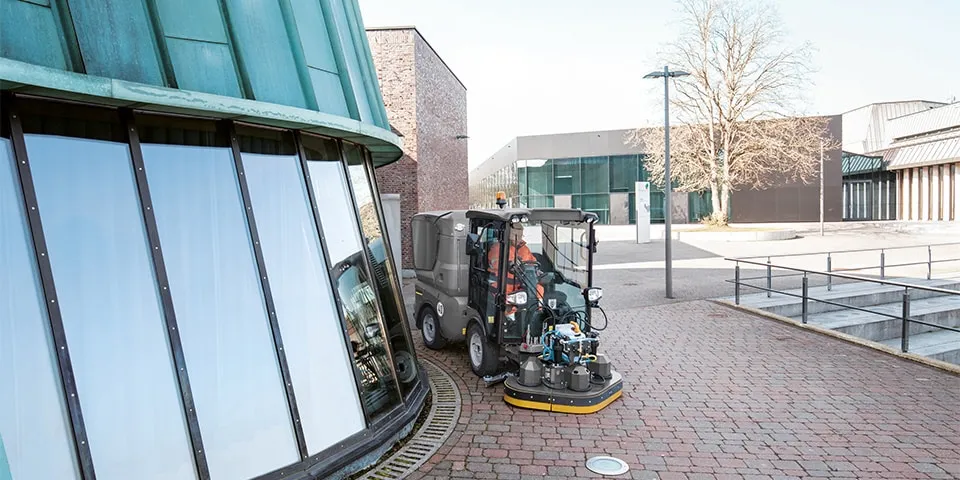
The impact of different wet-cleaning methods on streets
For wet cleaning, you can rinse at low, medium or high pressure, scrub with disc brushes or clean with hot water.
Municipal services looking for the right equipment should first consider how their machines will be used most: heavy-duty cleaning on construction sites, everyday cleaning of streets and pavements, removing greasy dirt from pedestrian areas… Which method is best suited to each situation, and when should you call in a contractor?
Here is a guide to the possible applications, along with the advantages and disadvantages of the various methods and machines.
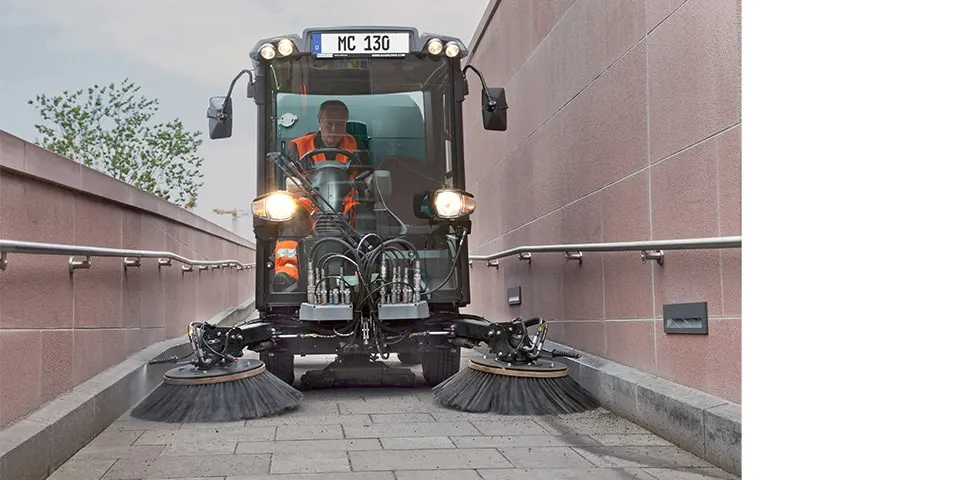
The sweeper can also work in narrow passages. (Photo: Bernd Noerig)
Vehicle-mounted spray bars are often used to spray cold water. Hand-held equipment, such as pressure washers, can also be used. The nozzles and water pressure must be suited to the task. Low pressure, up to 12 bars, is generally chosen for heavy-duty cleaning. This allows water to bind large amounts of dust on construction sites or to clean muddy streets effectively after a flood.
The equipment available is inexpensive to buy, but requires large tanks and considerable volumes of water.
Rinsing at medium pressure is an easy-to-use option. This method is suitable for everyday cleaning of streets and pavements, as well as quick cleaning jobs on construction sites. Combining pressure of up to 40 bars with a maximum water flow of 3,000 l/h delivers excellent results. The only drawback? Deep cleaning is not possible because the water pressure is insufficient.
For particularly demanding jobs, such as deep-cleaning a playground, municipal services will choose high-pressure rinsing. At 250 bars or more, water penetrates deep into the pores of surfaces and cleans them thoroughly. Water consumption is lower than with low- or medium-pressure rinsing, but the investment is higher.
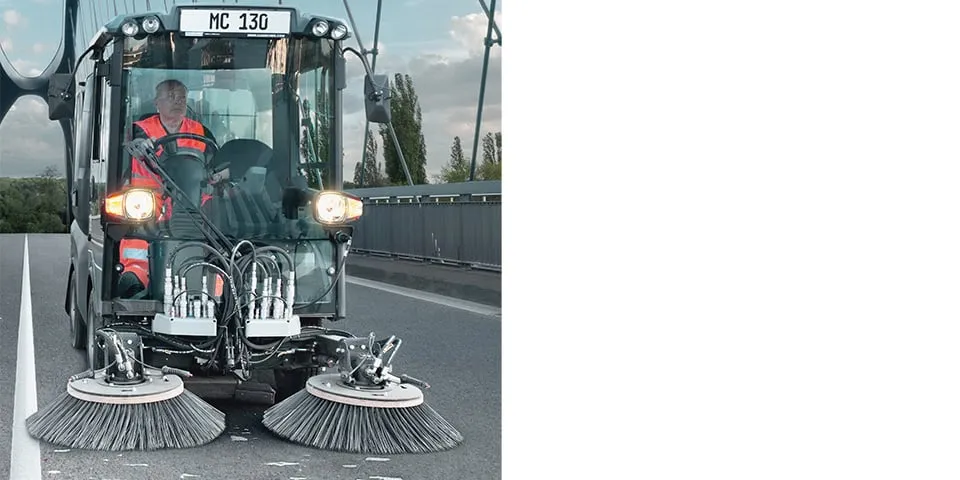
MC 130 sweeper with disc brushes. (Photo: Holger Lorenz)
Cleaning with disc brushes? Effective and flexible!
Wet cleaning with disc brushes is very common outdoors, where higher cleaning standards are required. It helps protect high-quality paving in pedestrian areas against grey deposits and keep it clean over time.
While roller brushes are generally preferred for indoor cleaning, disc brushes are the choice outdoors. What are the benefits of disc brushes? Low wear and tear, strong performance over large areas, a low rotation speed and light brush pressure. Most machines fitted with cleaning decks also use little water.
A well-equipped fleet needs a supplier that can provide versatile machines. These must be suitable for both cleaning and sweeping, and it must be possible to switch quickly from one tool to another. This means that, depending on the cleaning requirements, modular solutions with cleaning and sweeping decks must be available to achieve the required result.
If a cleaning product is essential, ask the manufacturer’s technical adviser for guidance on choosing the right combination of brush and cleaning product.
Heavy-duty jobs? Clean with hot water!
Manual hot-water cleaning using a trailer and a hand-held high-pressure washer is ideal for tasks requiring great precision, such as removing organic discolouration or oily and greasy dirt. These systems do not need a water or electricity supply, so they can be used to clean areas that are usually inaccessible. However, manual hot-water cleaning is relatively slow over large areas. For floor maintenance, removing chewing gum or oil stains, or cleaning tartan athletics tracks, for example, we recommend contacting a company with the right equipment. Given the high cost of investment, it makes little sense for municipalities to own these machines themselves.
Question about this story? Ask your question
Keep following this
Get an email when a new story is published. No account needed.
- SubjectNews







