











A tailored, sustainable solution for every type of water management
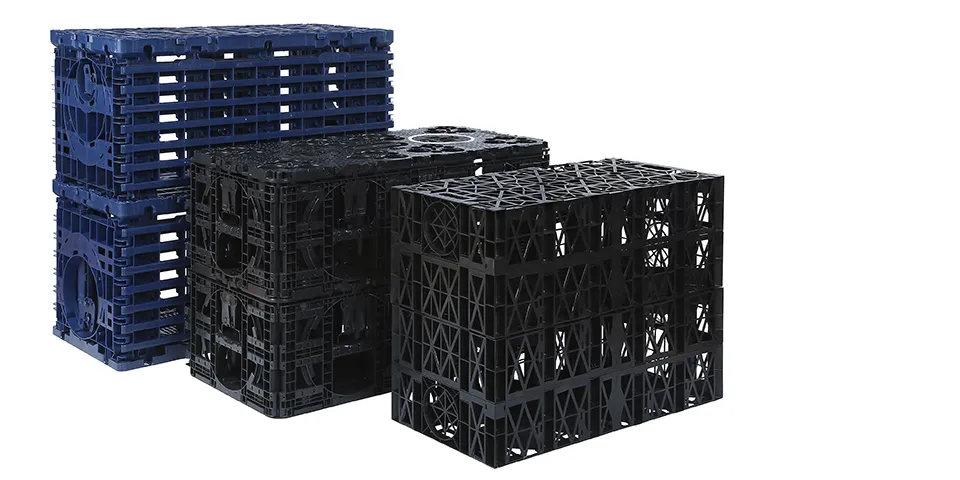
Designing an optimal rainwater management system is often a real headache. With a focused yet highly effective product range and a wealth of experience in water management, Wavin is equipped to tackle this complex challenge. In 2020, the manufacturer adds AquaCell, made from 100% recycled and 100% recyclable plastic, to its range as a unique product.
Since 1950, Wavin has grown into a European company driven by an unwavering passion for water, from drinking water to rainwater and wastewater. “Everything to do with water supply, drainage, treatment and protection,” explains Éric Detry, Product manager Civils & Infrastructure. “Water is a scarce resource that we are trying to protect through better management, safe water supply, more efficient sanitary pipework and improved hygiene. The ultimate aim is to improve building performance and create climate-resilient cities.”
With Q-Bic Plus, AquaCell and AquaCell Lite, Wavin offers a clear response to current regulations and water management challenges.
In 1999, Wavin took a major step by producing one of the first infiltration units. “We are one of the pioneers in underground infiltration systems,” says Éric Detry.
“The first unit we brought to market in 1999 was poetically dubbed a plastic beer crate. Since then, the units have naturally become more innovative.”
Q-Bic (Plus)
The Azura unit, 40 cm high, 50 cm wide and 100 cm long, was a great success, but after a few years, further innovation was needed. Éric Detry explains: “In 2006, we launched Q-Bic, a larger unit (60 cm high and wide, and 100 cm long) with two inspection tunnels. This meant the basin could also be maintained and cleaned. Regulations continued to move towards basins with ever greater capacity, but these inevitably mean more costs and work for the contractor. Since speed is essential in construction, Wavin developed Q-Bic Plus in 2015. This optimised version offers maximum inspectability (77% of the ground surface), is modular, easy and quick to install, and ergonomic. It is also the first unit to feature integrated connectors, with no additional clips or pins.”
AquaCell infiltration units are made from 100% recycled and 100% recyclable plastic.
AquaCell (Lite)
Wavin’s journey with infiltration units shows how innovation is in the company’s DNA. The same is true of the recent launch of AquaCell, units made from 100% recycled and 100% recyclable plastic. Éric Detry explains: “AquaCell is fully circular. And the clever stackable design of this new generation of infiltration crates means up to four times as many can be transported on a single lorry. This means fewer lorry journeys and a huge reduction in CO2 emissions, less space taken up on site and fewer deliveries. The push-fit installation with integrated connectors also makes installation quick and safe. Wavin has also launched the lighter AquaCell Lite variant (50 cm high, 39 cm wide and 100 cm
long). These rainwater units are suitable for areas without heavy traffic, such as parks, gardens and car parks.”
Installation of Q-Bic Plus, the optimal solution for fast, robust, inspectable and cleanable systems in urban areas.
StormHarvester and TreeTank®
With Q-Bic Plus, AquaCell and AquaCell Lite, Wavin offers a clear response to current regulations and water management challenges. Detry explains: “We are required to reuse water, allow it to infiltrate or store it for controlled discharge. With this range, we offer a high-performance, transparent solution that meets every requirement. Our Q-Bic Plus units can also help bring more green space to cities. We recently installed TreeTanks in Hasselt, for example, with the units filled with tree substrate instead of water.”
“Wavin does not sell products or systems, but solutions. It is a way of thinking. Another good example is our intelligent StormHarvester sensor technology, which uses weather forecasts to store rainwater, let it infiltrate or reuse it, all in a single solution. Our technical advisers work with specifiers, design offices and architects to help develop solutions. Together, we rise to the challenge,” concludes Éric Detry.
Question about this story? Ask your question
Keep following this
Get an email when a new story is published. No account needed.
- ThemeBuilding with less carbon
- SubjectNews







