











A sustainable future for railways with geotextiles
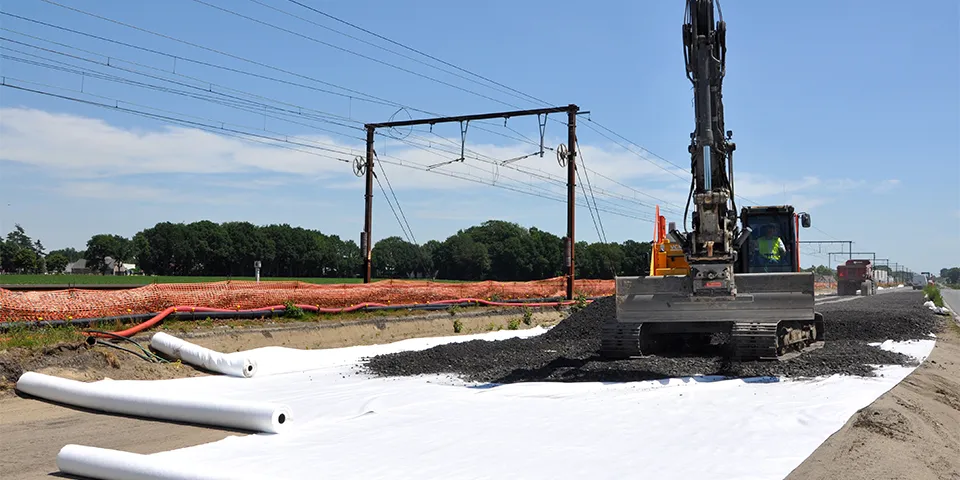
Rail is and will remain an important means of transport, both in Belgium and around the world. In regions that already have infrastructure in place, it needs to be maintained regularly to adapt it to future needs. These include maintaining, extending and expanding the network, as well as improving availability.
Developing regions, meanwhile, need new infrastructure to meet the growing demand for passenger and freight transport.
On these projects, priority must be given both to efficient construction and to long-term operational sustainability, while keeping maintenance costs down.

Geotextiles are quick and easy to install.
Geotextiles in railways
Geotextiles have been used in infrastructure for many years and have proved highly successful. They are quick and easy to install, while contributing to the stability and durability of railways.
A nonwoven geotextile can be used to separate the ballast supporting the track from underlying layers with different structures.
Vibrations generated by a high-speed train can cause a pumping effect in the lower layers, allowing fine particles from the subgrade to mix with the ballast and weaken it over time. A nonwoven geotextile between the ballast and the subgrade prevents these particles from rising. This improves ballast quality and, in turn, extends track service life.
Although the geotextile prevents these particles from rising, it remains permeable to water, allowing it to drain normally. Good drainage of water from the subgrade or from rainfall helps keep the infrastructure in good condition. In addition to filtering, a nonwoven geotextile also provides drainage, allowing water to be removed quickly.
When choosing a geotextile, it is therefore important to consider both its strength under the loads it must withstand and its hydraulic properties. Combined with proper installation, these characteristics ensure optimum performance in construction.

Effective separation of layers with SNW 50.
The benefits of BONTEC geotextile
Bontec is the brand offering Bontexgeo’s extensive range of geotextiles. Bontexgeo has extensive experience in infrastructure, including railways.
The most suitable product for railways is the Bontec SNW 50 range, manufactured in Belgium. Designed specifically to combine high strength with excellent permeability, it is the best-suited range for railway infrastructure projects.
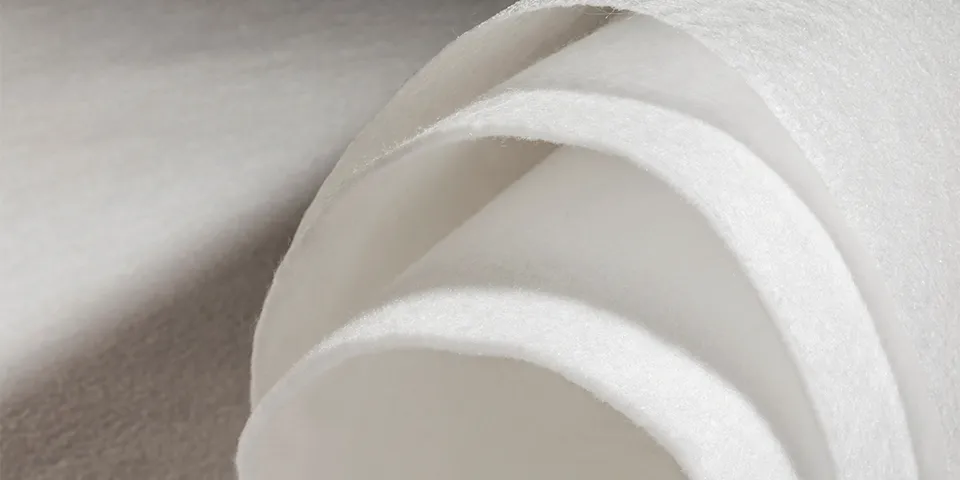
Bontec®, a comprehensive range of geotextiles.
In Belgium, the regulatory requirements for geotextiles used in railway projects are set out in PTV 829. Bontec SNW 50 meets the type 3,2 specifications. In addition, SNW 50 is Benor certified. This certification, issued by an independent body, provides all parties in the supply chain with additional assurance of the product’s quality and compliance. SNW 50 also holds
Asqual certification, the French certification for geotextiles, which has led SNCF to use SNW 50 products for many years. This certification provides reassurance not only to users in France, but beyond.
Examples of projects carried out using Bontec SNW 50 include Hansbeke and Beernem (Belgium), Grenoble (France) and TGV (Morocco)…
Railway extension in Hansbeke (Belgium).
Bontexgeo, your geotextile partner
As an international manufacturer headquartered in Belgium, Bontexgeo has extensive experience and an excellent reputation. Local production, reliable delivery, readily available teams and high quality are advantages on projects of all sizes, both in Belgium and abroad.
Question about this story? Ask your question
Keep following this
Get an email when a new story is published. No account needed.
- SubjectNews







