











1300 professionals meet at Digital Construction Brussels
Texte & photos Embuild
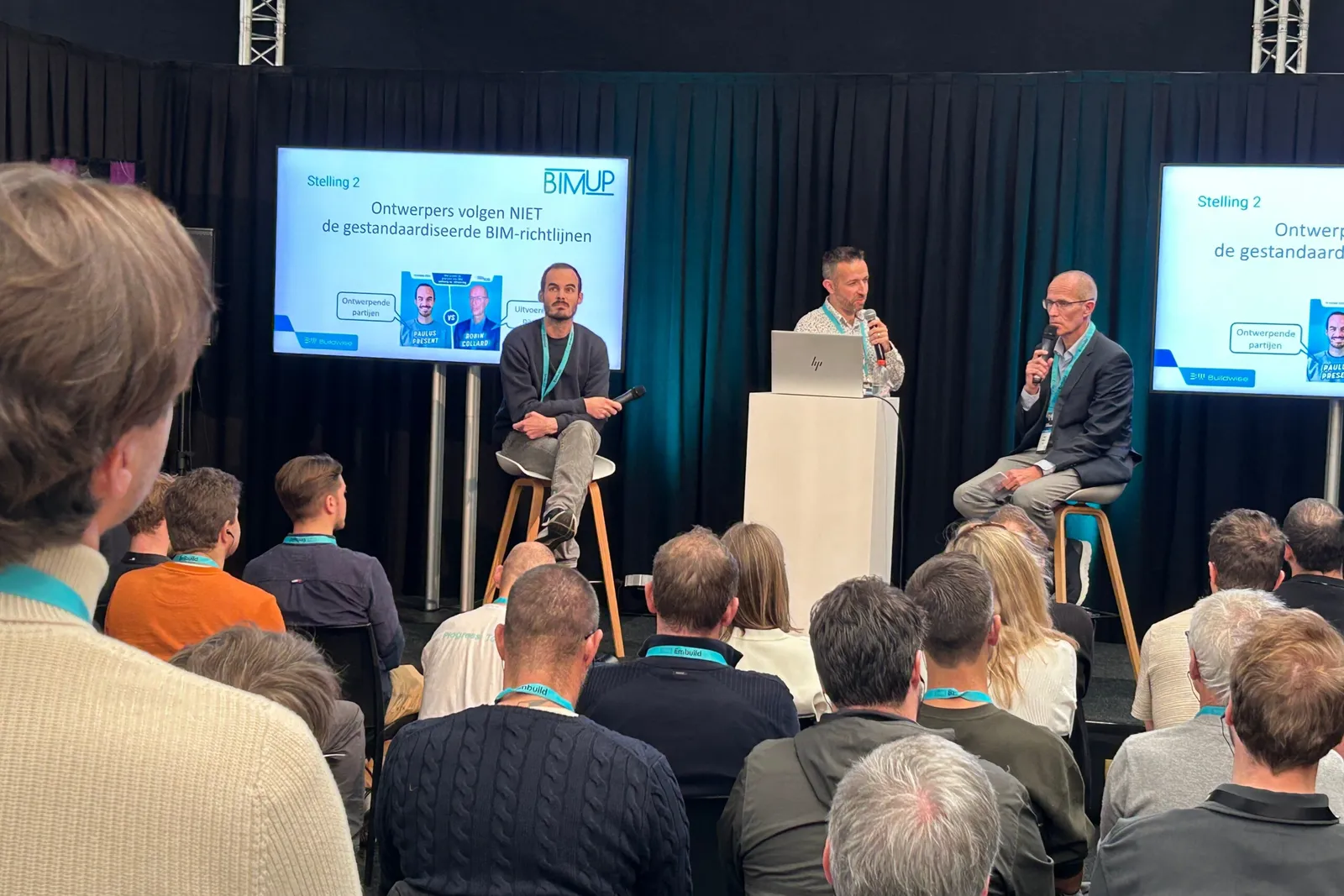
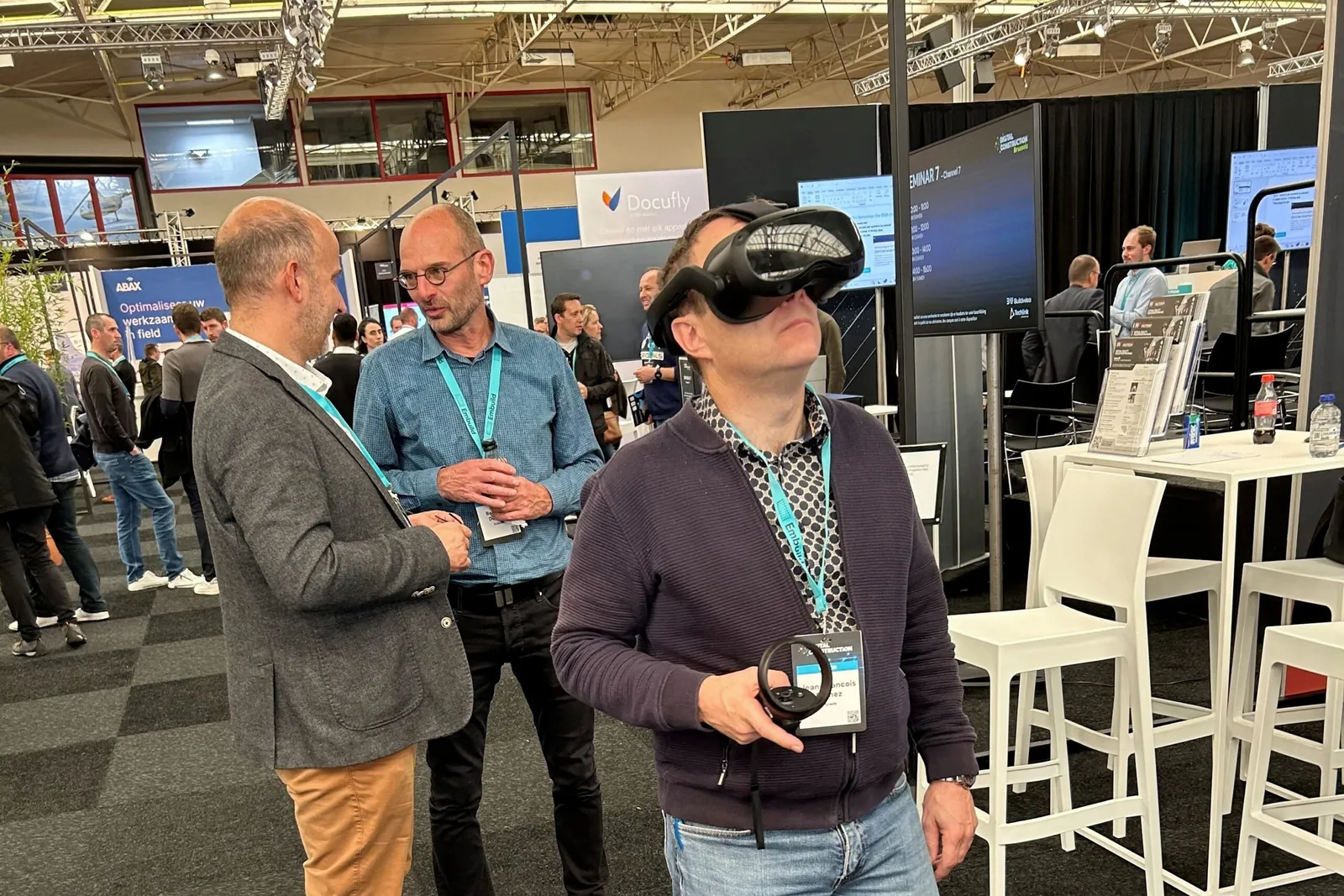
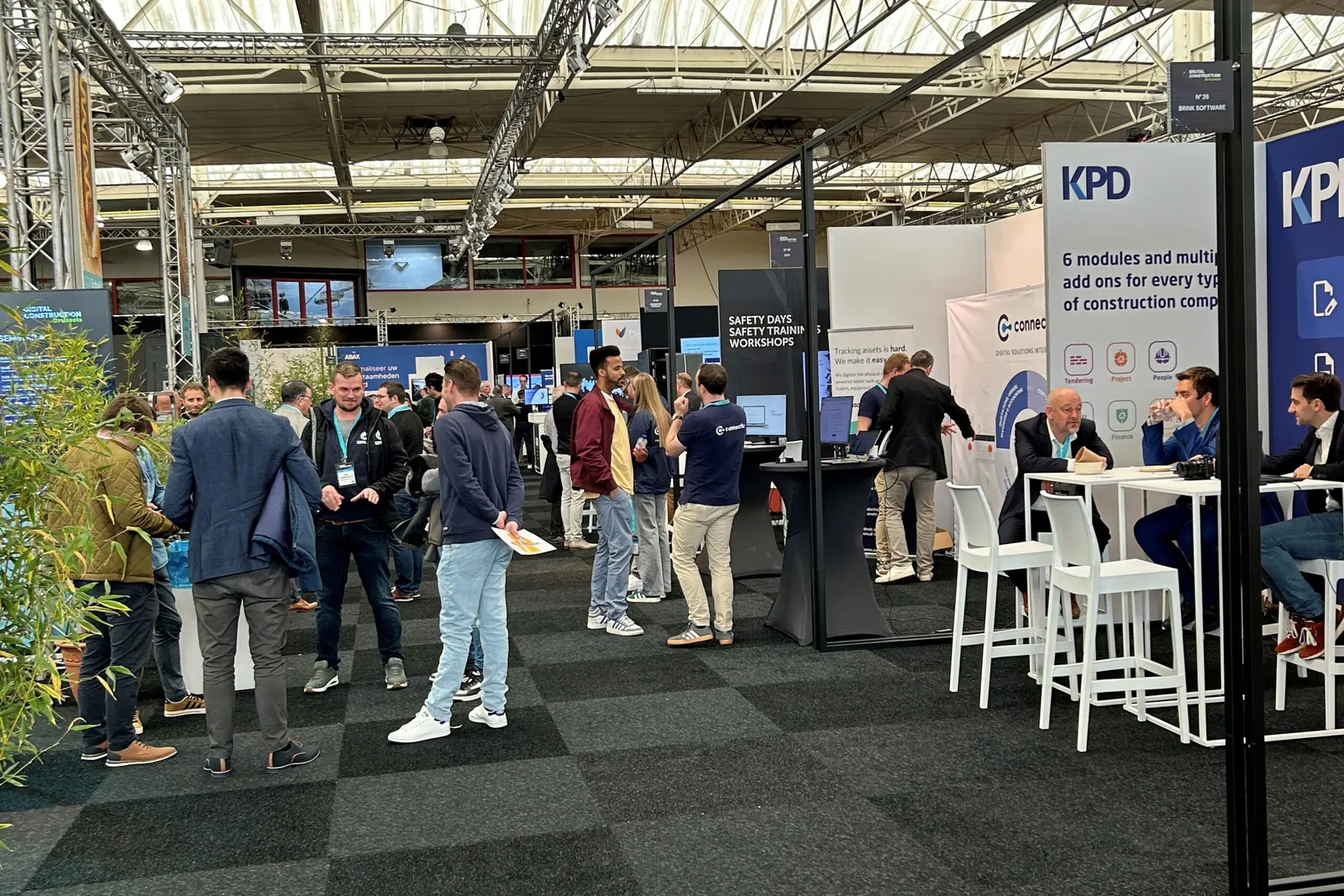
It has become an unmissable event that many of you put in your diaries. The traditional Digital Construction Brussels trade fair took place at Brussels Kart Expo in Grand-Bigard on 21 October. 58 exhibitors took part in the 8th edition, which brought together around 1300 professionals. Construire La Wallonie walked the aisles to get a feel for this event dedicated to digital tools for construction and installation companies.
While the usual exhibitors return each year, every new edition also brings new names and fresh faces to the world of digitalisation. One such newcomer was Contracto, which took part in the event for the first time. Contracto is an artificial intelligence tool that enables more precise and faster analysis of specifications and contracts. “Our tool enables construction companies to work faster and avoid contractual errors and ambiguities that can lead to time-consuming disputes on site. It also helps them identify new opportunities,” explains co-founder Malo Misson. “We focus on construction companies, so this is where we needed to be. I have to say that our first time has been very positive. We have no time to get bored and we’re very pleased to be here.”
Multi-bank platform
Isabel also took part in Digital Construction Brussels for the first time. Isabel is an online multi-bank platform that enables contractors to manage their accounts with different banks easily. “This is Isabel 6, a platform for B2B. We also offer the option of integrating Isabel 6 into the software, such as ERP systems, used by construction companies, many of which are our clients,” explains Ida Maziyateke, Customer Success Account at Isabel. “As this was our first time, we weren’t quite sure what to expect. It’s very well organised, and it’s interesting to meet partners and other exhibitors. We noticed that it’s mainly tradespeople who come to this fair. For us, it would be good to meet finance professionals working in construction companies.”
At the Buildwise stand, a major presence at the fair alongside Techlink, Bart van de Pol, a researcher at our construction innovation centre, is talking to visitors. We catch up with him after his conversation. How is it going this year? “There are many seminars and conferences, particularly on AI and BIM. I see people going along to these information sessions, then coming over to our stand to ask questions and find out more. It works very well,” he says.
Geographic information systems
Another new exhibitor this year was Esri BeLux. Esri is an American company that has developed more than 400 geographic information system (GIS) software products, including ArcGIS, the leading software for mapping and spatial analysis. This powerful geographic information system technology provides tools to capture, visualise, edit, manage, analyse and share location-based data. It also gives users access to thousands of curated datasets and maps, which can be explored and used for analysis and insights. “For the construction sector, our software provides a complete picture of the site’s spatial environment and helps users better understand the impact of a building on its surroundings. For example, it can show where drones can fly. Our software is also used for underground works, as was the case on the Oosterweel Link in Antwerp, and for offshore wind farm construction,” explains Gert Bergers, Business Consultant at Esri Belux, which sells the American company’s solutions in Belgium and Luxembourg.
It is important to note that BIM and GIS should not be seen as competing technologies, but as complementary ones. BIM focuses on the detailed design and construction of a structure, while GIS adds a geographic, spatial and therefore contextual layer. This is certainly the view of a company such as BESIX, which used both solutions on the well-known R4WO project on the Ghent ring road. GIS was used to analyse the spatial environment, while BIM was used for design elements such as clash detection and phase planning.
Madaster
This year, the fair also hosted Madaster Connect Belgique, a highlight focused on circularity in construction. It brought together industry players and strengthened ties between all stakeholders, from architects to materials manufacturers.
A new Madaster online platform was also presented. It offers a practical, innovative solution that enables everyone involved in a construction project to better understand and manage the materials used. The tool includes a materials passport, which provides a clear, detailed overview of the materials used, their environmental performance and their reuse potential. The concept behind Madaster was developed by internationally renowned architect Thomas Rau. He was at the fair to explain his “circular” vision of construction, which champions transparency in buildings so that the materials they contain and their reuse potential can be identified more easily.
Record visitor numbers
The final word went to Kristel Dekempeneer, who organises the event at Embuild. “Once again, this year’s edition of Digital Construction Brussels was a success, with a record number of visitors. Exhibitors were able to go home satisfied after making many new contacts.”
We look forward to seeing you next year for the 9th edition.
Question about this story? Ask your question
Keep following this
Get an email when a new story is published. No account needed.
- SubjectNews







