











100 years of innovation in road construction

For a century, Shell Bitumes has been helping to develop better road networks around the world.
From the start of large-scale bitumen production at Shell Haven refinery in the UK in 1920 to today’s research into sustainable materials, Shell Bitumes has consistently driven change in the industry through its expertise and innovation.
A leading international bitumen supplier, with customers across 52 different markets, Shell Bitumes has a robust, integrated supply chain backed by eight bitumen production sites on three continents. Bitumen is no longer produced locally: it travels further and needs to be stored. Shell refineries in the Netherlands and Germany, a storage depot near Rotterdam and a unique multimodal logistics capability in Europe enable Shell Bitumes to adapt readily to changing demand in the Belgian market.
Key milestones in Shell Bitumes’ innovation
Innovations that have marked this century include:
• 1923: Shell Bitumes’ first patent
• 1949: Launch of The Shell Bitumen Handbook: the industry reference work, now in its 6th edition.
• 1967: Development of the first clear binder
• 1988: Shell Tixophalte®, a sealant now used everywhere, from large industrial dams to DIY projects.
• 2007: Shell launches Shell Bitumen Fresh, the first bitumen solution that helps neutralise bitumen odours.
• 2019: Launch of Shell Bitumen FreshAir, the first bitumen to help improve local air quality while neutralising bitumen odours.
Investing in progress
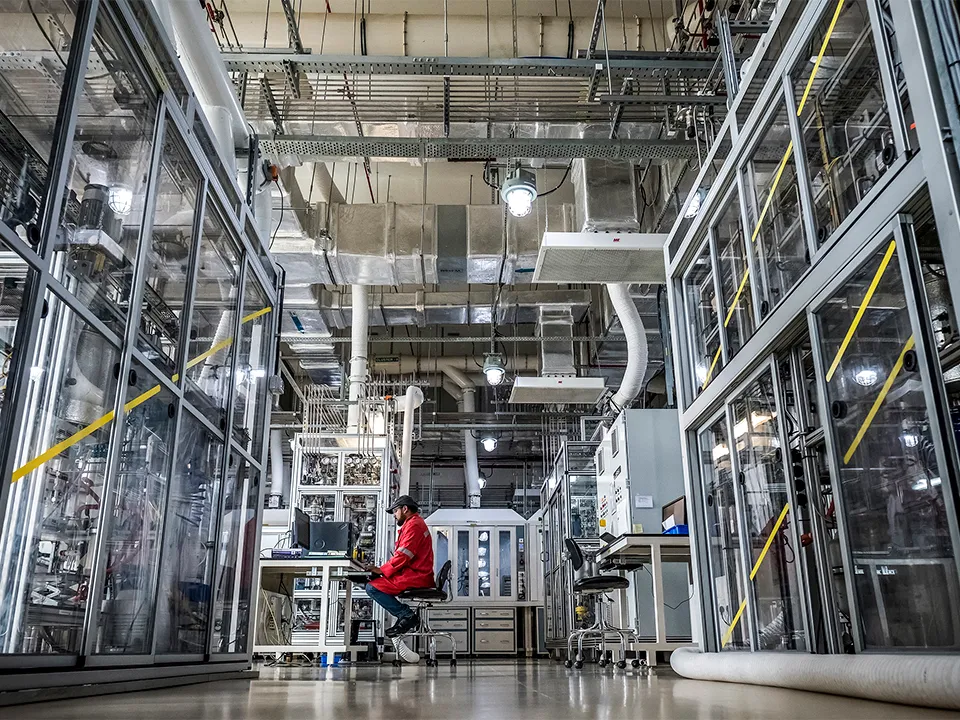
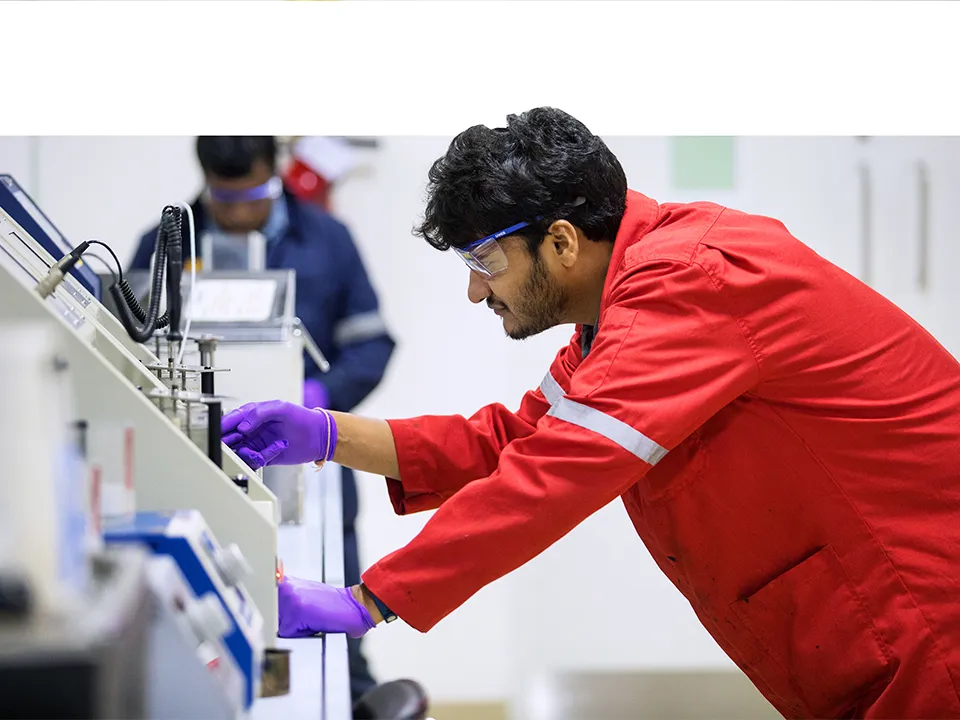
With more than 200 patented inventions relating to bitumen and asphalt, Shell Bitumes has four innovation sites around the world: the world’s largest bitumen R&D centre in Bangalore, India; two technical centres in Asia, in Thailand and China; and a centre in Europe, in Illkirch, France, near Strasbourg. This European technical centre (European Solutions Centre), located on the border between Germany and France, serves customers across Europe. Organised around three areas of activity, a binder hub, an asphalt hub and an analytical hub, it provides laboratory space for developing and testing new solutions.
Shell Bitumes is playing its part in a more sustainable future
As part of its mission to renounce quotation marks, Shell aims to be an energy business with net-zero CO2 emissions by 2050 at the latest. Through its solutions, Shell Bitumes is playing its part in achieving this ambition.
Asphalt production consumes energy and generates CO2 emissions. By enabling lower asphalt production temperatures with its solutions, Shell Bitumes helps reduce energy consumption and emissions at asphalt plants.
Shell Mexphalte C LT low-temperature clear binders have been used in tunnel projects such as the Grouft and Stafeltert Tunnels in Luxembourg and the Tunnel du Chat in France.
Shell Mexphalte C LT produces a brighter, more reflective clear asphalt layer, reducing tunnel lighting costs and improving safety at tunnel entrances, which are often shadow zones. As a low-temperature product, Shell Mexphalte C LT also enables asphalt to be produced at between 130 and 150°C, saving energy and reducing CO2 emissions. Lowering the production temperature by 30°C saves 0.9 litres of heating fuel and up to 2.4 kg of CO2 emissions per tonne of asphalt. 1

Roadworks can also affect air quality. Shell Bitumes is the first major bitumen supplier to develop a solution to reduce the impact of asphalt production and laying on air quality. Shell Bitumen FreshAir® helps reduce NOx, SOx, VOC and CO emissions, as well as fine particulate matter, by an average of 40 % 2 compared with conventional bitumen, while helping to neutralise odours.
Shell Bitumes has decades of experience in developing more resource-efficient products and finding new solutions for the road surfacing industry. Shell’s technical experts continue to work to reduce bitumen’s environmental impact by lowering its carbon footprint and increasing its circularity.
1Source: DAV, German Bitumen Association, Guidelines for hot-mix bitumen.
2Tests have shown that using Shell Bitumen FreshAir reduces levels of sulphur dioxide (SO2), nitrogen oxides (NOx), carbon monoxide (CO), volatile organic compounds (VOC) and particulate matter (PM) by an average of 40 % during asphalt production and application, compared with conventional bitumen.
Question about this story? Ask your question
Keep following this
Get an email when a new story is published. No account needed.
- ThemeTransforming infrastructure and territories
- SubjectNews







