First electric truck commissioned for installing roadworks signage
Texte & photos Colas Belgium
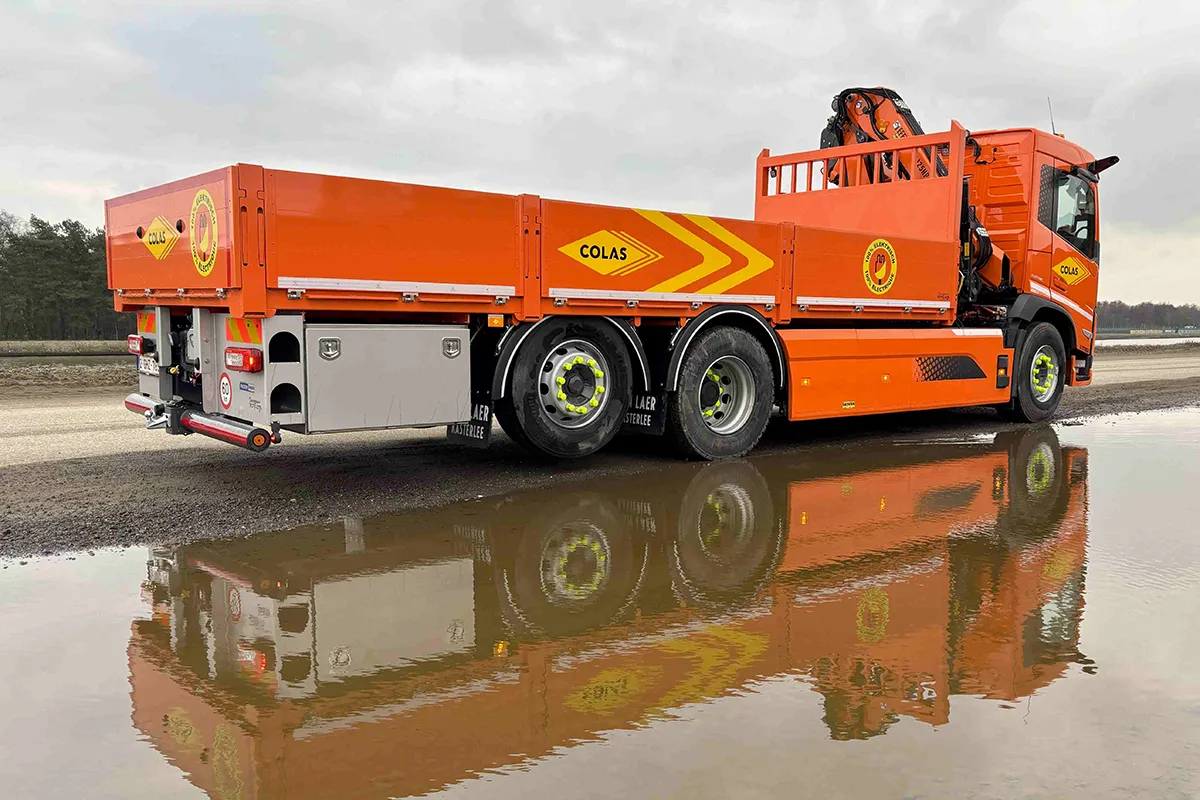
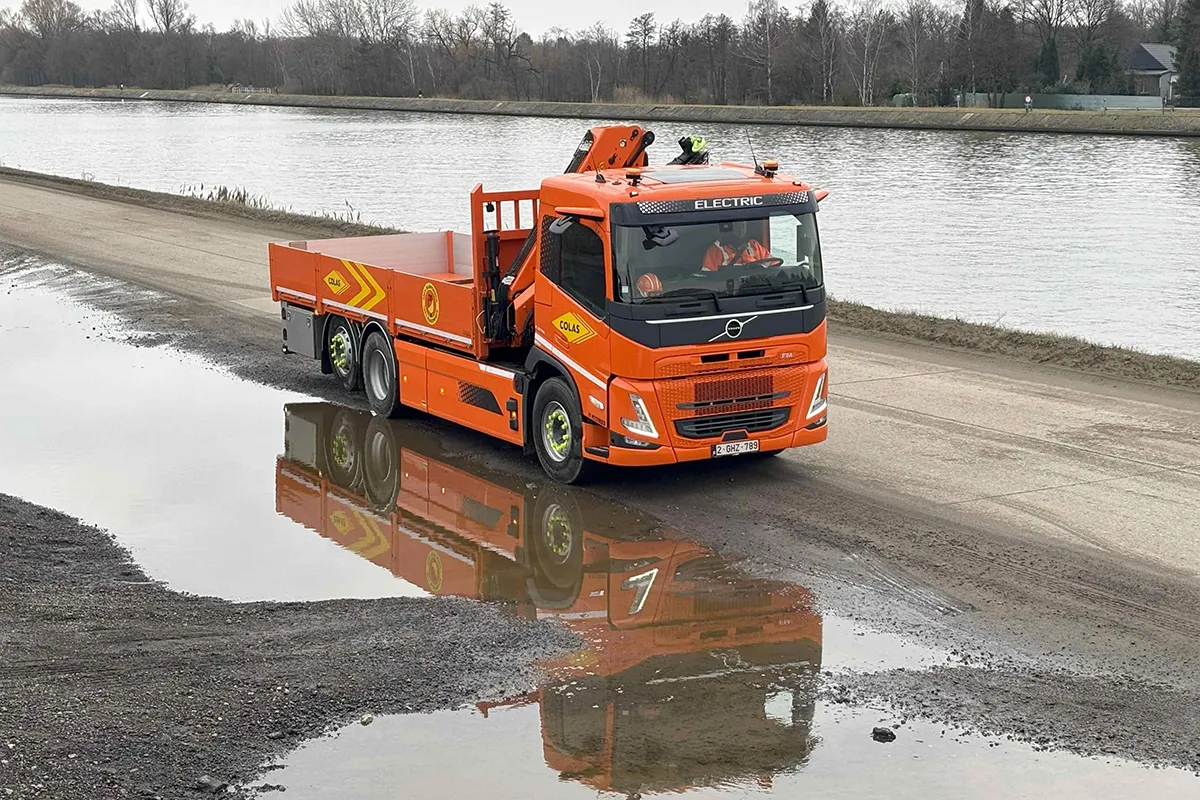
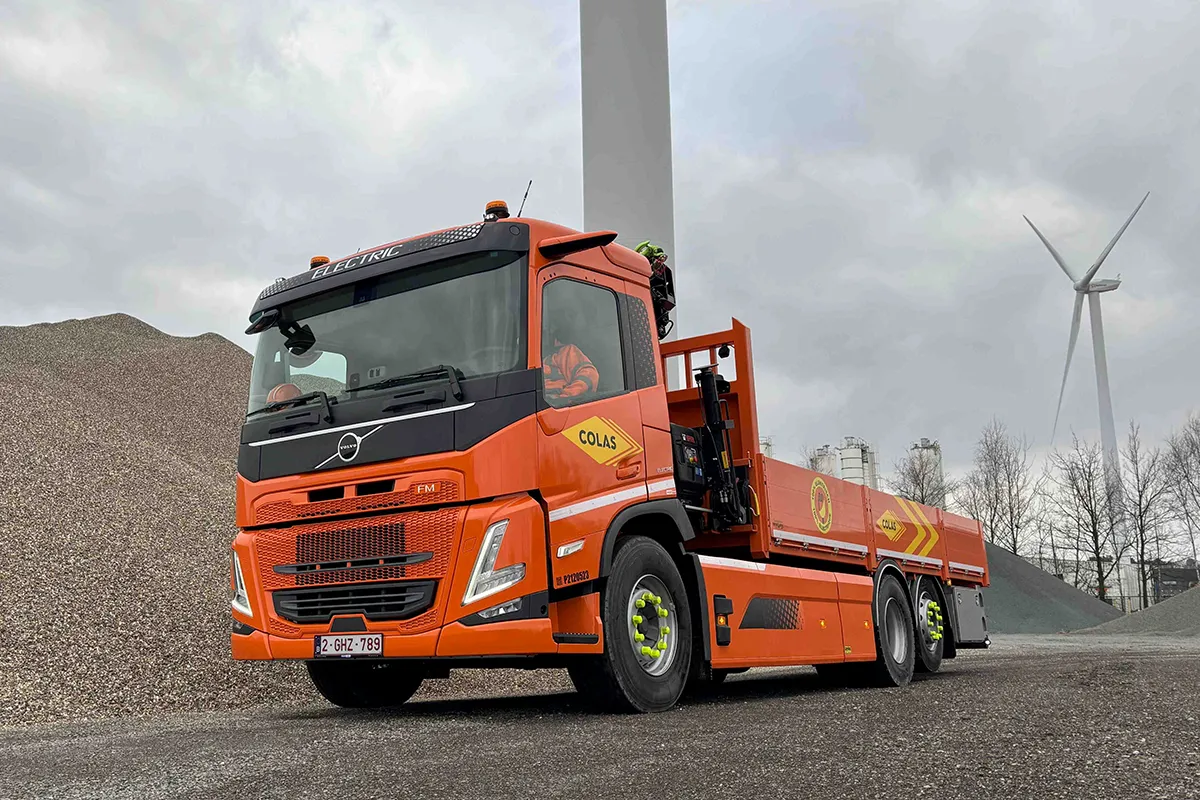
Colas Belgium has just commissioned its first Volvo FM Electric 6×2. The vehicle is used to install the road signage required for roadworks in the north of the country. The investment reflects Colas Group’s commitment to significantly reducing its carbon footprint by 2030.
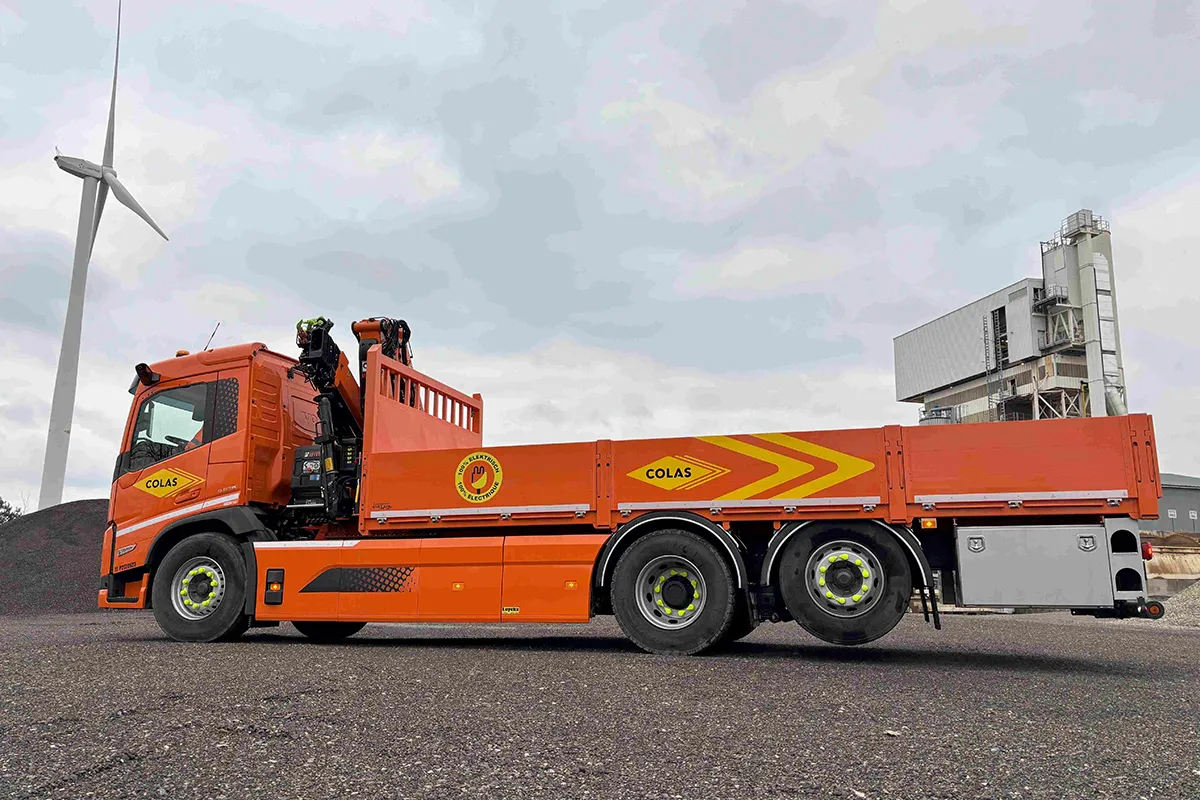
Colas Belgium, part of the French Colas group, specialises in the construction and maintenance of road, rail, port, airport, industrial and logistics infrastructure. These activities are supported by a versatile fleet of 95 trucks. “Just over half of this fleet is used to transport materials, while the rest is assigned to what we call our core activities. Volvo Trucks has been Colas Belgium’s exclusive heavy truck supplier since 2020. The manufacturer already accounts for almost half of our truck fleet. Although our group has already invested in several electric trucks in Europe, this Volvo FM Electric is the first to join our Belgian fleet. It certainly won’t be the last, given our strong ambition to reduce our carbon footprint,” says Christian Jacques, Equipment Director at Colas Belgium.
Colas Group launched its ACT programme in 2021, one of whose objectives is to reduce its direct and indirect greenhouse gas emissions (Scopes 1, 2 and 3) by 46.5% by 2030. The acquisition of this FM Electric is therefore clearly part of the programme.
Transporting and installing signage
“Colas Transport Belgium’s FM Electric, delivered by our dealer Paesen Trucks in Heusden Zolder, is a 6×2 rigid truck fitted with a crane behind the cab and a flatbed. The bodywork was built by Luyckx in Brecht. It has six battery packs, with a total capacity of 540 kWh, giving it a range of 250 to 300 km depending on how intensively the crane is used,” adds Yves Verheyden, Key Account Manager at Volvo Trucks Belgium.
“This vehicle is based in Heusden Zolder and is used to deliver and install temporary signage at our worksites, including signposts and signs, concrete support blocks and so on. It operates across almost all of Flanders and returns to its depot every day. The depot is equipped with fast-charging points, powered mainly by electricity generated on site by wind turbines and a photovoltaic installation,” says Christian Jacques.
Suited to the construction sector
“For a full year, we analysed the journeys made by the previous signage vehicle. We found that it very rarely travelled more than 300 km a day. The FM Electric’s range is therefore ideally suited to this activity,” he explains.
Yves Verheyden adds: “The construction sector is particularly well suited to electric trucks, as these vehicles generally cover relatively short distances. They also very often operate from their depot, which makes it easier to charge the batteries. Volvo Trucks has therefore developed a particularly extensive range of electric models for this sector, from straightforward 4×2 rigids to complex 8×4 vehicles.”
TCO on a par with diesel trucks
The gross vehicle weight (MMA) of this FM Electric is 28 tonnes. As legislation allows an additional 2 tonnes
above the legal limit, its payload is almost the same as that of a diesel vehicle, despite the weight of the batteries.
“As part of our policy to reduce CO2 emissions, electrifying our truck fleet, and eventually our construction equipment, seems to us to be the way forward. The substantial subsidy granted by the Flemish Agency for Innovation and Entrepreneurship, VLAIO, and the fact that this truck uses electricity generated on site for most of its needs mean that this FM Electric has a total cost of ownership (TCO) similar to that of a diesel truck. HVO is also being considered, but the high cost of this sustainable fuel remains a barrier to its use,” concludes Christian Jacques.
Question about this story? Ask your question
Keep following this
Get an email when a new story is published. No account needed.
- ThemeLow-carbon transport and mobility
- SubjectEquipment and machinery