Underground infrastructure, Feature | Targeted water distribution with a proportional pressure system
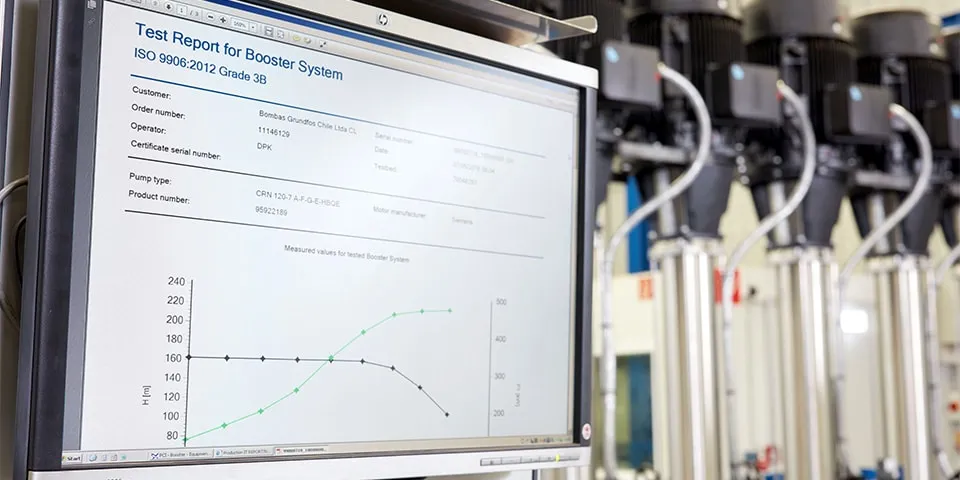
Today, sustainability is high on the agenda across the board, particularly in the drinking water sector. Energy and cost savings, sustainable production and reducing waste are priorities. In Belgium, 10 to 20% of drinking water is lost due to cracks in the pipe network. Grundfos’ multi-pump ‘demand-based distribution’ system, a solution operating at proportional pressure, can play an important role in this area.
“With our proportional pressure system, we help to limit leaks and reduce the energy costs of water distribution,” says Jeroen Michielsen, Sales Manager Water Utility at Grundfos.
Constant / variable pressure
A traditional drinking water distribution network operates at constant pressure. To compensate for losses in the pipes, leaks and peak-time water consumption, the pressure is higher than normally required at the points of delivery. The more water is consumed, the greater the pressure loss. At night, consumption is lower, but the same constant pressure and flow rate are maintained in the pipes. This results in more leaks and unnecessary energy consumption.
Jeroen Michielsen: “Grundfos therefore developed a ‘demand-based distribution’ system. This multi-pump solution operates at proportional pressure, with the system designed to provide the required flow at the required pressure at all times. The Grundfos Control MPC enables control of proportional pressure, soft starting and stopping, cascading operation of up to six pumps, as well as monitoring and management, all with clear messages. Excessive pressure in the pipework is offset, and water hammer, which can cause new leaks, is reduced.”
How does the system work? “Pressure sensors that record data are installed at critical points in the network,” explains Jeroen Michielsen. “The system then models the distribution network. Each measuring point feeds the model with its specific pressure profile. These profiles are recorded and sent to the pumping station, which optimises the control curve based on the latest data, while the frequency converter reduces or increases the pressure delivered by the pumps.”

The Grundfos Control MPC enables control of proportional pressure, soft starting and stopping, cascading operation of up to six pumps, as well as monitoring and management, all with clear messages.
Benefits
The benefits of ‘demand-based distribution’ are clear: greater user comfort thanks to more stable pressure at critical points, energy savings through a reduction in average pressure, fewer leaks due to lower pressure, and a lower risk of pipes bursting. The system has already been successfully implemented in various countries, including Germany, Denmark, Italy, Chile and China, resulting in energy savings of 15 to 30%. “We are currently in discussions with a drinking water management company in Wallonia about the first implementation in Belgium. With a proportional pressure management system, water losses caused by leaks can be reduced from 100 000 m³ to 15 000 m³. In Flanders, 180 million litres are lost every day, and in Wallonia, 178 million.”
Sustainability
Sustainable water distribution systems require cost-effective, trouble-free pumping systems. The high-efficiency motors developed by Grundfos, with or without an integrated or external frequency converter, meet and in some cases exceed the required motor efficiency criteria. Jeroen Michielsen: “Given that energy costs account for an average of 85% of a pump’s life-cycle costs, switching to high-efficiency motor technology can reduce these costs by up to 50%, which also has a positive impact on the environment.”
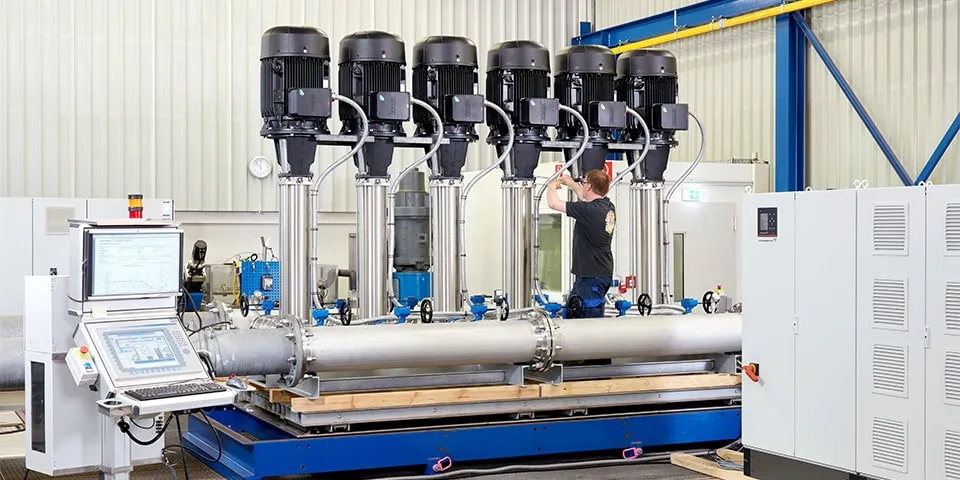
The demand-based distribution system is a multi-pump solution operating at proportional pressure.
Control and monitoring systems
Control and monitoring systems offer greater scope for improving the efficiency and reliability of pumping systems. Grundfos supplies external frequency converters (Grundfos CUE), dedicated controllers and internet-based monitoring (Grundfos Remote Management), all fully integrated into the pumping system. “Thanks to the easy-to-use SCADA interface, the dedicated controllers make it easy to control pump functions,” explains Jeroen Michielsen.
The plug-and-play communication interfaces of Grundfos monitoring and control systems are compatible with 95% of the communication standards on the market. “Our shared future lies in energy-saving behaviour, new forms of energy and sustainable production. That is why Grundfos uses and will continue to use every means available to promote sustainability in all its forms, both within our company and among our customers and business partners,” concludes Jeroen Michielsen.
Question about this story? Ask your question
Keep following this
Get an email when a new story is published. No account needed.
- SubjectInfrastructure