Landmark project for Wallonia’s first diamond interchange
Texte Philippe Selke Photos Pascal Thémans Productions
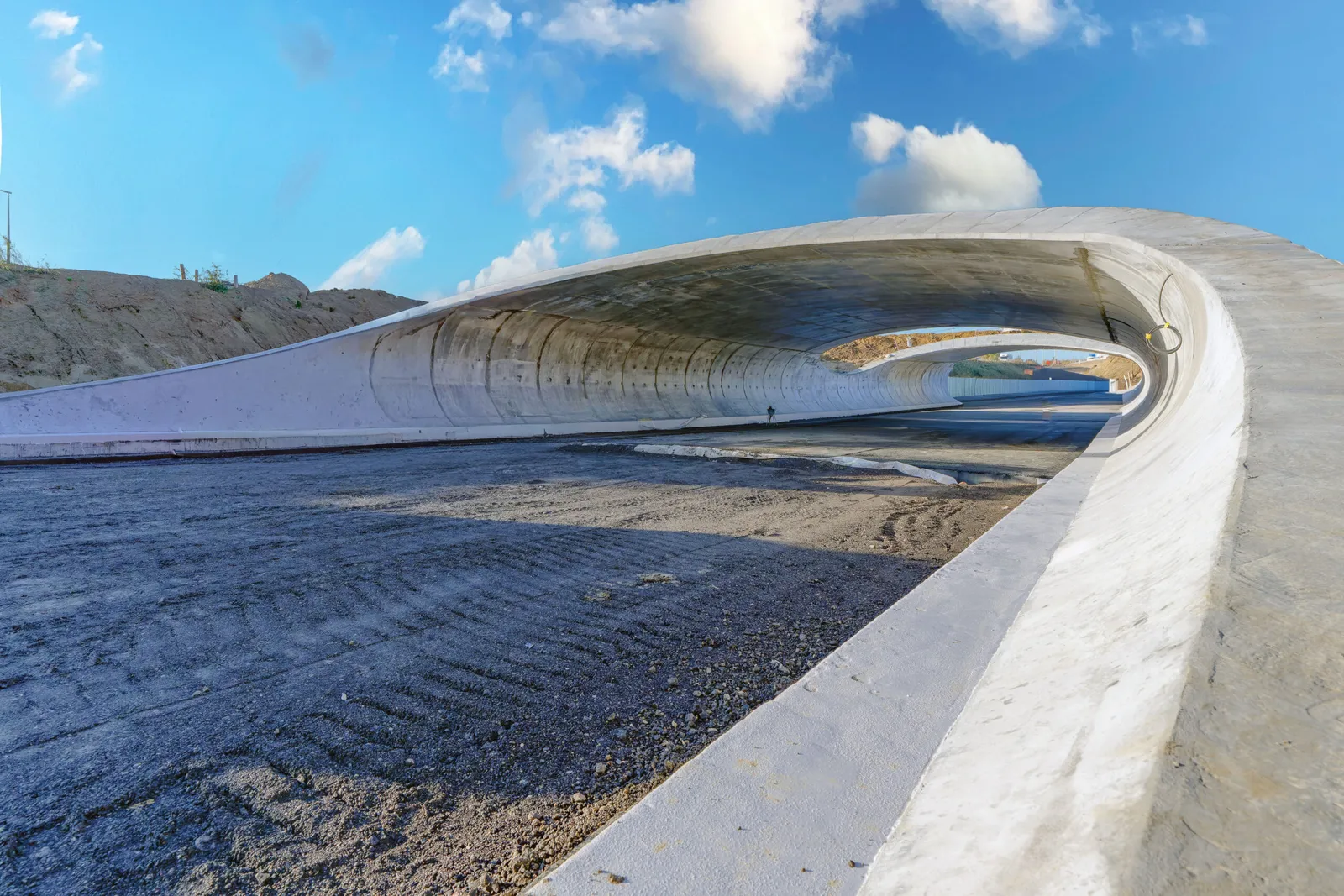
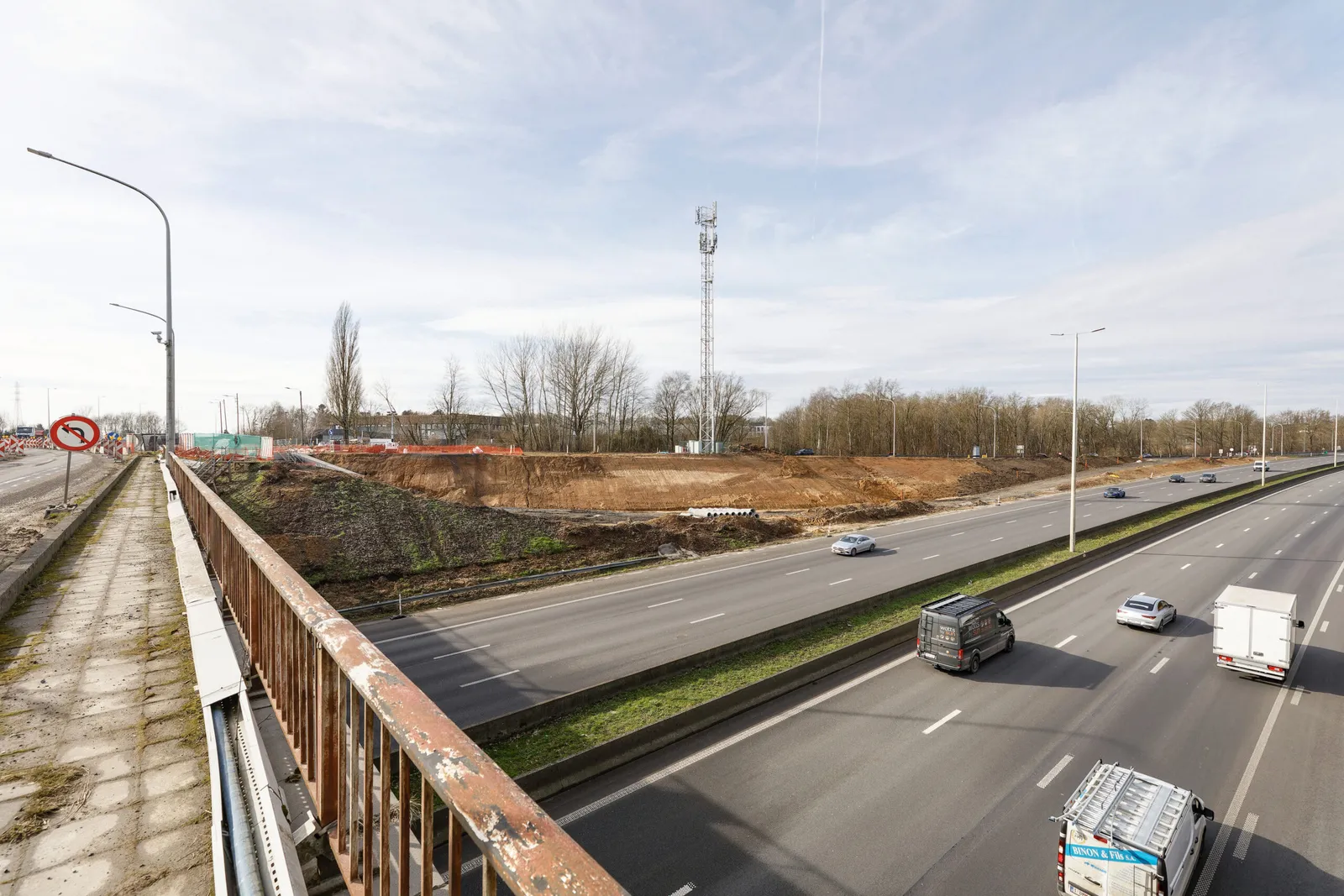
At Mont-Saint-Guibert, the famous roundabout at the junction of the N4 and N25 has been replaced by Wallonia’s first “diamond” interchange, with two underpasses beneath the N4 allowing motorists to travel straight from the E411 to the N25 and vice versa. A new underpass extending from the motorway exit from Brussels also helps to ease traffic and improve safety at this busy junction during peak hours. Working as a subcontractor to TRBA, Duchêne (Groupe Eiffage) successfully completed the civil engineering works on this huge project, on schedule and within budget.
Motorists travelling to Louvain-la-Neuve or passing through will be relieved that the project is finished. Since September 2023, they have had to drive through a forest of signs, right alongside the works, although these were carried out remarkably well and completed on schedule.
Complexity that calls for careful planning
After TRBA completed the main earthworks, Duchêne began work on site in September 2024. Extensive preparation had already been carried out in-house to resolve the technical and organisational challenges. Manuel Nemes, Civil Engineering Director at Duchêne: “We spent a long time considering the best way to build the two oval bridges beneath the N4, a major technical challenge. Initially, they differed slightly in terms of angles and entrance and exit openings. The 3D model was revised to make them symmetrical, optimising fabrication and construction.”
Arched formwork panels
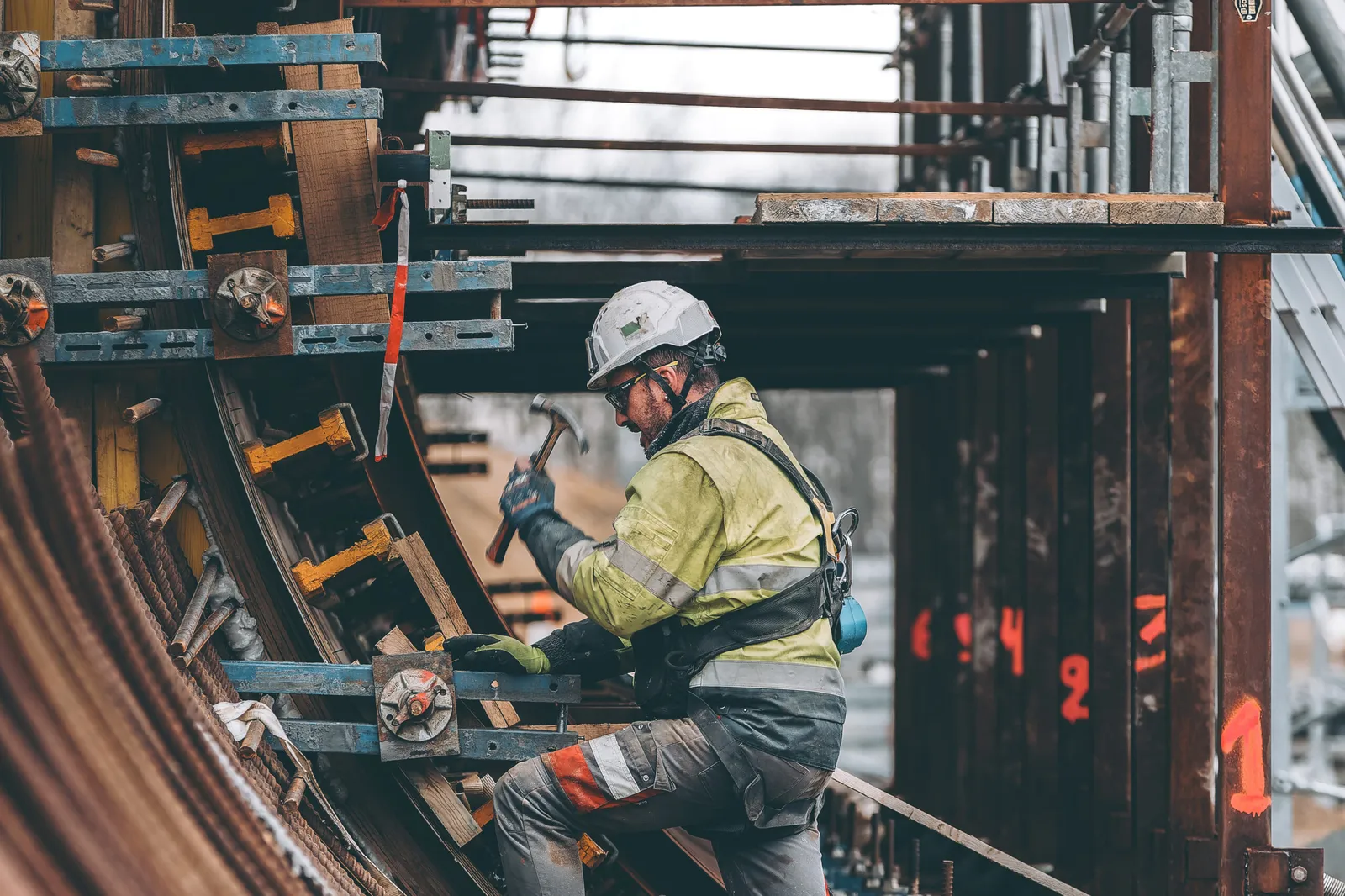
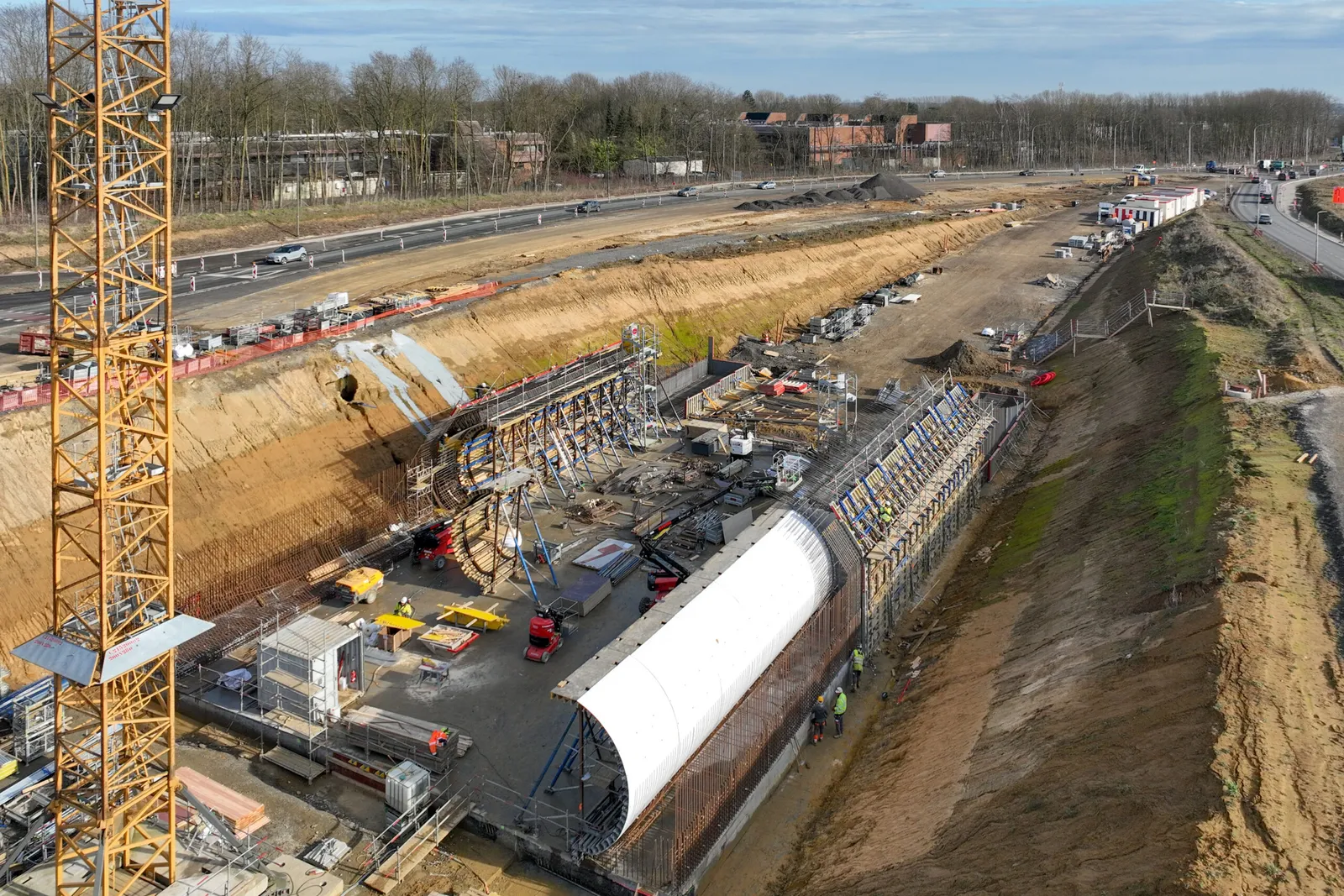
Site manager Nicolas Gathon adds: “The oval bridges required the manufacture of 13 arched formwork panels, each 3 m long so they could be transported, using curved steel sections. The site’s bowl-shaped configuration complicated construction, requiring precise formwork adjustments to achieve the desired curvature in several directions. The deck slab is also curved in two directions, width and length, which called for extensive design work. The soffit formwork, for the underside of the slab, presented a third challenge, with custom-made curved panels assembled on site. Finally, waterproofing the top of the slab proved difficult because of its pronounced curvature. The shot-blasting machine used to prepare the surface had to be suspended by a rope to stop it sliding down the slope.”
Time and space constraints
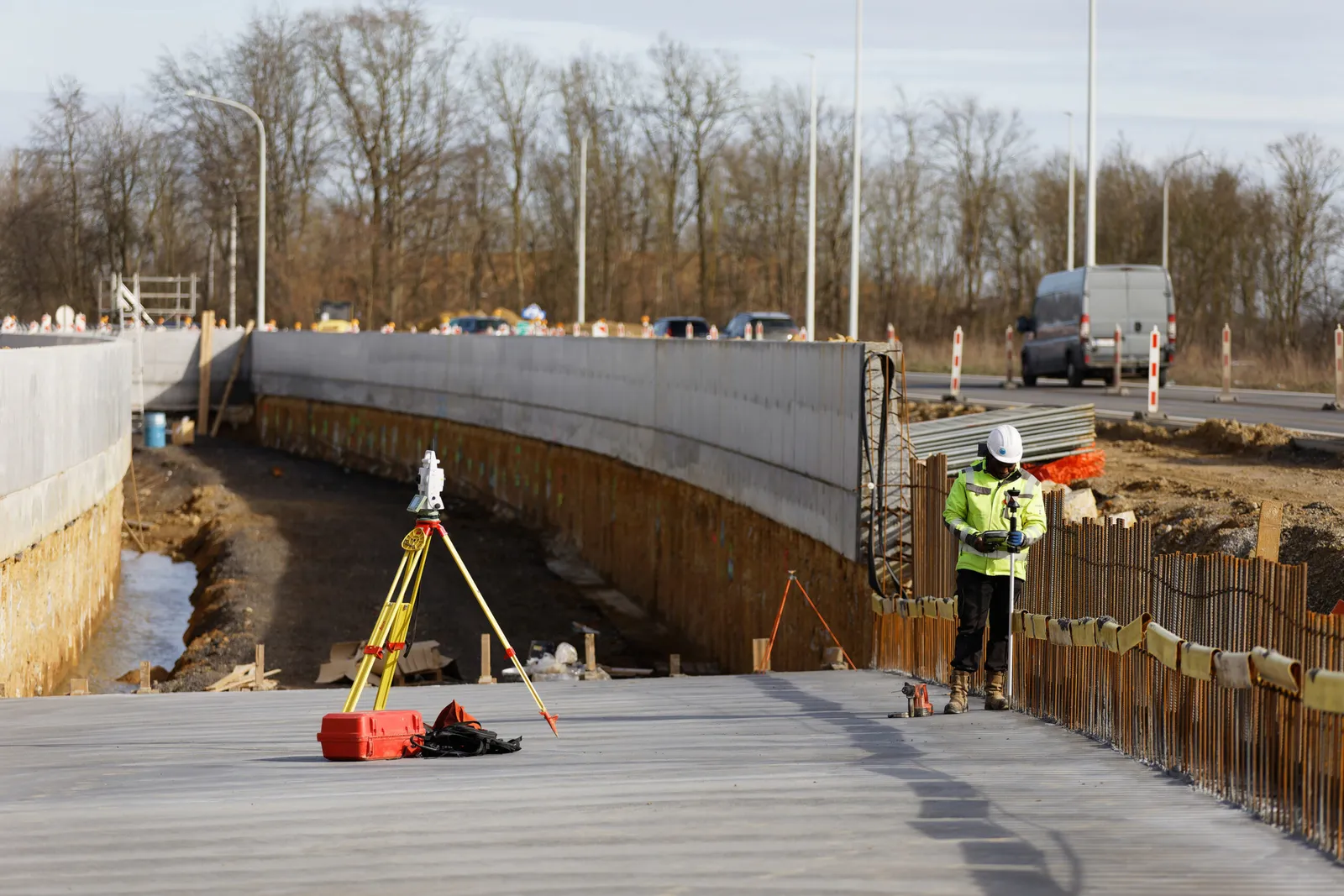
Heavy rain caused water and mud to build up, requiring daily pumping to remove up to a metre of water from the bottom of the trenches. The reinforcement and formwork also had to be cleaned regularly before each concrete pour.
The underpass at the motorway exit from Brussels was built using the top-down method. Because space was limited, with the site confined between traffic coming from the bridge and traffic leaving the motorway, Duchêne first installed the piles and cast the roof slab before excavating underneath. Keeping traffic flowing around the site at all times required complex management of access routes and concreting phases.
While TRBA is currently completing the surface works, the structures built by Duchêne are already open to traffic. The good organisation of this project, which involved an average of 50 workers, including subcontractors, was praised by all. Manuel Nemes concludes: “Congratulations to site manager Nicolas Gathon and works supervisor Arnaud Gaascht, the main architects of this success, along with their teams!”
Question about this story? Ask your question
Keep following this
Get an email when a new story is published. No account needed.
- ThemeTransforming infrastructure and territories
- SubjectInfrastructure