Foundation specialist showcases its expertise on a railway bridge project
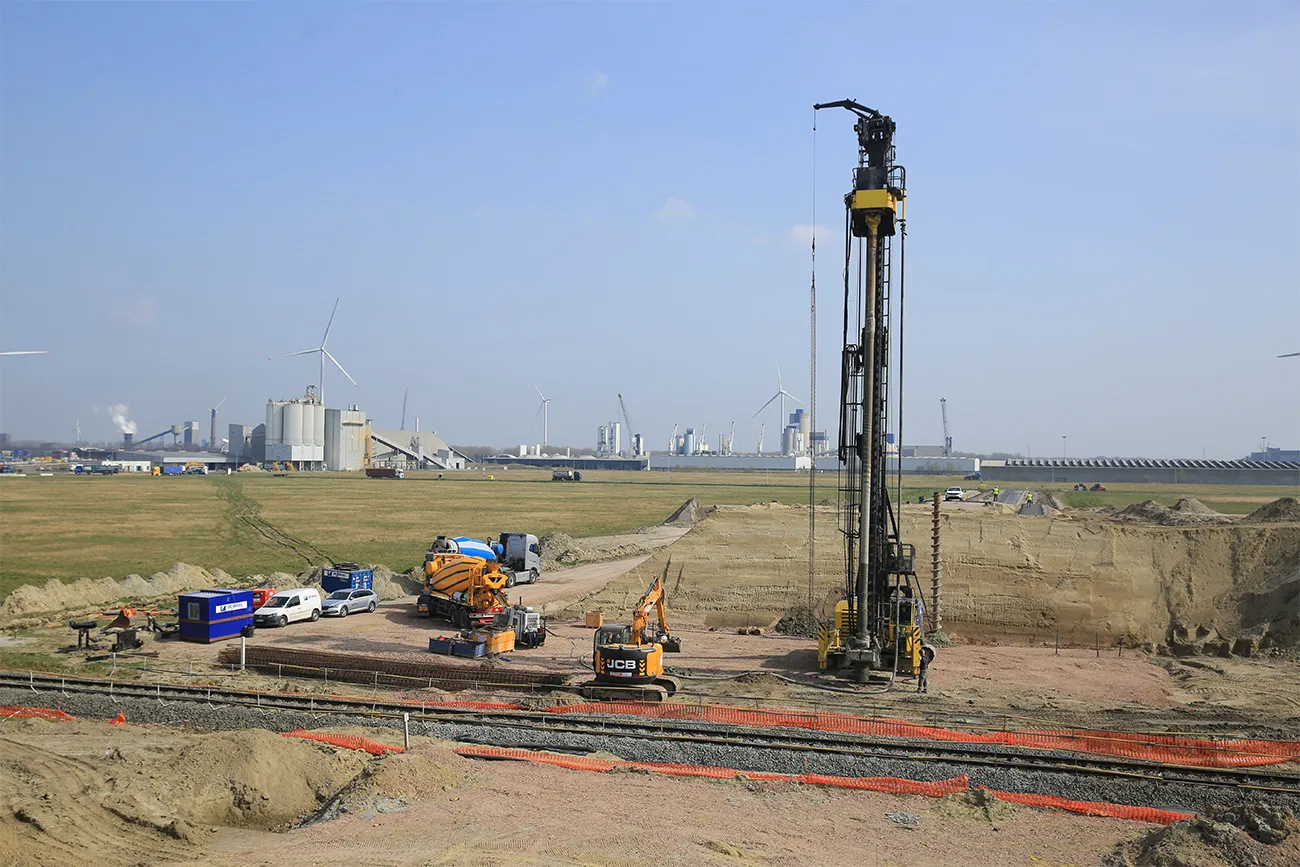
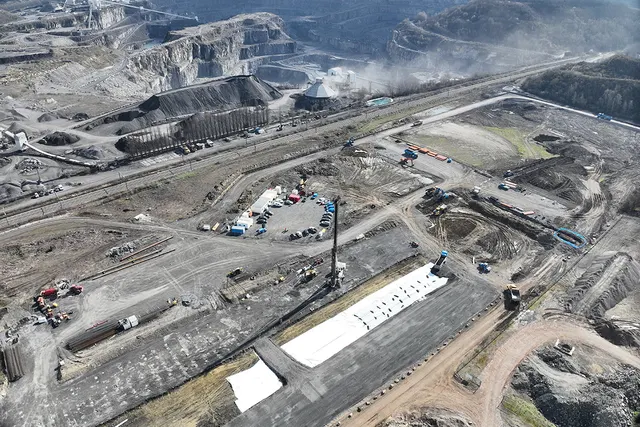
On behalf of North Sea Port, main contractor Willemen Infra is building a new road in the Port of Ghent area, which will connect to James Cookstraat. The street itself will be converted into a railway bridge. Willemen Infra appointed De Waal Solid Foundations, a full-service contractor specialising in retaining and foundation works, to install the soil-displacement piles. “Finding and developing a suitable installation technique was no easy task,” explains Olivier Rens of De Waal Solid Foundations.
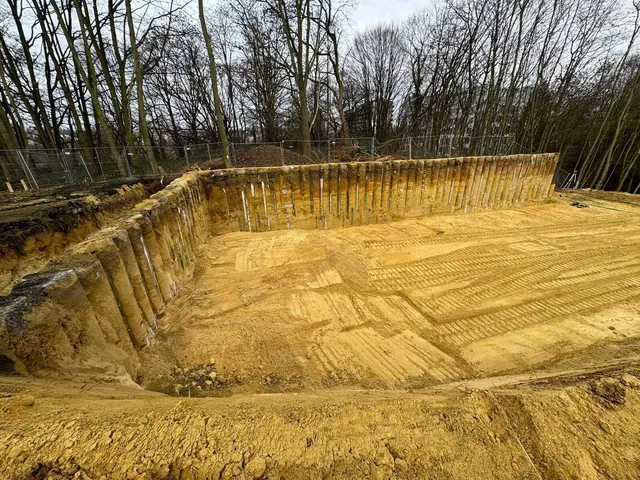
The new road will connect to James Cookstraat. The street will be raised and used as a bridge to carry traffic over the railway line. The new road is located in a GGA (“gebiedsgerichte aanpak”, area-based approach) zone. Archaeological excavations were carried out on the site during the second phase of construction of the Kluizendok. Archaeological remains may still be present beneath the excavated ground, but they are at such a depth that the planned works could never affect them. At the current James Cookstraat, the planned works involve creating embankments by raising the railway bridge. This area is being filled with a 2.5 m layer of soil from the dock excavation.
Vibration-free screw piles with lateral soil displacement
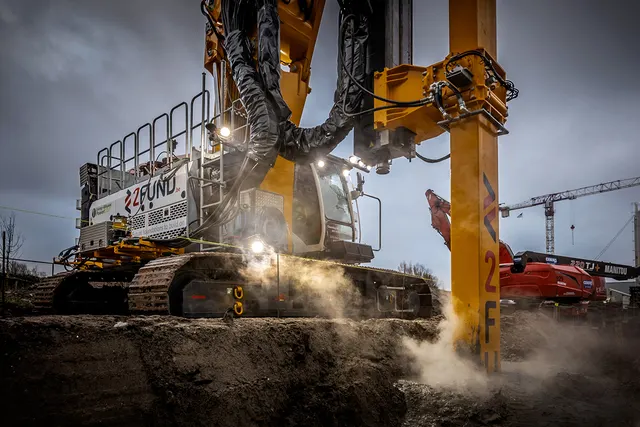
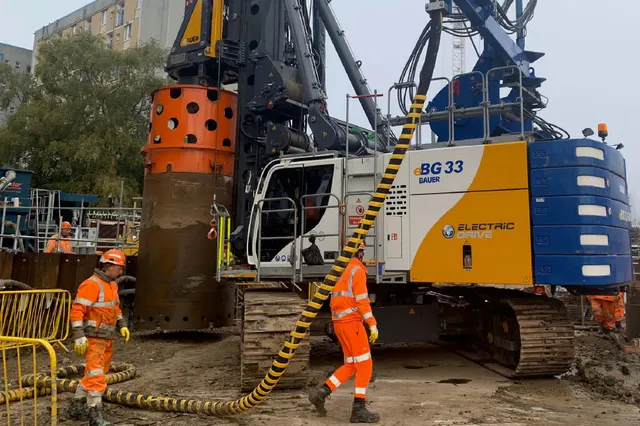
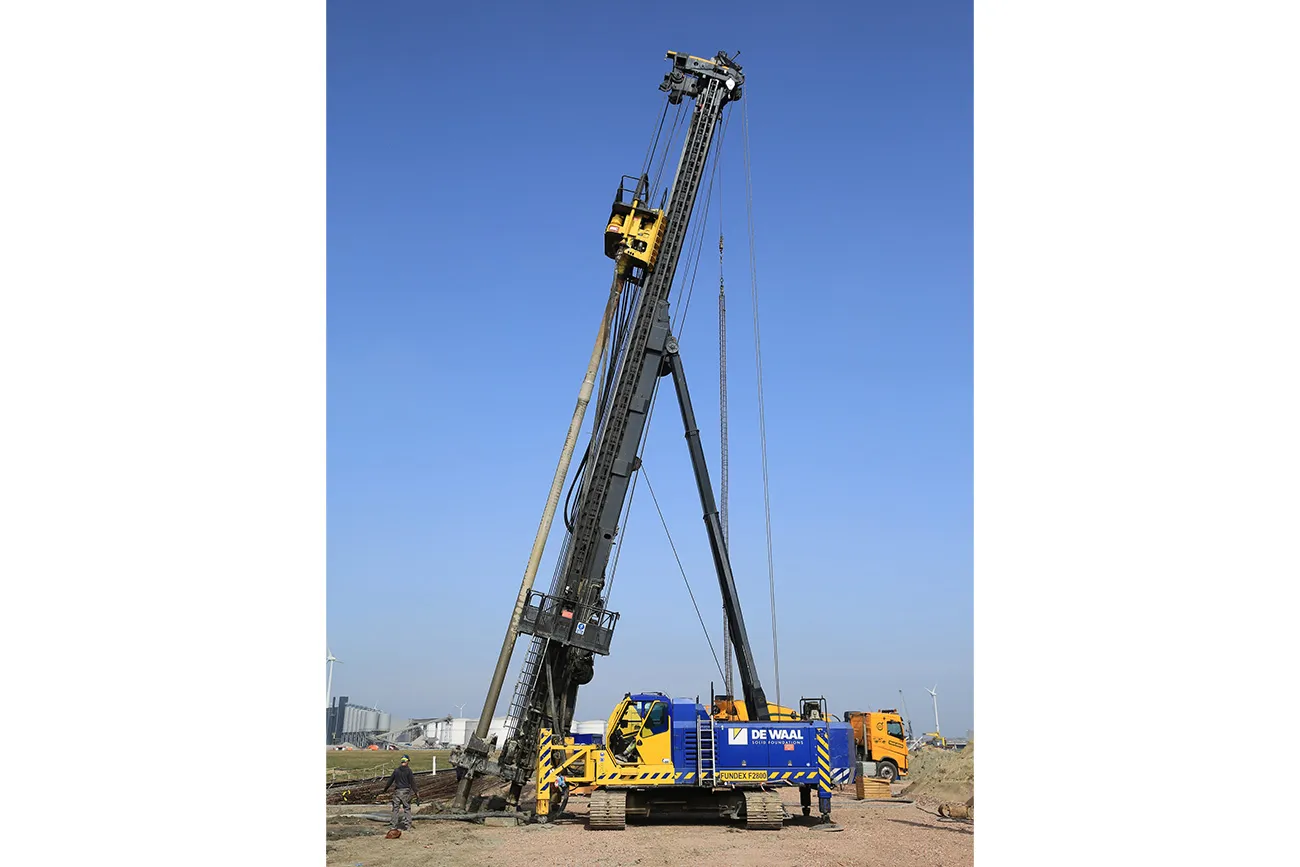
De Waal Solid Foundations was appointed to carry out the piling works. The chosen solution was pre-bored piles with double lateral soil displacement, installed without vibration, with a design load of 2500 kN ULS, a diameter of 61 cm and a length of 16.5 m. In total, 72 double-displacement screw piles were installed at an inclination of 25%, both forwards and backwards. The De Waal GVS pile was chosen because this type of pile can be drilled much deeper into hard strata. The system offers two advantages: the drilling process is entirely vibration-free, and it can achieve a high working load with a relatively small pile diameter. Reinforcement can also be installed along the full length of the pile.
Challenges
For the experienced team at De Waal Solid Foundations, this was a bespoke project, but it still presented a number of challenges. Olivier Rens explains: “Finding a suitable installation technique was not easy, given the heavy sand layers in the upper 10 m, which had to be penetrated using a large-diameter pile. Installing piles inclined forwards and backwards is no easy task either. In addition, the work was carried out close to a railway line, so we had to meet all the necessary safety requirements. Groundwater conditions also led to a large amount of water entering the concrete. We therefore needed to use a different type of concrete and take measures to reduce pore water pressure.”
Knowledge and experience
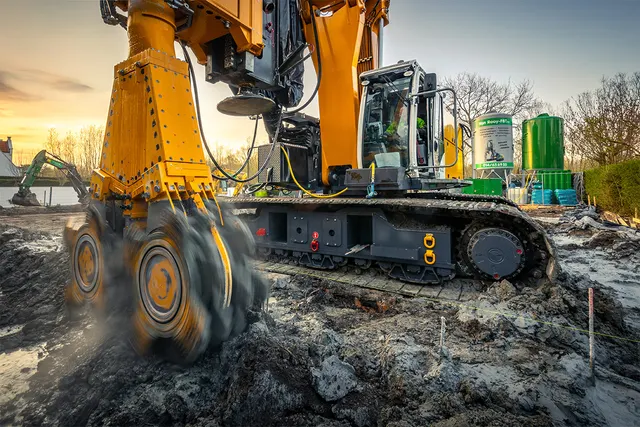
De Waal Solid Foundations’ knowledge and experience proved particularly valuable on this project. The site conditions, for example, called for a creative approach. “We pre-bored through the densely compacted upper sand layers before installing the double-displacement piles. With our extensive plant fleet and more than 30 years’ experience in piling, we can provide the right solution for every site and ensure smooth execution.”
Question about this story? Ask your question
Keep following this
Get an email when a new story is published. No account needed.
- ThemeTransforming infrastructure and territories
- SubjectFoundations