Fire safety experts help keep hot and cold apart
Texte Philippe Selke Photos EFSafety & Cordier Food Group
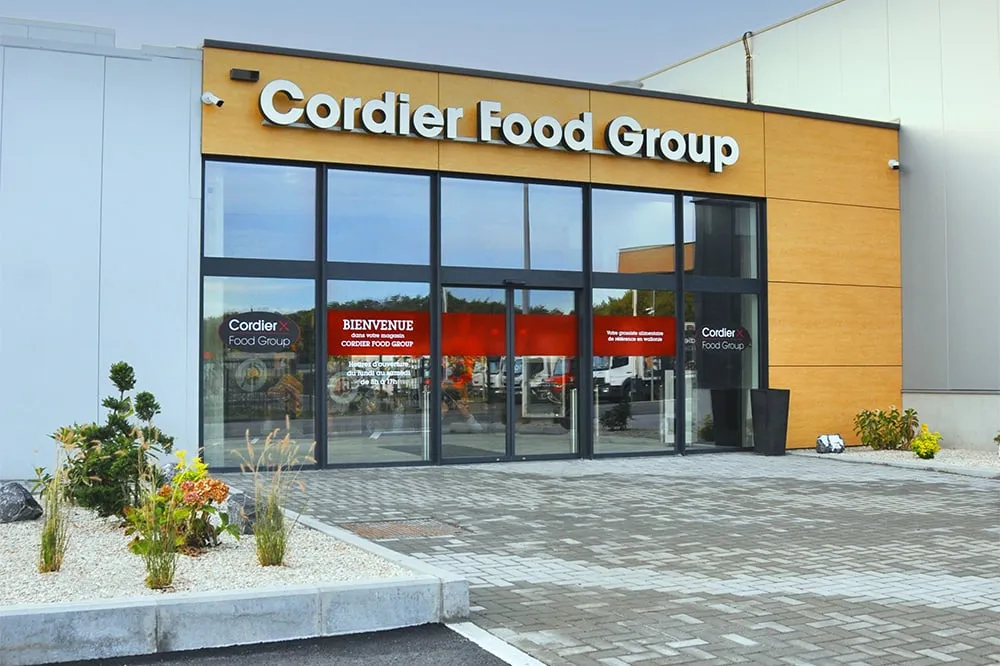
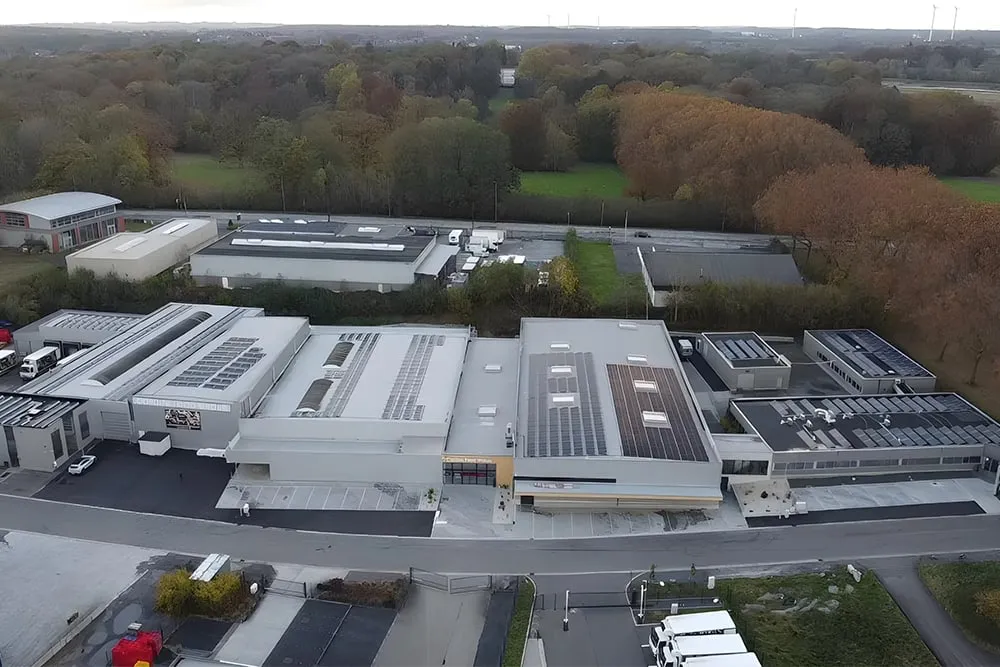
At Cordier Food Group in the Faubourg industrial estate in Manage, there was cause for celebration a few weeks ago: several hundred people had gathered to inaugurate the food wholesaler’s new cash & carry. But this was preceded by a series of studies and works. To support and assist the client with fire prevention and protection as part of the extension and conversion of its business, EFSafety worked hand in hand with BFS Consulting.
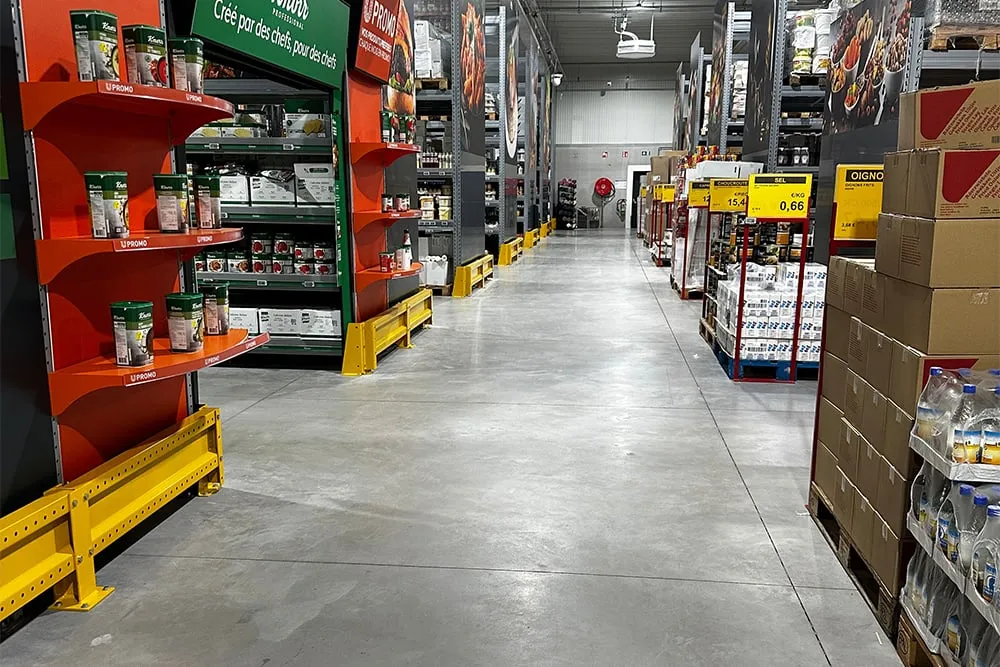
Experts in wholesale, Cordier Food Group has been upholding its traditions since 1928, supplying professionals with quality fresh produce. The company recently opened a new cash & carry area in a new extension. The former cash & carry has been converted into freezer halls. This expansion required a thorough fire risk assessment and the implementation of appropriate protective measures. The aim was to ensure the safety of employees and customers, as well as business continuity in the event of a fire, while complying with the applicable standards.
Safeguarding the existing buildings
Pierre Cochet, manager of EFSafety: “Initially, the former cash & carry separated the freezers from the cold rooms. A risk assessment was carried out in March 2023, before work began on the full programme of alterations and the extension. The main risks identified were associated with the cold rooms and freezers, which were insulated with flammable materials such as polyurethane, and with evacuating people from what resembled a maze. Everything was interconnected, but there was no compartmentation.”
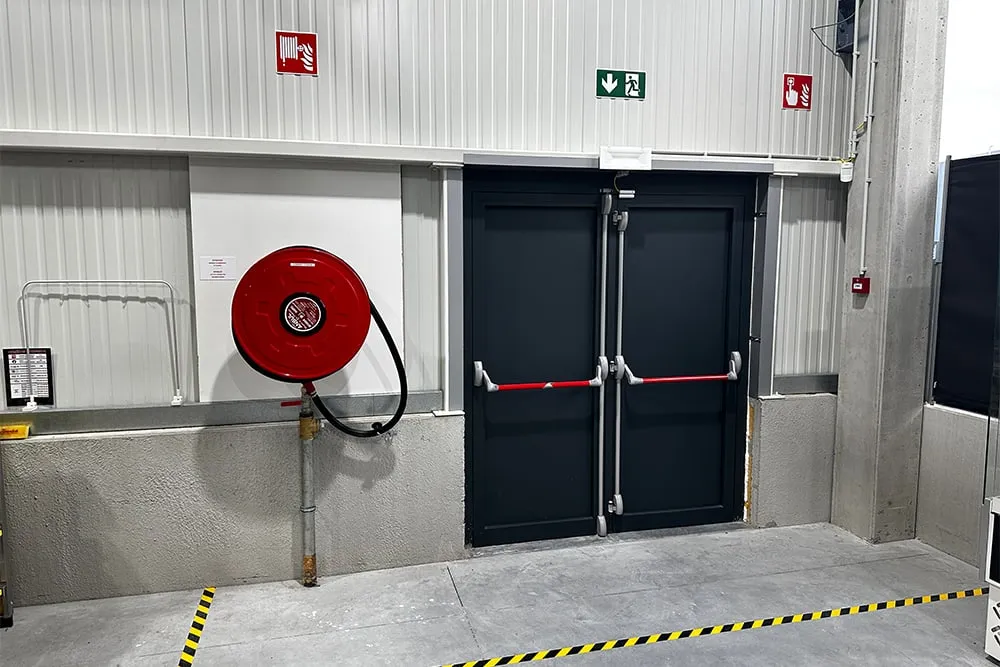
The challenge with this kind of layout is to find fire protection solutions that take account of the cold rooms on the one hand and the nature of the structural elements on the other. The extension was built entirely in concrete, in compliance with the fire safety standards in force. This is not the case for the historic buildings, which are largely built with steel frames and where the freezers reach a temperature of -38 degrees. Fire protection measures were therefore tailored to each building and its specific use. A general fire detection system compliant with standard NBN S21-100 (2021) was installed, except in the freezers at -38°C. Fire compartments were created between the different buildings to limit the spread of a fire across the whole business and facilitate the evacuation of staff and customers. The new cash & carry area was fitted with smoke extraction systems. Finally, evacuation plans and clear signage were put in place to guide workers and customers to the emergency exits. Staff and management were involved in implementing the fire protection measures, particularly those relating to evacuation and signage.
Combining two areas of expertise for a practical and effective solution
BFS Consulting carried out the fire risk assessment, while EFSafety was responsible for the fire detection study, evacuation plans and signage. BFS Consulting then updated the risk assessment in April 2024 and drew up the fire service intervention plan. This identifies all the firefighting equipment in the building, the various access points and risks on the premises, and provides recommendations.
In summary, the work carried out by EFSafety and its partner BFS Consulting took place in three phases. The first involved assessing the fire risks in the old buildings. The second involved incorporating fire prevention and protection measures into the design phase of the extension and into the existing buildings. Finally, the third and last phase consisted of conducting a new risk assessment once the works were complete, just days before the opening, to make sure that everything prescribed in terms of fire prevention and protection was sound.
Question about this story? Ask your question
Keep following this
Get an email when a new story is published. No account needed.
- ThemeBuilding and site safety and security
- SubjectFire safety