Fire-resistant insulation in renovation projects: the law, practice and the way forward
Texte Frie Van der Planken | Photos iStock
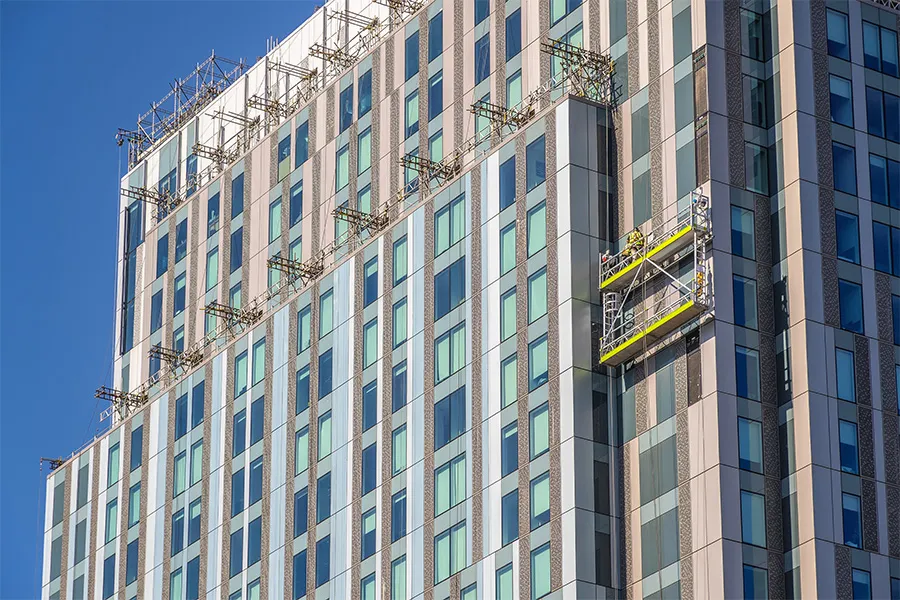
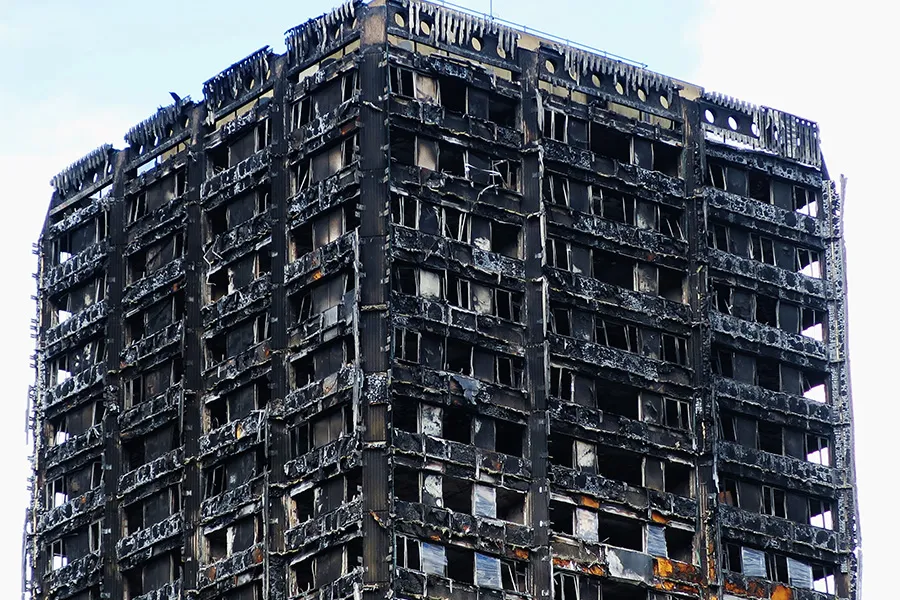
Since 1 July 2022, the Royal Decree on ‘Basic Standards for the Prevention of Fire and Explosion’ has been extended to include new fire safety requirements for façades. In the wake of the devastating fires in large buildings such as Grenfell Tower in London, this is clearly a positive development. However, the Royal Decree applies only to newly built buildings and extensions. So what about renovation projects? Does a fire safety solution apply, or is it even mandatory, in these cases? And what role do the fire service play?
Following the recent revision of the ‘Basic Standards’ Royal Decree, materials used for cladding and façade components in new medium- and high-rise buildings, including insulation, must in many cases be non-combustible. This provision helps prevent fire spreading through the façade system. The risk is also high during renovation work, although this is not covered by legislation. Bart Vanbever, Senior Expert Fire Safety at Agoria, explains: “The problem with renovations is that existing structures and protective systems often have to be dismantled. Take a façade, for example: remove part of it and you suddenly create a large opening. If the insulation materials are left unprotected at certain points during the work, a fire can take hold very quickly if combustible materials are present. So the work itself exposes you to a higher fire risk, because it is being carried out with a lower level of fire safety. Fire detection systems often have to be switched off or removed during the construction phase.”
A construction phase that “falls through the cracks”
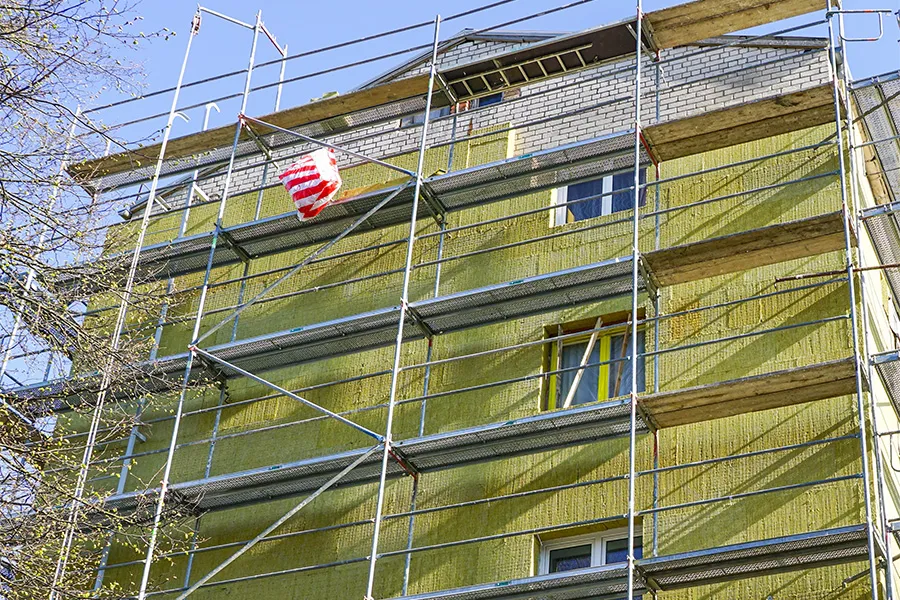
The Basic Standards apply only to the final result of the work. What happens during the construction phase is therefore not subject to any oversight. This is where unprotected insulation becomes a major concern: in combination with combustible materials, it creates a highly dangerous situation in both new-build and renovation projects. The fire service has no overall view of the situation. Safety coordination is another crucial issue, as Bart Vanbever points out: “The Royal Decree on temporary or mobile construction sites, which sets out the rules for safety coordination, is theoretically a very good concept. The rules are clear. But in practice, fire safety is often given short shrift in safety coordination plans. Even for large, high-risk buildings, a hot work permit is often treated as the first, and only, solution, when consideration should be given in advance to how the reduced level of safety during construction work will be offset. This could include on-site detection and organisational measures. These aspects are not really examined in depth.”
The Netherlands has addressed this ‘forgotten’ phase of construction with the Inspection Protocol, which sets out specific fire safety measures for (new) façades at every stage of the construction process, including during the works. Bart Vanbever says: “We should probably take inspiration from the Inspection Protocol in Belgium, but I wonder how effectively these measures are applied in practice. I imagine a construction site in the Netherlands is not so different from one in Belgium or France. In my view, it depends on the sector: in the nuclear industry, I have no doubt that a great deal of attention is paid to fire safety during construction, but I think things are different for an ordinary residential building or shopping centre.”
What is the way forward?
To ensure fire safety when renovating façades, ‘Basic Standards for Existing Buildings’ would seem the most obvious solution. But is this realistic? Peter Rutten, Commander of the Risk Management and Fire Prevention Department for the Antwerp fire service zone, says: “A Royal Decree of this kind for existing buildings has been in the pipeline for a long time, but drafting it is complex. Take a building from 1600 and another from 1960, for example: they are built in completely different ways. That is precisely why these standards are not planned, because it is very difficult to draw up rules that can be applied to every situation. However, one could envisage requiring the principles of the current Basic Standards to be followed whenever insulation is added to an existing building. If this is not possible for one reason or another, an equivalent solution could be developed.”
Peter Roseleth, Director of the Fire Prevention Department of the Brussels fire service, agrees: “It would already be a very positive step to have clear rules for insulating buildings during renovation, as well as rules for the construction phase, such as the Dutch Inspection Protocol. But responsibilities also need to be defined. As firefighters, we cannot determine and monitor everything. Engineering firms, architects and contractors also have a major responsibility.”
Can safety coordination during construction work be improved? Bart Vanbever believes it can, although legislation in this area is not the priority: “I think we have sufficient resources in our country in legislative terms, at least when it comes to safety coordination. The main shortcoming is enforcement, and more specifically, raising awareness among all the parties involved. Better statistics would be very useful in this respect. If we knew where the problems lay, we could address them and run targeted campaigns. Clear figures would provide the necessary basis for allocating more resources to enforcement and, potentially, drawing up further regulations to ensure fire safety during and after construction work. In my view, this is the best way forward.”
Question about this story? Ask your question
Keep following this
Get an email when a new story is published. No account needed.
- ThemeRenovating existing buildings
- SubjectFire safety