AI-based access control: the pros and cons
Texte Tim Janssens Photos Pexels, Pixabay

Artificial intelligence has rapidly emerged as a new driver of change in our society. AI also offers many opportunities in access control and security. But it is not all plain sailing (yet). In this article, we list the main advantages and disadvantages.
Few subjects, if any, attract as much interest today as artificial intelligence. The concept has been around for just under seven decades, but in recent years it has gained momentum and, at lightning speed, both literally and figuratively, established itself as “the new normal”. As access control is a technology-driven discipline, AI is also making rapid progress in this field. Traditional systems are giving way to AI-based alternatives that bring a new dimension to security, efficiency and ease of use.
Safer than ever
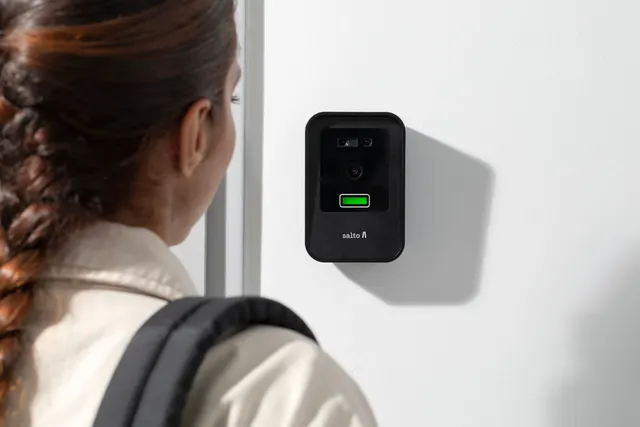
One of the most obvious benefits of AI in access control and security is a higher level of security. Using complex algorithms, AI systems can detect all kinds of patterns at lightning speed in the endless stream of data collected by card readers, security cameras, biometric scanning systems, underlying software platforms and more. This means that anomalies are detected immediately too. In other words, it is becoming increasingly difficult, if not almost impossible, for unauthorised people to gain access to certain premises or buildings. After all, an artificial intelligence system is much harder to fool than a human being.
Even biometric identification, one of the most advanced forms of access control, will become more effective than ever thanks to artificial intelligence. Under the European AI Act, passwords, codes, keys, access cards and even smartphones will increasingly be replaced by specific individual physical characteristics, such as fingerprints or the iris.

Automation and preventive maintenance
Automation is another way in which artificial intelligence can have a positive impact on access control and security processes. Take the allocation and management of temporary or permanent access rights. Until recently, this invariably involved some form of human intervention, but advanced AI systems are now expected to make it possible to do this (largely) automatically. The benefits are clear: greater efficiency and ease of use, less work for building managers and/or security staff and, in principle, lower operating costs. In addition, linking and integrating access control with other tools, such as video surveillance and time-recording software, opens up many opportunities for further optimisation. Not to mention the promising prospects for preventive maintenance. In other words, proactive maintenance before problems, breakdowns or failures occur, made possible by AI's pattern recognition capabilities.
Stay vigilant
However, every coin has two sides. The same is true of artificial intelligence. However sophisticated some systems may be and however well regulated they may seem, privacy concerns are never far away. Nor are false positives or false negatives in AI-based access control. Manual override may provide some relief, but it does not change the fact that this can lead to frustration or inconvenience. Bias, or the risk of perpetuating inherent biases by using one-sided training data, is also a major concern. Manipulation or deception by hackers cannot be ruled out either. The good news is that many of these potential drawbacks are already covered by the GDPR and the much-discussed AI Act, adopted by the European Parliament in mid-March. Of course, there will always be tiny loopholes that crafty individuals or groups can exploit, and it is important to remain vigilant about potential misuse.
Question about this story? Ask your question
Keep following this
Get an email when a new story is published. No account needed.
- ThemeBuilding and site safety and security
- SubjectAccess control