











Too hot indoors? These 6 tips will help you keep your cool at home

Hot days often mean stifling heat and excessive sweating at the office, on the train, in the classroom, and elsewhere. If you want to avoid the same fate at home, the key is to master the art of keeping solar heat out. Otherwise, it will be too late. These six tips will help.
1 Keep windows and doors closed during the day
Forecasting a hot day or heatwave? Keep doors and windows closed from early morning until the temperature cools down in the evening. The aim is to stop warm air entering your home and raising the indoor temperature.
2 Keep the sun out
Another must on hot (sunny) days: make sure your windows are not directly exposed to the sun. For south-facing windows in particular, a roof overhang, an awning, sliding panels or blinds can help prevent a greenhouse effect and the tropical indoor temperatures that come with it. Unfortunately, internal solar shading, such as curtains and blinds, does not have the same effect, because by then the damage is already done. The heat is already inside. In a well-insulated, airtight home, it is difficult to get the heat back out.
3 Keep blinds or roller shutters down all day
Do you have blinds? Or are you thinking of installing them? If so, make the most of them. Get into the habit of lowering them in the morning when you leave home, and keep them down all day in hot weather. Roller shutters also protect your windows from the sun’s heat, of course, but they leave the inside dark all day.
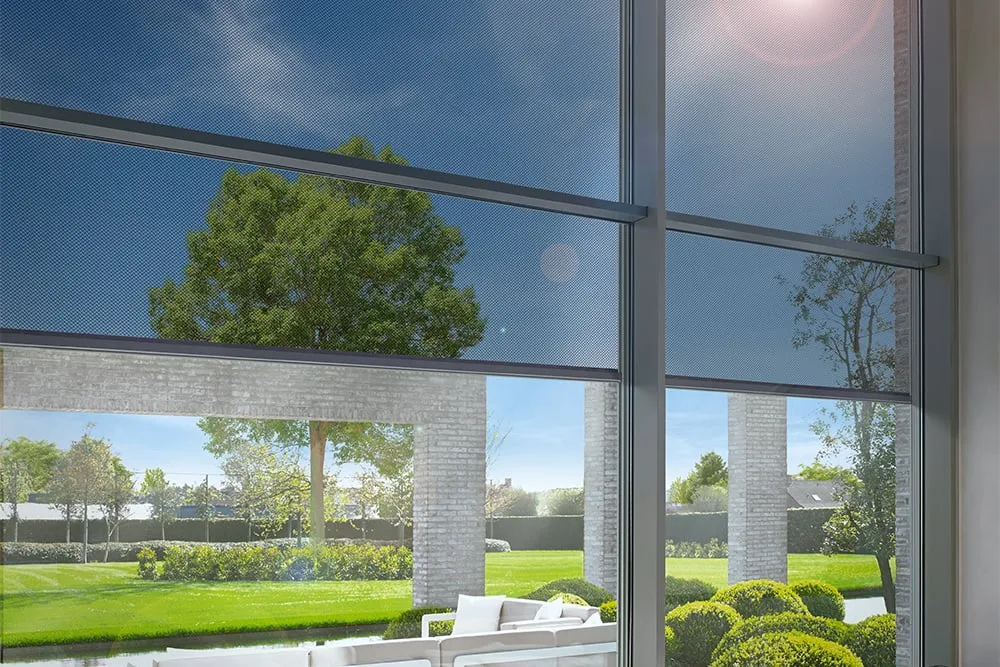
4 Automatic control of external solar shading
A small oversight, such as accidentally leaving the blinds open in the morning, will quickly lead to a rise in indoor temperature on the hottest days. Fortunately, there are also “smart blinds” that are controlled automatically according to your preferences and the latest data stored in the cloud. No additional sensors or home automation system are needed. A smart control app such as “Renson Solmate” is all you need to manage your blinds intelligently, even when retrofitting or installing them at a later date.
5 Let in the cool night air
It is a good idea to open your windows in the evening, when it is cooler outside than inside. Ideally, open two windows opposite each other, or one window on each floor (as well as all the internal doors), to let in as much cool night air as possible. Building materials absorb some of the cool air and release it gradually during the next hot day. This means you start the following day in a cooler home, which also takes longer to warm up. Do you feel unsafe leaving a window open? Or are insects a nuisance? You can have burglar-resistant window grilles with an integrated insect screen fitted. This is an interesting option for anyone planning to replace their windows.
6 Create a green buffer zone
Strategically placed plants, shrubs or trees around your home provide a natural buffer against the sun. Indoor plants are also a good way to keep temperatures under control. The moisture they release has a cooling effect on the surrounding air.
What about air conditioning?
These 6 tips allow you to “passively cool” your home by preventing the indoor temperature from rising too high. If you do nothing until it is too late, you will have to resort to “active cooling”, such as air conditioning. During a heatwave, it can be an excellent supplementary solution. However, you can make substantial savings on your energy bill if your air conditioner does not have to run for hours at a time throughout the year. Make no mistake: unfortunately, this is the case in many new homes, which are well insulated and airtight and have large south-facing windows. Prevention is therefore better than cure if you want a cooling system that is not only energy efficient but also sustainable. Nature will thank you!
www.renson.net
Question about this story? Ask your question
Keep following this
Get an email when a new story is published. No account needed.
- SubjectNews







