











Timber construction, the best response to today’s challenges
Texte Philippe Selke Photos Olivier Bourgi
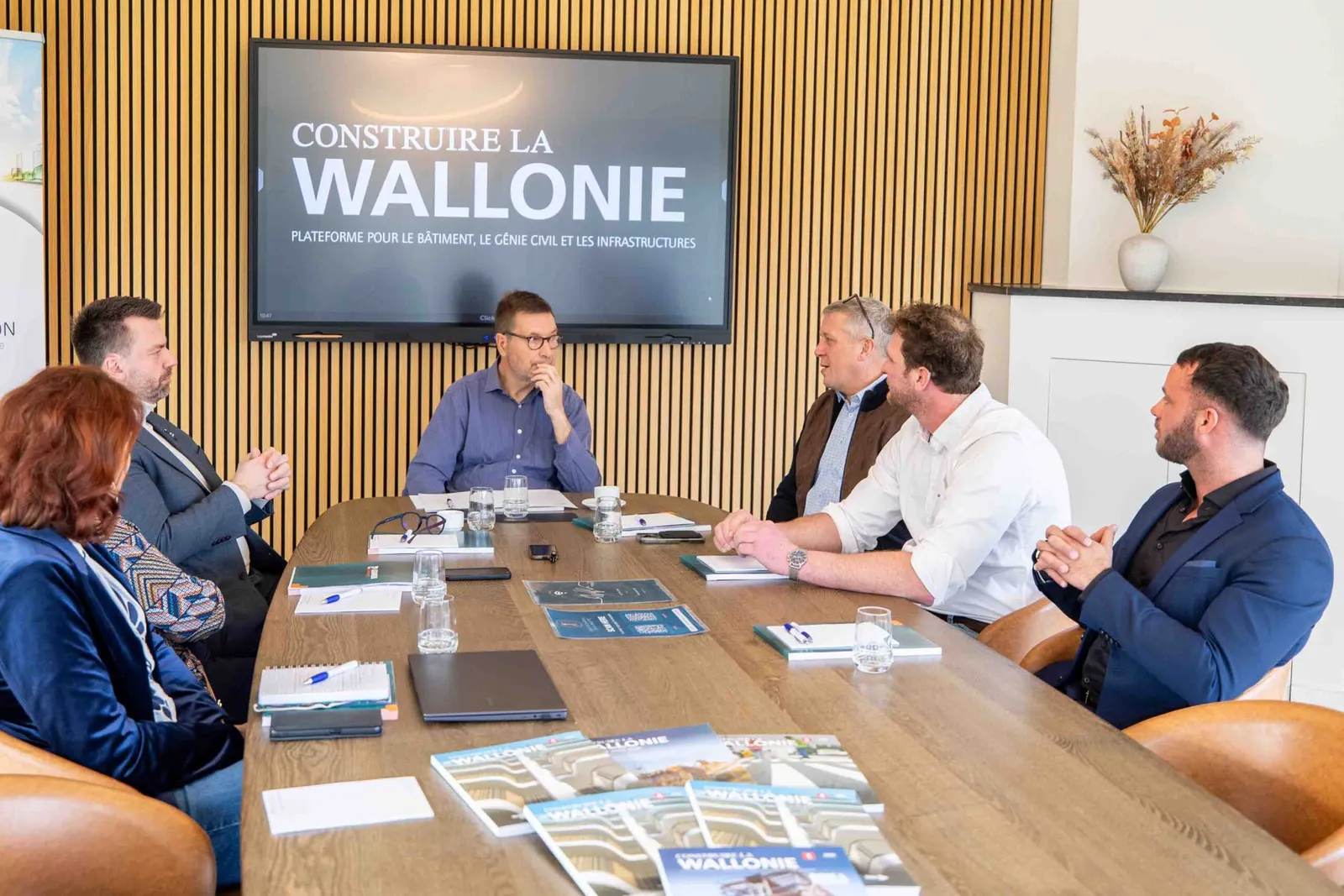
Decarbonising the sector, scaling up the energy renovation of Wallonia’s building stock, constructing buildings that promote the wellbeing of their occupants, addressing the shortage of skilled labour, … there is no shortage of reasons to build with timber, and timber construction has probably never been more relevant in our country. So where do we stand, and what can be done to further develop timber construction? This was the starting point for a round table organised by Construire la Wallonie (Louwers Mediagroep) on 5 February in Wavre. It was an open and frank discussion, driven by a shared determination to make progress.
Moderated by Philippe Selke (Palindroom), editor-in-chief of Construire la Wallonie, the event featured passionate exchanges between five participants with complementary backgrounds: Aurore Leblanc (Ligne Bois), Justine Couchariere (Cap Construction), architect Pierre Salingros (Atelier de Tromcourt), and two Walloon timber construction contractors, Laurent Riche (Stabilame) and Florian Huet.

Time to put misconceptions to rest!
Even today, some people still believe that timber is not durable, strong or fire-resistant, … From the outset, everyone agreed in calling out these persistent misconceptions, which mean they are constantly having to make the case for a structural material that is natural, renewable and durable. A carbon sink like no other, timber should be a natural choice in the fight against climate change. Aurore Leblanc: “Timber fits perfectly within the framework of the European DNSH regulation, which will gradually apply to smaller organisations too, for the construction of low-carbon buildings. Concrete and steel cannot claim such a low environmental footprint.”
Timber plays a key role in creating a more sustainable building stock, thanks to its many inherent qualities. Florian Huet: “Timber has an exceptional strength-to-weight ratio, making it ideal for prefabrication.”
“Timber is also an excellent thermal insulator as well as a structural element. There is no need to multiply materials to avoid thermal bridges. This makes design much easier,” adds architect Pierre Salingros.
As an added bonus, the sense of wellbeing experienced in a timber building has recently been confirmed by scientific studies that attest to the material’s health benefits. As Aurore Leblanc notes, timber fosters a connection with nature, or biophilia.
Additional benefits
The benefits of timber, however, go beyond environmental considerations. Laurent Riche: “Mobility has become a major problem in our country. Off-site manufacturing drastically reduces the number of journeys. Timber prefabrication also significantly shortens construction times, reducing ancillary costs, such as pavement rental in towns and cities, and disruption for local residents, thanks to shorter, cleaner building sites.
Employment also stands to benefit. Workshop manufacturing makes it possible to bring back workers who can no longer cope with the demands of working outdoors. Overhead cranes and digital machinery pave the way for more comfortable working conditions.
A training gap
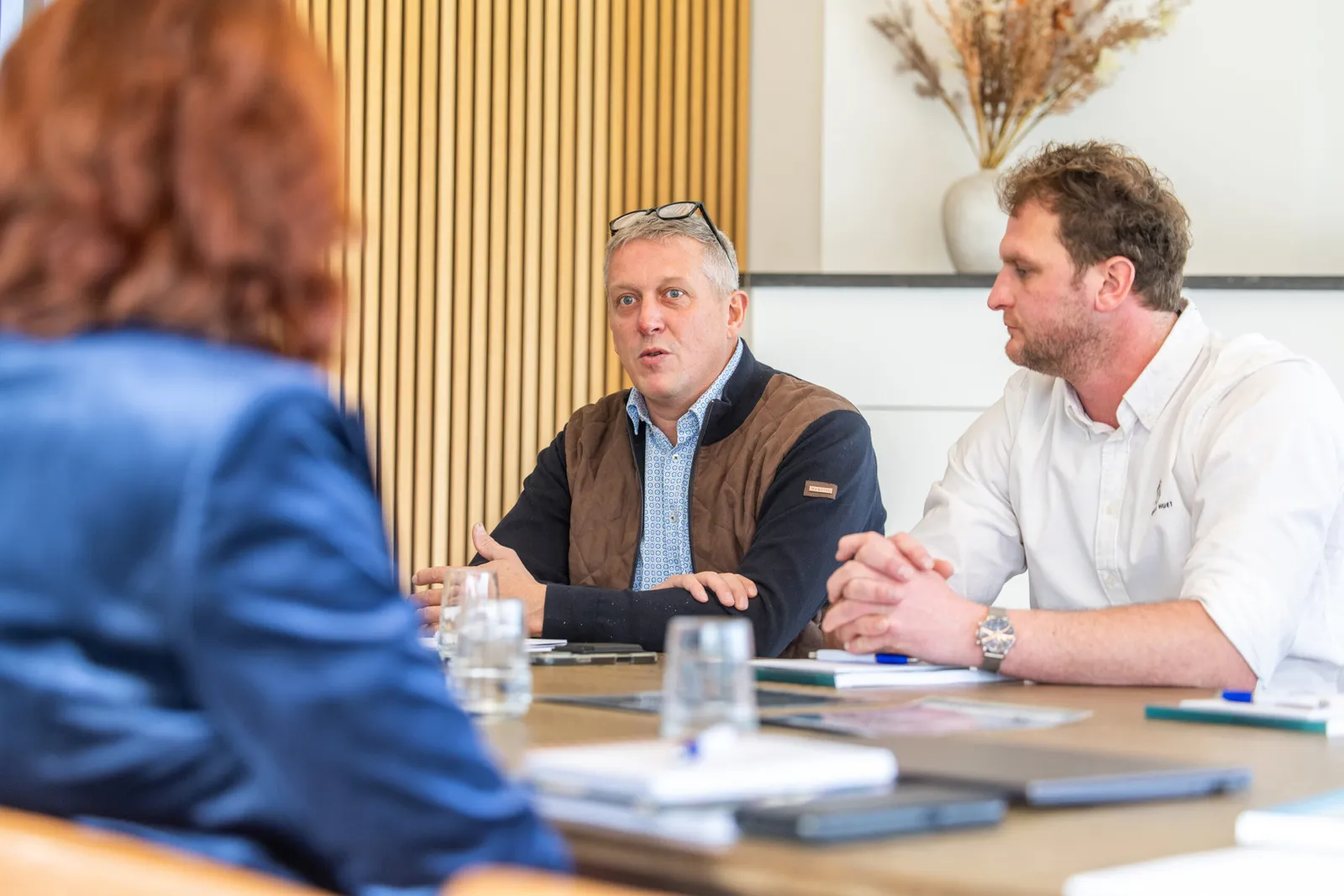
Laurent Riche highlights the lack of training for designers, who often only venture into timber construction at the client’s request: “Timber construction is an option in the civil engineering degree, at master’s level, and accounts for just four credits, … So it is hardly surprising that engineers and architects design in concrete. Only later might they ask for a timber alternative… But you do not design in timber in the same way as you do in concrete.”
Justine Couchariere agrees: “Timber should not be treated as a mere alternative. Timber means prefabrication, and therefore requires essential upfront design work if you want to generate worthwhile economic benefits, particularly by reducing uncertainties on site.”
A simpler role for the architect
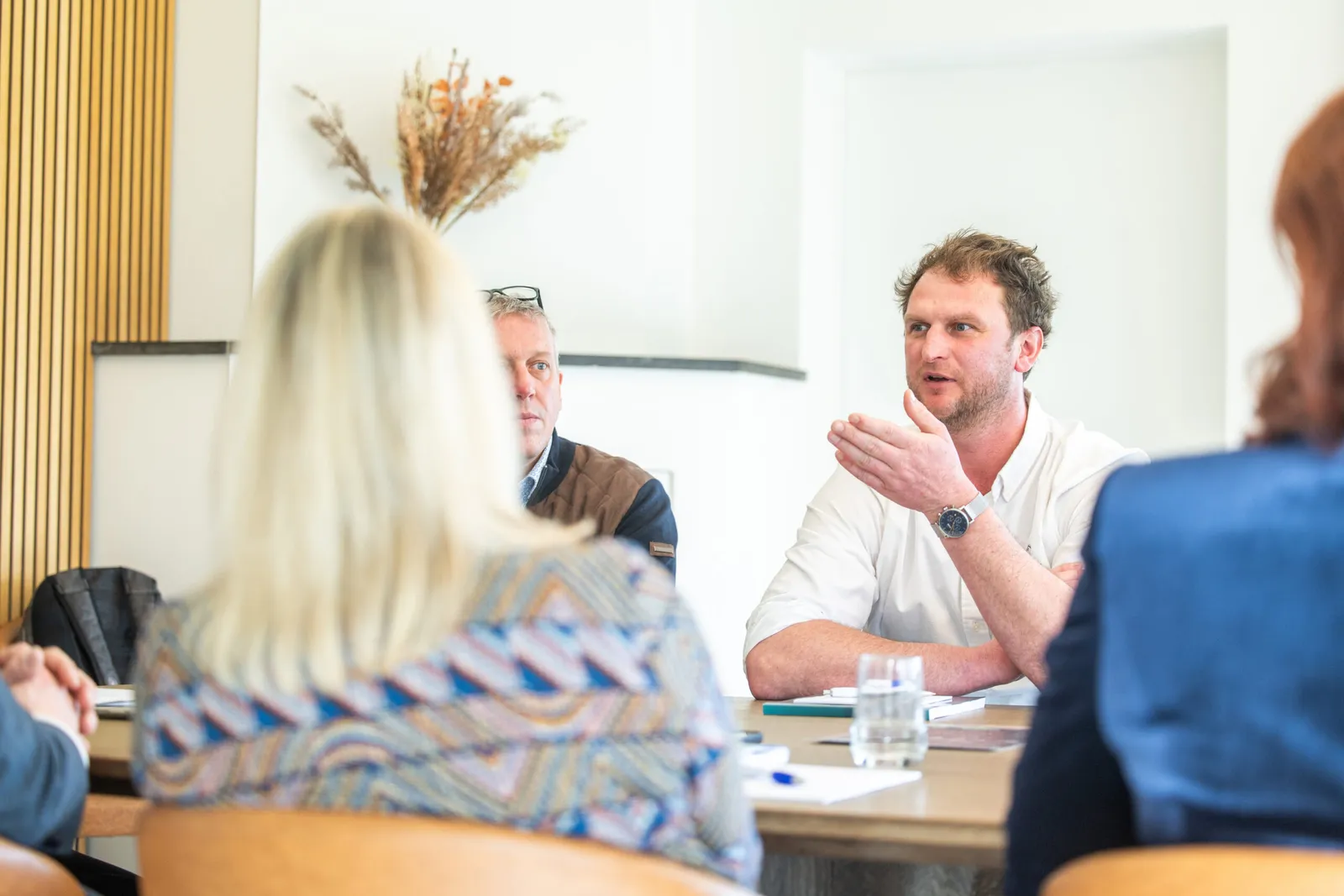
Florent Huet describes a new division of responsibilities: “We are builders, like masons, but our role is much broader because we work with timber. We need to support the architect, which a mason does not do.” In what is known as traditional construction, contractors can rely on the designers’ work. With timber, they often have to draw up the plans themselves.
Laurent Riche agrees: “Timber contractors were quick to adapt, providing the skills and digital tools required. Architects now only need to approve the construction details supplied by the contractor.”
Pierre Salingros agrees: “Ultimately, the architect leaves more of the work to the contractor. It is a real comfort. When I see people trying to solve problems on site, in the rain and mud, … Working things out in advance is more comfortable for everyone.” He adds that it is time to forget the idea of a highly standardised timber house chosen from a catalogue, when timber construction now makes genuinely bespoke design possible.

Standardising supply or structuring demand?
Does this freedom in construction choices hold back the growth of timber construction? In Belgium, the sector is made up of businesses of varying sizes, each with its own way or ways of building. For Laurent Riche, this creates complexity and undermines the image of the product.
Commissioned by the Walloon government in 2025 to establish an off-site construction sector, the Cap Construction cluster has set out one of its recommendations. Justine Couchariere: “For off-site timber construction to really take off, a degree of standardisation is needed across building components and construction systems. But be careful, standardisation does not mean uniformity. The aim is not to impoverish architecture or limit how buildings are used, quite the opposite. Standardising grids or wall systems improves interoperability, reduces waste and boosts the overall performance of projects.”
Laurent Riche: “I think designers should instead work to performance targets. Every element, whether a wall, floor or roof, … should meet performance requirements, whether it is bio-based or not. Prefabricators can then deliver those performance levels as they see fit. This would open up the market considerably.”
A key role in renovation
Timber also has a strong role to play in renovating Wallonia’s building stock. The European energy renovation targets cannot be met without a sharp increase in the current pace of renovation, requiring projects to be scaled up despite the shortage of skilled labour.
Aurore Leblanc: “Timber is the ideal material for wrapping multi-storey buildings from the outside, using complete off-site manufactured façades with integrated windows, doors and insulation.” The task is more complicated for rows of terraced houses bordered by pavements, but a number of examples show that renovation projects can be carried out collectively if public authorities provide residents with sufficient support.
New territorial development plans are driving urban densification. Adding extra storeys to existing buildings is one option, and once again timber proves to be the most suitable material.

Public-sector impetus and the bottom line
In Scandinavian countries, Germany and Switzerland, among others, public-sector impetus is recognised as the main lever for transforming timber construction. Here, the sector is eagerly waiting for public authorities to lead by example, offer tax incentives, adapt regulations and update specifications by incorporating performance criteria, to deliver low-carbon buildings in which timber can demonstrate its added value.
Meanwhile, the private sector is moving forward, motivated by financial gains. Banks are offering preferential interest rates to finance sustainable projects. Property developers are incorporating bio-based materials into their projects. When sustainability starts to pay, the incentive to do the right thing grows stronger!
Too nice to make a noise?
Aurore Leblanc regrets that the timber sector is too modest compared with the lobbies representing other materials: “We can be proud of our companies’ expertise. But we have to acknowledge that the timber sector is very fragmented, which can sometimes make it difficult to speak with one voice.”
Some estimate that timber construction accounts for around 10% of annual building activity in Belgium. “That figure is probably accurate, but it limits timber construction to buildings whose primary structure is made of timber. It does not take into account the many other uses of the material in construction. Beyond load-bearing structures, timber is widely used for cladding, extensions and additional storeys, interior and exterior fit-outs, and so on. If all these applications were included, timber’s actual share of construction would be higher than current statistics suggest. And figures do not tell the whole story. What we see on the ground gives a different perspective. Through our work, we are seeing genuine public enthusiasm and strong interest from professionals.”
Question about this story? Ask your question
Companies in this story


Keep following this
Get an email when a new story is published. No account needed.
- ThemeBuilding with less carbon
- SubjectNews
- CompanyLigne Bois
- CompanySTABILAME







