











“The cost of the energy transition will be enormous”, says FEBELIEC director
Europe aims to achieve climate neutrality by 2050. How is Belgian industry preparing for this? How green and sustainable is our sector today?
Will we achieve the target of cutting CO2 emissions by 55% by 2030? And what about the ambition to achieve full climate neutrality by 2050? These were among the questions put to Peter Claes, director of FEBELIEC, in ‘Building a positive energy story’, the interview series by gas.be. “Above all, we must make sure that we do not lose our economic activity and prosperity in the process. And we need to look for workable solutions,” says Peter Claes.
Making our energy consumption sustainable remains a huge challenge for every sector, Peter Claes points out. “We are lagging behind some other European countries in this respect. This is of course linked to our spatial planning and the options available to us: we have few natural resources that can be used to generate electricity. And developing infrastructure for renewable energy generation is not easy. Just think of the public protests against large onshore wind farm projects or new high-voltage power lines.” That is why the first priority in achieving the energy transition is to convince the public, Peter Claes continues. “Citizens have a strong voice when it comes to major infrastructure projects, and that is a good thing, but at the same time it holds back development. We need public support if we want the energy transition to succeed.”
Is 2030 too soon?
There is therefore a lot of work to do, and the bar is set very high. Too high? “Cutting CO2 emissions by 55% by 2030 is a huge task. Even 40% is difficult,” Peter Claes admits. We are better placed to achieve climate neutrality by 2050: “By then, three major technologies will be available: renewables (combined with storage and conversion into hydrogen or other molecules), fossil fuels (where the CO2 released is utilised or stored), and additional nuclear power: disliked by many, but CO2-free.”
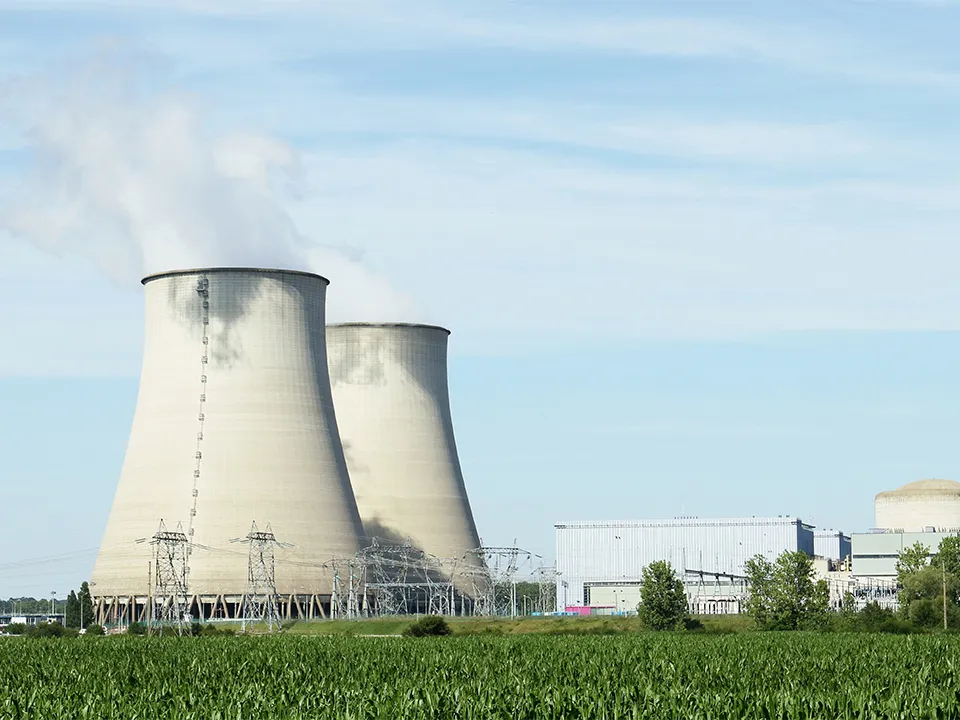
The planned nuclear phase-out in 2025, and the uncertainty surrounding it, do not make things any easier, Peter Claes believes. “If we replace the Doel and Tihange power stations with gas-fired power stations, both CO2 emissions and costs will rise again. Moreover, the debate about these two power stations is separate from the discussion about the future role of nuclear power. By 2050, we could be looking at new, efficient and safe power stations. Of course, that requires huge investment, but the same is true of other technologies.” Above all, FEBELIEC is calling for a long-term perspective. “It has still not been decided what will replace nuclear power. Security of supply must not be compromised under any circumstances,” says Peter Claes.
Staying competitive
One thing is certain: the cost of the energy transition will be enormous. Who will pay? Industry will never be able to foot the entire bill, Peter Claes believes. “Our companies compete with businesses all over the world. If energy becomes unaffordable, they will move to other parts of the world, and that will cost us prosperity, jobs and added value.” A CO2 tax on imported products is one possibility, but here too Peter Claes urges caution. “It is a double-edged sword. China, for example, could decide to tax our products even more heavily. That would put global trade as a whole at risk of collapse. So it is a delicate balancing act that will take time.” According to Peter Claes, governments can play a guiding role: “Public-sector support can give new technologies and infrastructure an initial boost, and create new opportunities.”
Should energy become more expensive to make people and businesses more aware of its cost? Here too, Peter Claes argues for realism: “Our electricity is already 10 to 40% more expensive than in neighbouring countries. This puts our businesses at a disadvantage.”
New technologies
According to Peter Claes, Belgian industry has already invested heavily in greening its processes. “Existing processes have already been significantly improved. But we need to go further: we must improve technologically, and therefore invent new technologies,” says Peter Claes. “Further development of green hydrogen, for example, requires huge investment in research and development. We will certainly need to focus on this in the coming decades. Every company wants it, just as everyone is now hoping for a coronavirus vaccine. Gas is already very important to industry, and if it can be produced in a climate-neutral way, we will of course look into it,” concludes the head of FEBELIEC.
Question about this story? Ask your question
Keep following this
Get an email when a new story is published. No account needed.
- SubjectNews







