











The Belgian glass industry, today and tomorrow
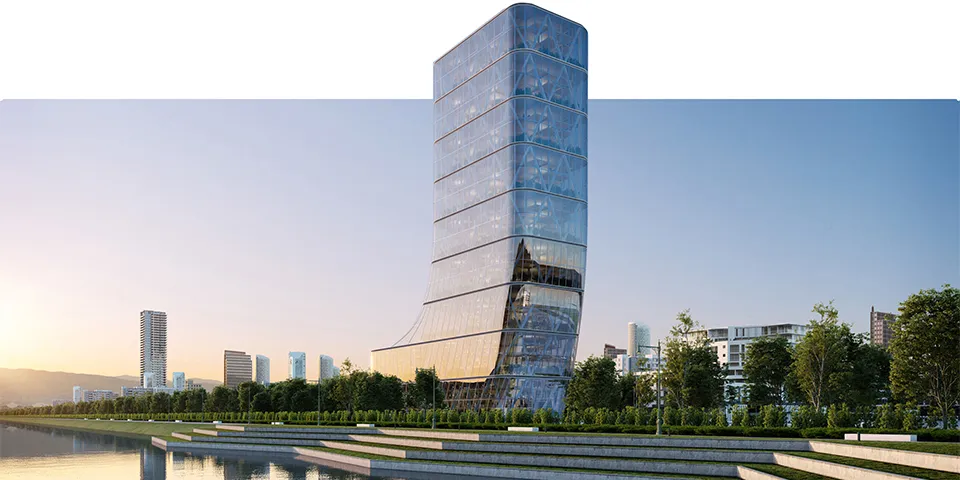
We know it in single, double and triple glazing, but it now comes in new variants such as ‘high-performance’, ‘UV-protective’, ‘electrochromic’, ‘building-integrated photovoltaic’, ‘antibacterial’ and ‘acoustic’. Glazing is an essential element of the buildings where we live and work, where we spend our leisure time and where we receive medical care. As for the glass industry in Wallonia and Belgium, it is holding its own on the world stage and looking to the future with confidence.
Solutions are available for buildings that require both effective solar control and maximum natural light (photo: AGC Glass)
Belgium is a glassmaking nation: « The glass industry has been present in our country since the Middle Ages, and has been a world leader since the late 19th century », says the Fédération de l’Industrie du Verre (FIV), which brings together around 40 Belgian companies involved in glass production and/or processing. What is more, « it is now at the forefront of socio-economic and environmental challenges: the circular economy, innovation, quality of life, sustainability, energy efficiency, recycling, renewable energy, healthy, high-quality packaging… » The sector generated turnover of €2,348 million in 2017 (the latest figures available), a level that has remained stable for several years. It currently employs around 7,500 people.
What sets Belgium apart
« The Belgian market produces larger panes of glass than neighbouring countries », explains Laura Bonnave, Senior Glass and Paper Advisor at inDUfed. « This is driven by demand from the residential sector, particularly new-build homes, where many large glazed openings are installed. In addition, glazing is becoming increasingly clear, allowing more light through. And with summer temperatures rising in recent years, demand for solar-control glazing has also edged up in Belgium.
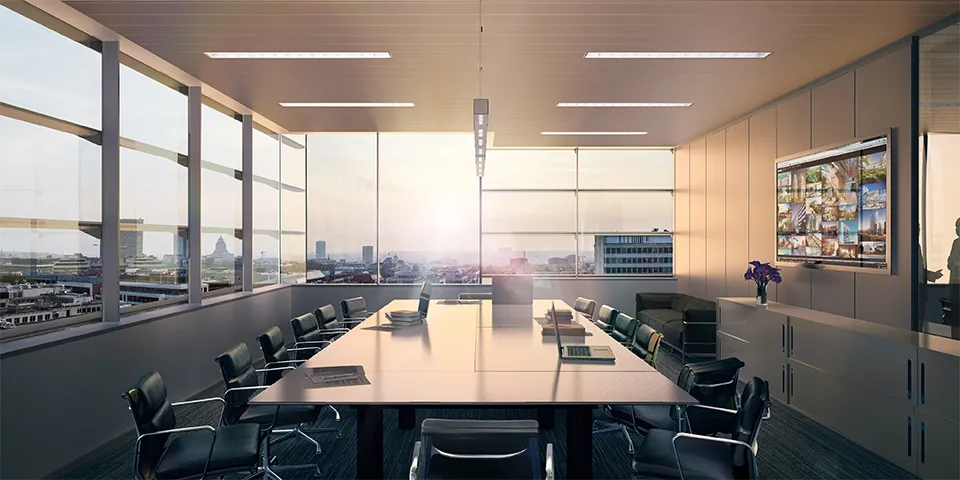
To meet the growing requirements for transparency, light transmission and thermal performance, the visible section of profiles is becoming ever smaller (photo: Saint-Gobain Glass).
Requirements for transparency, light transmission and thermal performance of glazing
« The changing requirements for transparency, light transmission and thermal performance affect the strength of external joinery profiles », explains the CSTC (Centre Scientifique et Technique de la Construction). « To meet these requirements, the visible section of the profiles, and therefore their effective cross-section, is reduced. » It is therefore important to ensure that the materials used for the profiles are strong enough. Laura Bonnave adds: « The PEB also sets a maximum period of overheating in homes, which means that materials must take this into account. Solar-control solutions such as shutters can be installed, but solar-control glass is clearly another option to consider. »
How energy legislation in Wallonia and Brussels affects glazing
The provision of natural light in buildings for comfort and health is covered by standard EN 17037. The current legal requirements are as follows: in Wallonia (Code wallon du Logement), the natural-lighting requirement is met if the net area of external wall and roof glazing in a habitable room is at least 1/12 and 1/14 of the floor area respectively; in Brussels, the Règlement Régional d’Urbanisme requires natural lighting in habitable rooms, except kitchens, equivalent to 1/5 and 1/12 of that area respectively.
« The PEB and regional grants also influence the installation of glazing », adds Laura Bonnave. « This mainly concerns thermal insulation, but also the amount of natural light. »
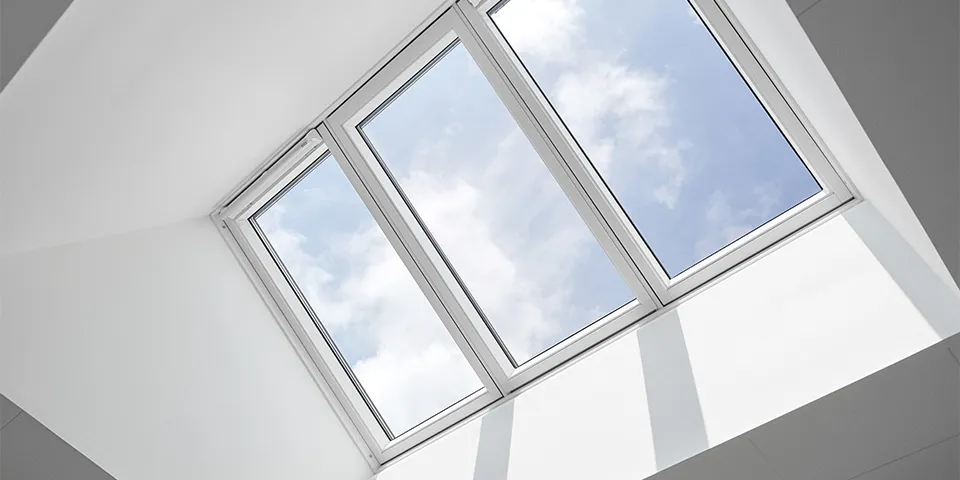
1/14 and 1/12 of the floor area: these are the standards for natural light entering a home (photo: Velux).
What does the future hold?
The FIV has recently considered the future of the sector. After identifying the main challenges, it consulted its members to draw up a list of possible developments. It then developed a vision to maximise the glass sector’s contribution to a low-carbon society while preserving its economic prosperity. Two figures sum it up: 36% (the reduction in CO2 emissions targeted by Wallonia’s glass sector by 2050) and 2% (market growth through the low-carbon transition). « However », warns inDUfed, « given the fragile investment climate, our scenario assumes that only part of this growth will be achieved in Wallonia using existing facilities. » It nevertheless notes that « extending product lifespans, making products lighter and increasing recycling rates are positive developments. » As for production facilities, « switching to more efficient furnaces, installing electric furnaces and using biofuels are all possible levers at an achievable level of ambition. »
Question about this story? Ask your question
Keep following this
Get an email when a new story is published. No account needed.
- ThemeFaçades and building comfort
- SubjectNews







