











The Ampsin-Neuville lock site is now home to Wallonia’s longest fish pass!
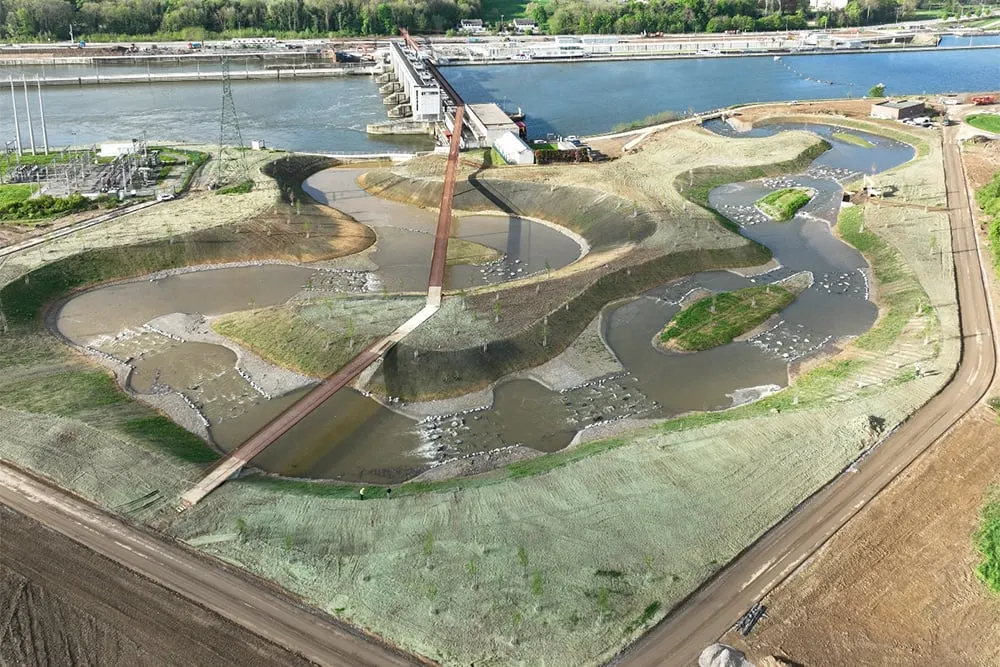
The new fish pass built as part of the project to upgrade the Ampsin-Neuville lock site has now been completed! A true artificial river, it is the longest structure of its kind in Wallonia. Various fish species, including salmon, will be able to use it as a route upstream, as well as a place to rest and spawn.
As part of the works to upgrade the Ampsin-Neuville lock site, a series of measures are being taken to encourage the development of wildlife and plant life.
These include a fish pass running around the left-bank hydroelectric power station. At 700 metres long, this is the longest fish pass in Wallonia. This type of project is unique on the Walloon Meuse, as a large area is needed to create a river of this kind.
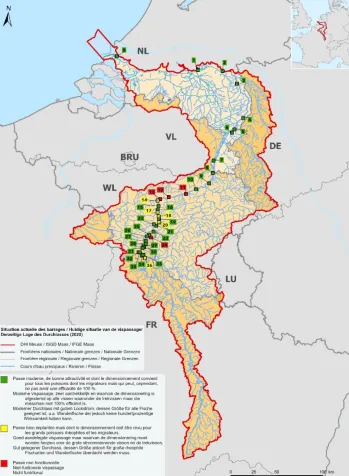
It is one link in the restoration of free fish passage throughout the Meuse basin. The fish pass is needed to allow different fish species to pass the weir and is designed in particular to restore the Atlantic salmon’s life cycle.
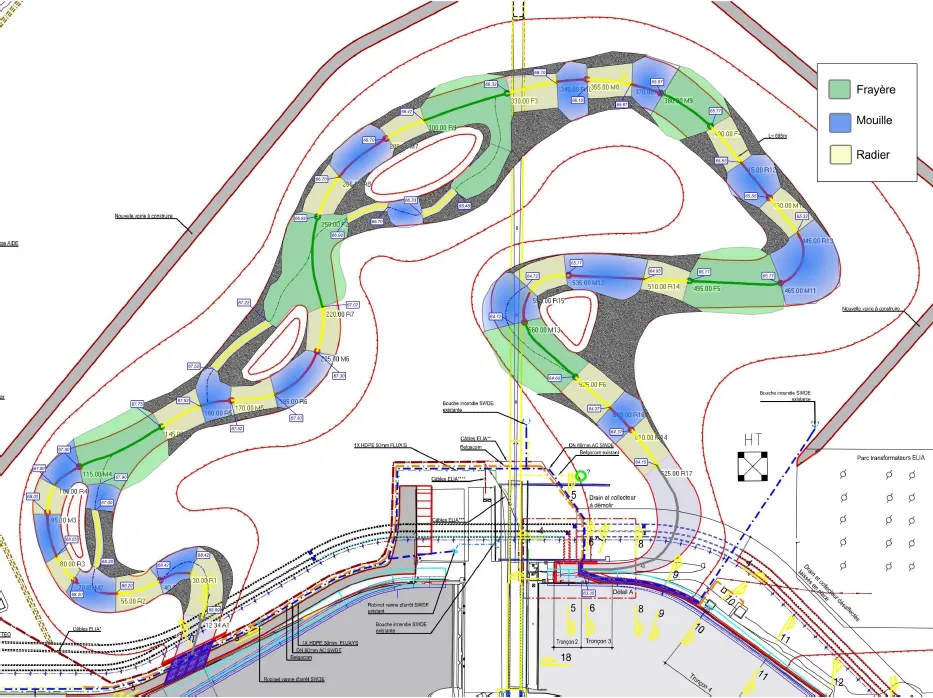
A true artificial river, it consists of various habitats, including pools, riffles and spawning grounds. With differing depths, from 30 cm to 2 metres, varying flow speeds, from still water to fast-flowing sections, and different substrates, including stone and vegetation, these areas provide different species with places to rest, spawn and travel upstream.
The river is intended for salmonids and eels, as well as other large river species, such as barbel and chub, and smaller ones, such as roach and bream. Some areas also provide ecological habitats for other species, including dragonflies and amphibians.
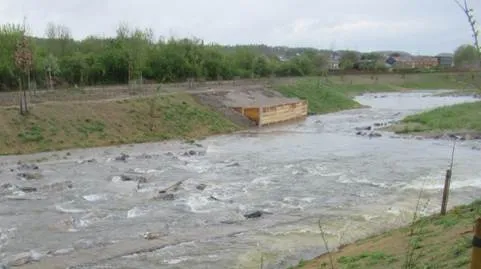
A kingfisher shelter has been installed downstream on the left bank, and a bank for sand martins has been incorporated into the artificial river.
The improvements have been extended along the downstream left bank.
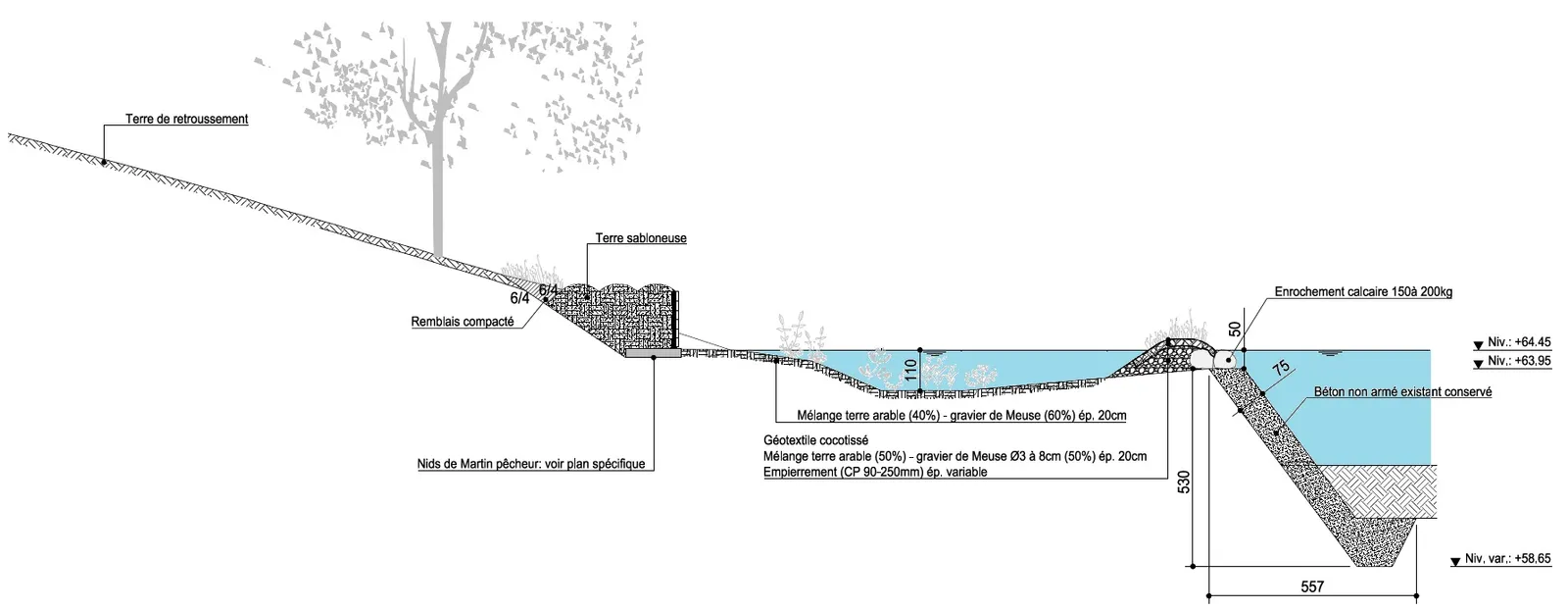
Their main aim is to re-establish links between the aquatic environment and the riverbank.
The concrete bank has been lowered to the waterline to create submerged transition zones in the north, where aquatic flora and fauna can develop.
Plant species have been selected to diversify the habitats.
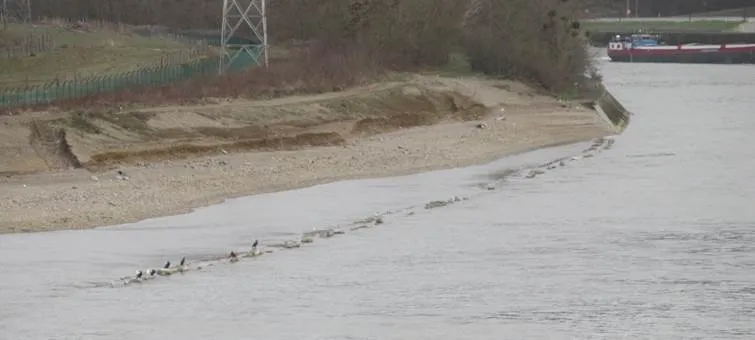
Recesses have been cut into the wall to allow this transition zone between the riverbank and the river to be recolonised, while protecting it as far as possible from wash.
The project also includes measures to reduce disturbance to bats by limiting lighting across the site and using warmer-coloured light.
Ponds are also planned to encourage the development of natterjack toads.
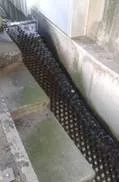

Finally, an eel pass has been built on the right bank to improve upstream passage for this species.
BUDGET AND PARTNERS
The fish pass and improvements to the downstream left bank represent an investment of €2.4 million excluding VAT.
The artificial river was designed by three consultancies:
- IMDC for hydraulic aspects,
- STREAM & RIVER CONSULT for the improvements,
- GREISCH for the civil engineering structures.
THE LOCK SITE UPGRADE PROJECT
The project to upgrade the Ampsin-Neuville lock site began in August 2018. It involves replacing the site’s two old locks, dating from 1958, with larger locks: one measuring 225 x 12.5 metres, with a capacity of 4,500 tonnes, which entered service in January 2022, and another measuring 225 x 25 metres, with a capacity of 9,000 tonnes, which is nearing completion.
The works are also improving the site for users, cyclists and walkers:
- The N90 has been made safer and its route altered to make way for the upgraded lock site;
- The footbridge over the weir and new lock, linking the municipalities of Amay and Huy, has been replaced and extended.
PROJECT COMPLETION SCHEDULE
- Mid-May to the end of May: filling the large lock
- May to June: demolition of the final section of the old locks
- End of June: start of navigation (trial phase, 100 cycles)
- End of summer: official opening
OPEN DAY FOR THE GENERAL PUBLIC
The general public will have the opportunity to discover the new infrastructure during an open day on Saturday 29 June. Details, practical information and registration will be available from mid-May at sofico.org
PROJECT PARTNERS AND BUDGET
SOFICO is the client for these works, which have a budget of approximately €150 million excluding VAT. It is funding the project with the help of a repayable loan from the EIB (up to €60 million) and a grant from the European Commission under the CEF, Connecting Europe Facility programme (covering up to 30% of the investment, capped at €50 million).
SPW Mobilité et Infrastructures, the project manager, is providing technical assistance to SOFICO.
The structures were designed by GREISCH in a temporary association with TRACTEBEL ENGINEERING.
DUCHENE is responsible for carrying out the civil engineering works, while BESIX UNITEC is handling the electromechanical works.
Finally, SECO is providing independent inspection services for the works.
Question about this story? Ask your question
Keep following this
Get an email when a new story is published. No account needed.
- SubjectNews







