











Students design concrete furniture for young people with autism spectrum disorder
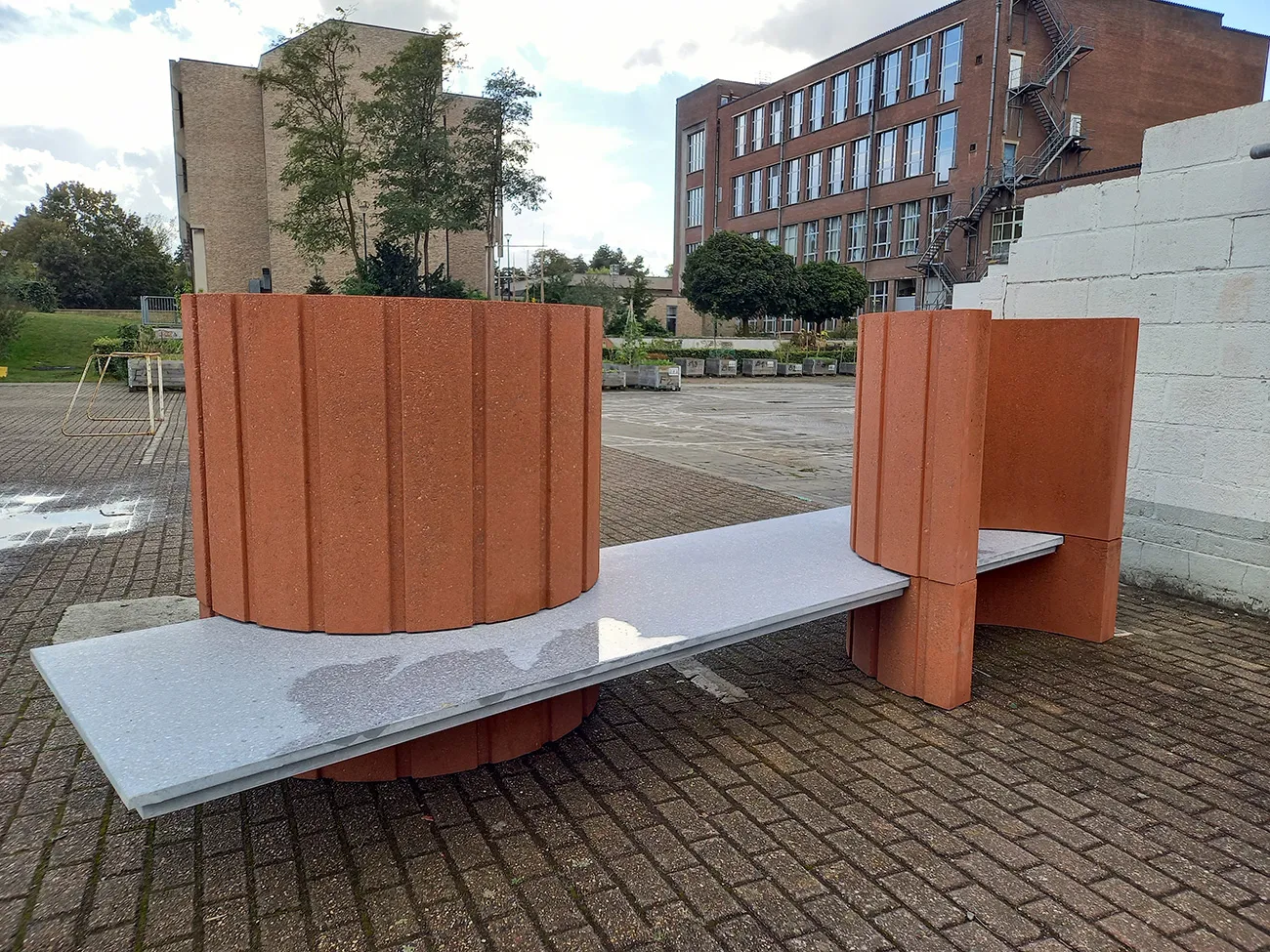
Students with autism spectrum disorder (ASD) need a space of their own. A space that protects them from sensory overstimulation, or from understimulation in the case of those described as hyposensitive. But how do you design a furnished space that is both calming and stimulating? Architecture and civil engineering students at Ghent University (UGent) explored this paradox. To do so, they worked with autism specialists, the City of Ghent and Het Kwadrant, a school in Ghent for young people with ASD. Thanks to Decomo, in collaboration with FEBE, students at Het Kwadrant can already try out two designs at their school.
One school, many needs
Het Kwadrant is a municipal school on Martelaarslaan in Ghent. It provides tailored education for 72 students aged 12 to 17 with autism spectrum disorder. These young people have very different needs, even during breaks at school: while one may want a view across the whole playground, another may prefer to find a quiet spot and withdraw. The UGent students had to take this into account while also ensuring that teachers could keep an eye on the whole area. The outdoor furniture also had to be robust and fit into an open space that could serve different purposes and encourage interaction between students. Finally, the impact of multiple stimuli, particularly visual and auditory ones, posed another challenge for the designers.
Understanding before designing
You cannot design furniture for students with ASD without understanding how they interact with each other and with their surroundings. There is an extensive body of scientific literature on the subject, but it calls for a critical approach. Moreover, it focuses only on children aged 3 to 12, whereas Het Kwadrant caters for young people up to the age of 17.
A wide range of collaborators
What makes this project unique is its multidisciplinary approach. Seven teams of architecture and civil engineering students took part. Led by Professor Nathan Van Den Bossche and supported by architectural engineers, the students benefited from a range of perspectives: Professor, psychologist and autism researcher Herbert Roeyers, several educational specialists from UGent and HGent, an Egyptian interior designer, a Paris-based consultancy and the care coordinators at Het Kwadrant all contributed to the project.
Remarkably diverse results
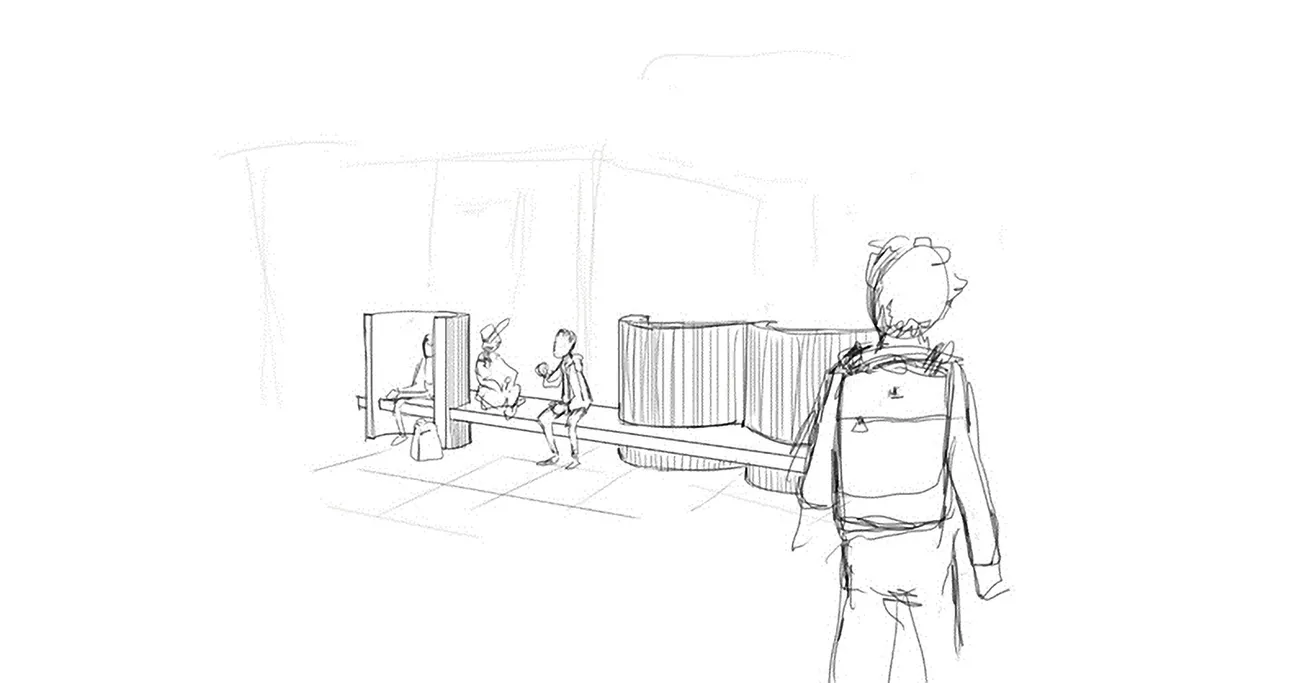
The project produced a wide variety of results. Some groups opted to design an original seat, while others came up with a complete outdoor solution.
Het Kwadrant and the City of Ghent were so impressed with the results that they put them forward to the project team responsible for the campus renovation. The designs are not only relevant to Het Kwadrant, but could also work well for all the schools on the campus.
Two prototypes made
Decomo and FEBE wanted students at Het Kwadrant to try out two prototypes. They therefore provided the students who designed the selected pieces of furniture with the technical support and expertise needed to bring their ideas to life. From the concrete mix and formwork to surface treatment and handling, the future civil engineers could rely on the essential expertise of industry specialists. The furniture is now widely used by students at Het Kwadrant. Hopefully, the other designs will soon be incorporated into the full campus renovation.
Unanimously positive feedback
The participating students, the concrete industry, ASD specialists and the teaching team all found the project an exciting and stimulating experience, with an encouraging outcome for young people with autism spectrum disorder.
Question about this story? Ask your question
Keep following this
Get an email when a new story is published. No account needed.
- SubjectNews







