











Steel structures for the Suzan Daniel Bridge delivered by boat
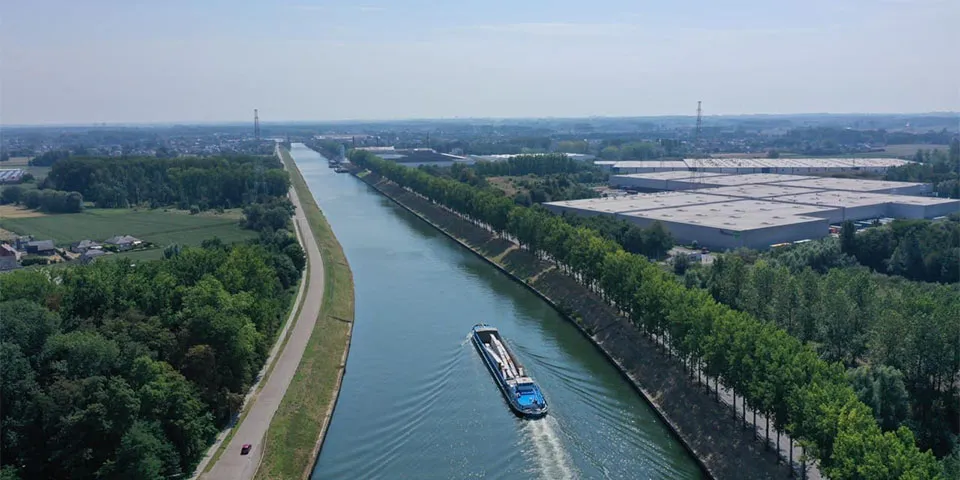
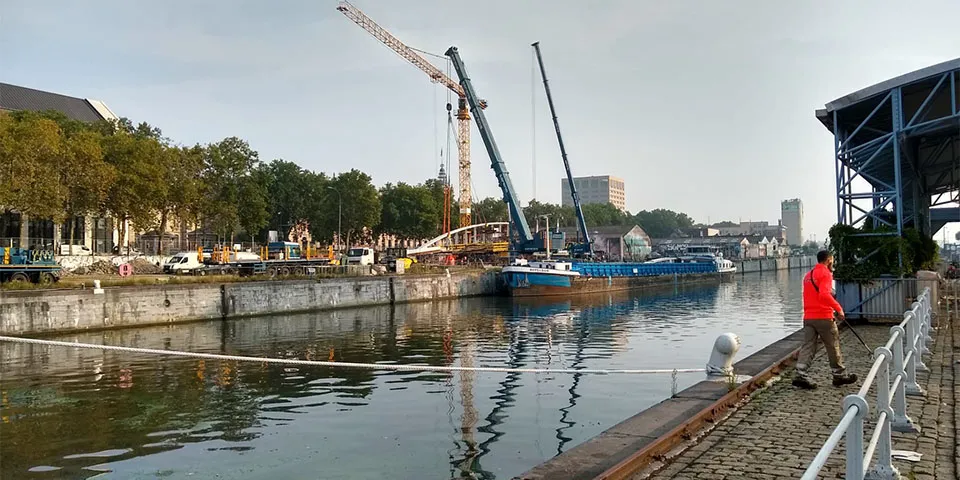
The steel components for the Suzan Daniel Bridge arrived by boat today, reports Beliris, the public construction expert for Brussels. The new bridge will provide an important link between Tour & Taxis and Gare du Nord via the Antwerp-Brussels-Charleroi Canal.
The bridge will give pedestrians, cyclists and other active travellers a shorter route, while enabling public transport to connect avenue Simon Bolivar, avenue du port and rue Picard.
“The bridge is a major technical achievement, an incentive for sustainable mobility, but above all a link between Brussels’ different neighbourhoods. The project brings together several of Beliris’ requirements,” said Prime Minister Sophie Wilmès, who is responsible for Beliris.
Over the past year, the steel structures were fabricated by Aelterman’s workshop in Ghent, which specialises in steel construction. These comprise the piers that will support the bridge’s central section and two arches that will support the concrete roadway. Contractor Jan de Nul also built the deep foundations and abutments on allée du Kaai and quai des Matériaux, while contractor Van Laere built an access ramp between allée du Kaai and quai de Willebroeck.
Today, after arriving by boat from their workshop, the steel structures are being unloaded at quai des Matériaux and quai des Péniches and can be assembled on the concrete section already built by Jan De Nul.
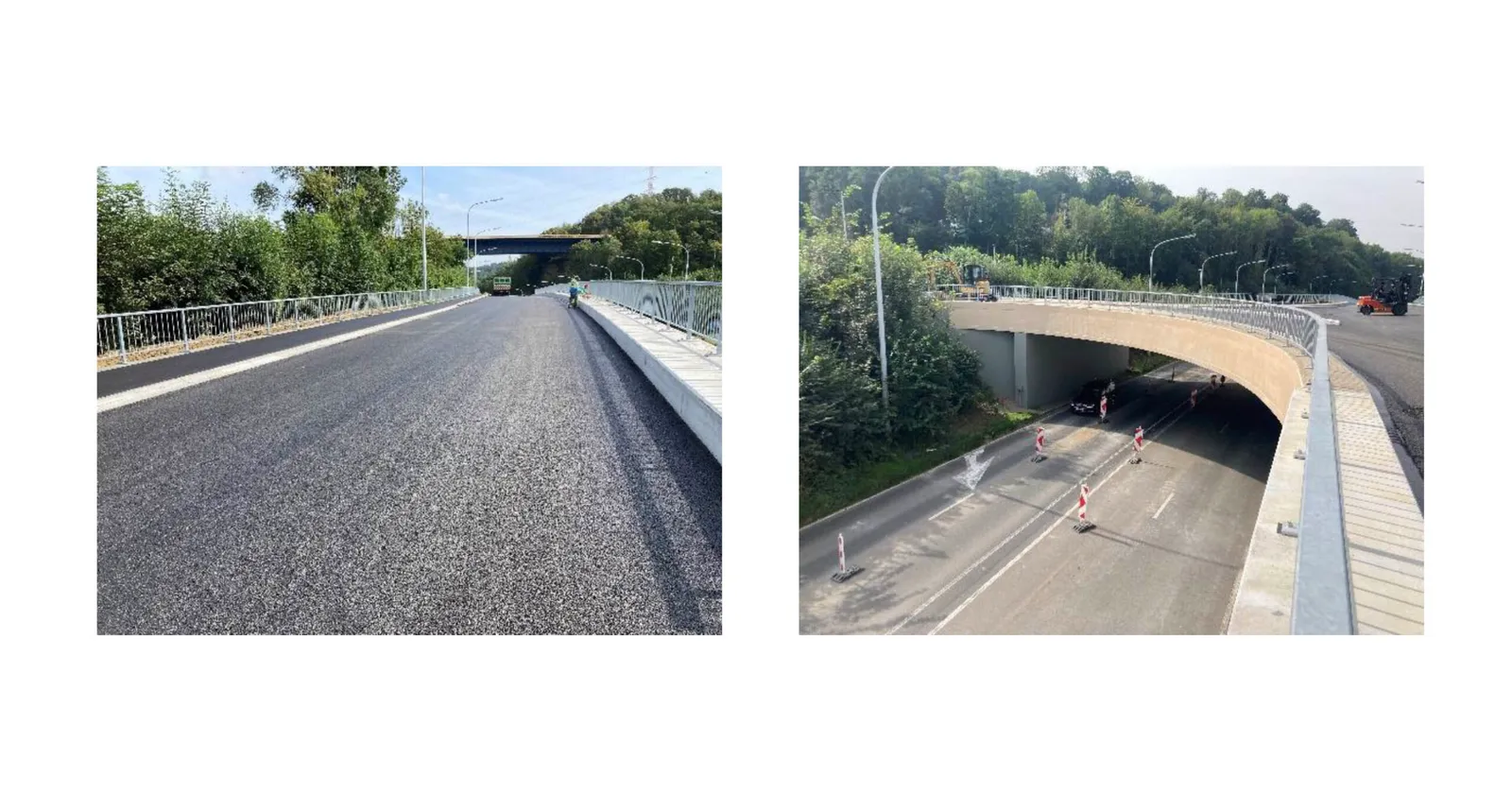
The bridge consists of a central deck spanning 60 m across the canal and two decks spanning 30 m over the quays. It will have two traffic zones: a 7 m-wide public transport lane and a 6 m-wide area for cyclists and pedestrians, with a wooden surface. To ensure comfort for people with reduced mobility and cyclists, the gradient along the entire length of the bridge has been limited to less than 4 %.
The project designers at Greisch have also developed both functional and architectural lighting. Lighting will be installed along the balustrades, arches, suspension cables and piers. Grilles in the floor surface will also allow daylight to reach the quays beneath the bridge.
The works, costing € 9,4 million including studies, are expected to be completed in summer 2021.
Question about this story? Ask your question
Keep following this
Get an email when a new story is published. No account needed.
- ThemeTransforming infrastructure and territories
- SubjectNews







