











Revision and harmonisation of the energy performance policy
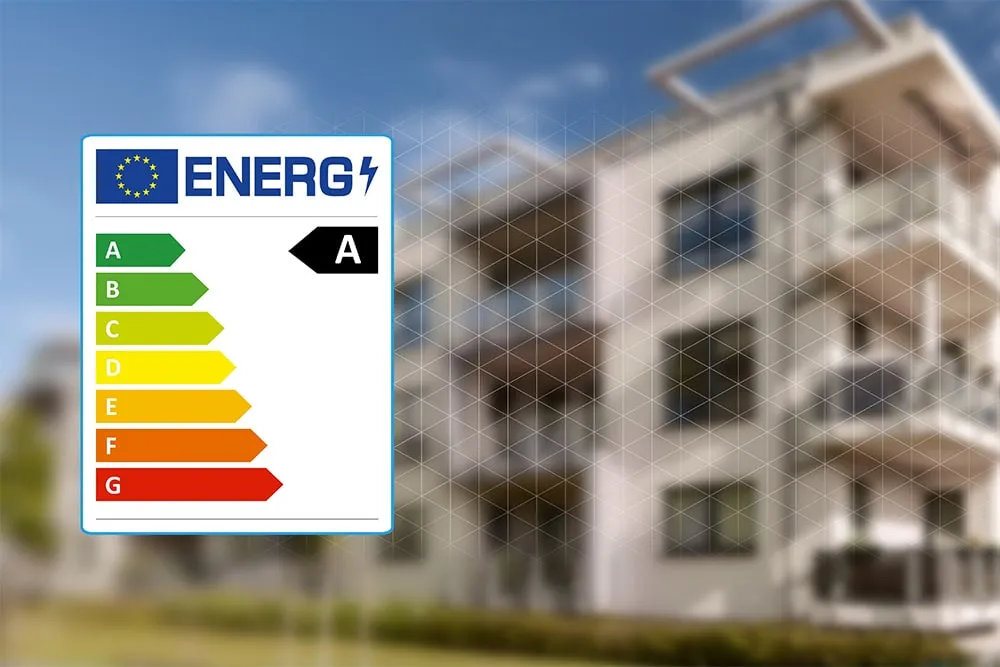
The new European Directive 2024/1275/EU on the energy performance of buildings entered into force on 28 May 2024. Member States, in Belgium the regional authorities, must now transpose it into their legislation. Several changes are worth highlighting. First, the goal is no longer to achieve nearly zero energy consumption, but rather to deliver zero-emission buildings, by 2030 for new buildings and by 2050 for existing buildings. In addition, the global warming potential, broadly speaking, operational and embodied greenhouse gas emissions, over the entire life cycle will have to be declared for new buildings. This change highlights the fact that today, energy performance alone cannot be considered without also taking into account the overall climate impact of a construction project or renovation, and perhaps its impact on other issues too, such as the circular economy and biodiversity.
Even greater emphasis is being placed on building renovation than before, which is clearly at the heart of the problem. Minimum energy performance standards will have to be set for non-residential buildings. By 2030, the 16% of buildings with the worst performance must be progressively upgraded, and by 2033, the 26% with the worst performance. For residential buildings, the approach is based on a “renovation trajectory”, under which the average energy performance of the building stock must improve by 16% by 2030 compared with 2020, and by 20 to 22% by 2035. This approach must focus on the worst-performing buildings. Finally, fossil fuel boilers are to be phased out by 2040, and solar energy installations must be deployed in public buildings and new and renovated non-residential buildings.
The challenges posed by renovation projects under this new framework will often be considerable. However, specialist engineering consultancies are creative in proposing solutions, provided that regulations are outcome-oriented and not excessively prescriptive.
Transposing this directive, which coincides in Belgium with a new legislative term, is an exceptional opportunity to assess the policy pursued to date and the administrative and technical problems encountered in the field, align urban planning regulations with energy performance and climate objectives, simplify administrative procedures and, finally, harmonise regional calculation systems, as construction professionals have long called for. This is included in the Walloon Regional Policy Declaration, which is already an encouraging first step.
Question about this story? Ask your question
Keep following this
Get an email when a new story is published. No account needed.
- SubjectNews







