











Redox flow battery technology is future-ready and offers a wealth of economic, environmental and safety benefits
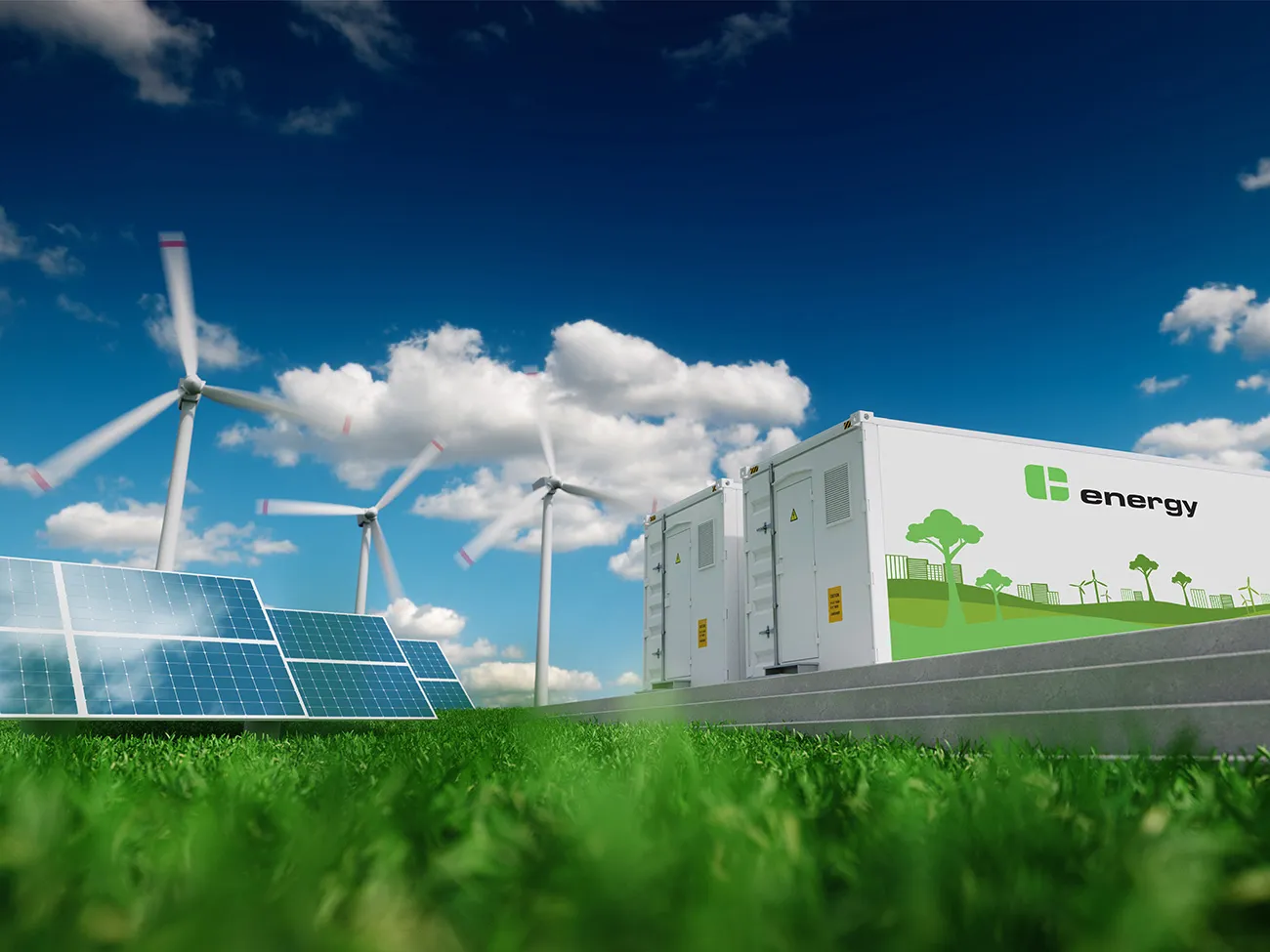
C-energy, part of Cordeel Group, has signed an R&D agreement with the Dalian Institute of Chemical Physics (DICP) of the Chinese Academy of Sciences to commercialise, produce and optimise vanadium redox flow batteries. C-energy aims to offer a complementary battery technology for economical, environmentally friendly and safe long-term energy storage.
C-energy develops new sustainable technologies and applications that address the energy transition and all the challenges it entails. This includes aspects of energy management, storage, optimisation and trading. To broaden its offering as it works towards climate targets, C-energy has concluded an agreement with DICP.

“DICP is a leading authority in redox flow battery research and development, with extensive experience in working with companies and transferring technology,” explains Dany Bosteels, Out-Of-The-Box Manager at Cordeel Group, who made the initial contacts with DICP.
António Guterres, Secretary-General of the United Nations, recently called for the creation of a global coalition for battery storage, following the publication of the World Meteorological Organization’s report on the state of the global climate in 2021. Mr Guterres highlighted the crucial role battery storage can play in tackling the global climate crisis. He advocates treating renewable technologies such as battery energy storage systems as freely available public goods, by removing barriers to the sharing of knowledge and technology transfer, including intellectual property restrictions.
“Battery storage of electricity will become essential to optimising our customers’ energy consumption. C-energy already offers lithium-ion batteries through its subsidiary C-battery and will soon be able to complement its offering with redox flow batteries,” says Niko Bonnyns, Project Director at C-energy. “The agreement with DICP covers the use of existing core technology and research collaboration to further develop it, so that we can align it perfectly with our project and customer portfolios.”
Renewable sources and industrial applications
A redox flow battery consists of a battery unit with a defined battery power rating (W) and an electrolyte storage system that determines the battery’s capacity (Wh). In this project, vanadium is the active component of the electrolyte.
Since power and capacity are decoupled, this type of battery is ideal for storing and releasing energy from renewable sources such as solar and wind farms. It also offers numerous benefits for industrial applications.
For a solar panel system, for example, there are on average four hours of optimal sunshine a day, often during periods of lower energy consumption, when the battery is charged. The battery is then discharged during peak demand periods. The same applies to wind farms: energy is stored during periods of strong winds and released when the wind is lighter but energy demand remains high.
Grid balancing
This optimal distribution of storage and release plays a crucial role in making energy management more sustainable and stabilising the grid. Redox flow battery technology offers design flexibility between power and capacity, making it possible to be less reliant on balancing mismatches between renewable electricity generation and consumption. Investment in storage is important, given our aim to increase renewable energy generation and the fact that generation does not always coincide with consumption. This type of storage is also fully future-ready. If capacity requirements increase, the volume can be increased by making more electrolyte available.
Economic, environmental and safety benefits
Redox flow battery technology is fully complementary to lithium-ion batteries and offers significant additional benefits. The cost per cycle is considerably lower than for lithium-ion batteries, and they have a longer service life (up to 25 years). The environmental value added is also substantial. Redox flow batteries are easier to recycle, and the mining process is secure in the long term, as the primary raw material is available in greater quantities in the Earth’s crust than lithium. Redox flow batteries also have a safety advantage, as they pose no fire risk. Their only drawback is that they require a little more space, but a flexible design tailored to the application is entirely possible.
Through this partnership, C-energy and Cordeel Group once again demonstrate their commitment to their mission, ‘Building a passionate CO2-free future’. This project, together with plans to assemble batteries in-house and make significant investments in research and development, including over the long term, confirms their ambition to contribute actively to the energy transition as European players. The group aims to use its logistics centres as energy hubs in the future and provide a comprehensive approach to creating a sustainable C2C future.
Tinne Van der Straeten, Minister for Energy: “Electricity storage is an essential part of Belgium’s energy strategy. To meet our ambition of quadrupling our offshore wind capacity in the North Sea by 2040, we will need flexible capacity, such as batteries, to balance the grid and compensate for fluctuations in solar and wind power. Renewable energy benefits everyone, both people’s wallets and the planet. It is also an opportunity to create jobs and a major asset for Belgium’s influence around the world, through innovation and expertise.”
Question about this story? Ask your question
Keep following this
Get an email when a new story is published. No account needed.
- SubjectNews







