











Public sewerage works comply with AIDE requirements
Texte & photos Deschacht
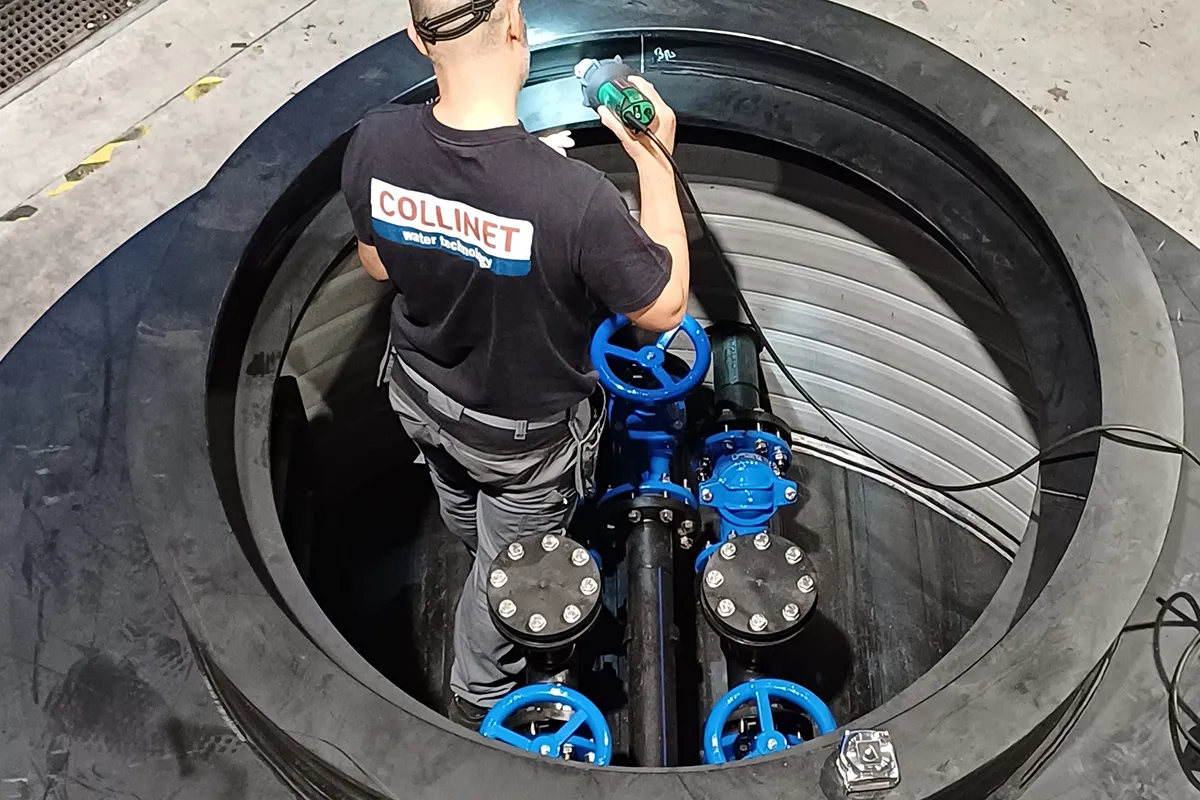
Public specifications are often set in stone and complex to comply with. In Hermalle-sous-Argenteau, roadworks contractor Balaes was commissioned to install the sewers and drainage system for the new Esprit la Gravière development, comprising 120 units. The AIDE intermunicipal utility’s requirements for the pumping station were met thanks to Deschacht’s bespoke solutions.
This development of 26 houses and 8 apartment buildings is a project by Perspectives Groupe, designed by Luc Spits. Its name comes from its location beside the Brock gravel pit, a body of water of great biological interest close to the Meuse. This desirable setting presented two challenges for the sewerage project: the water table lies just a few metres below ground level, and the ground falls by 3.5 metres before reaching the level of the existing road sewers.
The pumping station
Engineering consultancy Sotrez-Nizet designed the network, AIDE set out its requirements, and Balaes enlisted Deschacht for its ability to provide bespoke solutions.
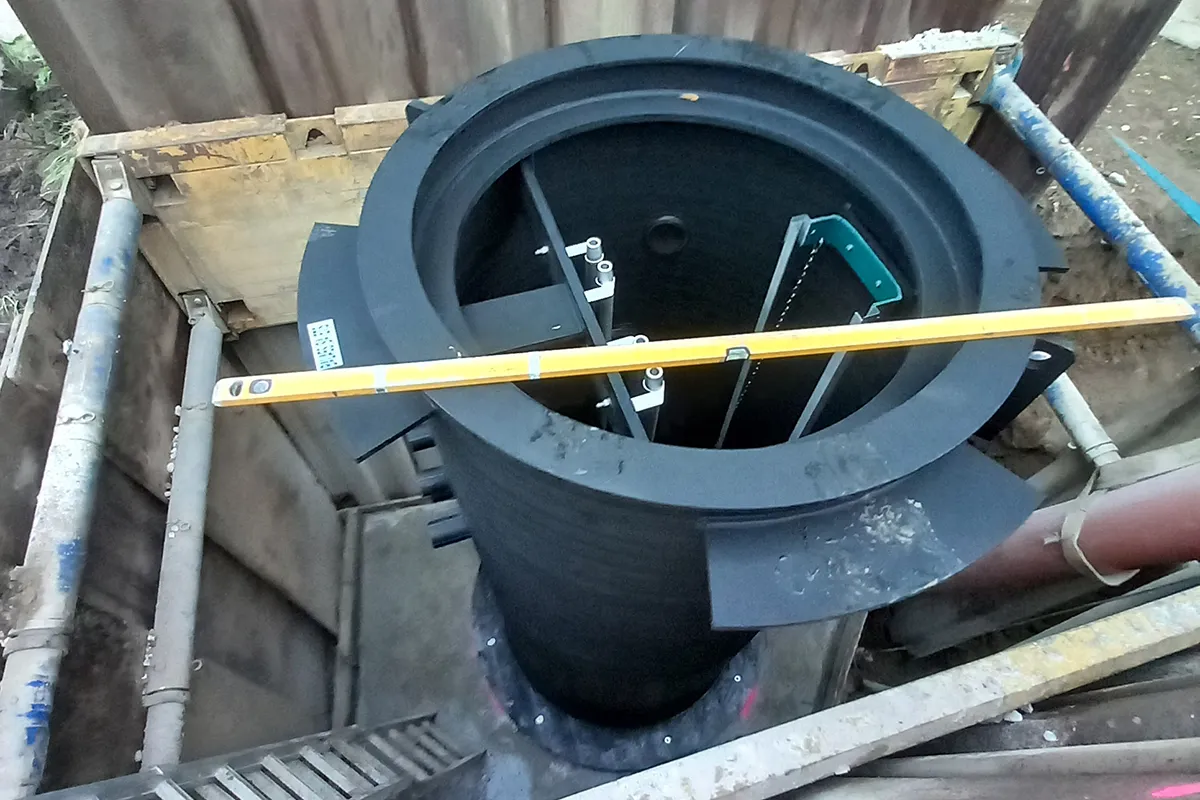
The installation comprises a pumping chamber, a valve chamber and a pressurised HDPE pipeline that conveys the wastewater over a distance of more than 100 metres.
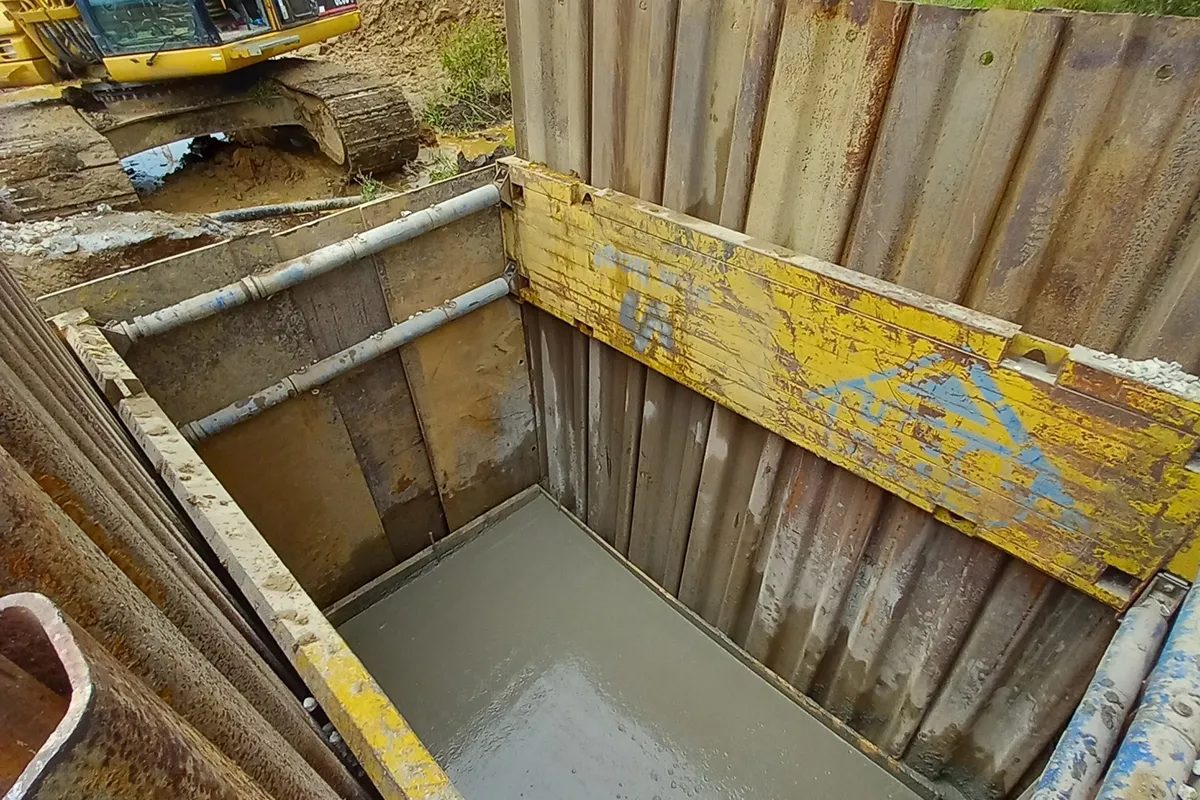
Philippe Monseur, foreman at Balaes, supervised the works, which called for some ingenuity: «The tank had to be installed in the water table, so we first had to drain the excavation before lowering it into place. We also had to pour a concrete anchoring slab to prevent it from being lifted by the water.»
Polyester or polyethylene tanks?
Every line of AIDE’s specifications was followed to the letter, with just one exception. To improve the quality of the installation, Deschacht proposed that the intermunicipal utility replace the material specified for the two tanks.
Deschacht engineer Dimitri Steilen explains: «The specifications called for glass-reinforced polyester tanks, and we proposed manufacturing them from polyethylene instead. We backed up this recommendation by pointing out that polyester tanks are standard models, with limited scope for customisation. With a polyethylene tank, we could supply a 100% watertight, turnkey product, including all the necessary adaptations. For example, one of the two tanks was fitted with a polyethylene ladder and a stainless steel screening basket. Deschacht has proven expertise in polyethylene, and we could offer all the necessary guarantees.»
Balaes appreciated this understanding of the project and the technical support, as Philippe Monseur explains: «Deschacht’s design office was very conscientious and highly responsive. They attended meetings with us and proposed solutions right through to implementation by their partners.»
Equipment installed in the tanks
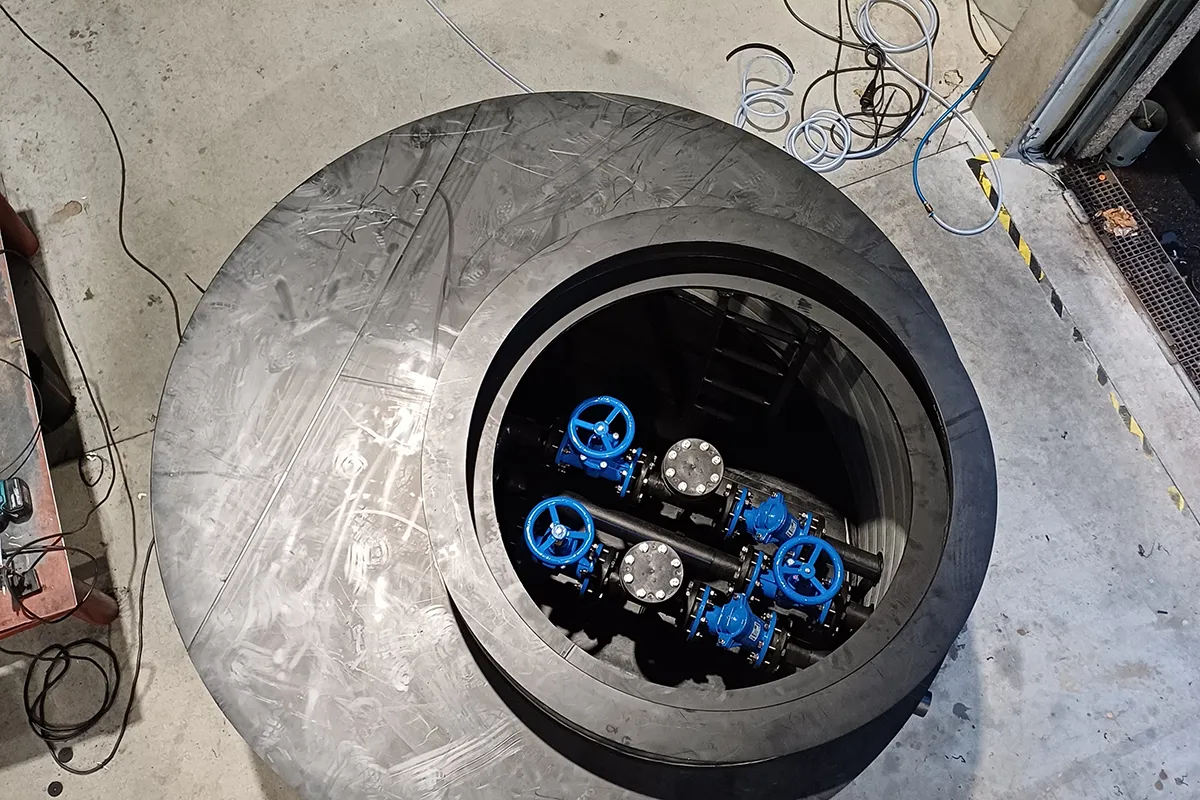
As they pass through these tanks, wastewater from the 120 homes flows through pumps and equipment selected by Ecosolutions. Deschacht called on its partner specialising in pumping systems to install all the equipment: the pumps, valve system, flow meter, control panel and connection to AIDE’s control centre.
«A project like this requires input from several trades: specialist engineers and electricians, skills we don’t have in-house,» says Philippe Monseur, before concluding: «Deschacht’s help was invaluable on a complex project like this.»
Other technologies used on site
Stormwater was also managed using Deschacht technologies and materials. Balaes installed polypropylene pipes, drains and a 60 m3 infiltration tank made of Variobox crates beneath the road. The system is lightweight, quick to install and can withstand heavy loads.
Een zakelijke vraag aan DESCHACHT Plastics? Get in touch
Companies in this story

Keep following this
Get an email when a new story is published. No account needed.
- SubjectNews
- CompanyDESCHACHT Plastics







