











Preventing overheating is more effective, more sustainable and no more expensive than having to “cure” it
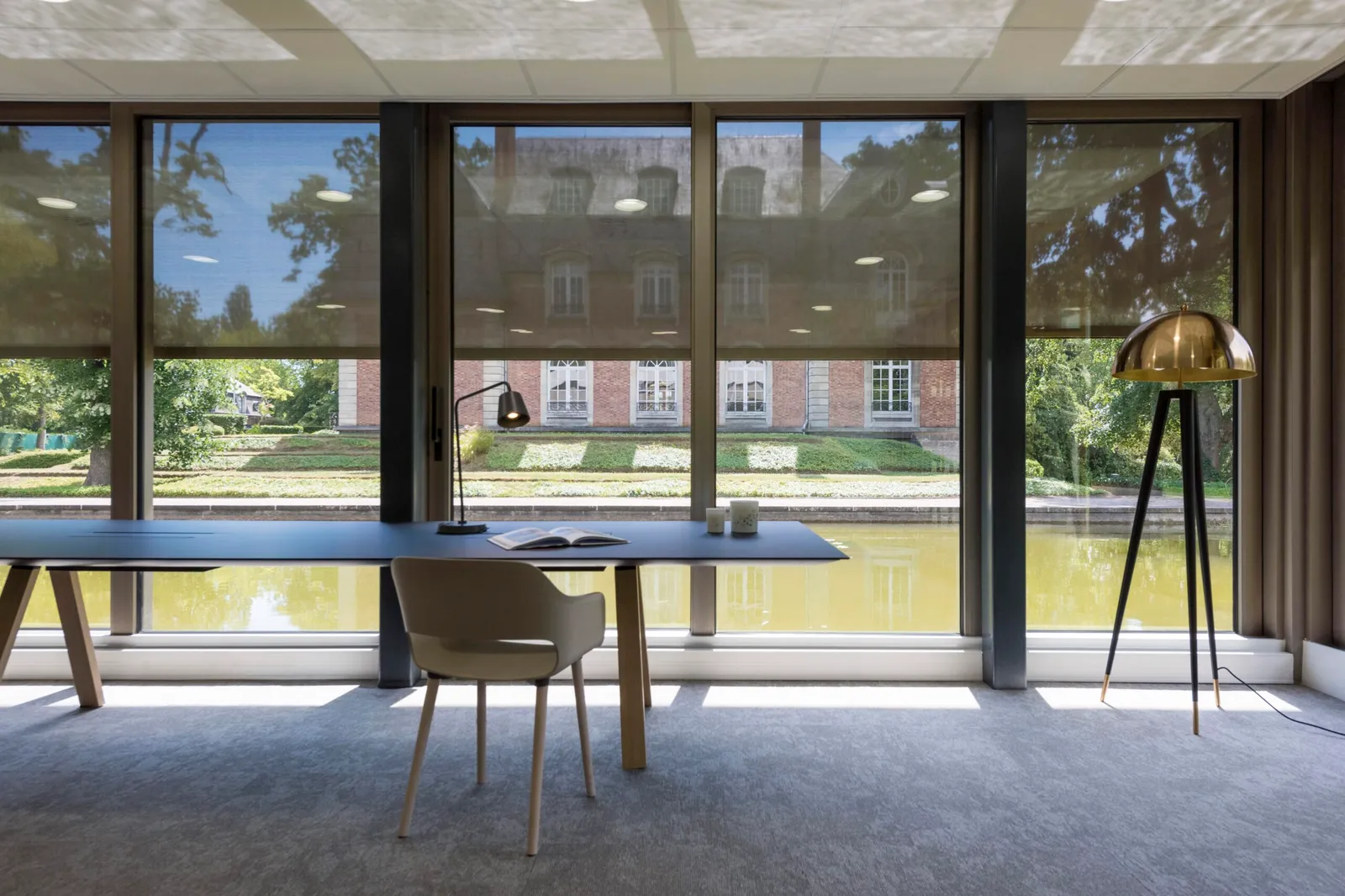
Coming home to a pleasantly cool house on a hot day, or keeping a cool head at the office even in summer, starts with well-designed buildings. Using the “ cooling hierarchy” as a guide also helps you create buildings that are comfortable to live in today and tomorrow. Find out more about this and other fascinating topics discussed at the expert round table on overheating, an initiative by VEROZO, the Belgian Professional Association of Shutter and Solar Protection Manufacturers, here.
“Intelligent building design can eliminate up to 80% of cooling demand,” explains civil engineer and architect Joost Declercq, research director at Archipelago Architects and affiliated with KULeuven. Hilde Breesch, professor of building physics and sustainable construction at KULeuven, says that night-time stack ventilation is the ultimate measure in the fight against overheating in buildings. Taken together, these findings lead to the same conclusion: in our climate, active cooling can be entirely unnecessary, provided sufficient attention is paid to building design. “It’s actually very logical,” says Joost Declercq. “Start by orienting a building correctly and strategically distributing the windows across the façades according to solar exposure.” With a new build, you start with a blank page. Renovation projects are obviously different. Even so, you can still propose measures to help adapt a home to the climate. These include (re)orienting specific functions within the home, adding or activating more thermal mass, and installing external solar shading over critical glazed areas. These are all options worth considering.
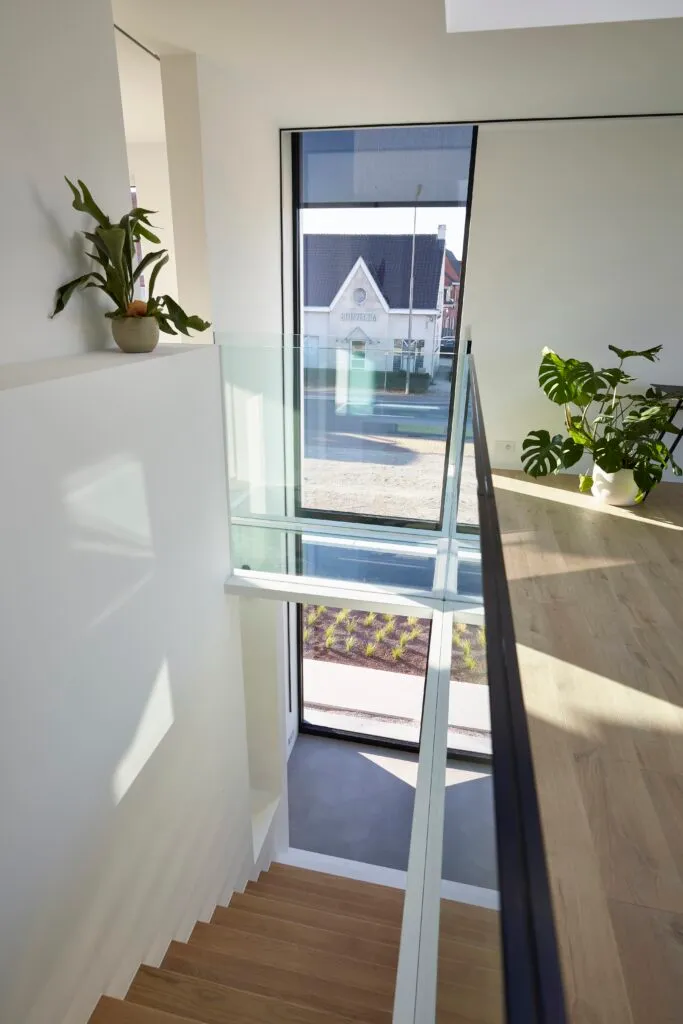
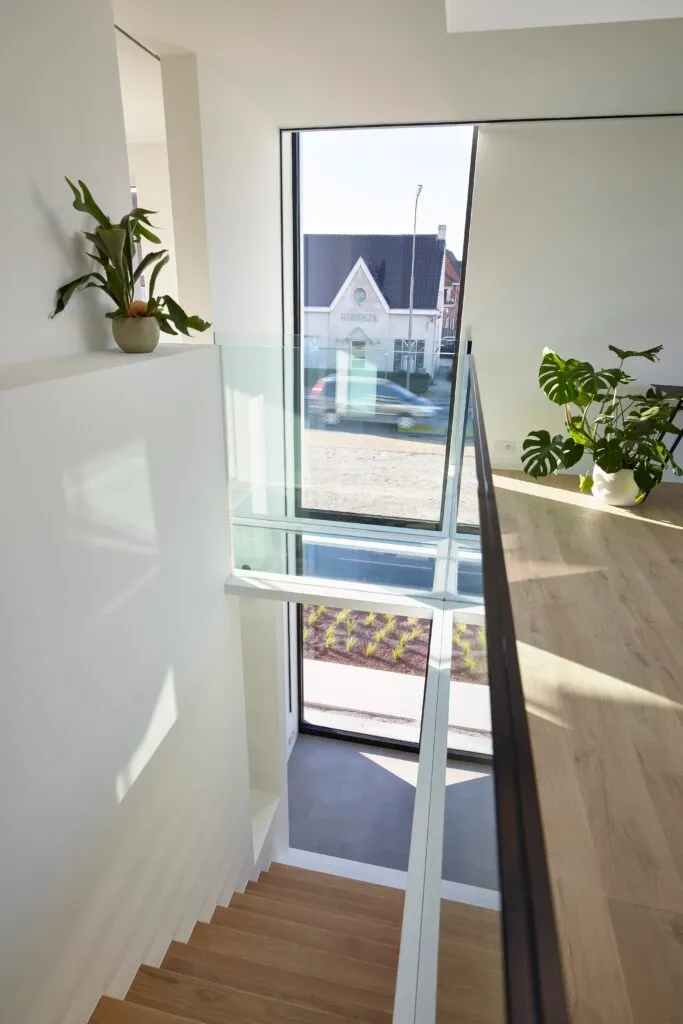
Too hot at home? The windows are (mainly) to blame
In any case, the first priority is to stop the indoor temperature from rising. Prevention is better than cure, mainly by keeping the sun’s rays from shining directly onto the glazing and heating up the interior.
Since the sun is one of the main causes of rising temperatures in homes, it seems logical that climate change is extending the overheating season. Hilde Breesch says: “In the past, there was a risk of overheating for three (summer) months. Today, we also have to account for overheating in spring and autumn. So the problem now occurs over longer periods throughout the year.” This is also confirmed by Shady Attia, professor of architecture and head of the Sustainable Building Design Lab at the University of Liège. “With improved insulation, airtightness and glazed areas, we are seeing more and more overheating in spring and autumn, and even on sunny winter days. This is particularly true of well-insulated buildings, where heat that enters stays inside for longer.”


External solar shading : blinds subtly and attractively integrated into the structure
Windows therefore need to be protected from direct solar radiation on the outside, for example with blinds or solar shading blinds. If you include them at the design stage, they can be integrated seamlessly and, above all, discreetly into the façade. The headboxes and guide rails are becoming increasingly slim and compact, making them barely visible even after installation. Solar-powered blinds no longer require holes to be drilled through the façade to connect them to the electricity supply. Today, there is a wind-resistant solar shading solution for every type of glazing, from vertical and corner windows to horizontal or sloping glazing, such as dormer windows, rooflights or conservatories.
Would you like to use external blinds as striking architectural features? Overhangs, awnings above windows or sliding panels in front of them are also options. Horizontal awnings above windows or louvres in front of the glazing provide shade in summer while allowing in as much low winter sun as possible. They also preserve the view outside. With sliding panels in front of the window, you can choose whether to let the sun in or keep it out.
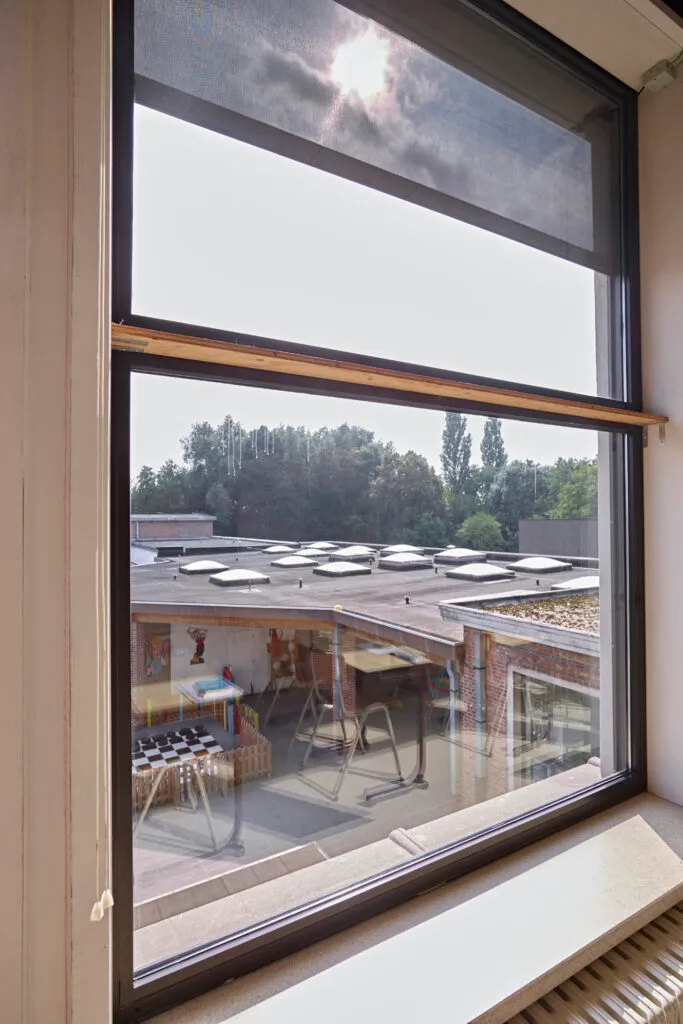
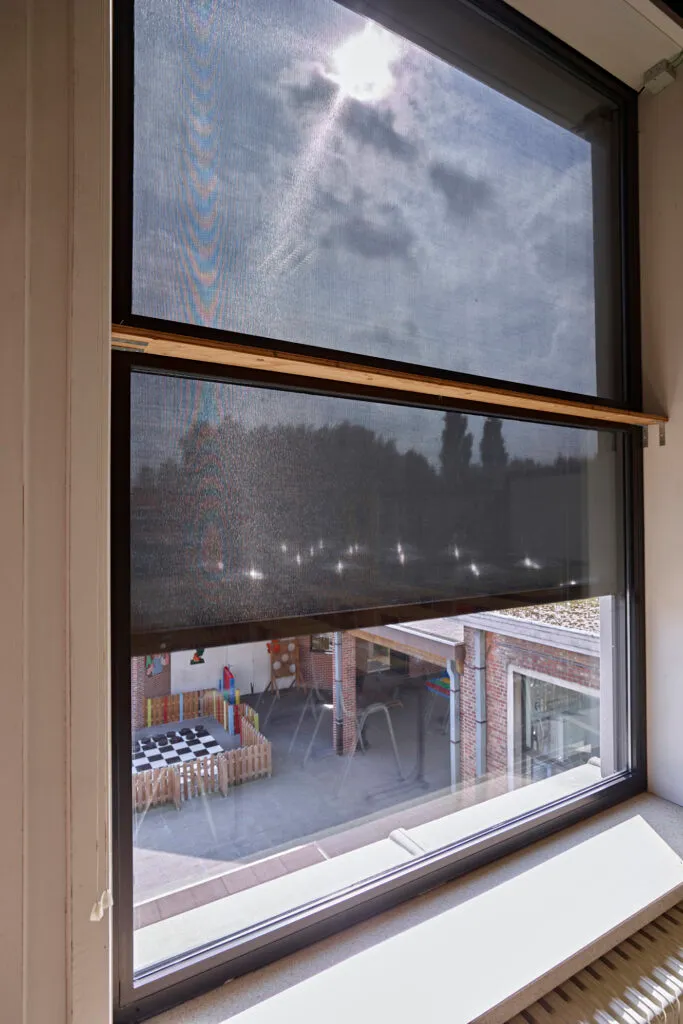
The cooling hierarchy as a “preventive” guide
The cooling hierarchy, developed by OSKA (Overleg Standaarden Klimaatadaptatie, Netherlands), provides a clear framework for taking a sustainable, long-term approach to overheating in buildings. It is particularly important to follow the four complementary steps in chronological order for every project or change of use:
- Water and greenery play an important role in naturally cooling buildings.
- Prevent heat from entering the home. Consider the orientation, size and position of façade openings, as well as solar shading, using awnings, a strategically placed tree or blinds.
- Remove heat passively, for example through (night-time) stack ventilation.
- Use active cooling systems, without refrigerants, only as a last resort.
“Ultimately, the aim is to make the fourth step in the hierarchy unnecessary through intelligent building design,” explains Joost Declercq. “In our current climate, this is entirely possible, particularly by installing sufficient solar shading, as outlined in step 2 of the cooling hierarchy.” Glenn Reynders, Energy Ville business developer / Dr engineer at KULeuven, agrees: “In my view, this is one of the most underestimated investments in today’s housing construction, given its major positive impact on cooling demand and comfort levels.” Another benefit of dynamic external solar shading is that you can continue to make the most of the free heat from low winter sun. “Solar-control glazing and window films don’t offer this,” adds Joost Declercq. “Both also distort the daylight spectrum, creating an undesirable ‘optical’ effect that is less pleasant for occupants.”
“If you need quick-fix solutions to keep indoor temperatures under control, it’s a sign that something is wrong with the building design,” says Joost Declercq. “In our regions, it is entirely possible to design a building that does not need mechanical cooling. We architects need to make a major effort in this area.”
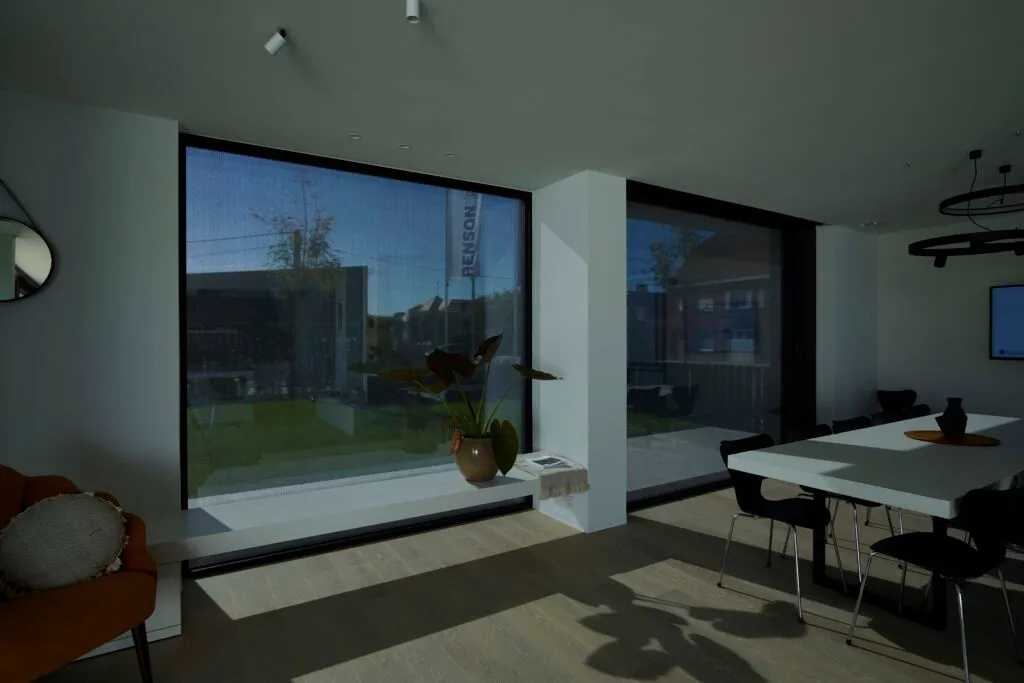
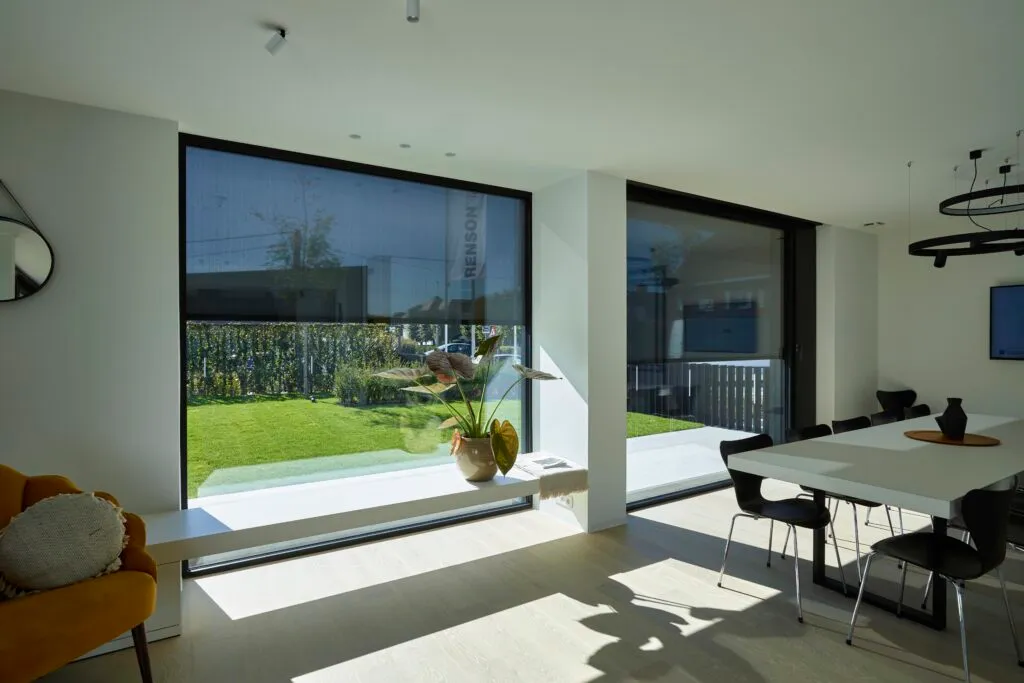
The “passive” cherry on top: night-time cooling
Hilde Breesch says: “If you tackle the problem thoughtfully, intensive stack ventilation is a simple, inexpensive and passive way of cooling the interior. By opening a window or door on the ground floor and upstairs, you circulate cool night air through the building, cooling the thermal mass so that it can absorb heat the next day.”
“Of course, this requires sufficient thermal mass,” adds Joost Declerq. “You can compare a building to a sponge that absorbs heat. The sponge needs to be wrung out from time to time, just as you need to be able to cool the building at night through ‘night-time cooling’. Fortunately, periods when the outdoor temperature remains higher than the indoor temperature, even at night, are very rare and will remain so. And rest assured: a building equipped with these passive overheating measures does not necessarily cost more, as long as it is well designed.”
“Resilient buildings and cities can adapt to extreme weather conditions without major external intervention,” concludes professor of architecture Shady Attia. “Climate resilience means maintaining comfort during heatwaves, ensuring sufficient night-time cooling, protecting vulnerable groups and achieving energy independence. A climate-adapted approach therefore focuses not only on comfort, but also on reducing risks, damage and energy dependence. Well-designed buildings also contribute to collective climate resilience.” Build for tomorrow today, and follow the basic principles of a climate-adapted building in your next project. Find more conclusions and expert advice on this subject in the full report of 15 May 2025, following this expert panel.
Question about this story? Ask your question
Keep following this
Get an email when a new story is published. No account needed.
- SubjectNews







