











New Louheau Bridge in Pepinster: a design responding to climate change
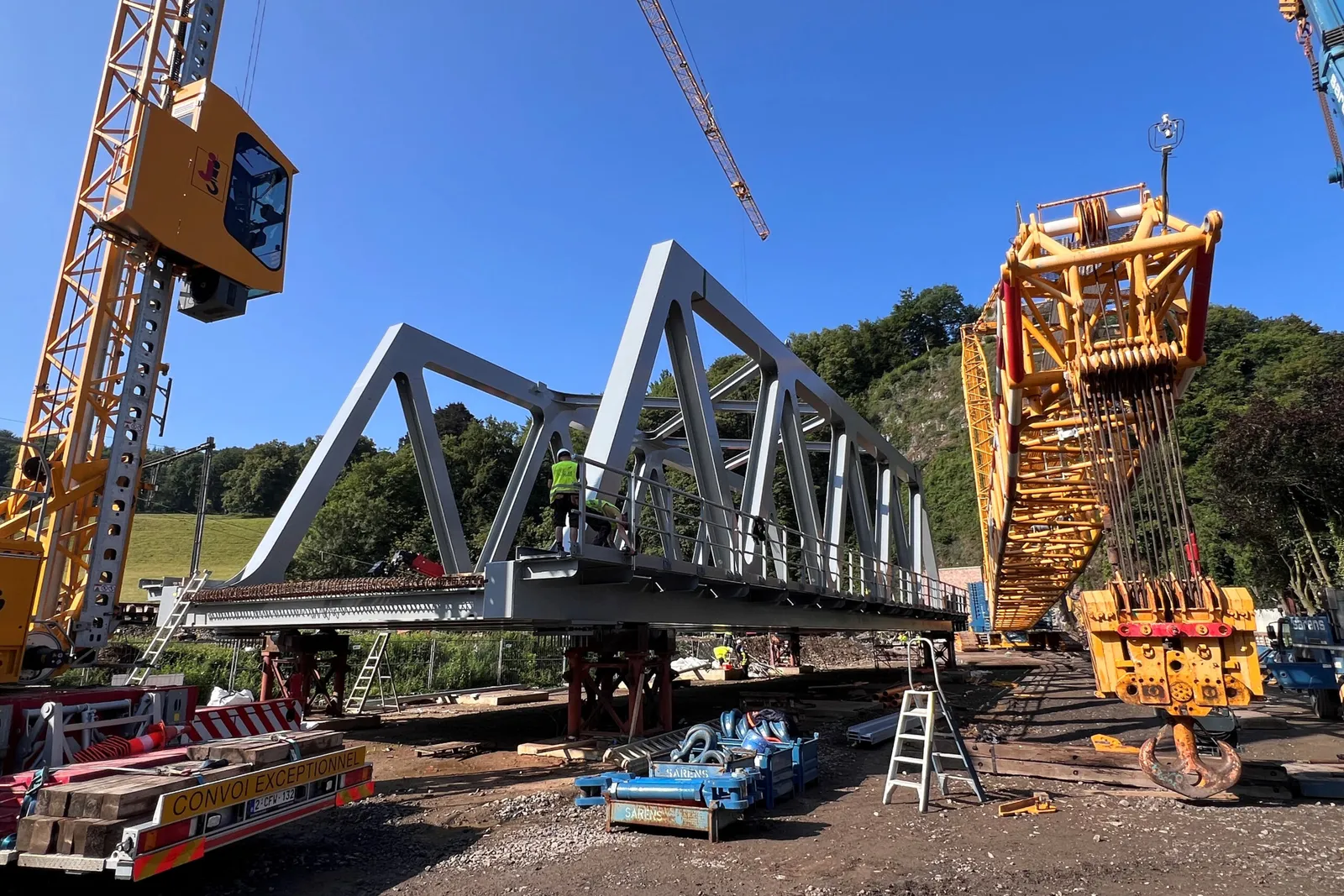
During the severe floods of summer 2021, the Vesdre burst its banks and large quantities of debris carried by the water badly damaged some of the foundations of this railway bridge on the line connecting Liège and Verviers. Following temporary repairs, the time has come for its replacement. With climate resilience in mind, Infrabel opted for a structure designed in a radically different way from its predecessor.
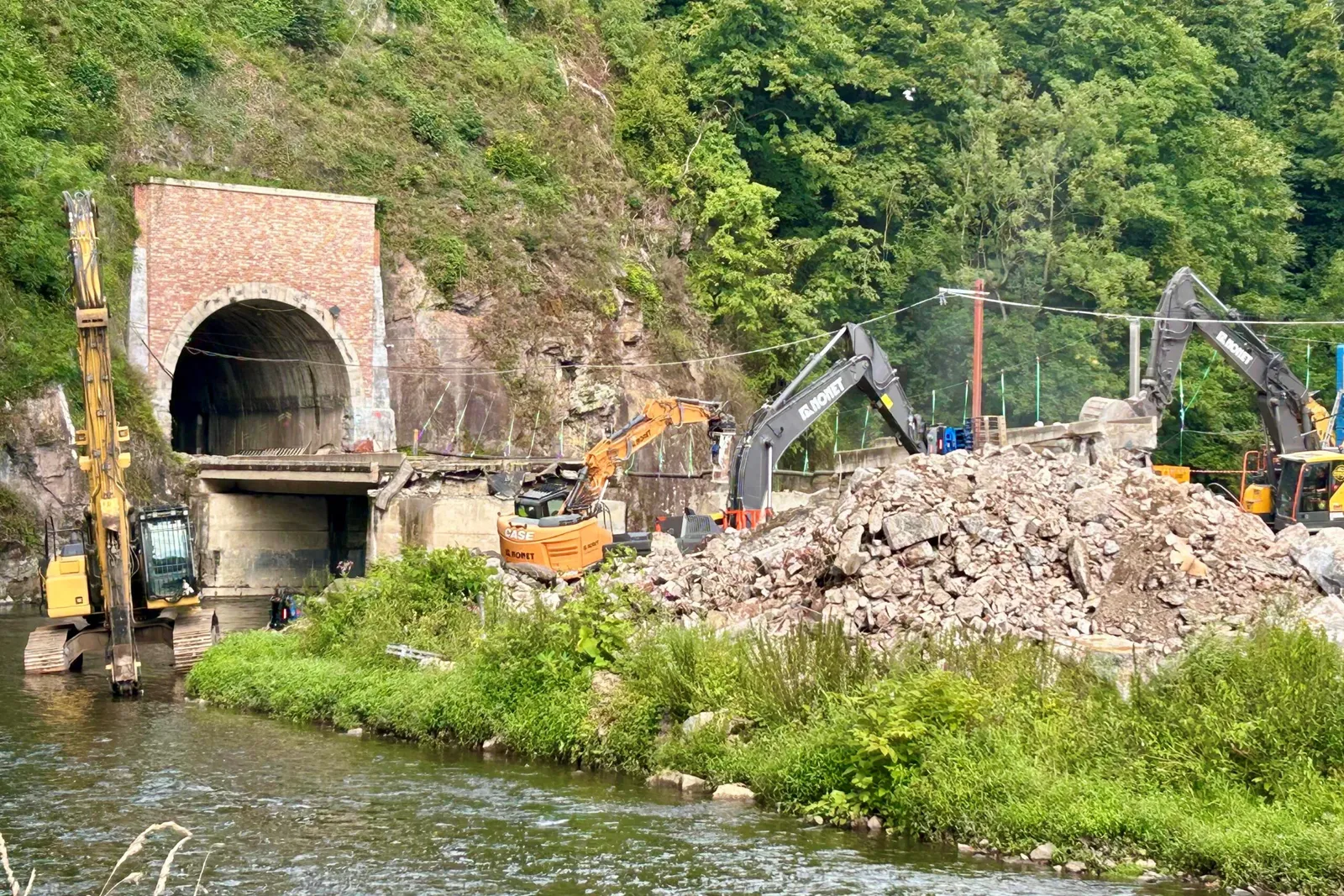
A structure more than a century old
Preparatory work began on 22 July, with one of the two tracks on line 37 connecting Liège and Verviers taken out of service. On Monday 28 July, the project entered its ‘main construction’ phase, making rail services impossible until first thing on Monday 25 August (see below for alternative travel arrangements).
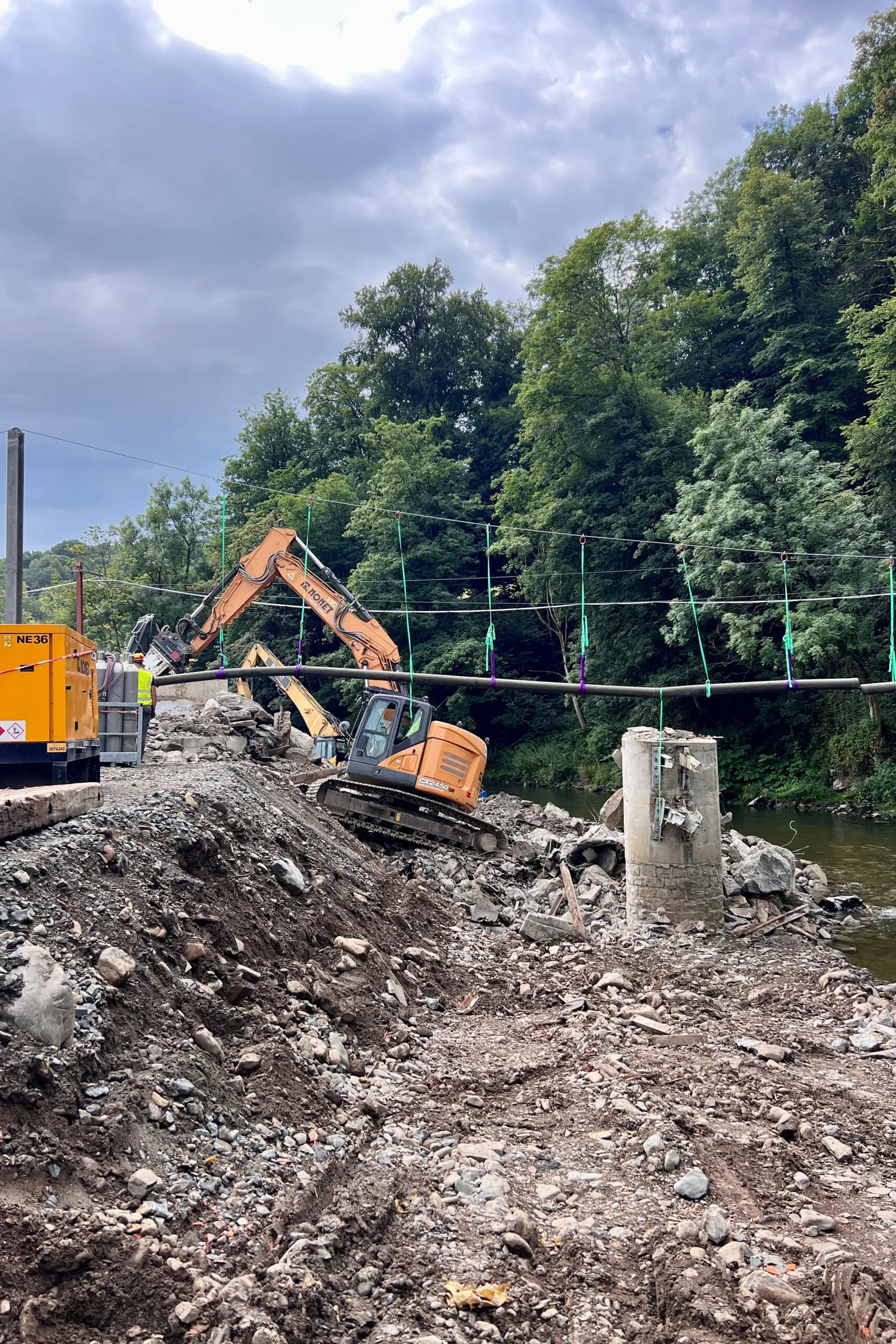
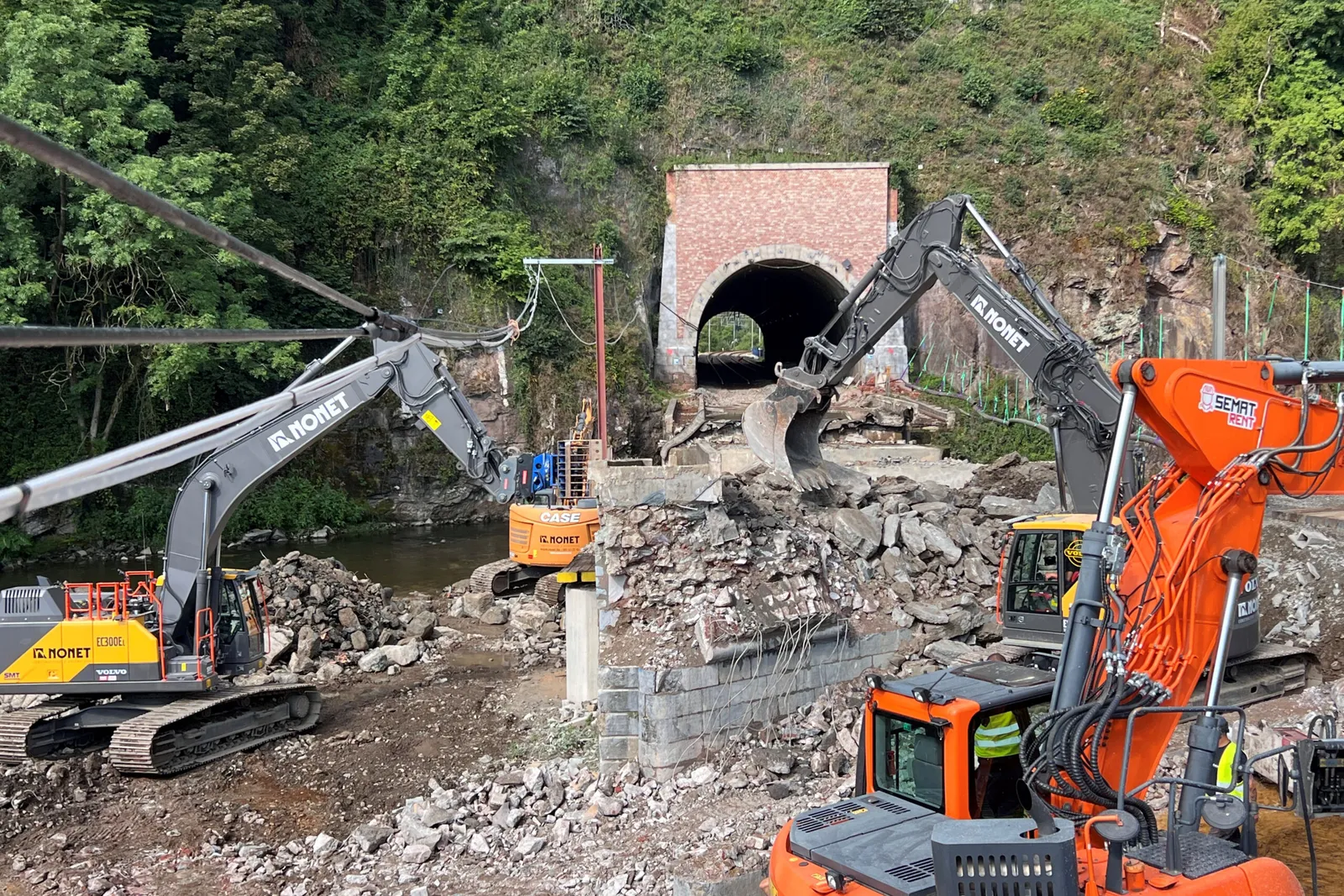
Over these 4 weeks, around ten people will work on site around the clock to replace the so-called ‘Louheau’ Bridge, some of whose masonry dates back to the mid-19th century. Demolition of the various sections of the structure, which is 65 metres long in total, will take 2 days and 2 nights. The materials will be crushed on site before being taken away by road.
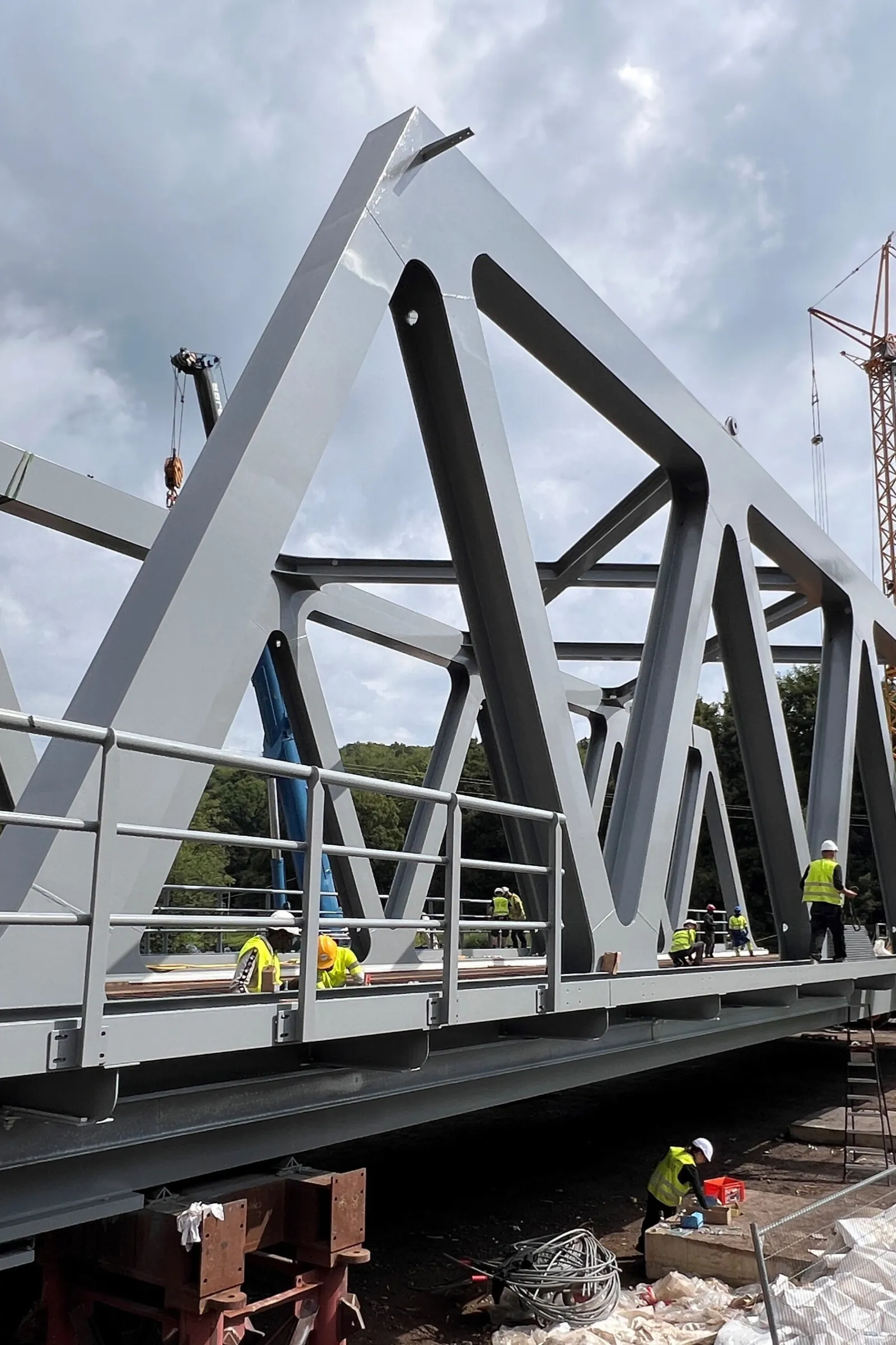
Assembly and then installation of the new structure will begin in the second half of the week. The section spanning the Vesdre consists of a single metal element nearly 40 metres long, which will carry both tracks. Weighing 240 tonnes, it will be placed on reinforced supports using a giant crane. The second section, which will replace the historic masonry vaults, is made of concrete and comprises two elements, one for each track, each weighing 150 tonnes. Unlike its predecessor, the new bridge will deliberately not rest in the riverbed.
€5 million investment to ensure climate resilience
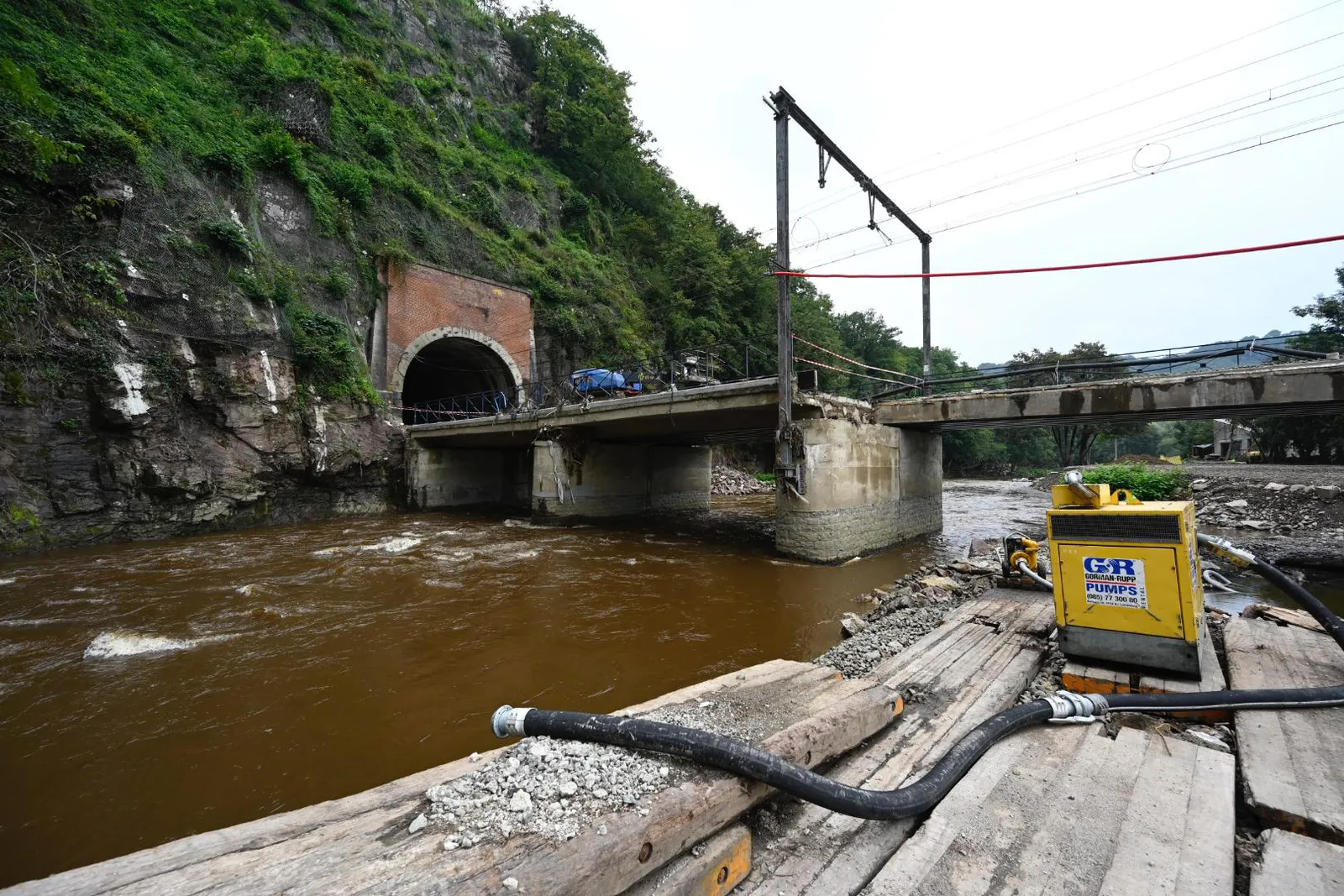
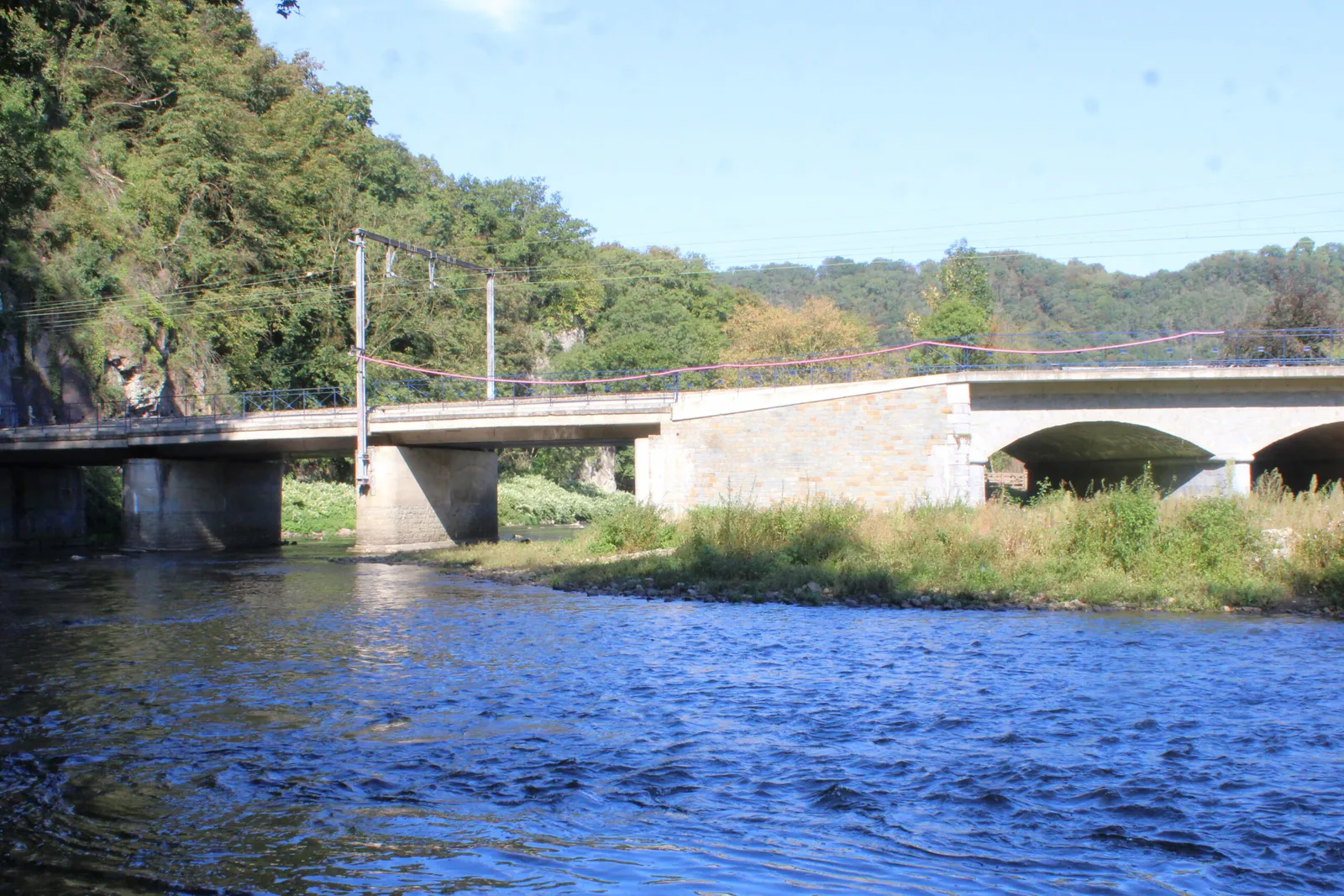
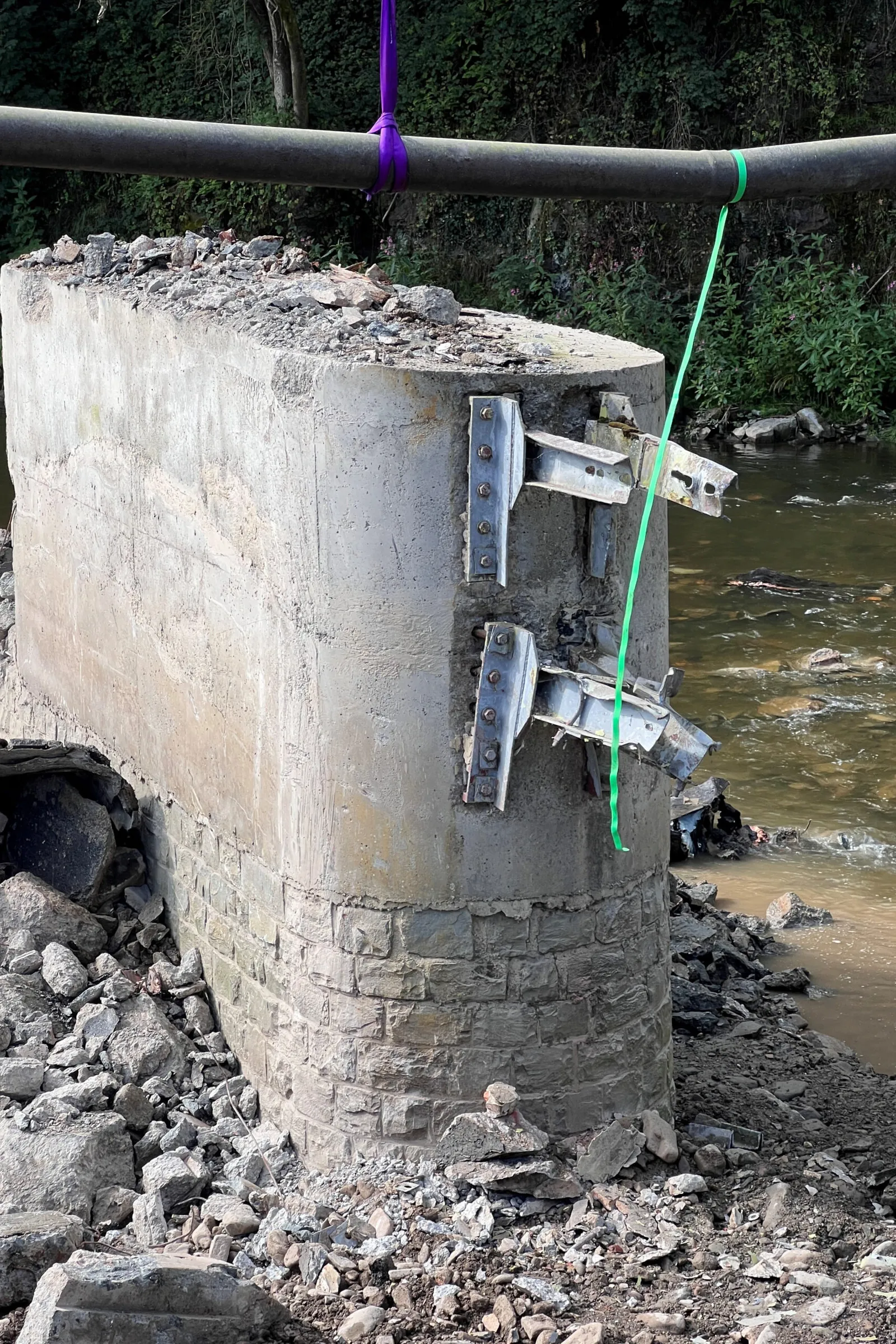
Louheau Bridge suffered extensive damage during the floods of July 2021. The exceptional rise in the Vesdre, combined with the large quantities of debris carried by the water, destabilised the bridge’s submerged foundations, which were supported on wooden piles, and caused one of them to crack. Infrabel teams were able to provide a safe but temporary solution, restoring rail services in just a few weeks. This summer’s project provides a more lasting solution.
The new structure has the particular advantage of being a single span. Despite the considerable distance it has to cross, it requires no intermediate supports in the river. The cost is certainly higher than that of a ‘traditional’ bridge, around 300% in this case, but this design offers multiple benefits. First, it helps protect against scouring caused by possible, and likely, major floods in the future. In principle, this should prevent any further prolonged disruption to rail services. In addition, the absence of intermediate supports, which could become obstacles when water flows become uncontrollable, makes it easier for water to flow through and prevents the bridge from acting as a dam. The revamped Louheau Bridge, representing an investment of €5 million, is therefore a model of climate resilience on the Belgian rail network.
Changes to train services
Until first thing on 25 August, all trains between Angleur and Verviers-Central are cancelled. Two types of bus service are available: a direct route between Liège-Guillemins and Verviers-Central, and a multi-stop route serving Angleur, Chênée, Chaudfontaine, Trooz, Fraipont, Nessonvaux, Pepinster and Verviers-Central.
In addition, IC trains on the ‘Ostend-Brussels-Eupen’ route are diverted and do not serve Verviers-Central, as are some IC trains on the ‘Kortrijk-Brussels-Welkenraedt’ route, which are rerouted or terminate at Liège-Guillemins. S41 trains on the ‘Liège-Verviers-Aachen’ route run only between Verviers and Aachen, while S44 trains on the ‘Landen-Liège’ route are extended to Chênée, calling at Angleur. Finally, from 28 July to 1 August, L trains on the ‘Spa-Verviers’ route are extended to Eupen, with additional stops at Verviers-Palais, Dolhain-Gileppe and Welkenraedt. These trains will not run at all from 18 to 22 August.
Question about this story? Ask your question
Keep following this
Get an email when a new story is published. No account needed.
- ThemeTransforming infrastructure and territories
- SubjectNews







