











Making the most of rooftops
Every square metre counts today. There is growing emphasis on making considered use of the space available. Roofs can no longer be seen as wasted space, serving only to protect buildings from the elements. The aim is to make use of the roof and turn it into a productive or recreational space. The next edition of Belgian Roof Day, on 26 November, will no doubt showcase several innovations in this field.
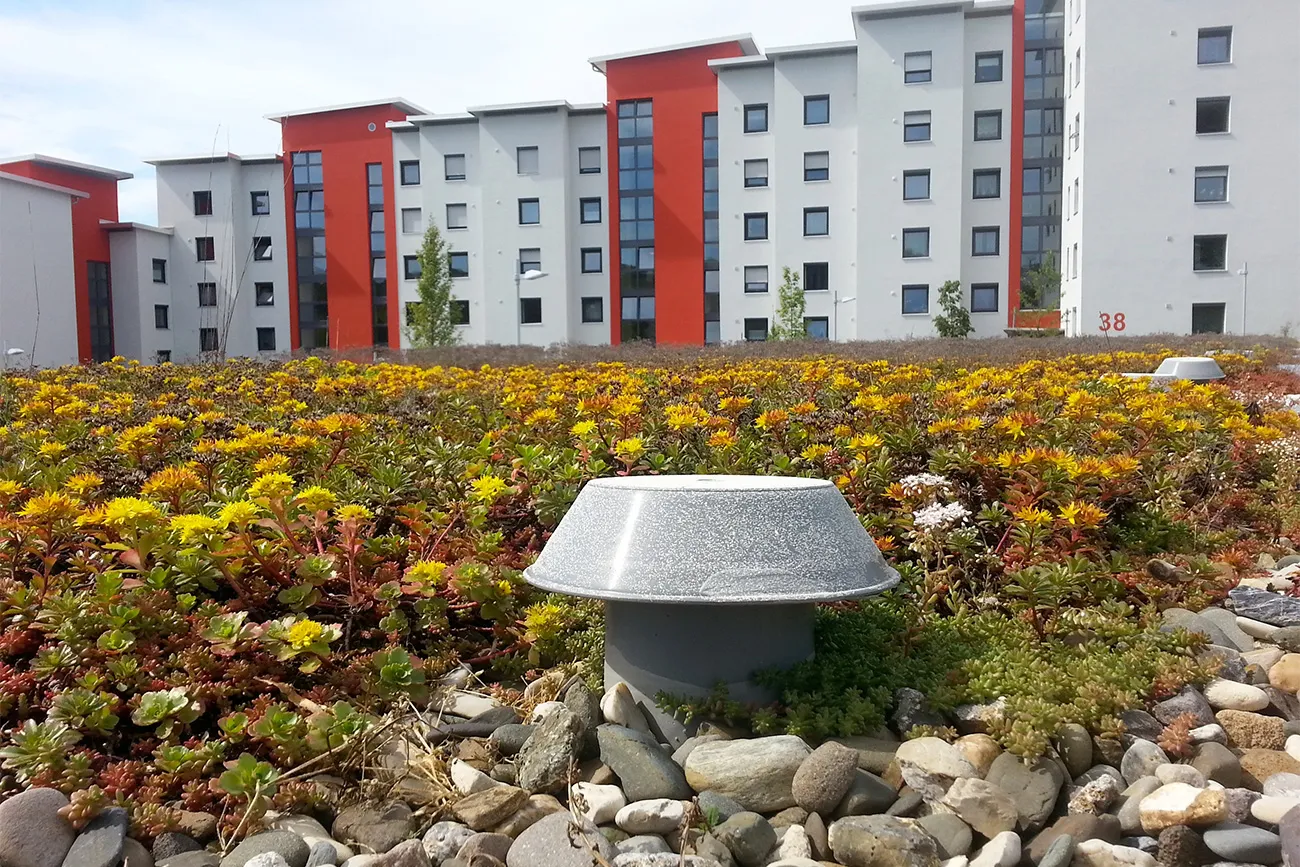
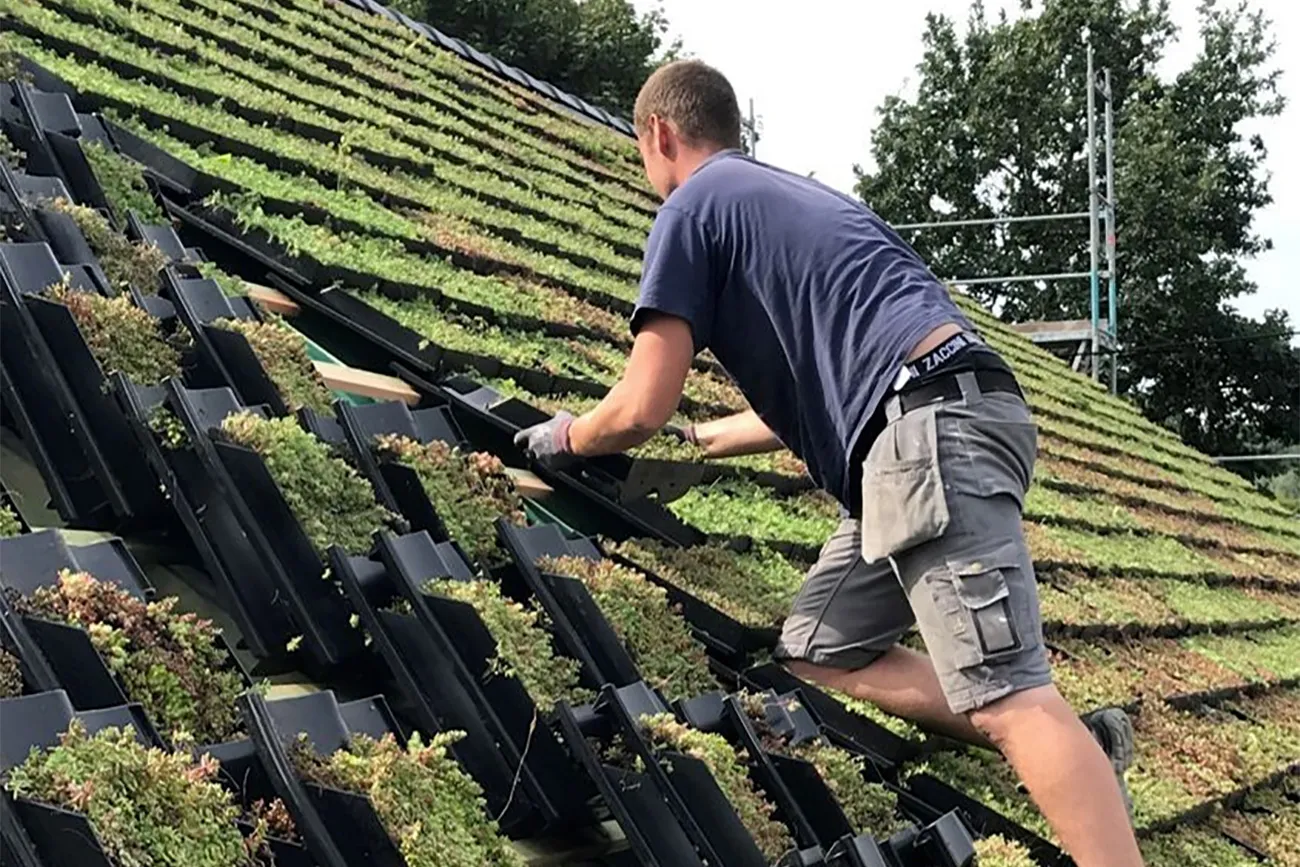
Green roofs are gaining popularity. Not only for their aesthetic appeal and insulating properties, but also for their contribution to biodiversity, particularly in cities. Whether intensive or extensive, accessible or not, decorative or productive, the options are numerous, from a simple sedum-covered roof to an urban farm. And did you know that there are also green roof systems for pitched roofs?
Accessible
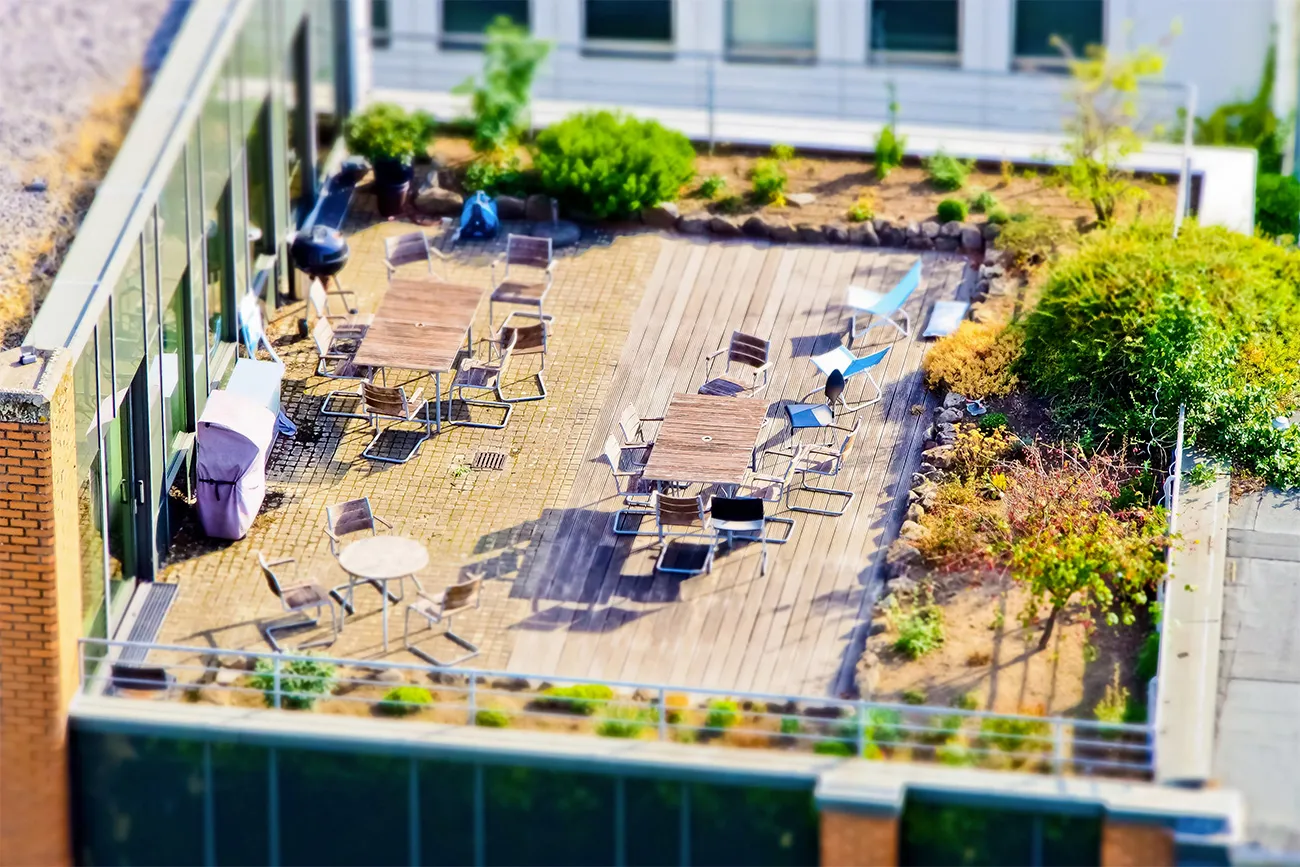
A roof terrace with a view, a car park, a sports ground or even a playground: an accessible flat roof can be used for almost anything.
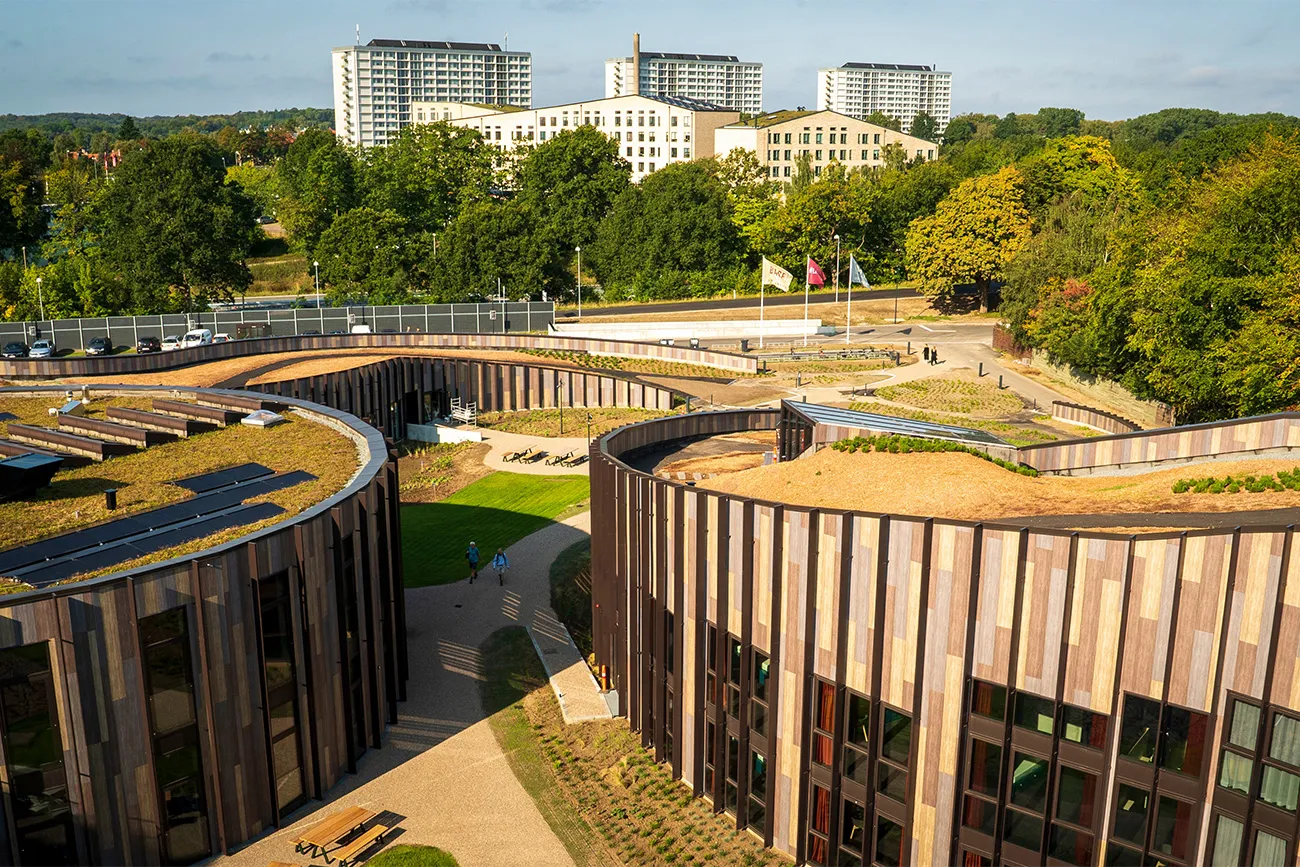
You don’t necessarily have to think as big as the Skovbrynet residential complex in Lyngby, Denmark, where 7300 m² of green space has been planted on the roof. You could simply create a rooftop walkway with magnificent views, as was recently done at the Confluence site in Namur (see pages 8-11).
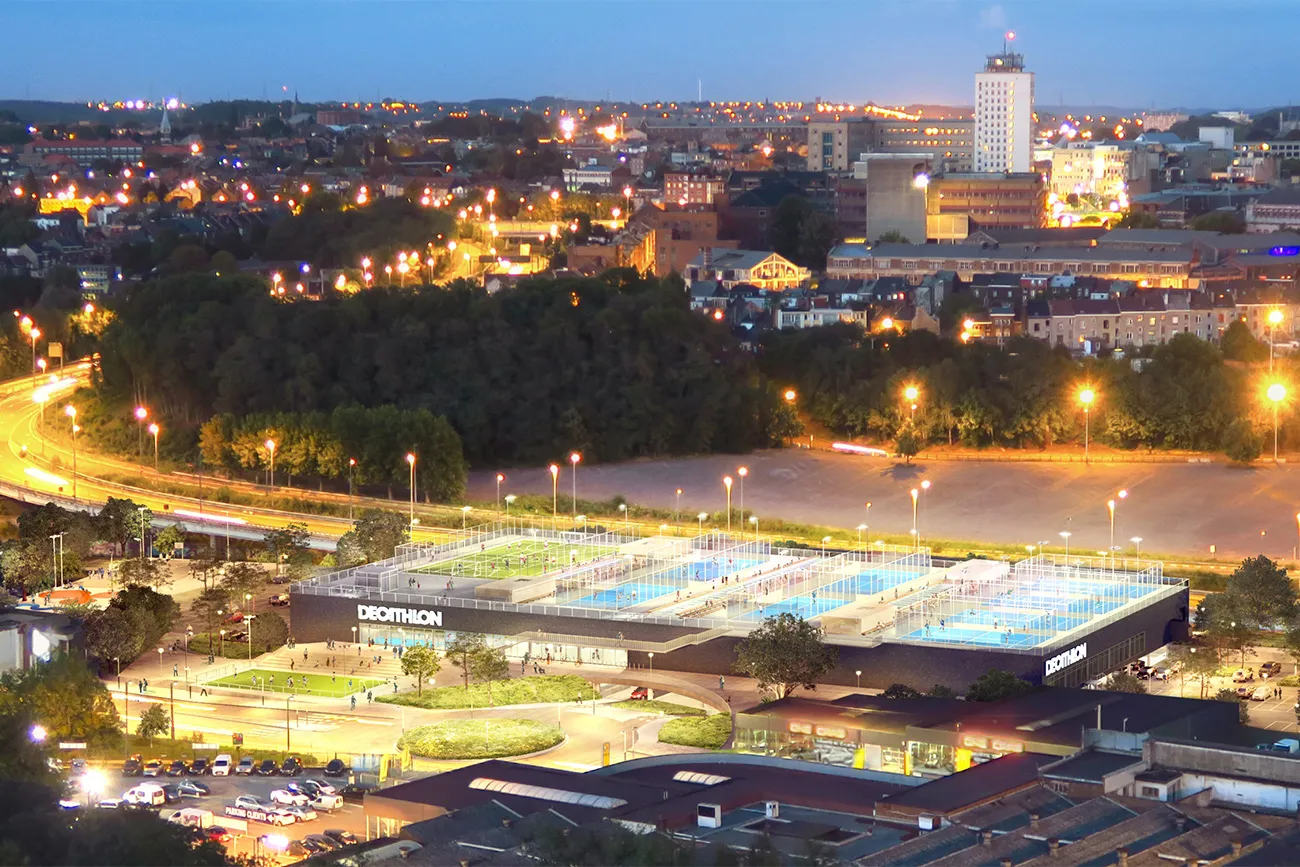
Better still, why not turn your company’s roof into a sports ground? That’s what the Decathlon chain did at its Charleroi store. No fewer than five padel courts and five football pitches have been installed on the roof, and 1500 to 2000 visitors use them every week.
And why not create a playground on a school roof? Naturally, all the necessary measures must be in place to ensure the children’s safety. This is what Label architecture successfully proposed for the extension of a school in a densely populated district of Saint-Josse-ten-Noode.
More prosaically, the roof of a commercial building can be turned into an open-air car park. A rooftop car park saves a significant amount of ground space while providing a safe place for the building’s employees and visitors to park. And what about the legendary Fiat test track on the roof of its former factory in Turin? It allowed the carmaker to test new models in complete privacy. A sign of the times, it has just been transformed into a huge hanging garden…
Inaccessible
If a flat roof is not accessible, it can at least accommodate photovoltaic panels and help reduce urban heat islands by using a roof covering with a higher reflectivity, also known as albedo, than a traditional bituminous roof, thereby reducing heat on the roof.
The importance of flat-roof insulation to a building’s overall energy performance cannot be overstated. The more insulation there is, the more energy-efficient a building is. This is one of the factors that has enabled the world’s largest chocolate warehouse, Barry Callebaut’s facility in Lokeren, to become the first building of this size in Belgium to achieve BREEAM Outstanding certification.
Vertical extension
Finally, adding a storey to an existing building is a good way to contribute to the intelligent densification of urban centres. Such a vertical extension is an attractive option when the plot is not large enough for a horizontal extension, or when the owners do not want to sacrifice part of their garden. Adding a storey to a building can also improve its energy performance while providing new and spectacular views. Because of its light weight, timber is often used for such extensions.
Question about this story? Ask your question
Keep following this
Get an email when a new story is published. No account needed.
- SubjectNews







